The Reality of the 5pm to 9pm Shift
Most blokes and ladies getting into the owner builder game think the hard part is picking the floor plan or choosing between Colorbond Shale Grey and Monument for the roof. It isn't. The real test is sitting in your office chair at 2pm on a Tuesday, staring at a spreadsheet, while your plumber calls to say the trenching backfilled itself during a cloudburst in Dubbo or Dandenong. Building a kit home while working forty hours a week is less about swinging a hammer and more about high-stakes logistics coordination. You're the project manager now. If you don't treat it like a second job, the project will stall faster than an old ute on a cold morning.
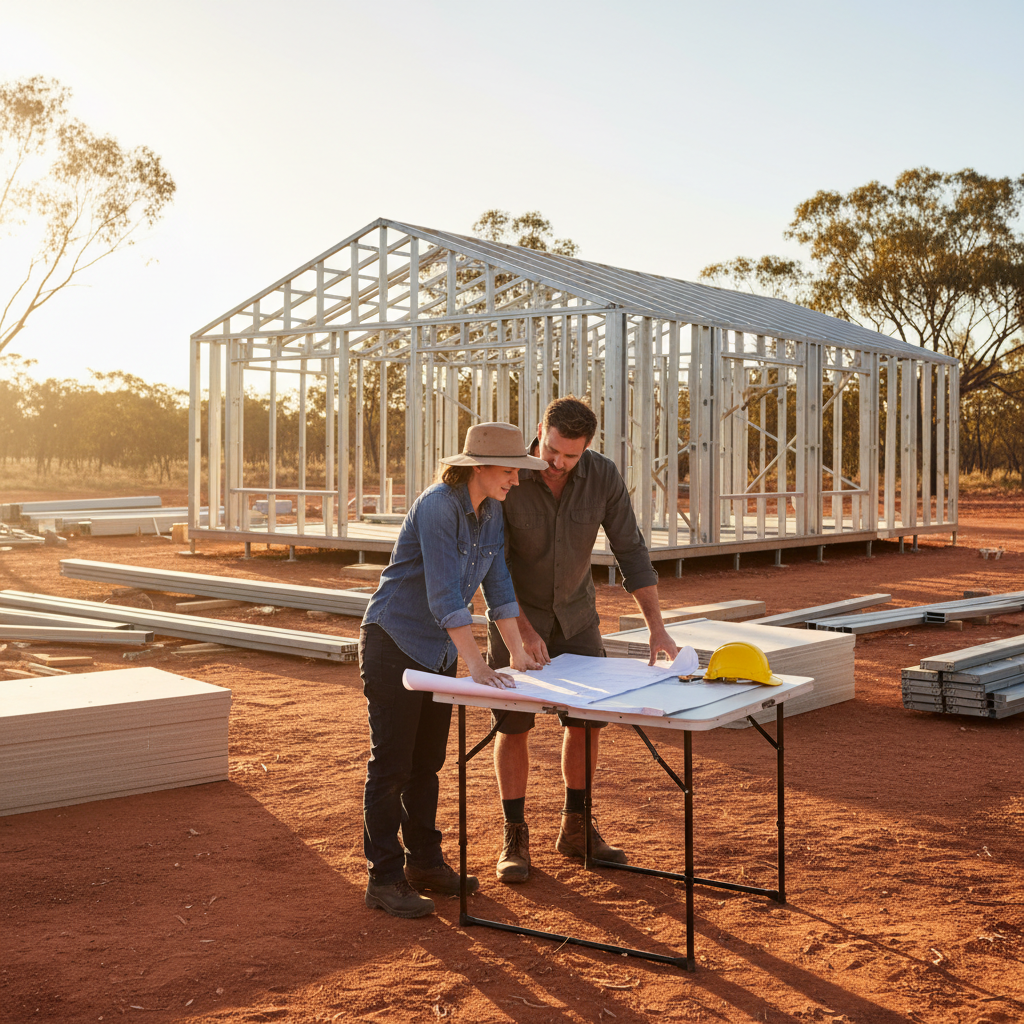
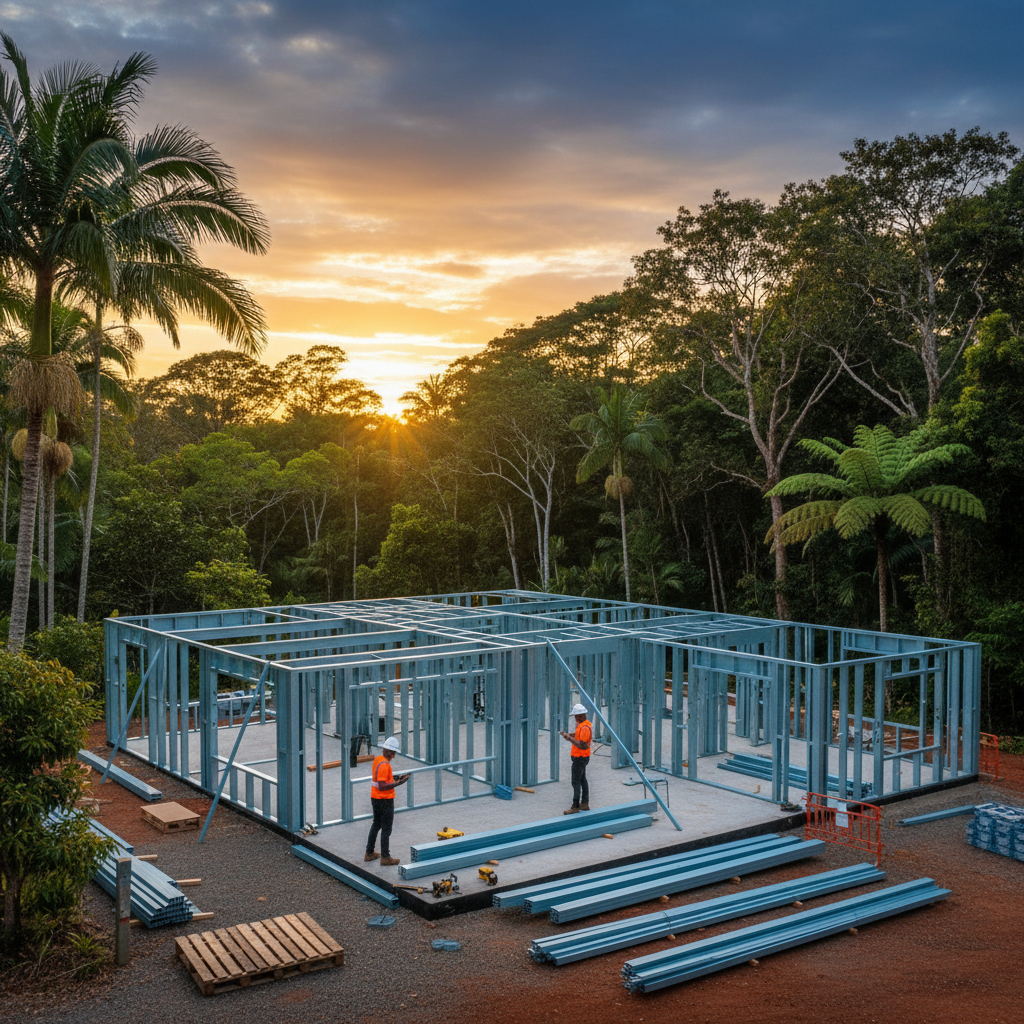
Steel frame kits are a godsend for people with limited time because the precision of BlueScope TRUECORE steel means you aren't wasting Saturday morning planng out warped timber studs. Everything is straight. Everything is pre-punched. But even with that advantage, the clock is your biggest enemy. You've got to be ruthless with your calendar. If you aren't planning three weeks ahead, you're already behind. Simple as that.
Mastering the Mid-Week Logistics
You can't be on-site when the truck arrives with your windows or when the building inspector rocks up for the slab tie-down check. This is where most owner builders trip up. They try to do it all on Saturdays. Bad move. Trades like sparkies and chipped-in chippies want to work Monday to Friday. If you only look at your site on the weekend, you'll spend half your Sunday fixing mistakes that happened on Wednesday. Plus, high BAL (Bushfire Attack Level) areas often require specific installation checks that won't wait for your day off.
Get a lockbox. A sturdy one. Give the code to your trusted trades. You need to enable people to work without you being there to hold their hand. Use your lunch break for the 'admin' of the build. That 45 minutes at your desk is for calling the council about your DA status or chasing up the local quarry for a load of 20mm aggregate. Don't leave these calls for 5pm because every trade office in Australia shuts at 4.01pm sharp.
Delivery Staging and Site Security
When your kit arrives, it's a massive amount of material. We're talking wall frames, roof trusses, bundles of external cladding, and all the fixing kits. If you're working full time, you need a designated drop zone that the Hiab driver can access without getting bogged. Nothing kills a work week like a call from a delivery driver who's stuck in your front gate because you didn't clear the overhanging branches. Arrange deliveries for a Monday or Tuesday. Why? Because it gives you the whole week to check the inventory against the packing list during the evenings with a headlamp. If something is missing, you've got time to sort it before the weekend warriors arrive to help you stand the frames.
The Importance of the 'Micro-Task'
Progress on a kit home isn't always about big wins. It's about the little stuff you can do in the dark. Because you're working all day, you have to find things to do at night. That might be taping up insulation joins, sorting your screws by size, or reading the technical manual for your windows. Small jobs keep the momentum alive. If you wait for a big 8-hour block of time to do everything, the house will take three years to build. We've seen it happen. People get burnt out because they see the site as an all-or-nothing commitment. It's not. It's a series of 15-minute tasks that eventually look like a house.
One trick is to prep the site every Sunday evening. Clean the slab. Move the rubbish to the skip. Organize the steel frames for the next stage. When your crane hire or your mates show up, they shouldn't be moving trash, they should be working. Your job is to clear the path so the high-value hours are actually productive.
Trade Management for the Time-Poor
You aren't just the builder, you're the site supervisor. Since you aren't there during the day, you need to be crystal clear with instructions. Use a sharpie. Write directly on the slab or the frames if you have to. "Plumbing stack here" or "No GPO on this wall". It sounds basic, but it prevents the 'I thought you meant...' conversations that happen on Friday nights. Because let's face it, if a trade makes a mistake because of vague instructions, you're the one who has to spend your Saturday fixing it.
Health and Burnout: The Owner Builder's Wall
Building a home is emotional. It's stressful. Doing it while your boss is breathing down your neck about a quarterly report is a recipe for a breakdown. You need to schedule days off where you don't even look at the site. Go to the beach. Take the kids to the park. If you spend every waking second thinking about AS 4100 steel standards or the pitch of your roof, you'll start to hate the project. And a project you hate is one you'll rush. Rushed work leads to dodgy finishes, and in the Australian climate, you can't afford that. You want those seals tight and those flashings perfect to handle a summer downpour.
Accept that things will go wrong. A delivery might be delayed by a week. A slab might not be as level as the drawings specified. It's okay. It's part of the process. The best owner builders aren't the ones who are the fastest, they're the ones who are the most persistent. It's a marathon, not a sprint to the finish line.
Checklist for the Working Owner Builder
- Setup a waterproof site office (even just a plastic tub) with all your approved plans and permits for inspectors to see.
- Hire a site toilet early. If you don't have one, trades won't stay, or they'll spend half the day driving to the nearest servo.
- Invest in high-quality cordless tools. You don't have time to be dragging 30 meters of lead across a muddy site every time you need to zip a screw in.
- Create a shared photo folder. Ask your trades to snap a photo of their work before they cover it up (like plumbing in walls). This is vital for your own records and future maintenance.
- Keep a detailed site diary. Note the weather, who was on site, and what was delivered. This is your best defense if a dispute arises later.
At the end of the day, you're building a legacy. Whether it's a small weekend retreat in the hills or a sprawling family home on the coast, the fact that you managed the process while holding down a career is something to be proud of. Just remember to keep the coffee hot, the spirit level handy, and your eyes on the next three steps of the build. You'll get there, one Saturday at a time.