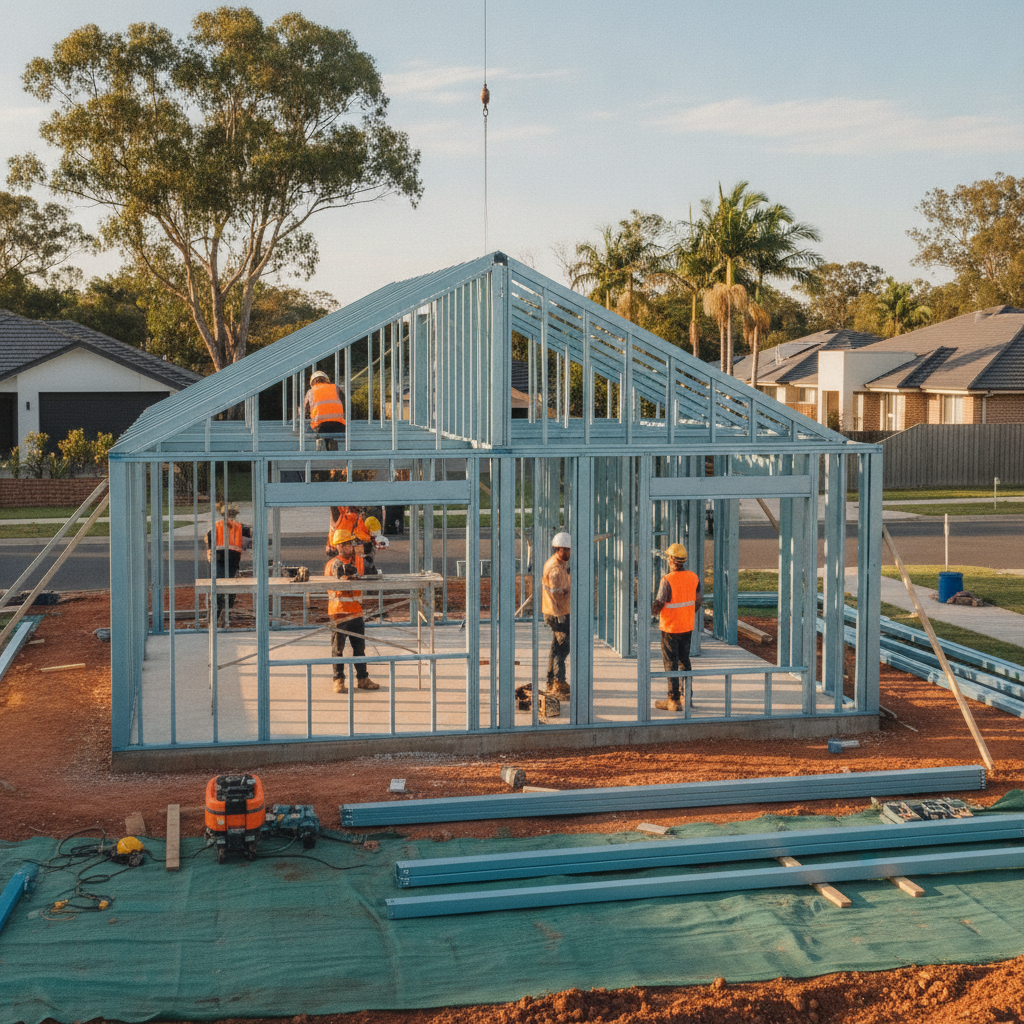
The Reality of the Rough-In
Most owner-builders get a bit of a shock when they step inside their kit home once the frames are up. It's a skeleton of silver. BlueScope TRUECORE steel looks sharp, but it's a different beast compared to the old-school timber sticks your dad used to build with. Your sparky and plumber are going to walk on site, look at those pre-punched holes in the studs, and they'll either have a plan or they'll start scratching their heads. You want the bloke with the plan. The rough-in is arguably the most technical part of your build because once those wall linings go on, your mistakes are buried. And digging them out is expensive.
Pre-punched Holes and Grommets
One of the best things about a steel frame kit is that the service holes are usually punched in the factory. They're tidy. They're consistent. But there's a catch. Steel is sharp. If your electrician tries to pull Tps cable through a bare steel hole, the edge will slice that insulation like a razor. This is exactly how you end up with a house that trips the RCD every time the wind blows. Every single hole that carries a wire must have a plastic grommet. Don't let them tell you it doesn't matter. It's a requirement under AS/NZS 3000. I've seen blokes try to save twenty bucks by skipping them. Don't be that guy. If you see bare metal touching copper-carrying lines, stop the job. Same goes for your poly pipe. While it's tougher than wire, constant vibration from water hammer against a steel edge will eventually saw through the pipe. It might take five years, but you'll find it when your floorboards start warping.
The Copper Contradiction
Here's a tip that catches out a lot of DIYers. If you're running copper pipes for your hot water, they cannot touch the steel frame. Period. It's called galvanic corrosion. When two dissimilar metals meet and you add a bit of moisture from the air, they react. The steel will eat the copper or vice versa depending on the coating. It's a mess. Most modern plumbers use PEX or Rehau pipes these days, which are plastic and largely solve this, but if you're insistent on a copper run for a specific fixture, it needs to be lagged or isolated. Make sure your plumber isn't using copper clips on steel studs either. Use plastic stand-off clips. They're cheap, they're fast, and they prevent the house from sounding like an old ship when the pipes expand and contract.
Acoustics and the Steel Frame 'Ping'
Steel has a high thermal expansion coefficient. It moves. Not a lot, but enough to make a noise if your services aren't secured properly. If a PVC waste pipe is rattling against a steel noggin every time someone flushes the toilet, you'll hear it in the master bedroom. Use acoustic pipe lagging in your internal walls, especially around the bathroom and laundry. It's a thick, heavy foam wrap. It's a bit of a pain to install and adds a few hunderd to the bill, but it's the difference between a house that feels solid and one that feels noisy. Also, tell your trades to use tech screws with rubber washers where they can. It dampened the vibrations.
Planning Your Kitchen Stack
Because you're working with a kit, the structural members are where they are. You can't just chainsaw a massive notch out of a steel stud to fit a 40mm waste pipe like you might with timber. If you do that, you've compromised the structural integrity of the frame and voided your warranty. If you're building a Varley or one of the larger designs, look at your wet area slab penetrations before the concrete is poured. If your plumbing is 50mm out, you'll be forced to build a false wall or a bulkhead to hide the pipes because they won't fit through the studs. Dealing with a 90mm wall cavity means you've got zero room for error with those big drain lines.
The NBN and Data Runs
Do yourself a favor and run more data points than you think you need while the walls are open. Steel frames can sometimes act like a bit of a Faraday cage for Wi-Fi signals in certain configurations. It's not usually an issue in a standard residential house, but why risk it? Hardwire your TV and your home office. It's easier to pull Cat6 cable through a steel frame now than it is to try and fish it through a ceiling full of insulation later on. Plus, it looks cleaner. No one likes messy cables hanging off the skirting board.
Noggins for Fixtures
Think about where your wall-hung vanities, towel rails, and even your wall-mounted TV are going. Steel studs aren't great for taking heavy loads with just a standard screw. You need to plan your blocking. I tell my clients to take a photo of every single wall once the rough-in is finished but before the plasterboard goes up. Hold a tape measure in the photo. It sounds overkill until you're trying to find a stud to hang a heavy mirror six months later. If you know you're putting in a floating vanity, get your builder or do it yourself, and screw in some timber or additional steel noggins at the right height. It makes the fit-out stage so much smoother.
Bridging the Thermal Gap
When the sparky is cutting holes for downlights, make sure they aren't compromising your ceiling insulation. We use BlueScope steel for the frames because it's dead straight and won't rot, but steel is a conductor. It carries heat. If your insulation is tucked away properly and the rough-in doesn't leave massive gaps, your kit home will stay cool in a Queensland summer and warm in a Victorian winter. Just watch that the trades don't shove the batts aside and forget to put them back. It's a small thing that makes a massive difference to your power bill.
Checklist Before the Plasterboard Arrives
- Are all electrical holes grommeted?
- Is there a minimum 25mm clearance between water pipes and power lines?
- Are all wet area noggins in place for the vanity and towel rails?
- Did the plumber pressure test the lines before the walls were closed?
- Have you taken photos of every wall cavity with a reference measurement?
- Are the gas lines (if you're using them) isolated from the steel frame?
Building your own place is a massive undertaking. It's stressful, it's tiring, and you'll spend half your life at the local hardware store. But getting these technical details right during the rough-in phase means you won't be dealing with mysterious leaks or electrical shorts down the road. Take your time. Talk to your trades. Most of them are good blokes who want to do a proper job, they just need to know you're paying attention to the details. Once that rough-in is signed off, you're one huge step closer to move-in day.