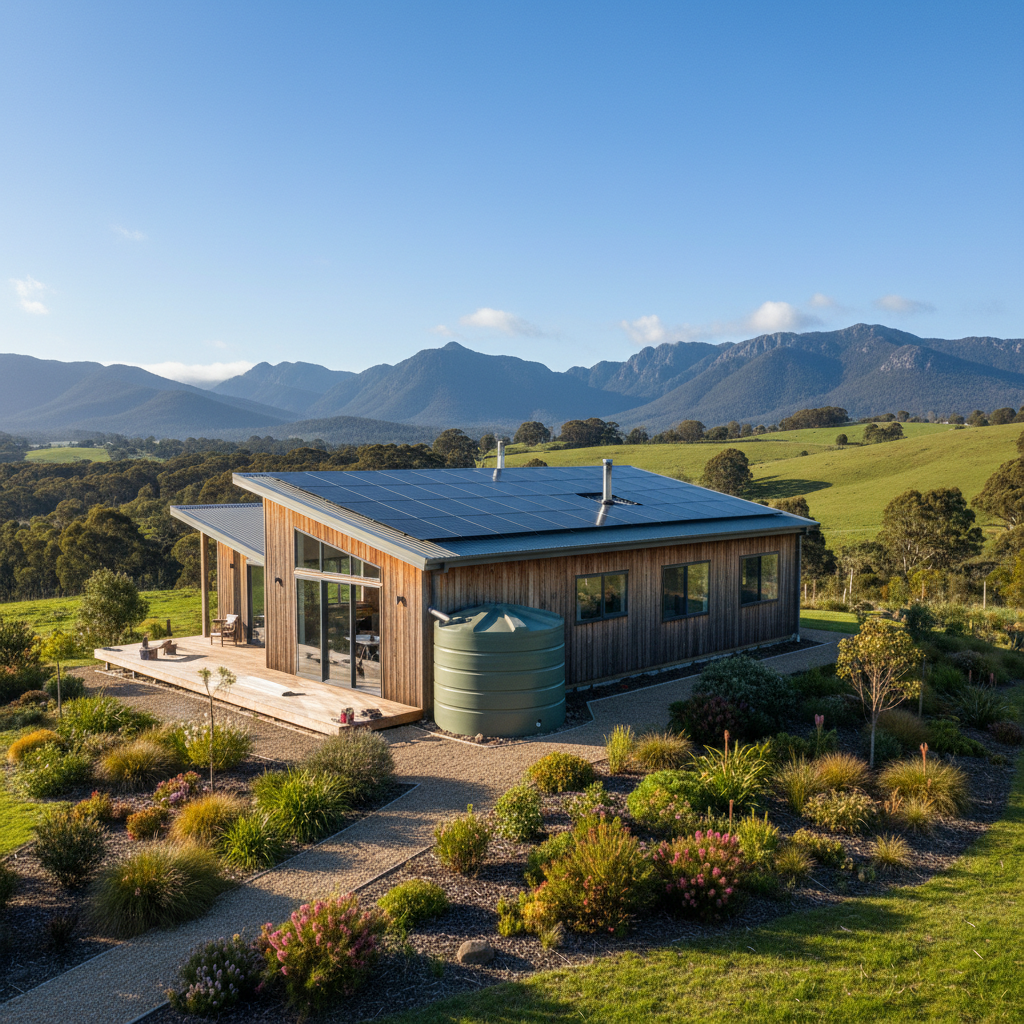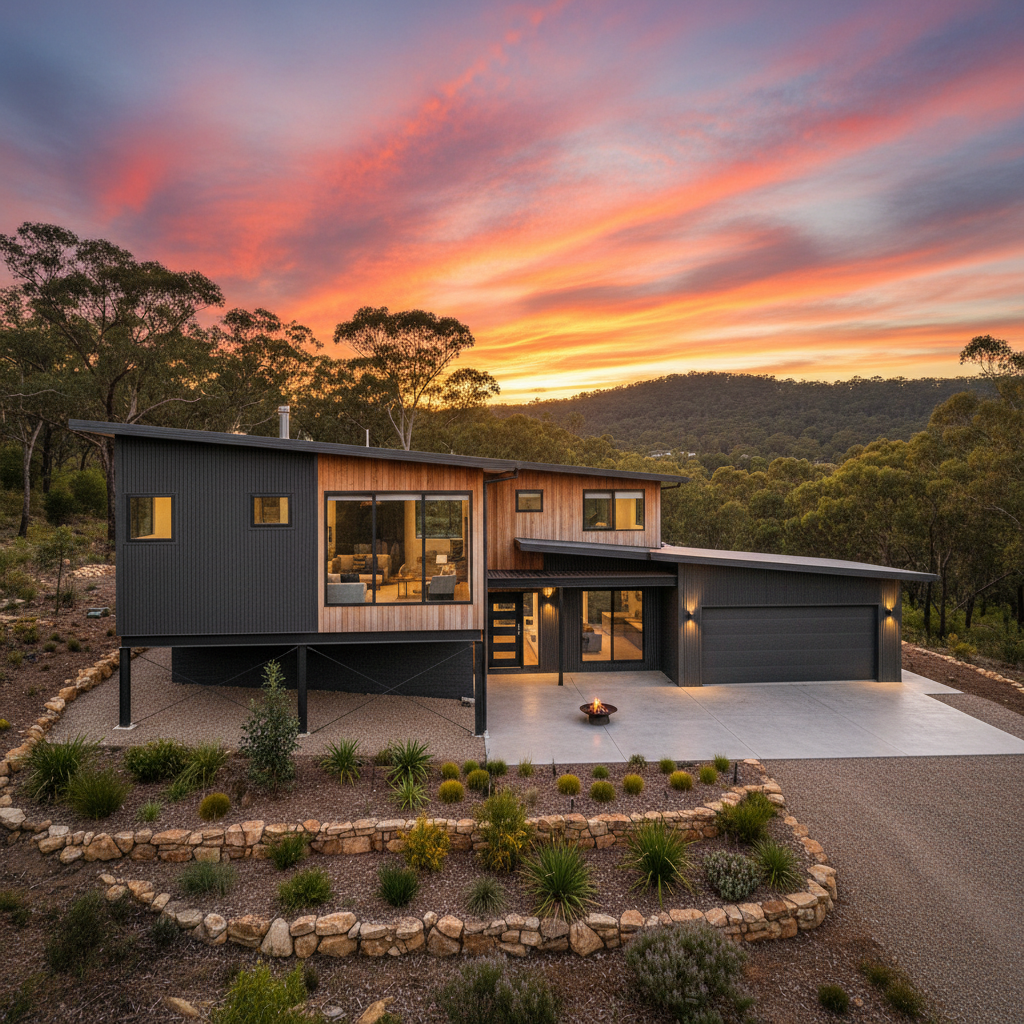
The End of the Quarter-Acre Sprawl
Walk around any new estate in Western Sydney or the outer suburbs of Brisbane and you'll see the same thing. Massive houses squeezed onto tiny blocks with barely enough space to open a window without hitting your neighbor's gutter. It's exhausting. But lately, something has shifted in the calls I get and the plans people are actually buying. Australians are finally waking up to the fact that more square meterage usually just means more vacuuming and higher cooling bills. We're seeing a massive swing toward smaller, smarter kit homes that actually leave room for a garden or a shed.
This isn't just about saving a few bucks on the build. It's a fundamental change in how we live. People are looking at their backyards and seeing potential for a secondary dwelling for the outlaws, or they're buying a rugged block in the sticks and realize they don't need five bedrooms to enjoy the bush. They want something tight, well-insulated, and easy to maintain. Steel frame kits are the backbone of this movement because they let you get a roof over your head quickly without the massive overhead of a traditional build. Plus, termites in Australia will eat through a timber house faster than a kid through a meat pie, so going with BlueScope TRUECORE steel just makes sense for longevity.
Smart Design Beats Raw Size Every Time
If you're looking at kit home plans, stop looking at the total area and start looking at the flow. I've seen 60-square-meter designs that feel bigger than most three-bedroom units because the ceiling height is right and the glazing is smart. Because we use steel frames, you can get those nice wide spans without needing chunky internal load-bearing walls everywhere. It opens the place up. But you've got to be clever about it. Think about the sun. In Australia, if you don't get your orientation right, your brand new kit home will turn into an oven by 2pm in February. You want your living areas facing north. Simple as that. It's the first thing I check when an owner-builder shows me their site plan.
And don't get me started on storage. In a smaller home, every millimeter is precious. I always tell people to look at their wall cavities. Since our kits come with precision-engineered steel frames, you know exactly where your studs are. You can plan for recessed shelving or hidden cupboards between the studs before the first sheet of plaster even hits the site. It's about working with the system, not against it.
The Owner-Builder Reality Check
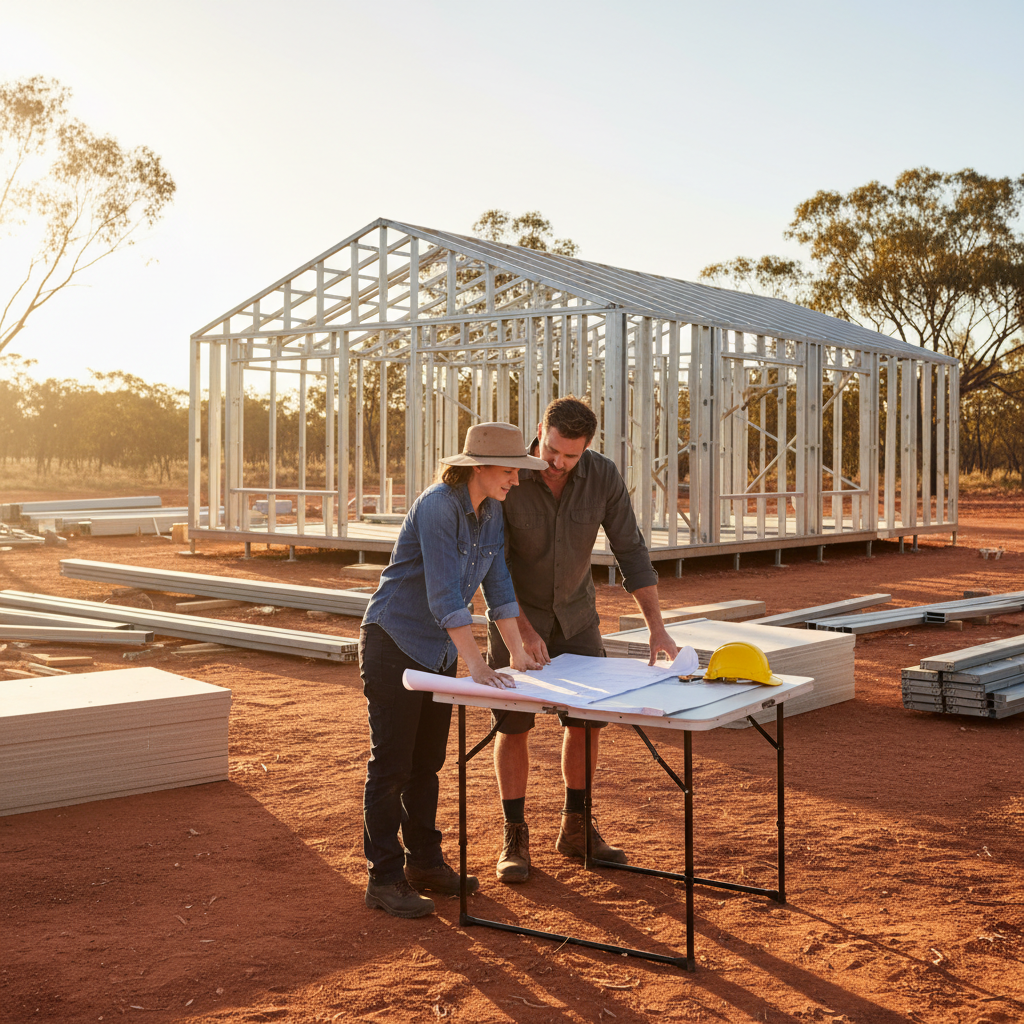
Being an owner-builder is a slog. There, I said it. It's rewarding as hell, but don't walk into this thinking it's a weekend hobby. You're the project manager. You're the one chasing the plumber when he doesn't show up on Monday morning. You're the one making sure the slab is dead level before the trucks arrive with your steel frames. If your slab is out by 20mm, you're going to have a nightmare of a time getting your walls to line up properly. Get a good concreter. Pay him well. Check his work with a laser level yourself.
When the kit arrives, it's like a giant Meccano set. Everything is pre-cut and ready to go. But you still need to be organized. Sort your components. The roofing, cladding, and windows all have their place. I remember a bloke up near Coffs Harbour who unpacked his whole kit into one big pile in the dirt. Spent three days just looking for the right tracks for his sliding doors. Don't be that guy. Keep your site clean. It's a safety thing, sure, but it also keeps your head clear. A messy site leads to mistakes, and mistakes with steel frames are a pain to fix once the insulation is in.
Technical Tip: Managing Thermal Bridging
Since we're talking about steel, we need to talk about heat. Steel is a great conductor. In the middle of a Queensland summer, that frame wants to pull heat into the house. In a Tassie winter, it'll suck the warmth out. This is why we include quality insulation and recommend a thermal break. It's usually just a high-density poly strip or a specific wrap that sits between the frame and the cladding. It stops that heat transfer dead. Refer to AS 4859.1 for your insulation standards. Don't skimp here. Using a kit home with a TRUECORE frame gives you a straight, true house that won't warp or twist, but you've got to treat it right with the right building wrap and batts.
The Shift Toward Multigenerational Living
Another trend we're seeing is the 'granny flat' that isn't really for a granny. It's for the 25-year-old kid who can't afford a $900k mortgage or the professional who needs a proper office away from the main house. These smaller kit homes are perfect for this. Because the components are relatively light compared to heavy timber beams, you can often get them into backyards with limited access. So long as you can get a crane truck close enough or have a few mates to help hand-unload, you can build almost anywhere.
But check your local council regs first. Every LGA in Australia has different rules about secondary dwellings. Some are great - they'll let you build a kit home as a separate residence with no worries. Others will make you jump through hoops that'll make your hair turn grey. Get your BAL (Bushfire Attack Level) rating sorted early too. If you're in a BAL-29 or BAL-40 zone, your choice of windows and cladding matters. Steel frames are a massive advantage in fire-prone areas, but your external skin still has to meet the code.
Practical Advice for Your First Kit
If you're just starting out, here is my no-nonsense checklist:
- Get your soil test done before you even look at floor plans. The dirt under your feet dictates your footing costs.
- Talk to your local council about setbacks. You don't want to buy a kit and then find out it has to be five meters from the fence line when you only have three.
- Look at the wind rating. Are you N2? N3? C1? Our steel kits are engineered for specific wind loads, so don't guess this. If you're on a hill in a windy part of Victoria, you need to know.
- Line up your sparky and plumber early. Like, months early. They're busy. Tell them you're building a steel frame kit home so they know they'll be drilling through metal, not timber. They'll need the right bits.
- Don't rush the frame assembly. Use a string line. Check your squares. If the frame isn't plum, your windows will stick and your plasterboard will crack.
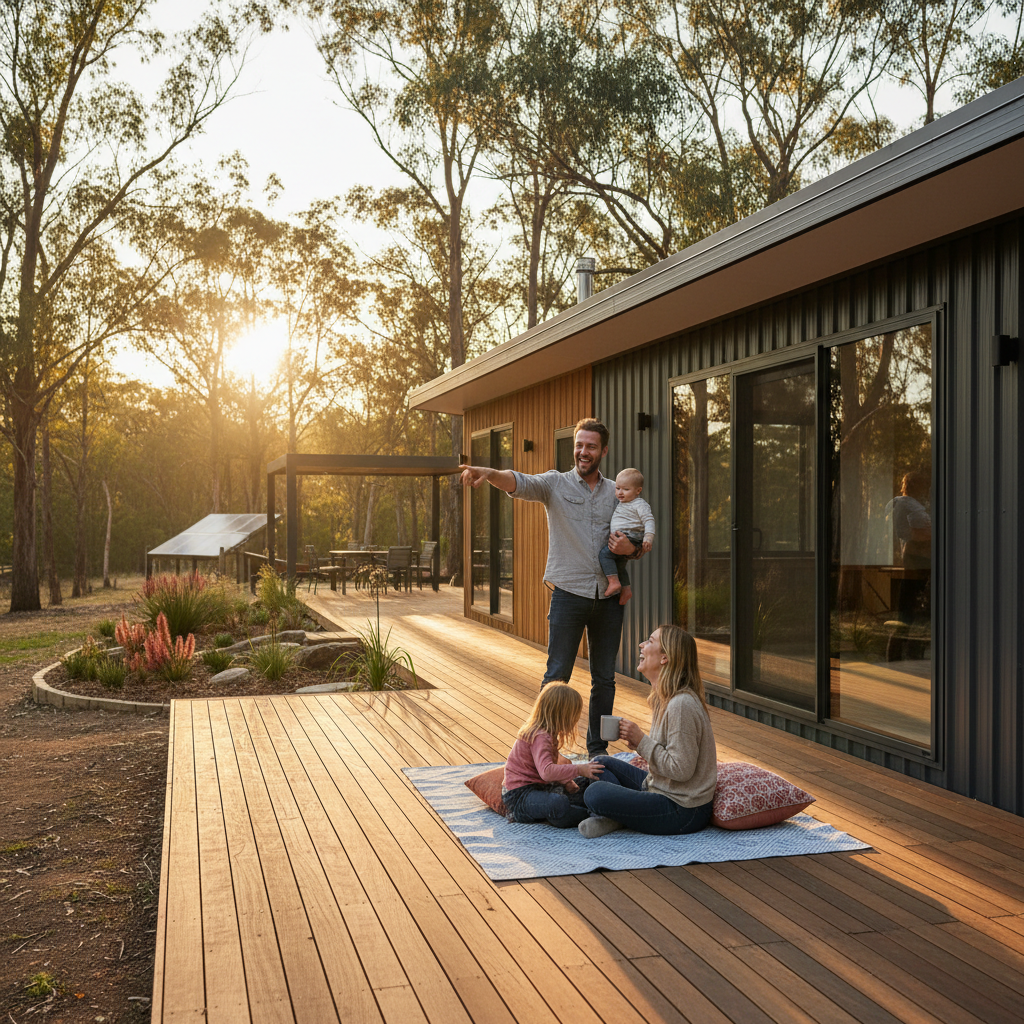
Building your own place is a massive achievement. There's nothing quite like the feeling of standing under a roof you helped put up, especially when it's a solid steel structure that you know is going to outlast you. The trend toward smaller homes isn't about sacrifice. It's about freedom. Less house means more life. And in Australia's current housing market, that's the smartest move you can make. Just make sure you bring a decent cordless drill and plenty of spare hex head drivers. You're going to need them.