Choosing Your Foundation: The Single Storey vs. Elevated Debate
When you start dreaming about your kit home project in Australia, your mind probably jumps straight to the floor plan, the kitchen layout, or the colour of the cladding. But before you get too settled on a specific design, there is a fundamental question you need to answer: should your home sit flat on the ground or be raised up on stumps? This choice reflects more than just an aesthetic preference; it is a practical decision that affects your construction process, your lifestyle, and how your home interacts with the Australian landscape.
In this guide, we are looking at the pros and cons of single storey slab-on-ground homes versus elevated (pole or stump) designs. As an owner builder, understanding which profile suits your specific block of land will save you time, stress, and potential design headaches down the track.
The Flat Block Favourite: Single Storey on a Concrete Slab
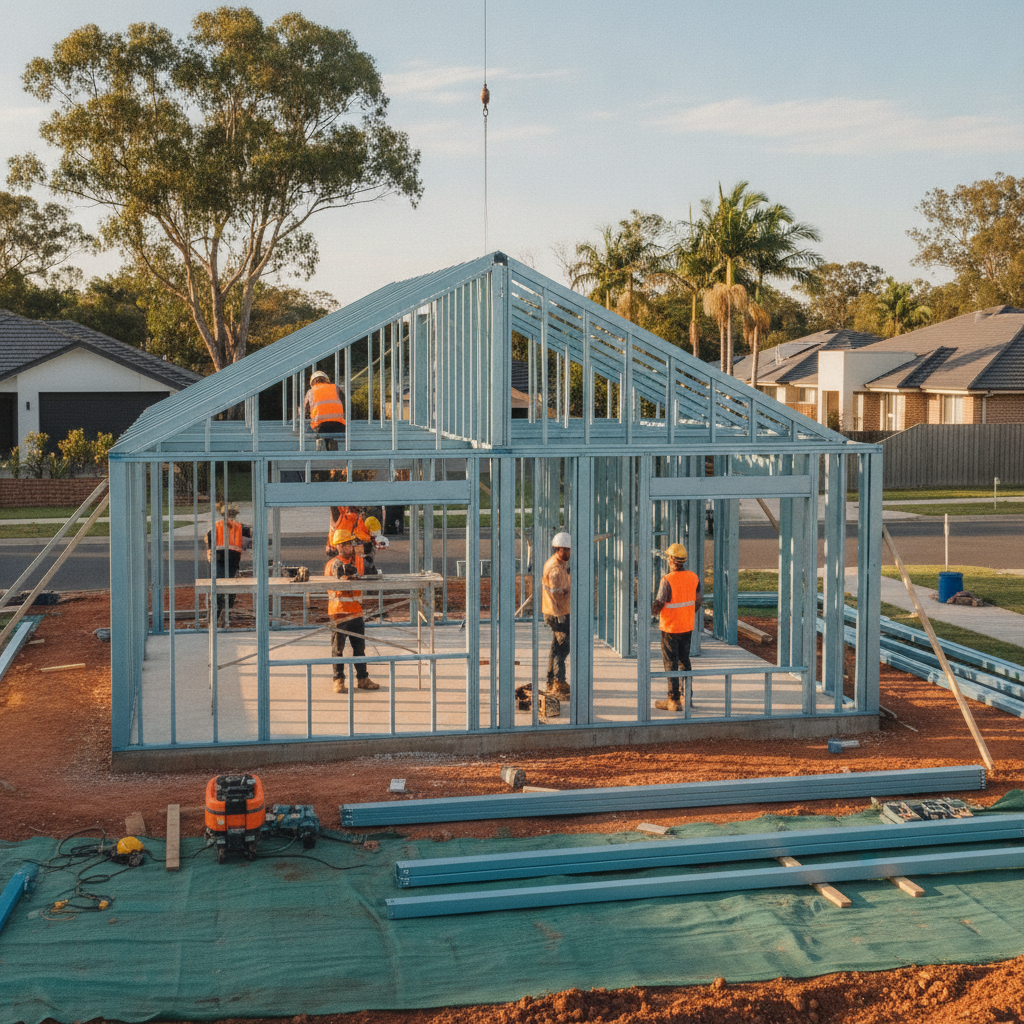
If you are lucky enough to have a relatively flat block of land, the single storey home built on a concrete slab is often the go-to choice. It is the most common sight in Australian suburbs for a reason: it offers seamless indoor-outdoor flow and a feeling of grounded permanent stability.
Accessibility and Lifestyle
One of the primary benefits of a single storey kit home on a slab is accessibility. With no stairs to navigate, these homes are ideal for young families with prams or retirees looking to 'age in place'. The ability to walk straight from your living room onto a concrete patio or garden area creates that classic Australian lifestyle where the backyard feels like a direct extension of the house. For those using steel frames, a slab provides a rock-solid foundation that complements the precision of the steel structure perfectly.
Thermal Mass Advantages
From a building science perspective, a concrete slab provides 'thermal mass'. In many parts of Australia, this is a huge plus. During winter, a well-positioned slab can soak up the sun's warmth during the day and release it slowly at night. In summer, the ground's natural coolness helps keep the interior temperature more stable. However, this only works effectively if you have considered your home's orientation on the block.
The Challenges of Slab-on-Ground
While slab construction is popular, it is not always the best fit. If your block has a significant slope, the amount of 'cut and fill' (excavation) required to create a flat pad can be extensive. This not only changes the natural drainage of your land but can also result in high retaining wall requirements. If you are dealing with reactive clay soils, which are common across many Australian regions, your slab may need to be significantly engineered to prevent cracking, which adds complexity to your site works.
The Elevated Approach: Living Amongst the Treetops
Elevated kit homes, often built on steel or timber stumps, are a quintessential part of Australian architecture, particularly in coastal, rural, or tropical areas. They are the problem-solvers of the building world, turning a difficult block into a stunning vantage point.
Mastering the Sloping Block
If your block has a bit of character (also known as a steep hill), an elevated kit home is usually the most logical choice. Instead of fighting the land with heavy machinery and excavation, an elevated home sits on top of it. By using steel flooring systems and piers of varying heights, you can maintain the natural profile of the land. This is often much better for the local environment and ensures that natural water run-off remains uninterrupted.
Airflow and Cooling
There is a reason why the classic Queenslander is elevated. In Australia's humid climates, getting air to move around a house is vital for comfort. An elevated home allows for cross-flow ventilation not just through the windows, but effectively underneath the floorboards. This natural cooling can make a massive difference in your comfort levels during a scorching Australian summer.
Capturing the View
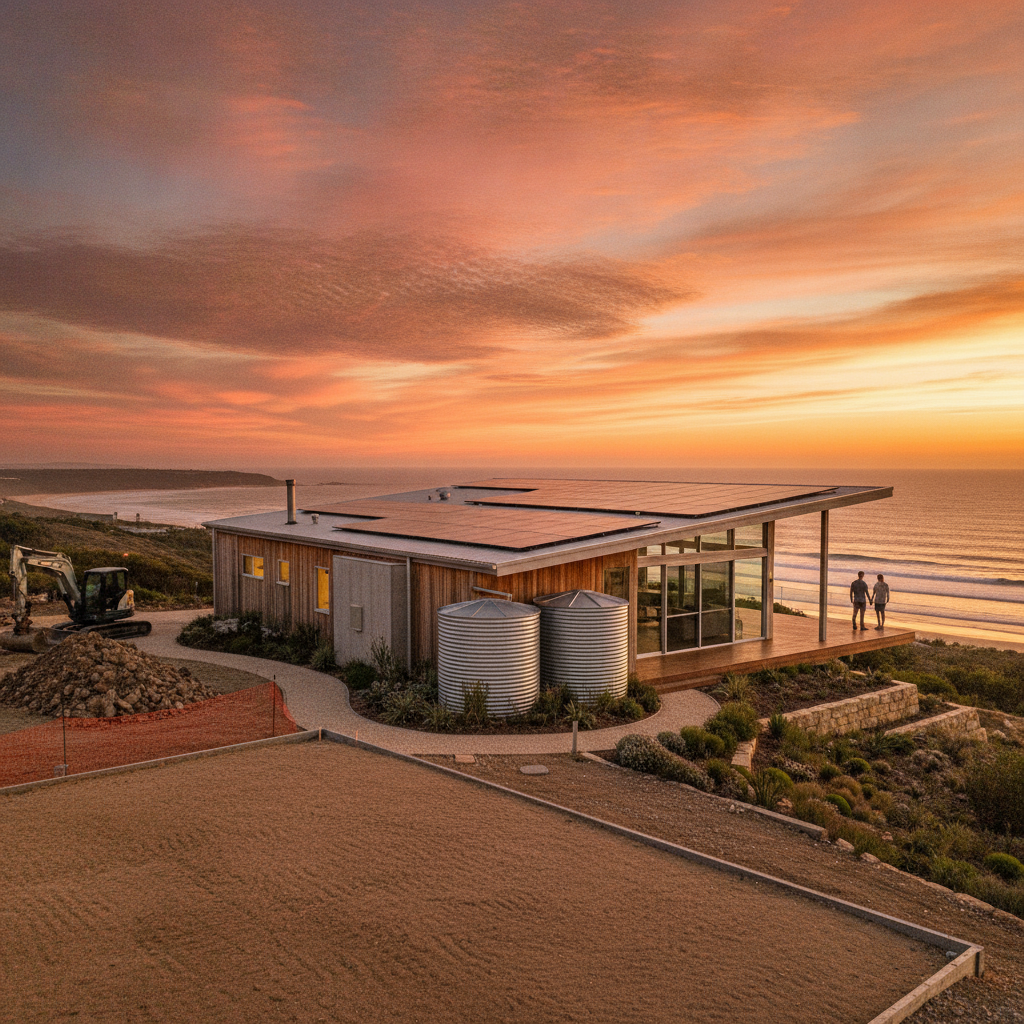
Sometimes the best part of your block is the view, but you can only see it if you are two metres off the ground. Elevating your kit home can transform a standard outlook into a panoramic vista. Additionally, that space underneath the house can be repurposed for storage, a shaded hobby area, or even a protected parking space, depending on the height of your stumps.
Comparing the Two: Key Considerations for Owner Builders
When you are acting as the owner builder, you need to weigh up the practicalities of the construction process for each style. Here is how they stack up against each other:
1. Site Preparation
For a single storey slab home, your site prep is all about the ground. You need a flat, compacted pad. This involves earthmovers, drainage planning, and often soil testing to ensure the ground can support the weight. For an elevated home, site prep is often less invasive. You are digging holes for footings rather than clearing a massive footprint. This makes elevated homes a fantastic option for blocks with protected trees or sensitive ecosystems.
2. Under-Floor Services
One often overlooked aspect of building is the plumbing and electrical work. In a slab home, most of your plumbing is 'set in stone' literally. Once the concrete is poured, moving a toilet or a drain is a major undertaking. In an elevated kit home, your pipes and cables are easily accessible underneath the floor. This makes future renovations or repairs much simpler and less destructive.
3. Termite Management
Australia is home to some very hungry termites. While modern steel frames, such as those made from BlueScope TRUECORE steel, are termite-proof, the rest of your home (like your finishing timbers and cabinetry) still needs protection. An elevated home provides a clear 'inspection zone' underneath the house, making it very difficult for termites to enter undetected. Slab homes require physical or chemical barriers around the perimeter and penetrations, which need regular professional inspection.
Which Suits Your Block? A Quick Checklist
Still undecided? Ask yourself these five questions:
- How much fall is on the block? If there is more than a one-metre difference from one side of the house footprint to the other, elevation starts to look very attractive.
- What is the soil like? Rocky ground can be expensive to excavate for a slab, while very soft soil might require deep piers anyway, making an elevated floor more efficient.
- What is your climate? If you are in the tropics, elevation helps with cooling. If you are in a chilly alpine region, a slab can offer better thermal retention.
- Are there views to capture? Don't waste a great view by staying at ground level if a slight elevation would open up the horizon.
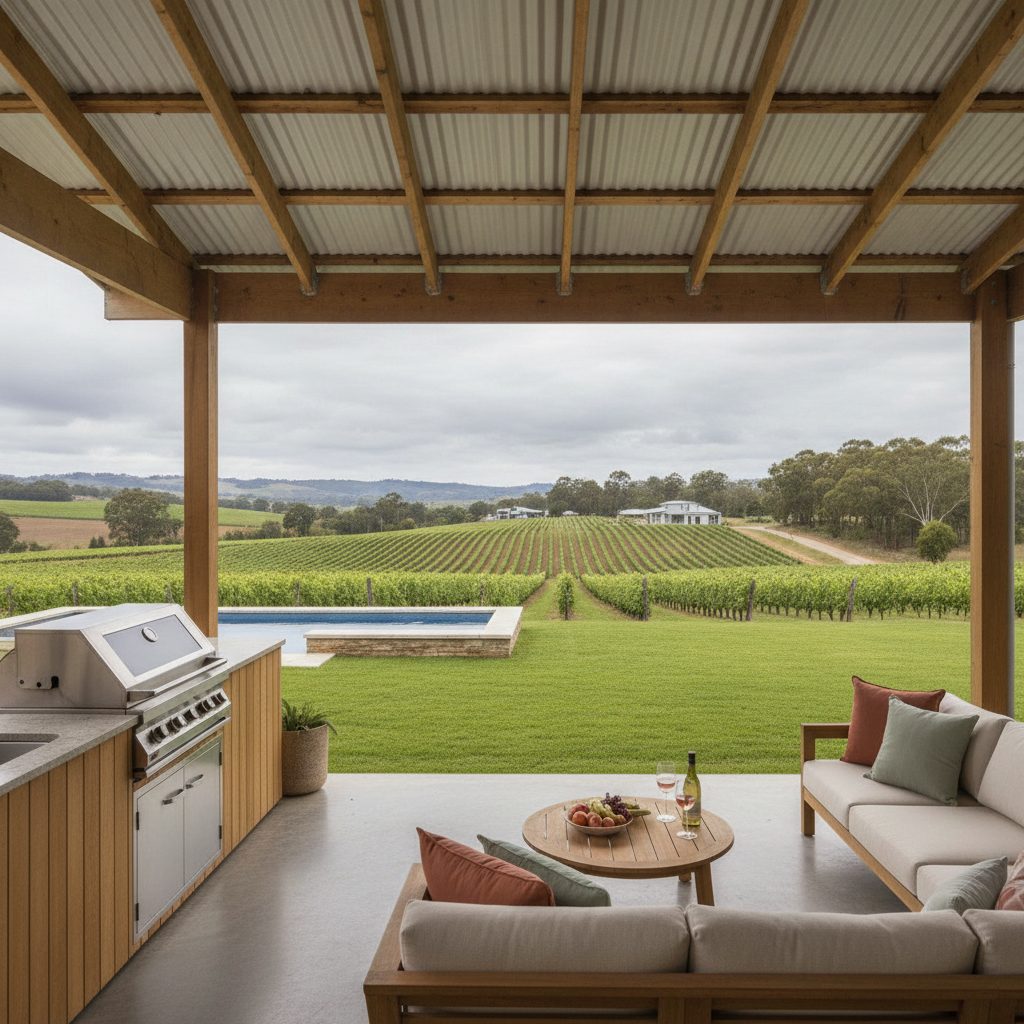
- What is your lifestyle? Do you want to walk straight out to a pool, or do you prefer the feeling of being up in the trees on a wide verandah?
The Role of Steel Framing in Your Choice
Whether you choose a single storey on a slab or an elevated design, the frame is the skeleton of your home. In Australia, steel framing has become a preferred choice for kit home builders. The precision of steel means that if you are building an elevated home, the floor joists and wall frames will be perfectly straight and true. This is particularly important when you are working on stumps, as any slight misalignment in the foundation can be amplified as you build upwards. Steel frames also offer a high strength-to-weight ratio, which is a major benefit for elevated designs where you want to minimize the load on the piers while maintaining maximum structural integrity.
Practical Tips for Owner Builders
If you are planning to manage the build yourself, here are some actionable tips:
- Get a Contour Survey: Don't guess the slope of your block. A professional survey will tell you exactly how many millimetres of fall you are dealing with. This is the first step in deciding between a slab or stumps.
- Check Council Requirements: Some local councils have height restrictions or 'character' overlays that might dictate whether you build high or low.
- Think About the Deck: In Australia, we love our decks. If you go for an elevated home, plan your verandahs or decks at the same time as the main kit. It’s much easier to integrate the structural flooring system from the start than to add it on later.
- Insulate the Floor: If you choose an elevated kit home, don't forget to include high-quality under-floor insulation. This replaces the natural thermal mass of a slab and keeps your feet warm in winter.
Conclusion
There is no right or wrong answer when it comes to choosing between a single storey slab home or an elevated design. It ultimately comes down to the unique characteristics of your Australian block and your personal lifestyle goals. A flat block often calls for the grounded, easy-access nature of a slab-on-ground home. Conversely, a sloping or coastal block often finds its perfect match in an elevated design that captures breezes and views while treading lightly on the land.
By taking the time to analyze your site and considering the long-term benefits of each style, you can ensure your kit home project is a success from the ground up. Whether you are walking onto a sun-drenched concrete patio or looking out from a high-set steel-framed balcony, the best kit home is the one that feels like it truly belongs on your land.