Forget the standard floor plan for a second
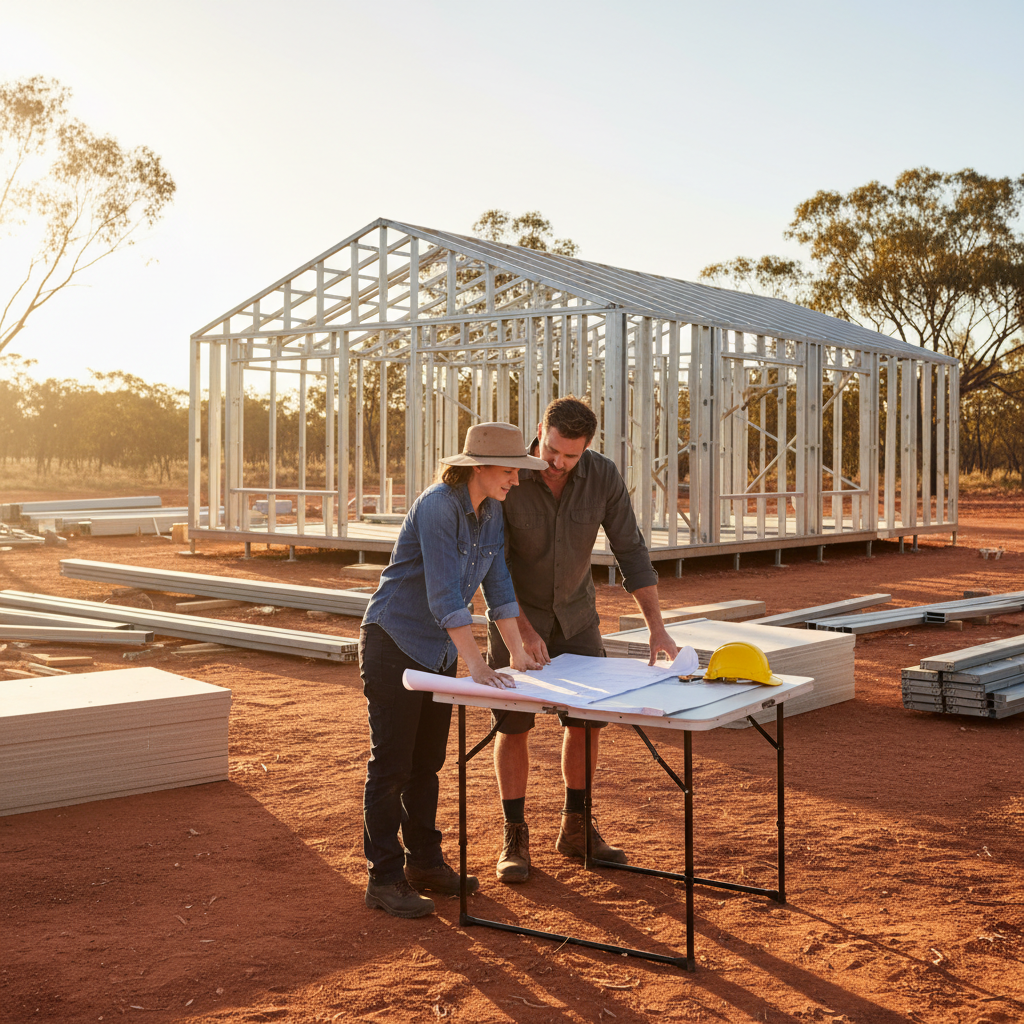
Most people sit down with their floor plans and look at the bedrooms, the big open-plan kitchen, and maybe that deck they've been dreaming about for three years. Then they move in. Three months later, the hallway is lined with vacuum cleaners, the spare room is a graveyard for hiking gear, and nobody can find the batteries. Storage usually ends up as an afterthought. It shouldn't be. When you're building a kit home, you have this unique window of opportunity to bake storage right into the bones of the house before the first sheet of plasterboard even touches the steel frames.
I've seen plenty of owner-builders regret not pushing a wall back 300mm while they had the chance. It's about looking at the 'dead' spaces. Those gaps under the stairs, the weird corners in the laundry, or the massive void in the ceiling. If you're building with a steel frame, like the TRUECORE stuff we use, you've got straight, true lines that make custom cabinetry a hell of a lot easier than trying to scribe wood to a wonky timber stud. Let's get into how to actually make this work.
The Kitchen Scullery Trap
Everyone wants a butler's pantry. It's the big trend in Aussie suburbs from Glen Waverley to Gympie. But here's the thing. If you just chuck a walk-in pantry into a small kit home design, you're often just sacrificing floor space for a room that's hard to move in. Instead of a cramped room, think about a 'wall of power'. This is a floor-to-ceiling bank of cabinetry along one internal wall. Because kit homes often use open-plan layouts to feel bigger, using one entire wall for 600mm deep storage gives you ten times the utility of a walk-in cupboard. Use pull-out drawers for your pantry items. Your back will thank you when you're sixty and not crouching down to find a tin of chickpeas at the back of a dark shelf.
Pro tip for the owner-builder: talk to your cabinet maker early. If you're using a kit like the Valley or the Homestead, you can often shift non-load-bearing internal wall positions slightly. We've had customers in the Hunter Valley widen their hallway by just 200mm to allow for a recessed linen cupboard that doesn't poke out into the walking track. It's a small change on paper that changes how the house feels every single day.
Leveraging the Steel Frame Cavity
Steel frames are skinny and strong. Use that. Standard internal studs are often 70mm or 90mm. While you can't always shove a whole cupboard inside a wall, you can create recessed shelving. Think about your bathroom. Instead of a bulky shaving cabinet that hits you in the forehead when you lean over the sink, talk to your sparky and plumber about keeping a stud bay clear. You can build a recessed niche right into the wall. It's flush. It's clean. It looks like a high-end architect designed it, but it's really just smart use of the frame.
In the lounge room, same deal. A recessed niche for the TV or a bookshelf saves you from having furniture protruding into your living space. This is especially vital if you're building on a smaller footprint to keep costs down. You want the floor to be clear. Clear floors make a room look massive. Clutter makes it feel like a shoe box.
The Mudroom. Not just for snowy climates.
In Australia, we don't have heaps of snow, but we sure have mud and dust. Whether you're on a bush block in Margaret River or a coastal patch in Shellharbour, the entry point of your home is a high-traffic disaster zone. Most kit home designs have a front door that opens straight into the lounge. Change that. Even if you just use a screen or a half-wall, create a dedicated 'drop zone'.
What goes in a drop zone?
- Hooks for the Akubra or the school bags.
- A bench with shoe storage underneath (no more piles of thongs by the door).
- Charging stations for the phones and drills.
- A small drawer for the mail and car keys.
If you're doing the fit-out yourself, you can buy flat-pack cabinetry that fits these dimensions perfectly. Since your kit comes with the insulation and cladding, the internal 'stuffing' is your playground. Don't just follow the dotted lines on the plan. Think about where you'll actually put your boots when it's raining in February.
Roof Space: The Final Frontier
Australians are terrible at using their roof space. We usually just shove some pink batts up there and forget about it. Because steel roof trusses are engineered to be incredibly strong, you can often talk to an engineer about loading up certain sections for storage. If you're building a design with a steeper pitch, you've got a goldmine of space up there. Attic ladders are cheap. You can buy them at Bunnings for a few hundred bucks. Install one in the garage or the hallway. Deck out a section of the ceiling with some yellow-tongue flooring. Now you've got a place for the Christmas tree, the camping gear, and the old suitcases that doesn't take up a single square inch of your living area.
Just a heads up for owner-builders: make sure you don't mess with the bottom chord of your trusses without checking the specs. Steel frames are a system. You can't just go cutting bits out because you want a bigger hatch. Stick to the engineering drawings or ask your kit provider for advice on attic loading.
The Laundry Multi-Tasker
Laundry rooms in kit homes can be pretty basic. Usually just a trough and a tap. But if you're smart, the laundry can be your storage powerhouse. Run your cabinets all the way to the ceiling. Use the space above the washing machine for things you only need once a year. Plus, if you're on a rural block, consider a 'wet' laundry entry. This is where the laundry has an external door. You come in from the paddock or the beach, dump the sandy clothes straight in the wash, and walk into the house clean. It keeps the mess contained. It's one of those lifestyle choices that sounds small but makes life 100% better.
Don't forget the outdoor 'stuff'
Where's the lawnmower going? The bikes? The surfboards? If you don't plan a shed or an integrated storage locker into your build, these things will end up on your beautiful new deck. When you're looking at your site works and slab, think about extending the slab under the eaves on one side. You can build a slimline storage locker against the house using the same cladding as the kit. It looks seamless. It's way better than a rusty zinc shed sitting in the middle of your yard.
Building your own home is about more than just the four walls. It's about how you'll live in it on a Tuesday morning when you're running late and can't find your keys. Take the time during the planning stage to really look at your floor plan. Walk through it in your head. Where do the groceries go? Where does the linen hide? Get your storage sorted before the frames go up and you'll have a home that actually works for you.
At the end of the day, a kit home gives you the shell. What you do with the inside defines whether it's a house or a place that actually makes your life easier. Choose the latter.