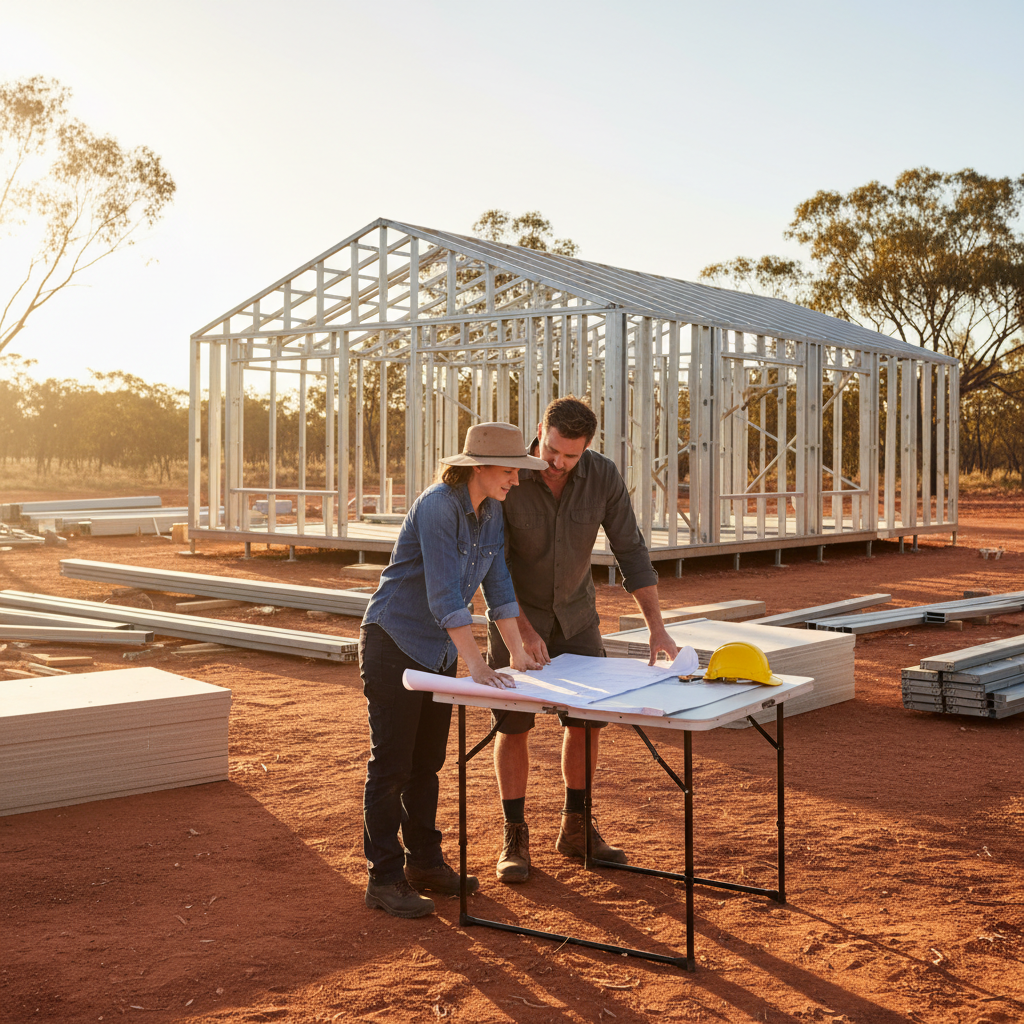
I've seen it a hundred times at site visits from Gippsland to the Sunshine Coast. An owner builder stands in the middle of a dirt patch, scratching their head because the 'perfect' design they bought online doesn't actually fit how they live. Or worse, it doesn't fit the slope of their block. Look, choosing a kit home in Australia isn't just about picking a floor plan that looks alright on a tablet screen while you sit on the couch. It's about sussing out the nuts and bolts of how that steel frame is going to handle a howling westerly wind or a week of rain during the build.
Does this design actually suit my specific BAL rating?
Down here, fire isn't a joke. If you're building in a Bushfire Attack Level (BAL) zone, your design choices are basically made for you by the regulations. You can't just slap any old window or door on a house if you're rated BAL-29 or BAL-40. Ask the supplier if their standard kit inclusions actually meet the requirements of AS 3959. Because if they don't, you'll be shelled out thousands extra later for toughened glass or specific metal shutters. We use BlueScope steel frames because they don't burn, which is a massive head start. But a steel frame doesn't solve your window problems. You need to know if the kit includes those spark-resistant mesh screens or if you're left to scout those out at Bunnings on a Saturday morning when you should be onsite fixing rafters.
Check the roof pitch too. Some councils have strict height limits, especially if you're trying to squeeze a two-storey kit onto a small suburban lot. If the pitch is too steep, you might blow your height cap. If it's too shallow, you're limited on what roofing materials you can use. It's these little technical traps that trip people up before they've even poured a slab.
Where are the load-bearing points for my slab design?
Most kit home buyers think the kit dictates the slab. It's actually the other way around. Your engineer needs to see exactly where the heavy loads are coming down through those TRUECORE steel studs. If you change a wall location in the design, you change the engineering. And that changes the concrete. It's a domino effect. Ask the kit provider if their plans are 'engineer ready'. If they're just pretty pictures without structural sticking power, your local slab mob will laugh you off the site. You want to see the spacing of the studs. Usually, we're talking 450mm or 600mm centres. This matters. If you're planning on hanging a massive 75-inch TV or a heavy stone vanity in the bathroom, you'll need extra noggins tucked inside that frame. Steel is strong as hell, but it's not magic. You can't just screw a heavy cabinet into thin air. You need to plan those internal supports while the design is still on paper, not when the plasterboard is already up and painted.
How does the kit handle thermal bridging?
Let's be real about steel. It's a conductor. If it's stinking hot in Alice Springs, that heat wants to crawl through the frame into your loungeroom. You have to ask about the thermal break. Under the National Construction Code (NCC) Volume 2, you've got specific R-value targets to hit. A good kit should come with high-quality insulation and a thermal break strip that sits between the frame and the cladding. If a supplier tells you "don't worry about it," walk away. You'll bake in summer and freeze in winter. I always tell blokes building their own place to look at the ceiling height too. A 2.4m ceiling is standard, but it feels like a cave. Going to 2.7m makes even a small kit feel like a mansion. It costs more in cladding and framing, obviously, but it's the single best upgrade you can make for resale value later on.
Can I actually get a truck into my site?
This isn't strictly a design question, but it affects the kit you choose. If you've picked a design with massive 6-metre floor joists or long roof sheets, but you're building on a tight block in the Dandenongs with a hairpin turn, you're in trouble. Talk to the provider about how the kit is packed. Does it come in manageable bundles that a few mates can move, or do you need a 20-tonne Franna crane on-site for three days? Logistics kill budgets. I've seen deliveries get stuck at the front gate because the driveway was too muddy or the overhead branches were too low. Suddenly you're paying a driver to sit there and eat his lunch while you scramble to find a smaller ute to ferry stuff back and forth. It's a nightmare. Ask for the longest component length in the kit before you commit. If it's longer than the access to your site allows, you need a different design. Simple as that.
The plumbing trap you didn't see coming
When you're looking at a floor plan, look at the wet areas. Are the kitchen, laundry, and bathrooms all close together? If they're scattered to the four corners of the house, your plumbing bill is going to be astronomical. More pipes, more digging, more headache. A smart design keeps the 'wet' walls back-to-back. It's not just about saving money on PVC pipe, it's about the time it takes the sparky and the plumber to run their gear through the steel frames. Holes are pre-punched in the studs usually, which is a godsend, but if your plumber has to zig-zag all over a 200-square-meter footprint, he's going to charge you for the extra sweat.
Who is actually responsible for the bracing?
Bracing is what stops your house from falling over when the wind picks up. In a steel frame kit, this is usually done with strap bracing or structural plywood. You need to ask if the bracing layout is included in the assembly instructions. Nothing slows down an owner builder more than getting to the end of the frame stage and realizing they don't know where the cross-bracing goes. It has to be precise. You're building a structural cage, not a garden shed. And while you're at it, ask about the fasteners. Does the kit include the specific screws and bolts for your wind rating? A house in a N3 wind zone needs vastly different tie-downs than one in a sheltered N1 spot. If those aren't in the box, that's another three trips to the hardware store you didn't account for.
Don't be afraid to be a pest during the sales process. Ask for a copy of the assembly manual before you buy. If it looks like it was translated through three different languages and drawn by a toddler, run. You want clear, Australian-standard drawings that show every connection point. You're the one who has to put this thing together, or at least manage the tradies doing it. If the documentation is rubbish, the build will be rubbish. It's your money and your future home. Make sure the kit matches the reality of your block of land, not just the dream in your head.