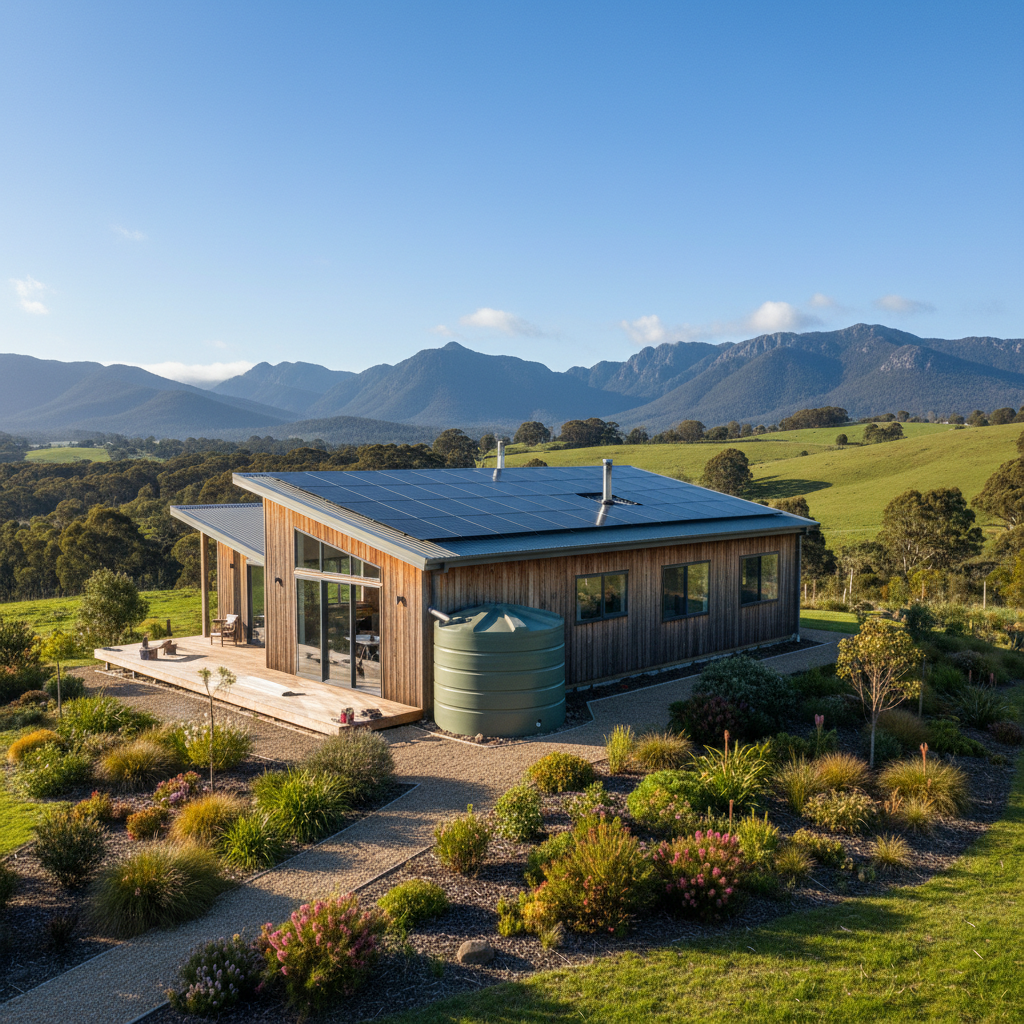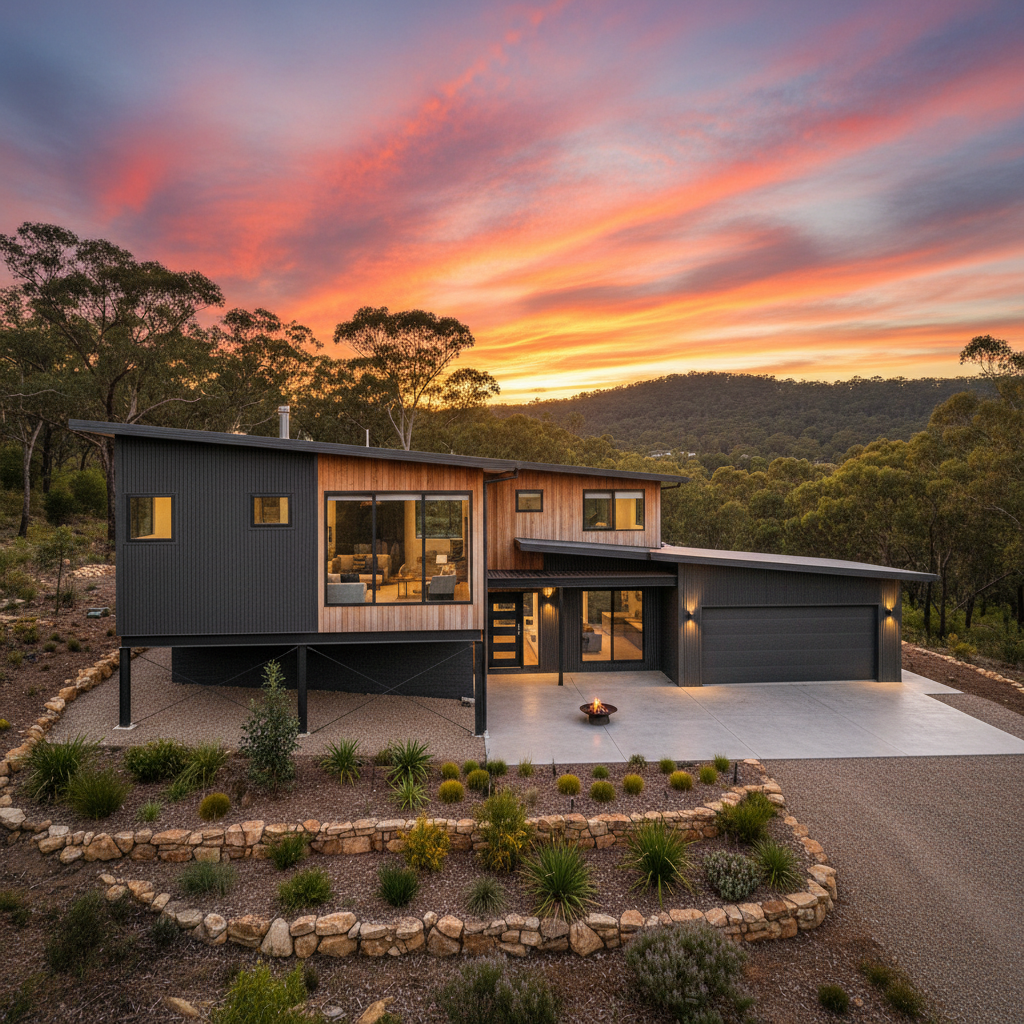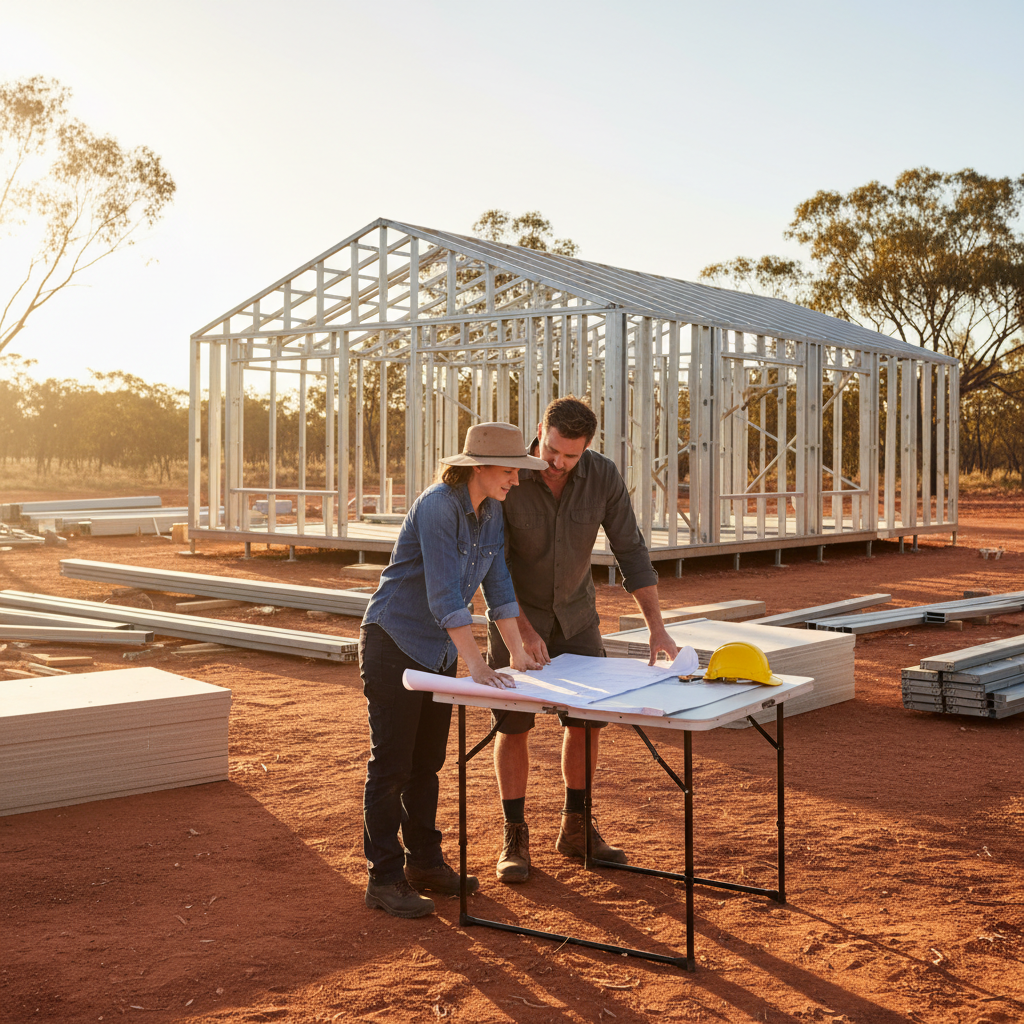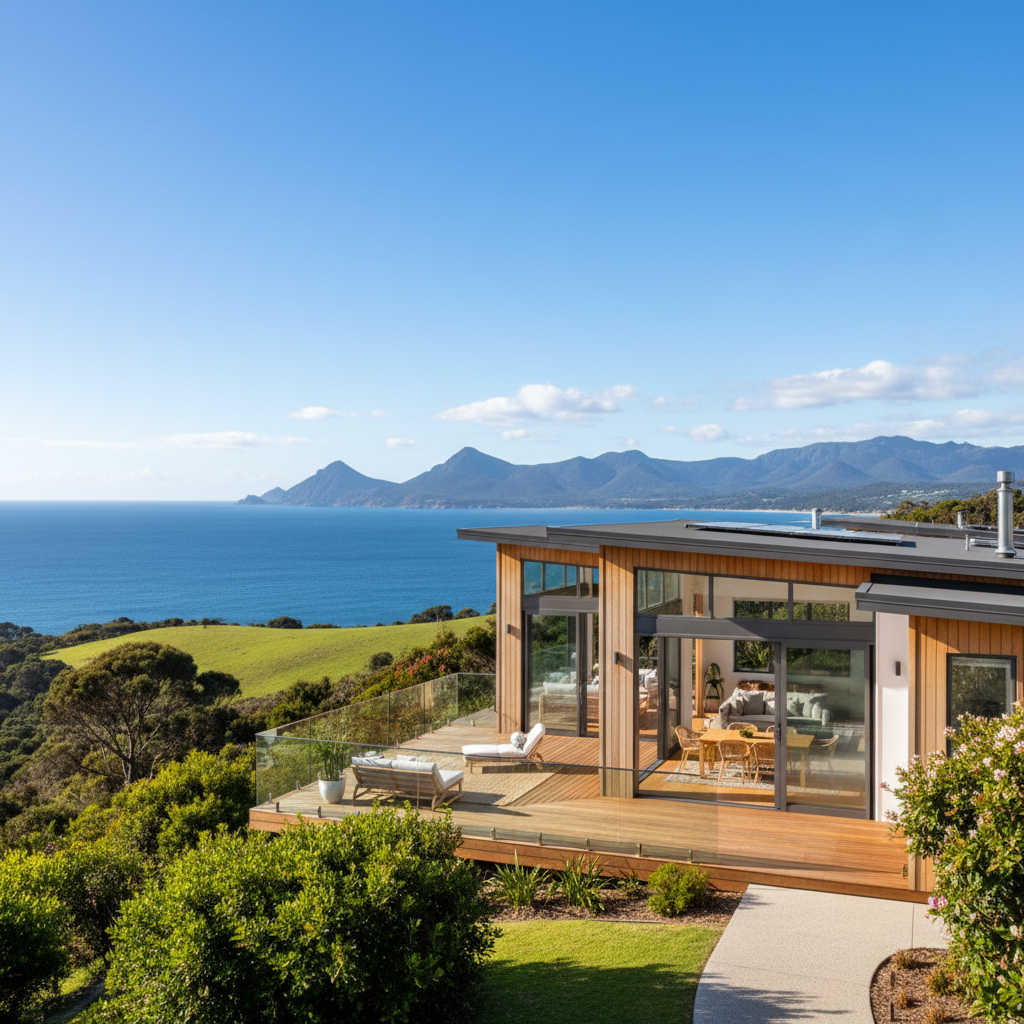
The Blueprint Reality Check
I've seen it a hundred times. A bloke walks into the shed with a crumpled set of A3 plans, looking like he's trying to solve a Rubik's Cube in the dark. He's staring at a 1:100 scale drawing of a three-bedroom kit and all he can see is where the fridge fits. Look, the fridge is important for your beer, but it's the last thing you should worry about when you're first cracking open a set of kit home plans. You need to look for the guts of the thing. The stuff that actually keeps the roof over your head when a southerly buster hits at 2am.
Reading plans is a skill. It's not something you're born with, and frankly, some architects make it harder than it needs to be with over-complicated symbols. But if you're going to be an owner-builder, you've got to get literate. Quickly. Most people skip the specifications page because it looks like a dry legal document. That is your first mistake. The specs tell you what you're actually paying for. The plans just show you where it goes.
The Difference Between the Lines
Solid lines, dashed lines, thick lines. They all mean something different. In a kit home context, those thick outer lines are your structural boundaries. Since we use BlueScope TRUECORE steel, those lines represent the precision-engineered frame that's going to be delivered on the back of a hiab. If you see a dashed line overhead, that's usually a roof overhang or a bulkhead. Don't ignore those. I knew a woman in Dubbo who didn't realise her eaves were only 300mm until the sun started baking her north-facing windows in mid-January. She thought the drawing showed 600mm. It didn't. She just didn't know how to read the scale bar correctly.
Check your floor levels too. You'll see things like FFL (Finished Floor Level) and SSL (Structural Slab Level). If you're building on a concrete slab, the difference between these two is usually the thickness of your flooring. If you're planning on thick spotted gum floorboards but your plans only allow for 10mm of tiles, your doors won't swing. It's a tiny detail that creates a massive headache later on when you're trying to shave the bottom off a perfectly good door.
Understanding the Specification Sheet
The spec sheet is the bible for your build. It's where the rubber meets the road. In our kits, we're talking about specific components like Colorbond roofing, external cladding, and those internal steel wall frames. But you've got to look closer. What's the BMT (Base Metal Thickness) of the steel? Is it 0.75mm or 1.0mm? It matters for the pull-out strength of your screws. Every millimetre counts when you're the one holding the impact driver on a windy Tuesday afternoon.
And let's talk about windows. The plans will give you codes like 1215 or 1821. That's not some secret masonry code. The first two digits are the height, the second two are the width. So a 1215 window is 1200mm high by 1500mm wide. Simple. But what the plans won't always shout at you is the U-value or the SHGC (Solar Heat Gain Coefficient). If you're in a cold spot like Cooma or a furnace like Roma, those numbers are more important than the colour of the window frames. You want high performance, not just a pretty view.
The Confusion with Other Home Types
Let's get one thing straight because there's a lot of chatter out there that muddies the water. A kit home is a specific beast. You'll hear people talking about homes that arrive on the back of a truck already bolted together, or modules that get craned into place. That's not what we do. Those are different systems with different rules. A kit home is for the person who wants to get their hands dirty. Or at least the person who wants to manage the trades and see the skeleton of the house go up piece by piece on their own dirt.
Why does this matter for your plans? Because those other types of homes often have massive structural beams that eat into your ceiling height. With a steel-framed kit, your floor plan is usually much more flexible. You can have wider spans without needing a chunky pillar in the middle of your open-plan living room. When you're looking at your plans, look for those structural posts. If you see a square with an 'X' through it in the middle of your lounge, that's a column. If you don't want it there, you need to talk about steel span capabilities early on.
Section Drawings: The Secret Weapon
If the floor plan is looking down from the clouds, a section drawing is like taking a giant saw and cutting the house in half. These are the most underrated drawings in the pack. They show you the ceiling heights, the roof pitch, and how the wall meets the floor. This is where you'll spot if there's enough room in the ceiling crawl space for that ducted aircon unit you've been eyeing off at the local trade centre. Most people forget about the 'stuff' that lives in the walls. Plumbing stacks, electrical runs, insulation batts. A section drawing tells you if you actually have the physical space to fit the lifestyle you're planning.
Pay attention to the flashing details in these drawings too. Water is the enemy of any build. The section should show how the cladding overlaps the slab or the sub-floor. If it's not clear, ask. Because when the horizontal rain comes sideways across the paddock, you'll want to know those flashings were designed to handle more than a light sprinkle.
What's Not in the Box?
This is where owner-builders usually get caught out. A kit home provider gives you the shell. The bones. The skin. But your plans will often show things that aren't actually in the crate when it arrives on site. Things like the kitchen cabinetry, the toilets, the light fittings, or the actual concrete in the slab. These are often labeled as 'NIC' (Not In Contract). It sounds obvious, but you'd be surprised how many people call us wondering where their kitchen sink is. Look at the inclusions list and cross-reference it with the Legend on your drawings. If there's a symbol on the plan that isn't on the inclusion list, you're buying it at Bunnings later.
A Few Tips for the Road
- Check your BAL (Bushfire Attack Level) rating on the specs. If you're rated BAL-29 or BAL-40, your window and door specs change completely. You'll need toughened glass and specific seals.
- Look for the N-rating. That's your wind classification. An N2 rating is different from an N4 or a C3 (cyclonic). Don't try to build an N2 shed in an N4 wind zone unless you want to see your roof in the next postcode.
- Measure your furniture. Seriously. Draw your dining table to scale on a piece of paper and see if you can actually walk around it in the space provided on the plan.
- Don't assume the 'AS' (Australian Standard) references are just fluff. AS 3660.1 for termite management is a big one. Even with steel frames, you've still got timber skirting and furniture. You need a plan for the bugs.
Building your own place is a massive go. It's rewarding, it's exhausting, and it'll probably give you a few grey hairs. But if you take the time to really suss out the plans before the first truck arrives, you're halfway there. Don't just look at the pictures. Read the fine print. Ask the 'stupid' questions. Because once that steel is bolted to the slab, changing your mind becomes a very expensive hobby.