The Reality of Reading Kit Plans
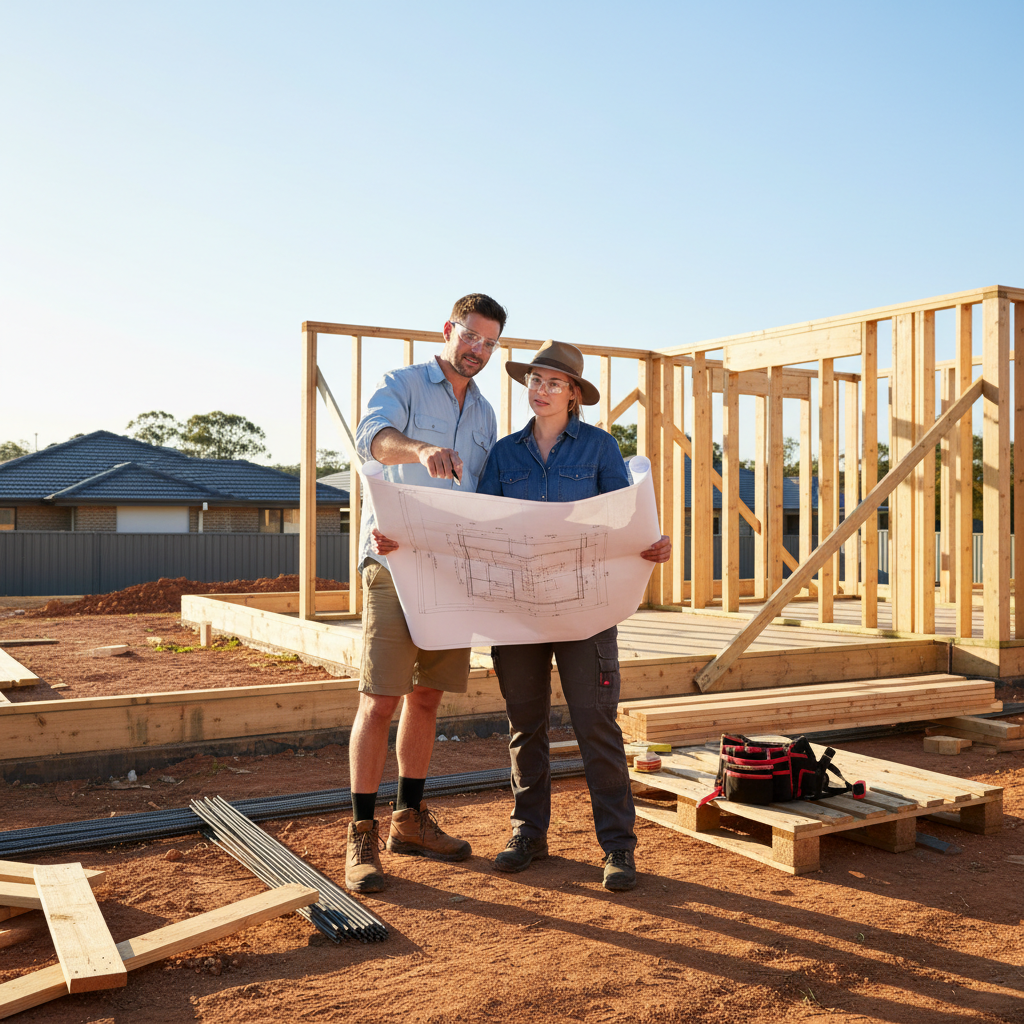
Most people open their first set of kit plans and look straight for the kitchen island. They want to see where the fridge goes or how far the walk from the master bed to the ensuite is. That's fine for dreaming, but if you're actually going to build this thing, you need to look at the numbers and the fine print that everyone else ignores. I spent fifteen years on sites across Queensland and New South Wales, and I've seen blokes get three weeks into a frame stage only to realize they didn't understand the difference between a floor plan and a structural layout. It's a mess you don't want to clean up. Especially when you're the owner-builder and the buck stops with you.
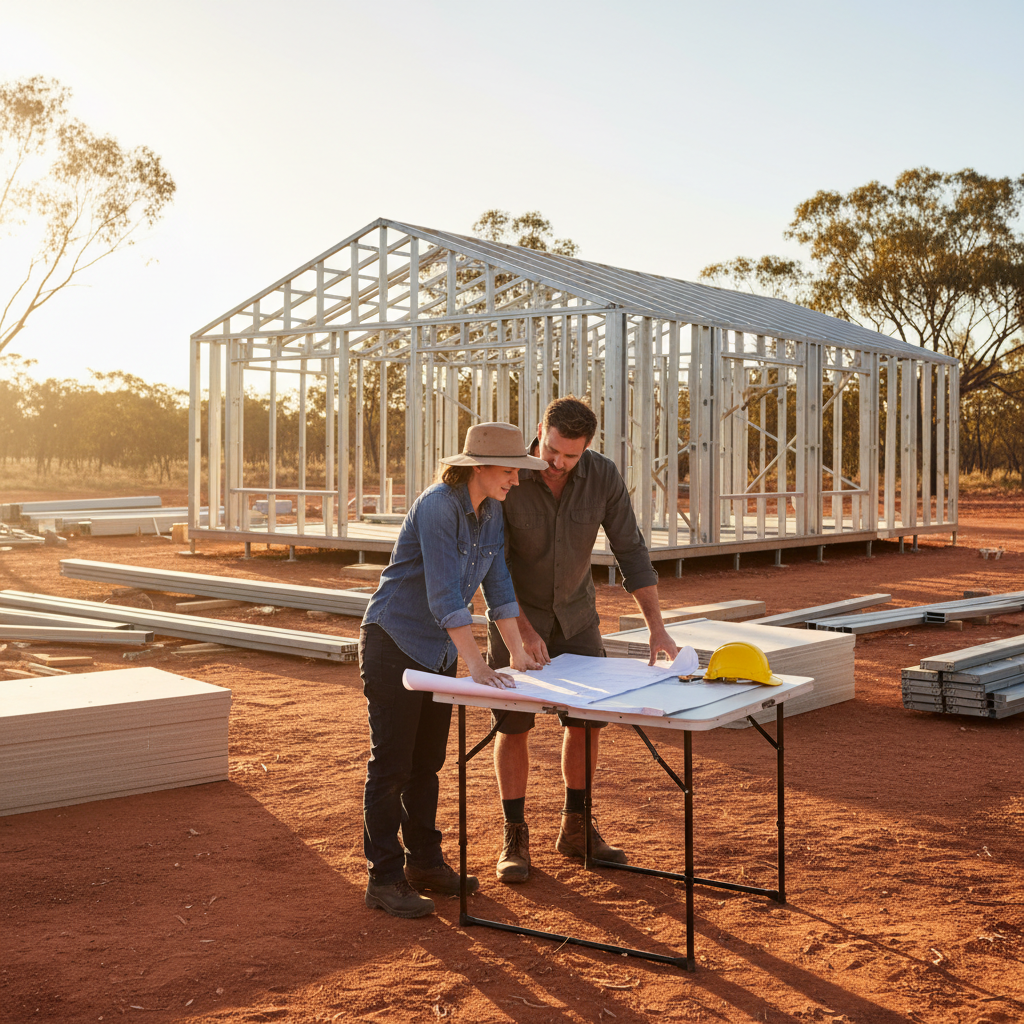
Kit home plans are your bible. If it's not on the plan, it doesn't exist. You'll get architectural drawings, which show the look and feel, but the heavy lifting is in the engineering and the specifications. These documents tell you what thickness your BlueScope TRUECORE steel is, where the bracing goes, and how many boxes of screws you should be seeing on your delivery pallet. If you can't read these properly, you're flying blind.
The Floor Plan is Just the Beginning
The standard floor plan (1:100 scale usually) is your bird's eye view. It's the 'what' of the project. But you need to hunt for the 'how'. Look for the section markers. These are those little circles with a line through them and a letter, like A-A or B-B. They tell you that if you sliced the house in half like a cake, this is what the inside looks like. This is where you see your ceiling heights. Nobody wants to realize they've got 2.4m ceilings when they were expecting 2.7m raked ones. Check the floor plan against the window schedule too. I've seen kits turn up where the owner thought they were getting sliding doors, but they'd missed the 'FX' code on the plan which meant a fixed glass panel. Always cross-reference.
Understanding Steel Frame Tech Specs
Since we're talking about steel frames, you've got to get comfortable with gauge and grade. Engineering plans will specify things like G550 steel. That's a high-strength grade. Don't just gloss over it. When you're looking at your wall layouts, you'll see codes for noggins and studs. In a steel kit, these are precision engineered. Unlike timber where you can just whittle something down if it doesn't fit, steel is cut to the millimeter in the factory. If your plan says a stud is at 450mm centers, that's where it has to stay. You can't just move it because you decided later you wanted a bigger niche in the shower. Well, you can, but you'll be calling the engineer and paying for a redesign. Not a cheap afternoon.
Steel frames are light. They're easy on the back. But they require specific fasteners. Your specifications list should show exactly what screws go where. There's a big difference between a 10-16x16 wafer head screw and a hex head with a neo washer. Use the wrong one and you're compromising the structural integrity or, at the very least, making it impossible for the plasterer to get a flat finish later. I always tell owner-builders to keep a printed copy of the fixing schedule in a plastic sleeve pinned to a temporary fence. It saves heaps of arguments with contractors.
The Roof and Drainage Specs
Australians love a big veranda. But verandas mean complex roof lines. Your roof plan will show the pitch, which is the angle. If you're in a high wind area or a place that gets hammered by summer storms in the Tropics, those specifications change. You'll see references to 'C' or 'N' wind ratings like N3 or C2. These aren't just suggestions. They dictate how many batten screws you need and the spacing of your tie-downs. If you're building in a BAL (Bushfire Attack Level) zone, your specs will also mention ember guards and specific flashing requirements. This is where the steel roofing and cladding really come into their own because they don't catch fire, but you still have to install them according to the AS 3959 standards mentioned in your kit docs.
Don't ignore the plumbing rough-in specs either. While the kit provider doesn't do the plumbing, the plans show where the stubs come through the slab. Because once that concrete is poured, moving a toilet waste pipe 100mm to the left because you read the plan wrong is a nightmare involving a jackhammer and a lot of swearing.
Nitty Gritty: The Inclusions List
Every kit home comes with a list of what's in the box. This is often separate from the drawings but just as vital. It's essentially your shopping list. Here’s how you read it without getting overwhelmed:
- Check the cladding profile. Is it horizontal or vertical? This changes your wall batten layout.
- Look at the insulation R-ratings. In Hobart, you'll want a higher R-value than in Noosa. If the kit includes R2.0 batts but your local council requires R2.5 for the energy certificate, you need to catch that early.
- Confirm the window ratings. Are they double glazed? Do they have the right U-value?
- Check the gutters and downpipes. Square-line or quad? It matters for the look of the house.
I reckon one of the biggest mistakes people make is assuming 'standard' means 'what I want'. Standard is what's on the piece of paper. If you want black window frames instead of silver, make sure it’s in the specs before you sign off. Reordering custom windows because you didn't check the color code is a mistake you only make once, usually because it costs you five grand to fix.
The Importance of the Site Plan
Your site plan shows where the house sits on your block. It’ll include setbacks from boundaries. Council loves setbacks. If your plan says 6.0m from the front boundary and you build it at 5.8m, you might find yourself in a nasty legal spot. The site plan also shows the 'Finished Floor Level' (FFL). This is how high your slab or floor is above sea level or a specific datum point. If your block has a slope, this is crucial. You might think the ground is flat, but a 500mm fall across the building envelope is common and will change how you approach your footings or slab edge thickening.
Final Advice for the Owner-Builder
Take your plans to a local printer and get them printed in A3 or A1. Don't try to build a house off an iPad screen. You need to be able to scribble on them. Highlighting your electrical points in yellow or your plumbing in blue makes life easier for your trades. And when you're talking to your sparky or your plumber, show them the steel frame layouts. They need to know they're working with steel so they can bring the right bits, like grommets for the cables so they don't chafe on the metal edges and specialty self-drilling screws.
Building a kit home is a massive achievement. It’s hard work, but it’s rewarding as long as you treat the plans like the technical manuals they are, not just pretty pictures. Spend a wet Saturday morning sitting at the kitchen table with a coffee and go through every page until you can visualize every screw and stud. It beats standing on a muddy site on a Monday morning wondering why the roof trusses don't seem to line up with the load-bearing walls. Trust me, the time spent reading now saves weeks of stress later.