The Myth of the 'Traditional' Build
I have spent years on sites from Gippsland up to the Sunshine Coast, and I have seen timber frames arrive on the back of a truck looking like a box of pretzels. It is the reality of the Australian climate. You get a hot, dry week followed by two days of torrential rain, and that pine starts twisting before you even get the roof on. People talk about timber being the standard, but when you are the one trying to line up a door frame in a house that has settled two millimetres lopsided because the studs shrunk, you start questioning that tradition pretty fast.
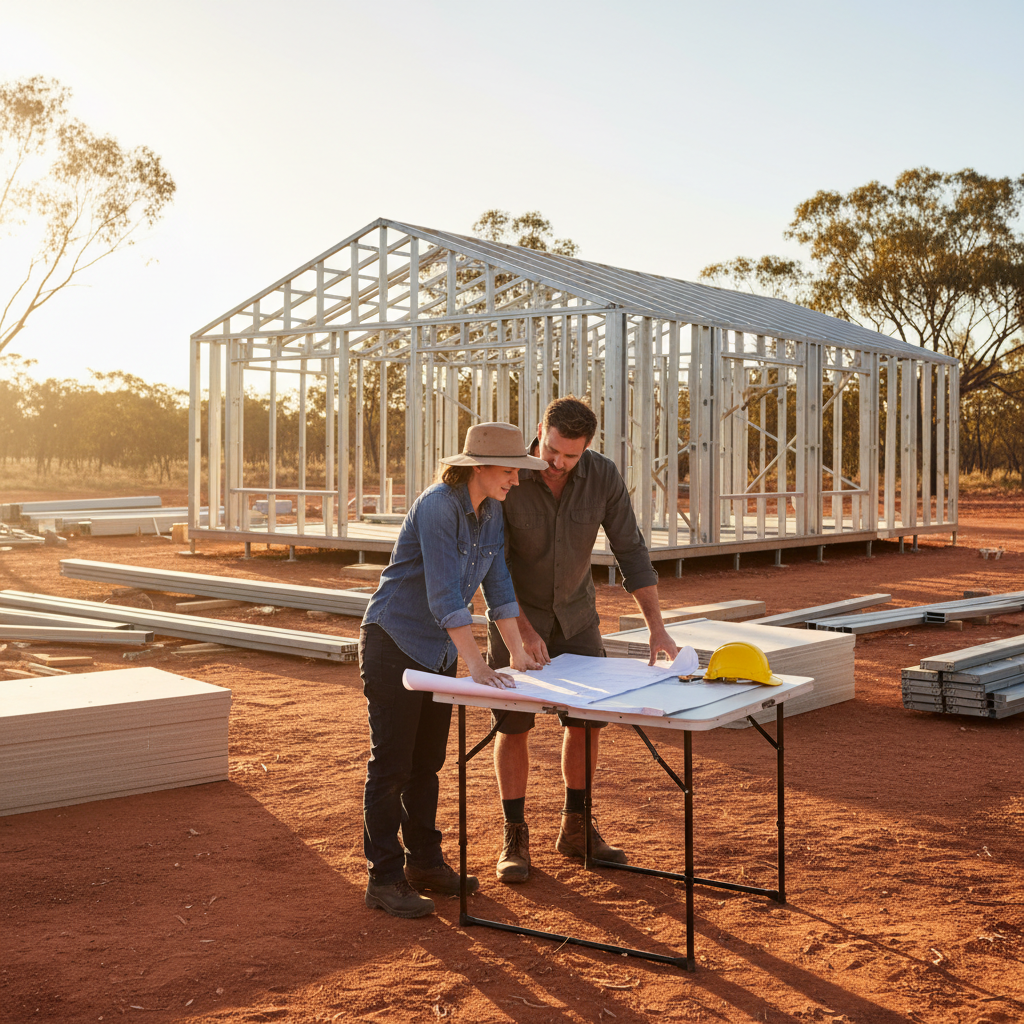
Switching to BlueScope TRUECORE steel frames changed how I look at a project. It is about precision. Every piece of steel comes out of the factory exactly to the millimetre. It does not matter if its forty degrees in the shade or a freezing morning in the Blue Mountains. Steel does not soak up moisture. It stays dead straight. For an owner builder, this is a massive win because it means your plastering goes on smoother and your kitchen cabinets actually sit flush against the wall without you having to shim every second junction.
Termites Do Not Eat Steel
Let's be real about the biggest threat to Aussie homes. Termites. I have walked into sub-floors in rural New South Wales where the structural timber looked fine from the outside but crumbled like a dry biscuit when I tapped it with a screwdriver. It is a nightmare that keeps people awake at night. If you are building with timber, you are essentially providing a buffet for the local subterranean termite colony. You can treat the soil and install physical barriers, but those systems require maintenance every single year. Life gets busy. People forget. Then the deck start sagging.
Building with a TRUECORE steel frame removes that anxiety from the equation. Period. Termites cannot chew through it. They can't nest in it. Even if they manage to find a way into your house through a crack in the slab or a plumbing penetration, they are not going to compromise the structural integrity of your home. It's one less massive worry on your plate. Plus, it meets the requirements for termite resistance under the National Construction Code without needing those toxic chemical sprays every few years. That's a better outcome for your family and the dirt under your feet.
Fire Safety and the BAL Rating Reality
If you are building anywhere near the scrub, you are going to be dealing with Bushfire Attack Level (BAL) ratings. I have seen folks get hit with massive extra costs because their design did not meet the fire safety standards for their specific block. Using steel is a smart move here. Steel is non-combustible. It is that simple. While it won't make a house fireproof on its own, it certainly won't add fuel to the flames like a dry timber frame will during a bushfire event. It offers a level of resilience that timber just cannot match, especially when you are looking at the higher BAL-29 or BAL-40 zones where every material choice counts for your council approval.
Why Precision Matters for the DIY Builder
Most of the people I talk to who are taking on a kit home project are doing it to save money or to get a better quality finish than a volume builder offers. But if you're not a pro carpenter, working with timber is tough. You need a drop saw, a nail gun, and the experience to know which way a board is going to bow. Steel frames from BlueScope come pre-punched with holes for your electrical and plumbing. It is like a giant Mechano set. You're not standing there with a drill bit trying to figure out where to run the wires through a stud. It is all laid out for you.
I remember a bloke building a kit home out near Wagga Wagga. He had never swung a hammer professionally in his life. He told me the best part was the weight. Steel has a much higher strength-to-weight ratio than timber. You can lift a whole wall section with a couple of mates without needing a massive crane for every little move. It makes the site safer and faster. And because the frames are bolted or screwed together, the connections are incredibly strong. They don't pull apart as the house settles into the landscape over the first few years.
The Environmental Edge
People often think timber is the greener choice because trees grow back. But look at the waste on a typical timber site. Offcuts everywhere. Over-ordering because you know 10 percent of the timber will be too warped to use. Steel is different. Our kits are designed on a computer and cut to length in the factory. There is almost zero waste on site. And when you're done with a steel frame, even fifty years from now, that steel is 100 percent recyclable. It stays in the loop. BlueScope is a local Aussie company too, so you aren't shipping cheap materials from halfway across the world. You are supporting local jobs and getting a product designed for our specific sun and salt conditions.
Practical Tips for Your Steel Frame Project
If you are jumping into a steel frame build, keep these three things in mind:
- Get the right tools. You will need a good quality impact driver and specific hex-head screws for steel. Do not try to use your old timber screws; you will just strip the heads and end up swearing at the wall.
- Think about your noggins. If you are planning on hanging a heavy 80-inch TV or a massive set of floating shelves in the laundry, tell your kit provider early. We can add extra steel noggins in those spots. You can't just screw into the thin flange of a steel stud anywhere and expect it to hold a 50kg load without some backing.
- Insulation is your best friend. Steel can conduct heat, so you want to make sure you use a high-quality thermal break between the frame and your external cladding. It's a simple strip of high-density foam or a similar material that stops the 'thermal bridge'. Do this right, and your home will be cooler in summer and easier to heat in winter than a timber-framed house.
The Final Word on the Job Site
Building your own home is a massive undertaking. It's stressful, it's tiring, and it usually takes longer than you think it will. Why make it harder by using materials that move, rot, or get eaten by bugs? I reckon if you're putting your own sweat into a project, you want it to last. Steel gives you that peace of mind. It stays straight. It stays strong. And when the wind is howling across the plains on a Tuesday night in July, you will be glad you built with something that doesn't creak and groan like an old wooden ship. It’s about building something you’re proud to hand over to the next generation.