The framing reality check
I’ve spent fifteen years watching people pull their hair out over building projects. Usually, the stress starts the second the first truck rolls onto the site. If you're building a kit home in Australia, you're not just fighting the weather, you're fighting the bugs, the council, and the clock. Most people sit there and wonder if they should stick with traditional timber or go with steel. I’ll tell you right now, if you’re building anywhere near the bush or in a termite-prone area, wood is a massive gamble. We use BlueScope TRUECORE steel for a reason. It isn't just about the brand name. It's about the fact that it doesn't warp when the humidity in Queensland hits ninety percent and it won't get chewed to pieces by subterranean termites while you're sleeping.
Termites don't eat steel
Termites are a nightmare. Ask anyone who has had to fork out twelve grand for a chemical barrier or, worse, someone who discovered their wall studs had been turned into sawdust. In Australia, it isn't a matter of if termites will find your house, it's a matter of when. Timber frames require constant vigilance. You’re looking at annual inspections and worrying about every little breach in the slab edge. Steel doesn't have that problem. Because it's inorganic, pests aren't interested. You still need your termite management systems as per AS 3660.1, but the skeleton of your house is safe. This peace of mind is huge for owner-builders who are already managing twenty different things at once. Plus, using steel means you aren't pumping as many harsh chemicals into the soil around your footings just to keep the bugs at bay.
Straight lines and no squeaks
Ever walked through an old timber house and heard that annoying groan from the floorboards? Or tried to hang a door in a frame that’s twisted because the wood dried out unevenly? Timber is a living product. It breathes, it moves, and it shrinks. In a kit home, you want precision. TRUECORE steel frames are fabricated to the millimetre. When that frame arrives on your block in Dubbo or the Mornington Peninsula, it is straight. It stays straight. This makes the rest of your job heaps easier. When you go to screw in your plasterboard, you aren't searching for studs that have bowed out of alignment. Your cornices won't crack three months after you move in because the house settled. It’s about more than just strength. It’s about the finish of the house. A straight frame means a professional-looking home, even if it’s your first time on a drill.
The bushfire factor
If you're building in a Bushfire Attack Level (BAL) rated zone, steel is your best mate. We see it every summer. The NCC Volume 2 has strict requirements for building in fire-prone areas, and while no house is 100% fireproof, steel frames are non-combustible. They don't add fuel to the fire. If an ember gets under your eaves, you don't want your wall studs catching alight. Using steel frames, metal roofing, and appropriate cladding gives you a massive head start on meeting those BAL-29 or BAL-40 requirements. It makes the council approval process a lot less of a headache when you can show you're using materials that won't contribute to the fire load. It’s just common sense in the Aussie landscape.
Handling the gear on site
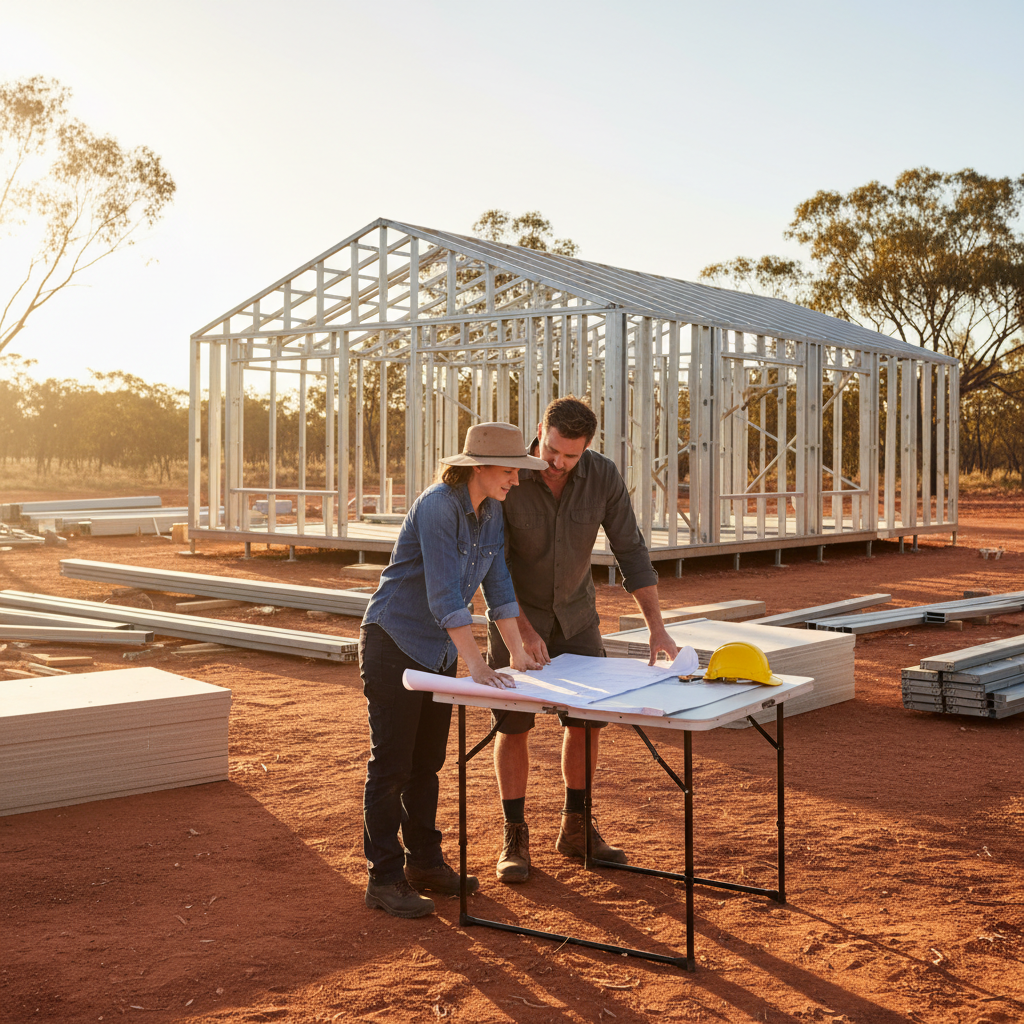
One thing people forget is the weight. A steel frame is significantly lighter than green-sawn timber. If you're out there with a couple of mates trying to stand up wall sections on a Saturday morning, you'll appreciate the difference. You don't need a massive crew to handle the components. Because the kits come out as a set of pre-assembled panels or easy-to-manage sections, the physical toll on your body is lower. And don't worry about the strength. The strength-to-weight ratio of BlueScope steel is incredible. It’s why we can have those big, open-plan living areas with wide spans that timber can't manage without some massive, expensive LVL beams. You get more floor space and fewer internal load-bearing walls cluttering up the place.
Working with the trades
So, you’ve got your frame up. Now you’ve got to get the sparky and the plumber in. This is where some old-school blokes might complain, but things have changed. Modern steel frames have pre-punched holes for wiring and pipework. The plumber doesn't have to spend half a day drilling through thick timber studs, which saves you money on their hourly rate. You just need to make sure you use the right plastic grommets so the wires don't rub on the steel edges. It's a different way of working, sure, but it's cleaner and faster. And since the frames are earthed, it can actually be a safer environment during construction if everything is handled properly by a licensed tradie.
The BlueScope difference
I get asked why we bother with TRUECORE specifically. Why not some cheap imported stuff? Because I’ve seen what happens to low-grade steel when it sits on a salty coastal site for two weeks before the roof goes on. TRUECORE has a high-quality alloy coating that protects it from corrosion. It’s designed for our sun and our salt air. It also comes with a backing from a company that actually exists in Australia. If something goes wrong, you aren't calling an office in another time zone. You're getting a product that has been tested in our backyard. It's also worth noting that steel is 100% recyclable. When you’re done with the house in eighty years, that steel can be melted down and turned into something else. No trees needed to be felled for your studs, and there’s zero waste on site because everything is cut to size in the factory. No giant skip bins full of timber off-cuts that you’ve paid for and then have to pay to dump.
A few things to watch out for
I won't lie to you and say it's all sunshine. You have to be careful with your insulation. Steel conducts heat faster than wood, so you need a proper thermal break between your frame and your external cladding. This isn't optional, it's part of the building code. We include the right foil and batts to handle this, but you’ve got to install it right. If you miss the thermal break, your house will be a furnace in summer and a fridge in winter. Also, keep your magnets handy. Hanging pictures on steel frames is easy once you know how, but you can't just hammer a nail in anywhere you like. You’ll want a good stud finder that can detect metal and some self-tapping screws. It's just a different set of tools for a better result.
Building your own place is a massive undertaking. It’s probably the biggest thing you’ll ever do. Choosing the frame is the foundation of the whole project, literally and figuratively. If you want a house that stays straight, resists the local pests, and stands up to the harsh conditions we deal with in Australia, steel is the way to go. It takes the guesswork out of the build and gives you a much better chance of finishing on time without a wonky roofline. Get the frame right, and the rest of the project will follow.