The Reality of Building in Australia
I’ve spent fifteen years on sites and in factories, and I’ve seen what happens to timber frames after a wet summer followed by a 40-degree heatwave. It isn't pretty. You see the walls start to creak, the plasterboard joints pop, and suddenly your brand-new home looks like a funhouse mirror. That is why I stopped messying around with wood years ago. In this country, you need something that doesn’t move. You need BlueScope TRUECORE steel. It is the backbone of a proper kit home, and frankly, if you are an owner-builder looking to do this right the first time, you shouldn't be looking at anything else.
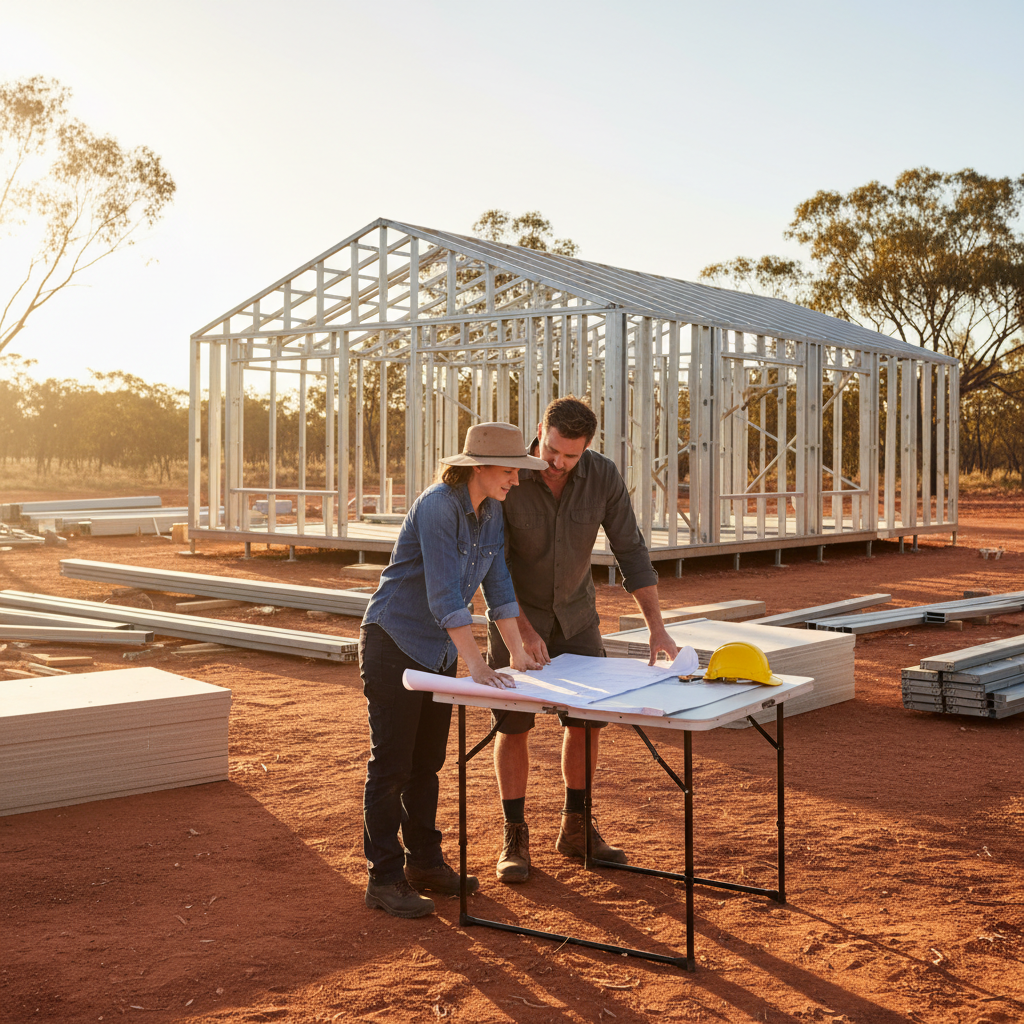
Building your own place is a massive undertaking. You're out there on the weekend, probably with a lukewarm coffee in one hand and a level in the other, trying to make sense of a floor plan while the wind kicks up dust. If your frames are straight as an arrow, the rest of the job is a breeze. But if you’re fighting warped timber studs that look like boomerangs, you’re in for a long, miserable slog. Steel arrives to site dead straight and stays that way. Because it’s manufactured to millimetre precision, your architraves fit, your doors swing true, and your windows don't bind up when the house settles. It’s common sense, really.
Termites Don't Eat Steel
Let's talk about the elephant in the room. Or rather, the silent little pests in the ground. Termites. I have seen them chew through a brand-new treated pine frame in North Queensland faster than a bunch of tradies through a box of donuts on a Friday. It’s heartbreaking. You spend your life savings on a home only to find the structural integrity is being turned into sawdust behind your plasterboard.
When you use a steel frame kit, you’ve got built-in peace of mind. It’s 100% termite proof. Not 'termite resistant' like some chemical-soaked wood, but actually proof. They can’t eat it. You still need your physical barriers and regular inspections to stop them from getting into your skirting boards or kitchen cabinets, but the actual skeleton of your house is safe. That is one less thing to worry about at night when you hear something scratching in the walls. Most of the time it's just a possum, but with steel, you know for sure it isn't your house being eaten out from under you.
The Fire Problem
If you’re building anywhere near the bush, or even on a suburban block with a high BAL rating, steel is your best mate. TRUECORE steel is non-combustible. It won't ignite and it won't add fuel to a fire. If an ember gets under your eaves and hits a steel truss, nothing happens. It sits there. If it hits an old dry timber truss? You’re in trouble. Australia is getting hotter and drier, and the building codes are getting stricter for a reason. Using steel frames makes meeting those BAL-29 or BAL-40 requirements significantly easier. Plus, you won't have the structural failure that can happen when timber frames char and lose their load-bearing capacity during a fire event.
Precision Engineering for the DIY Builder
I always tell our customers that a kit home is only as good as the frame it’s built on. Because we use BlueScope steel, every piece is punched, notched, and labeled. It’s like a giant Meccano set for grown-ups. If you can read a map and hold a drill, you can put these together. The holes for your electrical wiring and plumbing are already there. You don’t have to spend three days with a hole saw getting covered in wood shavings.
And let’s be real about the weight. A steel truss weighs a fraction of a seasoned hardwood beam. If you’re building this yourself with a couple of mates, your back will thank you. You aren't straining and grunting to get a wall section upright. You can flick it up, screw it off, and move to the next one. It’s efficient. It’s fast. And because it doesn't soak up water, you don't have to panic if a storm rolls in before the roof is on. Timber sits there, swells up, and then shrinks when it dries, causing all sorts of headaches. Steel doesn't care about the rain.
Structural Integrity and the NCC
We build to the National Construction Code (NCC) standards, specifically AS 4100 or AS/NZS 4600 for cold-formed steel. This isn't some flimsy stuff we’ve whipped up in a shed. This is engineered to withstand Aussie wind loads, from the coastal gusts of the Bass Strait to the cyclonic regions up north. Real expertise means knowing that steel has a much higher strength-to-weight ratio than timber. This allows for wider spans and open-plan designs that people actually want today. You want a big 6-metre opening for those stacker doors leading onto the deck? Steel makes that easy without needing a massive, expensive glulam beam that weighs as much as a small car.
The Myth of the 'Cold' House
I hear it all the time. People reckon steel houses are colder or noisier. That’s absolute rubbish. In 2024, with the thermal break requirements in the NCC and the quality of modern bulk insulation, a steel-framed kit home is incredibly efficient. We include high-quality insulation in our kits for a reason. If you install your thermal breaks properly on the studs, you don't get that heat transfer. As for the 'ticking' noise people talk about? That’s usually down to poor installation. If the frame is bolted down correctly and the roof is laid with the right fasteners, it’s as quiet as any other house. In fact, because steel doesn't 'creep' or warp as it seasons, you get fewer of those random bumps in the night that timber houses make as they settle over ten years.
Steel is also sustainable. It’s 100% recyclable. When you’re at the end of the build, you don't have a massive pile of offcuts to send to landfill like you do with a timber build. Most of our components are cut to length in the factory. Very little waste, very little mess. It stays clean. I hate a messy site. It’s a trip hazard and it looks amateur. A steel site is a clean site.
Practical Tips for Your Steel Frame Build
- Invest in a good quality impact driver. You'll be driving a lot of Tek screws, and a cheap drill will burn out before you finish the first bedroom.
- Always use a string line. Just because the steel is straight doesn't mean your slab is. Check your levels early and often.
- Don't forget the noggins. If you know you're hanging a massive 85-inch telly or heavy floating vanities, tell us or add extra steel noggins during the frame stage. It’s much harder once the plaster is up.
- Watch the edges. Cut steel can be sharp. Wear your gloves and keep a file handy for any burrs.
- Keep your frames off the ground. Even though it's galvanized TRUECORE steel, you don't want it sitting in a mud puddle for six weeks while you wait for the plumber.
Choosing your building material is the most important decision you'll make after choosing your block of land. Timber is fine for some, but if you want a house that stays straight, ignores termites, and stands up to the Australian sun without flinching, steel is the go. It makes the owner-builder process so much less stressful. You aren't a carpenter? Doesn't matter. The engineering is already done. The precision is built in. You just have to put the pieces together. It’s a better way to build, and once you’ve done a steel kit, you’ll never go back to timber.