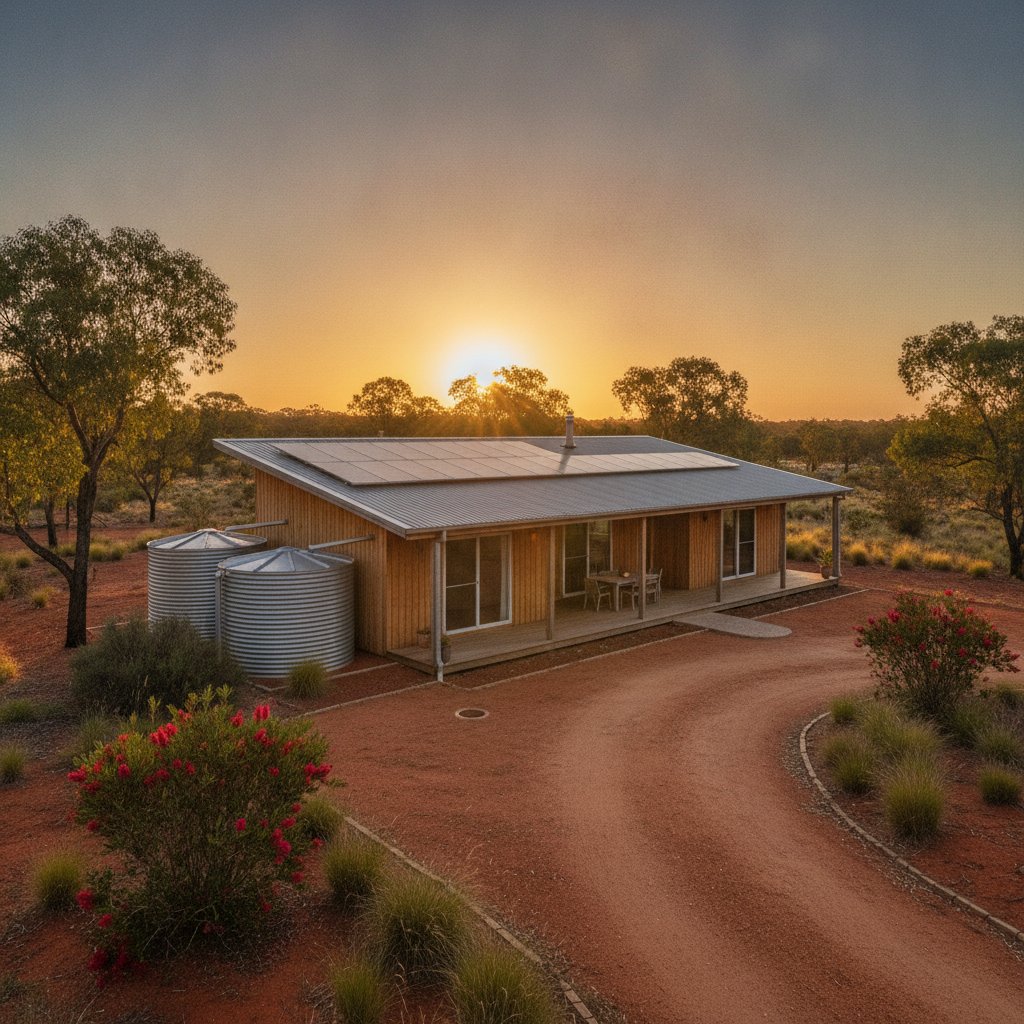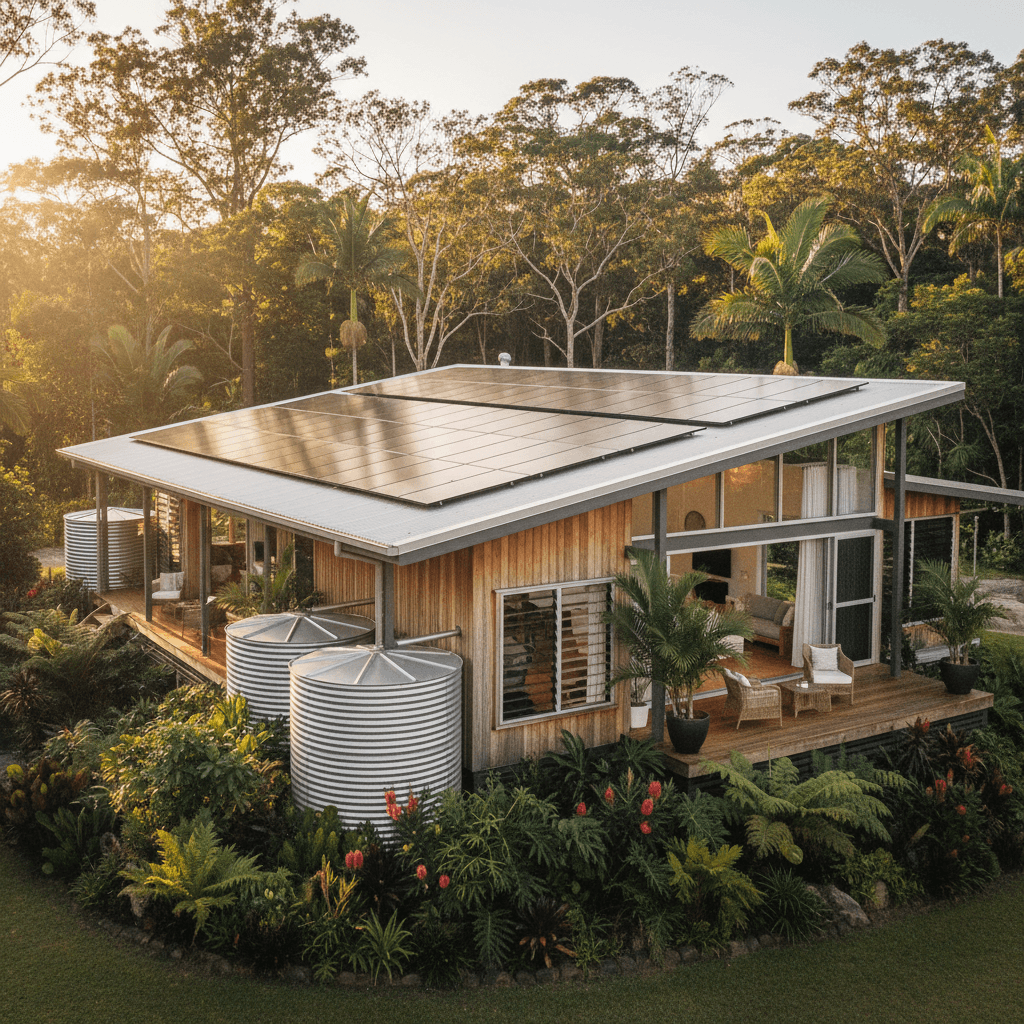
I spent twenty minutes yesterday standing in a customer's backyard in Gympie while they showed me exactly where they wanted their floor-to-ceiling windows. It was mid-afternoon, about 31 degrees, and they were pointing straight west. I had to tell them straight: if you put four meters of glass there without a massive overhang or some serious tinting, you'll be able to bake a loaf of bread on your coffee table by February. Building a kit home gives you heaps of freedom, but if you muck up the orientation and the airflow, you're stuck with a house that's miserable to live in six months of the year.
The North-Facing Lie (And Why You Need It Anyway)
Everyone talks about north-facing living areas like it's a magic spell. It isn't magic, it's just physics. In the Southern Hemisphere, the sun spends its time hanging out to our north. In winter, it sits lower in the sky. In summer, it's way up high. If you get your kit home oriented so your main living areas look north, you're winning. You get that nice, deep winter sun creeping across the floorboards in July, which saves you a fortune on heating. But come January, the high sun hits your eaves instead of your glass. It's a simple trick, but you'd be surprised how many people just plonk their house down parallel to the front fence because it looks 'right' from the street. Forget the street. Look at the sun.
So, what if your block is weird? Maybe your best views are to the south or you've got a neighbor's ugly shed blocking your northern light. This is where you have to get smart with window placement. High-level windows, or clerestory windows, are a godsend here. You can pop them up high on a wall to grab that northern light while keeping your privacy. Plus, because hot air rises, being able to crack a window near the ceiling lets the heat dump out of the house like a chimney. It works. Fast.
Steel Frames and the Science of Staying Cool
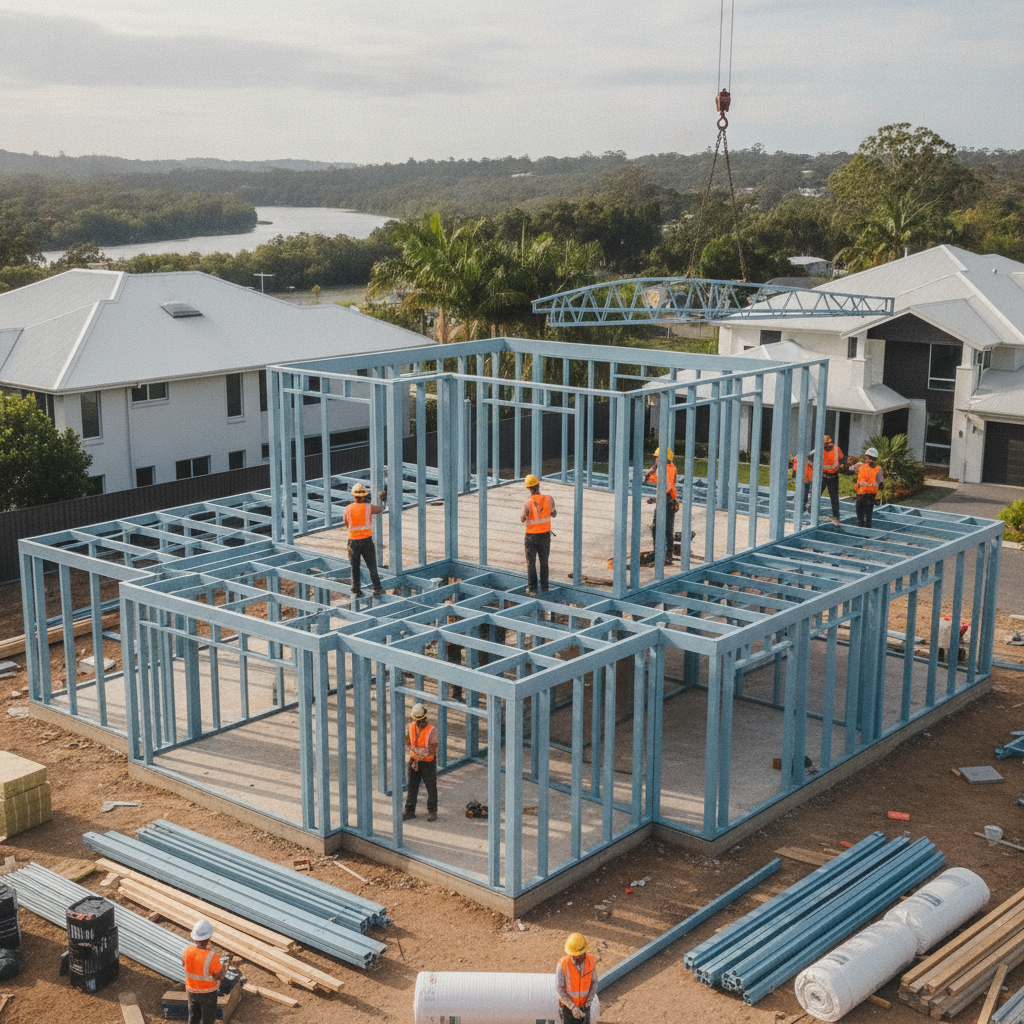
One thing people don't talk about enough is how the guts of the house affect your temperature. We use TRUECORE steel because it stays dead straight, which is great for stoping your windows from sticking when the house settles. But steel isn't a thermal mass. It doesn't hold onto heat the way a thick brick wall does. This is actually a massive win in places like Queensland or the Top End. When the sun goes down and the cool breeze kicks in, a steel frame kit home cools down almost instantly. You aren't fighting against thousands of warm bricks radiating heat into your bedroom at 10pm while you're trying to sleep.
But there's a trade-off. Because steel conducts heat, you need to be spot on with your thermal break. The NCC (National Construction Code) Volume 2 is pretty clear about this nowadays. You can't just slap cladding onto a steel stud and call it a day. You need that 12mm thermal break strip or a breathable wrap with an integrated air gap. This stops the heat from the afternoon sun jumping from your exterior cladding straight through the metal frame and into your plasterboard. It’s a tiny detail that makes a massive difference to whether your air con has to run at full tilt or just a tick over.
Cross-Ventilation: It's More Than Just Opening a Door
I see it all the time. Someone draws up a plan with a big sliding door on one side of the room and nothing on the other. That's not a breeze, that's just a hole. To get real airflow, you need a pressure difference. You need air coming in one side and a way for it to get out the other. Ideally, you want your windows placed on opposite walls, or at least adjacent walls, to create a path for the air to move.
Think about the 'Venturi effect'. If you have a small window on the windward side of the house and a larger opening on the leeward side, the air actually speeds up as it pulls through the house. It’s like a natural fan. If you're building in a spot that gets a regular sea breeze or a gully wind, find out where it comes from. Talk to the neighbors. They'll tell you, 'Oh, the breeze always comes from the south-east around 4pm.' Build for that. Don't block it off with a solid laundry wall or a walk-in robe.
Louvres: The Owner-Builder's Secret Weapon
I reckon louvres are the most underrated tool in the kit home shed. Yeah, they're a bit more expensive than a standard sliding window, and cleaning them can be a pain if they're high up. But for ventilation? Nothing beats them. You get 100% of the window area for airflow, compared to about 45% for a slider or an awning window. Plus, you can angle them. You can keep those bottom ones tilted so even if it's raining, you're still getting fresh air without soaking your rug. Just make sure you specify high-quality seals so they don't whistle when the wind really picks up.
Practical Tips for Your Layout
So you’re sitting there with the floor plans and a red pen. What do you actually do? First, look at your 'wet areas'. Laundries, bathrooms, and ensuites don't need the prime northern real estate. Tuck them away on the south or west side. If they're on the west, they actually act as a bit of a heat buffer for the rest of the house during the afternoon.
- Use internal doors that allow airflow. Over-door vents or just leaving a decent gap at the bottom can help if you like keeping doors shut.
- Consider the 'stack effect'. If you've got a two-storey kit home, that open stairwell is a giant straw for hot air. Use it to pull cool air from the ground floor up and out through high windows.
- Don't forget the eaves. A 450mm eave is standard, but in some parts of Australia, you'll want 600mm or even 900mm to really shade those walls. Since our kits use steel rafters and trusses, extending those eaves is straightforward during the design phase.
- Check your BAL rating. If you're in a bushfire-prone area, your window choices are going to be restricted by Australian Standard AS 3959. You might need toughened glass or metal shutters, which affects how much light and air you get. Sort that out early.
The Insulation Myth
People think insulation is just for keeping the heat in during winter. Wrong. In a kit home, insulation is your first line of defense against the sun. We provide bulk insulation and reflective foil because you need both. The foil reflects that radiant heat away from your roof cavity, while the batts slow down the heat transfer. But here's the kicker: if you don't have good ventilation in your roof space, that heat just sits there. Whirlybirds or solar vents are cheap additions that make your insulation work twice as hard. If the air in your roof is 50 degrees, your ceiling insulation is fighting a losing battle. Get that hot air out of the roof, and your living rooms will stay much closer to the outside shade temperature.
At the end of the day, a kit home isn't just about getting the frames up and the roof on. It’s about how it feels when you walk in after a long day at work. If the house feels bright and there’s a bit of a breeze moving through the kitchen, you’ve done it right. If you have to keep the lights on at midday and the air feels like it's standing still, all the fancy tapware in the world won't save it. Spend the time now getting your windows and your orientation sorted. You won't regret it when the first heatwave of the season hits.