The Great Australian Shift Toward Smarter Building
Drive through any new estate in the outer suburbs of Melbourne or Brisbane and you'll see the same thing. Rows of dark-roofed, black-brick houses huddled together with barely enough space to squeeze a lawnmower between them. They look modern, sure. But they're thermal disasters. These homes are basically heat-soaks that rely on massive ducted air conditioning units to stay liveable from November through March. It is a backwards way to build. And a growing number of Australians are finally fed up with it.
We are seeing a massive swing toward owner-building. People aren't just doing it to save a few bucks anymore. They're doing it because they want a house that actually works. They want walls that keep the heat out, frames that won't get eaten by termites, and a floor plan that doesn't feel like a cookie-cutter carbon copy of their neighbour's place. This is where kit homes have found their stride in the current market. By taking control of the procurement and managing the trades themselves, everyday Aussies are building high-spec, sustainable homes that the big volume builders simply won't touch.
Thermal Performance and the BlueScope Edge
Sustainability isn't just about sticking a few solar panels on the roof and calling it a day. It starts with the skeleton of the house. In the kit home world, the move toward TRUECORE steel frames has been huge. I've spent years on sites, and I can tell you there is nothing worse than watching a timber frame sit out in the Queensland rain for three weeks while the chippies are tied up on another job. It twists. It bows. Then, six months later, the homeowner is wondering why their plasterboard is cracking at the cornices. Steel doesn't do that. It stays dead straight.
But the real sustainability win with steel is the precision. Because these frames are engineered to the millimetre, you aren't dealing with a bin full of offcuts destined for landfill. It's clean. Plus, it's 100 percent recyclable. When you combine a steel frame with high-quality insulation and a reflective foil wrap, you create a thermal break that actually keeps your internal temperature stable. I reckon we're moving toward a point where 7-star energy ratings will be the bare minimum, and a kit home is the easiest way to get there without losing your mind over custom architectural fees.
Why Owner-Builders are Choosing Steel
- Termite proof by nature - no need for nasty chemical barriers every few years.
- High strength-to-weight ratio allows for big, open-plan living areas without massive, expensive timber beams.
- Non-combustible material which is a massive plus for anyone building in a BAL (Bushfire Attack Level) rated zone.
- The frames don't warp or shrink, so your windows and doors don't stick when the seasons change.
The Rise of the Backyard Studio and Granny Flat
The Australian housing trend isn't just about the main family home anymore. We've seen a massive spike in people looking for secondary dwellings. Maybe it's a home office because nobody wants to commute to the CBD five days a week, or it's a space for adult kids who are priced out of the rental market. These small-footprint kit homes are becoming the go-to solution. They're manageable. You can get the slab poured, the kit delivered to the kerb, and have the thing under roof in a matter of weeks if you've got your trades lined up.
Choosing a design for a secondary dwelling requires a bit of tactical thinking. You want something that maximizes northern light. In a smaller 60 or 90 square metre footprint, if you get the windows wrong, the place feels like a cave. We always suggest looking at designs with raked ceilings. It adds a sense of volume that you just don't get with standard 2.4m ceiling heights. It's about making a small space feel like a sanctuary, not an afterthought in the backyard.
Getting Your Hands Dirty: Tips for the Modern Owner-Builder
If you're thinking about taking this on, don't go in blind. Owner-building is rewarding, but it'll test your patience. First thing you need to do is get your Owner-Builder permit. Each state has different rules - NSW, VIC, and QLD all have their own quirks regarding the course you need to take. Do it early. Don't wait until the kit is sitting on your site to realize you haven't finished your White Card or your permit application.
Construction skip bins are another thing people forget. You think you won't have much waste, but then the cladding arrives and the windows are uncrated, and suddenly you've got a pile of timber pallets and plastic wrap that looks like a small mountain. Organise your waste management early. And keep your site tidy. A messy site is a dangerous site, and good sparkies and plumbers will charge you more if they have to trip over trash just to get to the wall cavity.
Practical Site Logistics
When the truck arrives with your kit - usually packed with those blue-tinted steel frames - you need a plan. You can't just have them dropped in the middle of the driveway. You need a flat, dry area. Get some 4x2 offcuts to keep the frames off the ground. If they're sitting in the mud, you're going to have a miserable time cleaning them before the cladding goes on. Also, check your delivery. Count the windows. Make sure the Colorbond roofing is the colour you actually ordered. It's much easier to fix a mistake while the driver is still there than it is three weeks later when you're ready to screw the sheets down.
The Future is High-Performance
The trend we're seeing across Australia is a move toward quality over quantity. People are realising that a massive house with cheap finishes and poor insulation is a money pit. They'd rather have a slightly smaller, better-built kit home with double-glazed windows and a steel frame that'll last a century. It's a more conscious way of living. It's about building for the climate we actually have, not the one we wish we had.
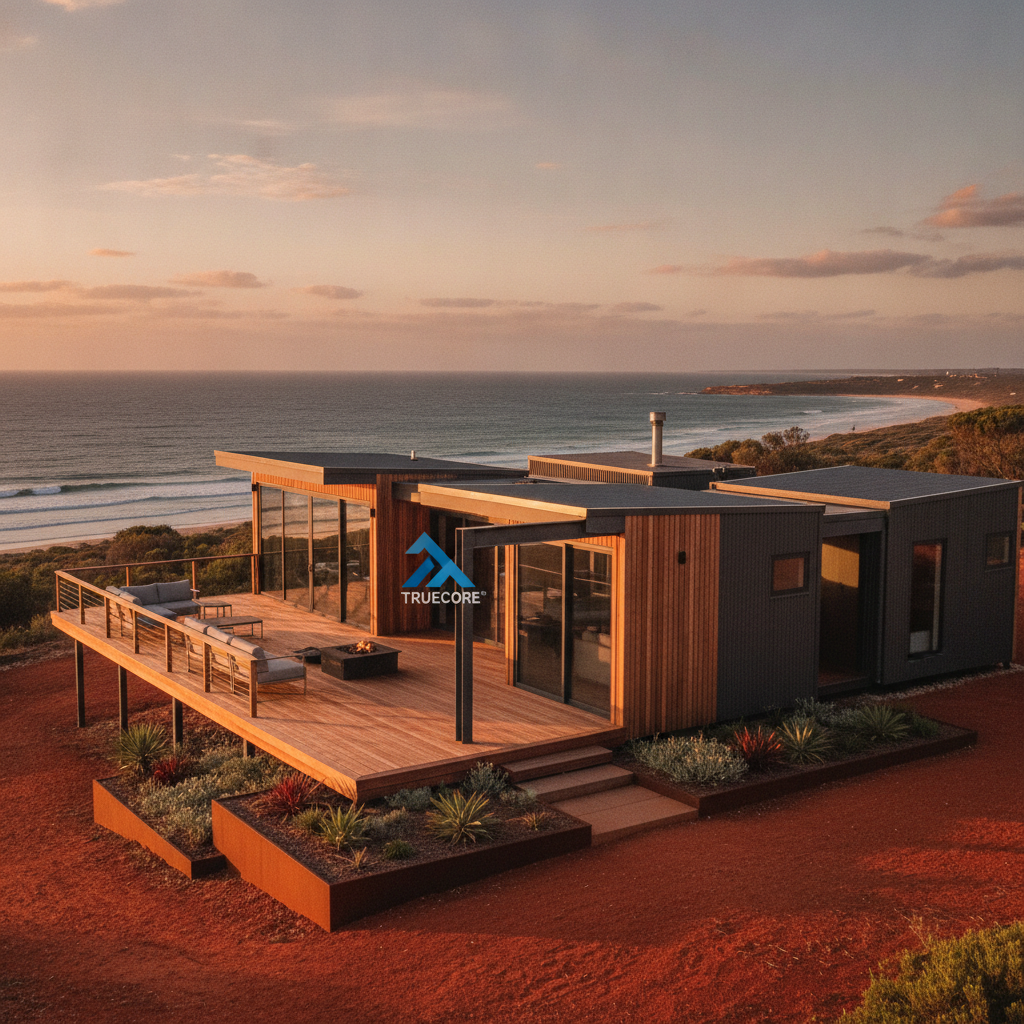
The era of the 'disposable' house is ending. Whether it's a sprawling ranch-style home in the hinterland or a compact studio in a suburban backyard, the focus is shifting to longevity. Using materials like BlueScope steel and James Hardie cladding isn't just about aesthetics. It's about knowing your biggest investment isn't going to rot, burn, or get eaten. That's a trend that isn't going away anytime soon. It's just common sense.