So, You Want to Be the Boss?
Starting a kit home project in Australia is a bit like deciding to cook a seven-course meal for twenty people when you've only ever mastered beans on toast. It sounds great on paper. You see the steel frames arrive on the back of a hiab truck, the TRUECORE steel gleaming in the sun, and you think you’ll have the roof on by Sunday. But then Monday rolls around. The plumber didn't show. It rained in Toowoomba for three days straight. Now your slab is a swimming pool and your schedule is toast.
I've spent fifteen years watching people tackle this. Most people don't fail because they can't drive a screw into a steel batten. They fail because they treat the build like a hobby instead of a logistical operation. If you want to actually move in before your kids graduate high school, you need to tighten up your approach.
The Council Rabbit Hole
Don't even think about ordering a kit until you've sat down with a local planning officer. Every council in Australia, from Byron to Broome, has its own set of quirks. You might think your block is a straightforward build, but then you find out you're in a high Bushfire Attack Level (BAL) zone. Or maybe there's an easement for a sewer line that isn't on the old maps you found.
You'll need a Development Application (DA) or a Complying Development Certificate (CDC). This isn't a weekend job. It takes months. If you order your kit home before these approvals are locked in, you'll end up with a pile of steel frames and BlueScope cladding sitting in a paddock, rusting or getting pinched while you argue with a bureaucrat about the height of your ridgeline. Get your paperwork sorted first. Everything else comes second.
The Trade Trap
One of the biggest mistakes I see involves the 'she'll be right' attitude toward subcontractors. You aren't just the builder; you're the project manager. In the current Aussie market, good chippies and sparkies are booked out months in advance. You can't call them on a Thursday and expect them on-site Monday.
Build relationships early. Go to the local hardware shop at 6:30 am. Talk to the guys in the hi-vis. Ask them who's reliable. When you find a good plumber, pay them on time. Actually, pay them early. Word gets around in small towns and new estates. If you're the owner builder who argues over every cent and pays late, your job will be the first one dropped when a bigger project comes along.
Site Access and the Slab
Your kit arrives in a big truck. If the driver can't get within ten metres of the slab because you didn't clear the scrub or the driveway is too narrow, he’s going to drop that load at the front gate. Then you'll spend three days moving heavy steel members by hand. It's back-breaking work.
And let's talk about the slab. It has to be perfect. Kit homes are manufactured to precise millimetre tolerances. If your concrete is out by 20mm across the span, your wall frames won't sit right. You'll spend a week shimming and grinding, which is a massive waste of time. Hire a concreter who knows how to read a plan and uses a laser level like his life depends on it. Because your sanity definitely does.
Wait for the 'Lock-up' Stage
A lot of DIYers get excited and buy their kitchen cabinets and floor tiles while the frames are still being bolted together. Don't. Unless you have a massive, dry shed to store it all in, keep your money in your pocket. Moisture is the enemy of flat-pack kitchens. Plus, until you have the roof on and the windows and doors in, your site isn't secure. I've seen pallets of insulation vanish overnight because someone left them sitting in an open frame. Wait until you hit lock-up. It's the moment the house is weatherproof and you can finally lock the front door. That's when you order the pretty stuff.
Managing the Steel Frame Install
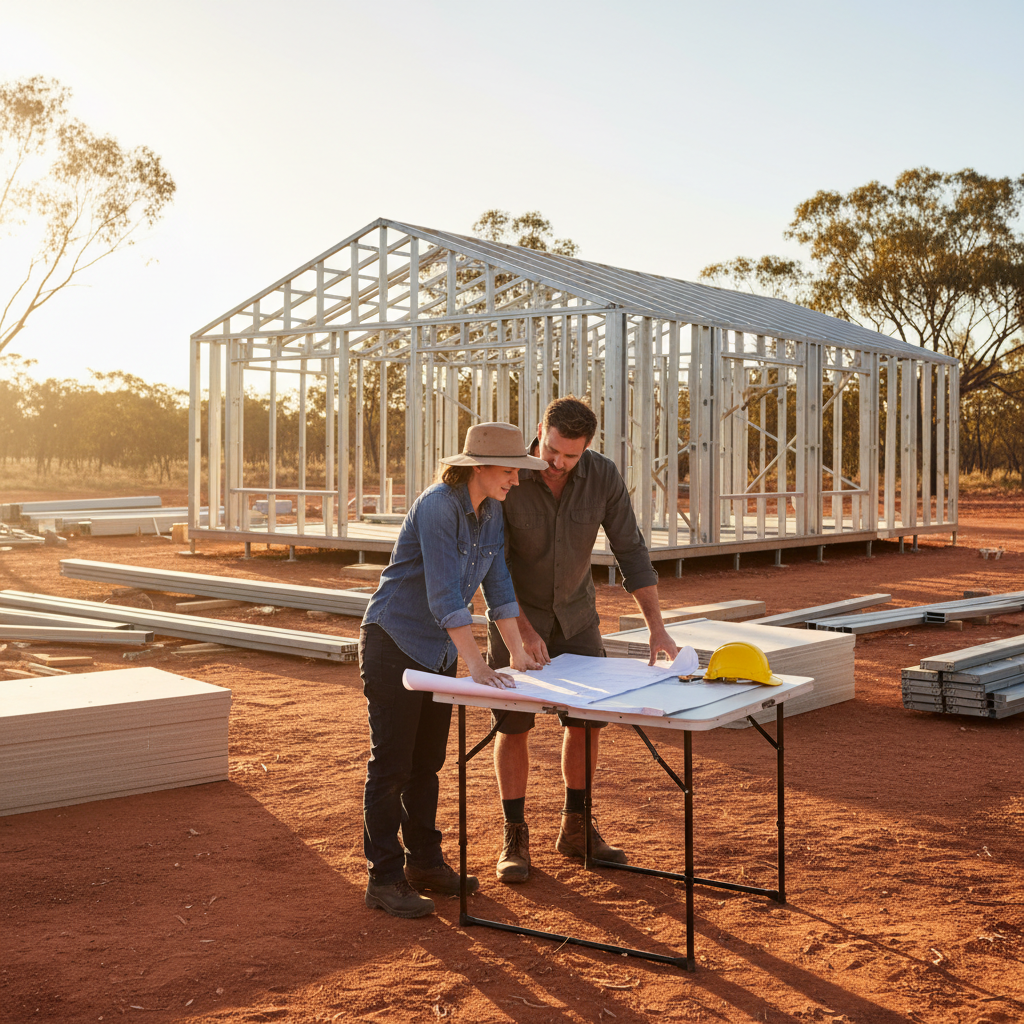
Working with steel frames is different than timber. It's lighter, which is a win for your back, but you need the right tools. Get yourself a high-quality impact driver and a big supply of hex-head screws. If you try to do this with a cheap drill from the middle aisle of the supermarket, you'll burn the motor out by lunch.
Steel also doesn't warp. What you get is what you get. Follow the layout floor plans exactly. Don't decide to move a wall ten millimetres to the left on a whim. The roof trusses are engineered to sit directly over the wall studs. You move one, you mess with the load path of the entire structure. If you need to make a change, talk to the manufacturer first. Most of the time, the answer is 'no'. But it's better to hear it now than have a structural failure later.
The Hidden Time Sucks
People forget about the tiny things. The screw-ups. The missed deliveries.
- Scaffolding: You can't just climb a ladder to do the guttering. Workcover will have a field day, and it's dangerous anyway. Hire proper scaffolding and factor in the weekly rent.
- Rubbish: A building site creates a mountain of offcuts, plastic wrap, and lunch wrappers. Rent a skip. Keeping a clean site isn't just about being tidy; it stops you from tripping over and breaking an ankle.
- Inspections: Your building certifier needs to see the site at specific stages. Footings, slab, frame, and final. If you pour concrete before they see the steel reinforcement, they can make you dig it up. No joke. Know your inspection points and give them 48 hours notice.
Weathering the Storm
Australia is a harsh place to build. If you’re building in North Queensland, you're dealing with humidity that'll sap your energy by 10 am. If you're in the Victorian highlands, you might get snowed out. Watch the Bureau of Meteorology (BOM) app like a hawk.
When the rain comes, the site goes to mud. Trucks get bogged. My advice? Don't fight it. If the forecast looks like a wash-out, spend the day doing your admin. Update your spreadsheets. Call the next round of trades. Do not try to bog a 10-tonne truck in your front yard. It’ll cost you two grand in towing fees and a week of digging out just to get back to where you started.
The Finish Line
Owner building is a marathon. It’s not a sprint. You’ll have days where you want to walk away and sell the whole lot as a 'half-finished dream'. Everyone goes through it. The trick is to keep moving, even if it’s just one small task.
Suss out your trades early, get your site access sorted, and respect the Aussie weather. If you do that, the process of putting together your steel kit home will actually be what it’s supposed to be: a way to get a high-quality, durable house without paying a massive premium for a commercial builder's overheads. Be smart, stay organized, and don't be afraid to admit when you need a professional to step in and finish a section.