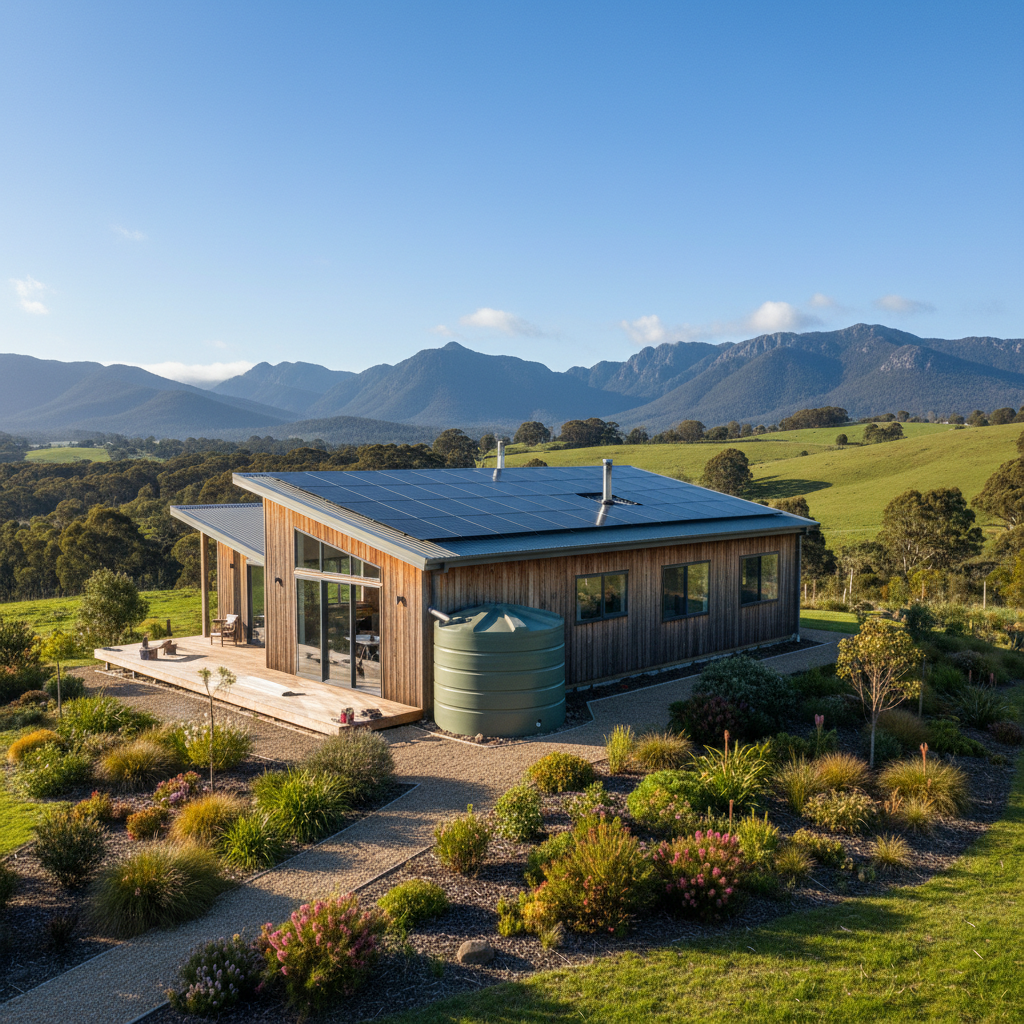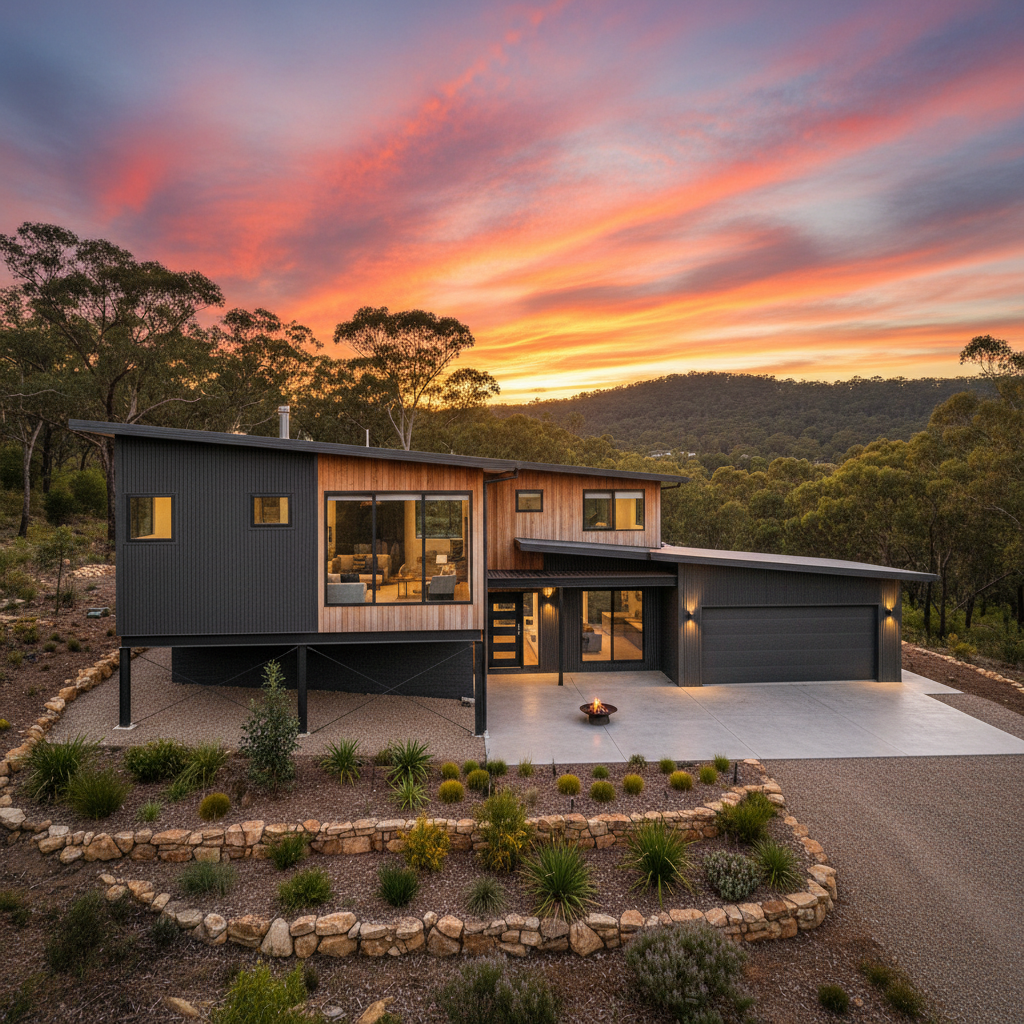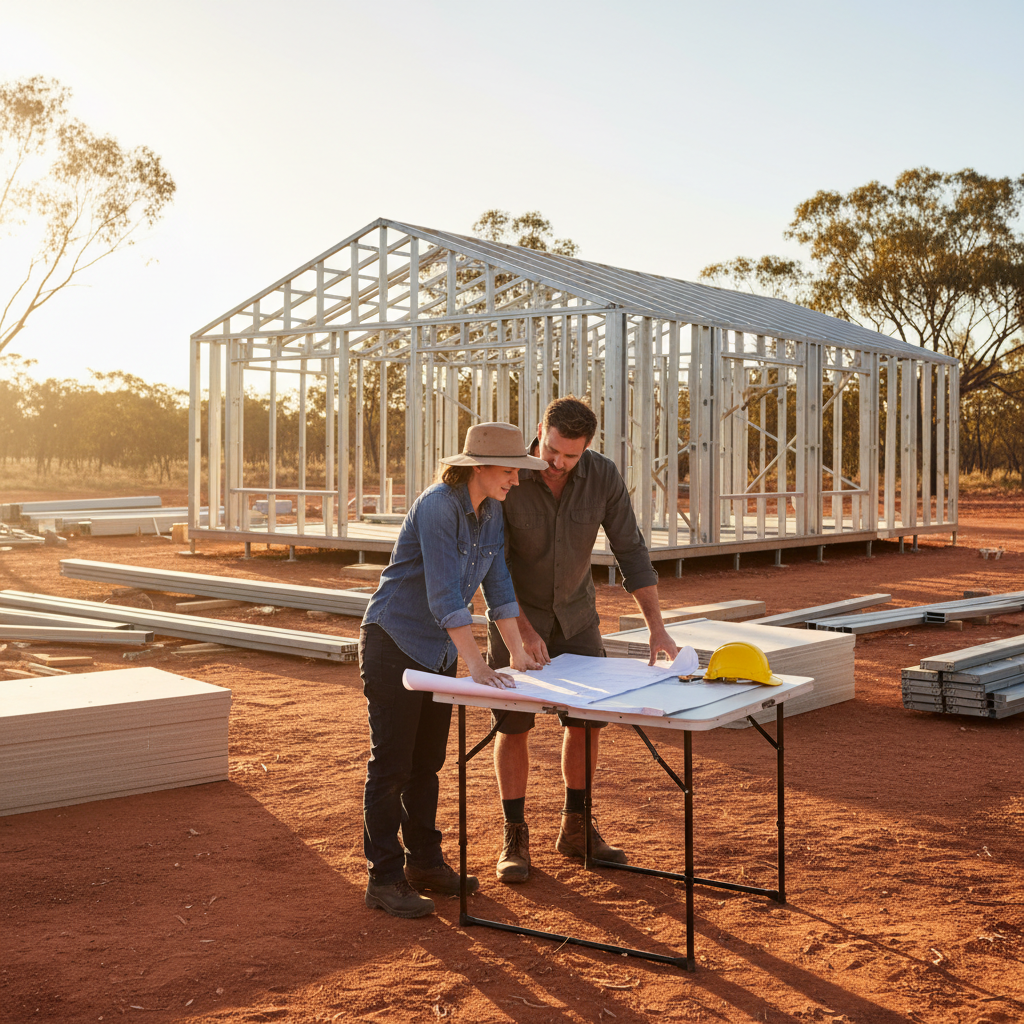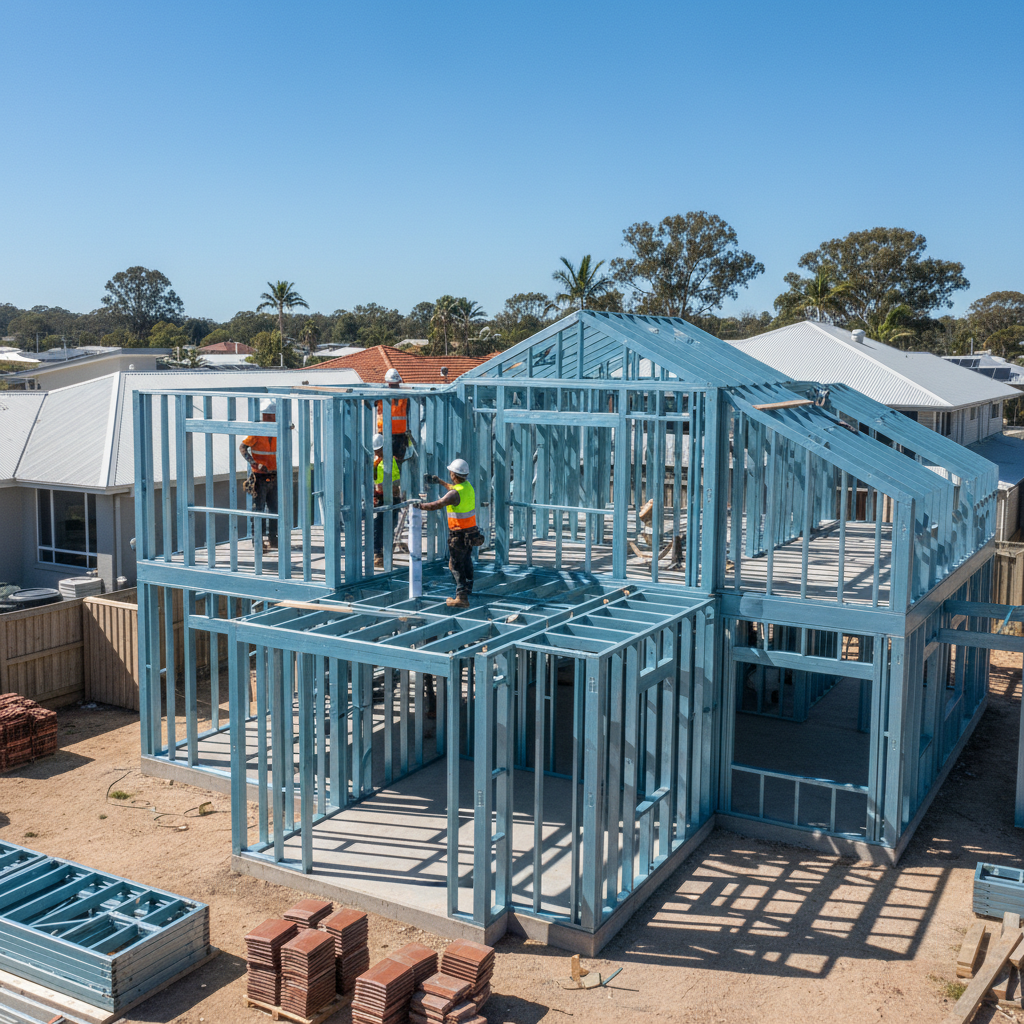
Walk onto any building site in Queensland or WA and look up. Most of the time, you're seeing a sea of corrugated steel. There's a reason for that. It isn't just because it's cheap or easy to truck into a remote kit home site. It's about how that material handles a 40-degree January afternoon versus a freezing July night in the Snowy Mountains. If you're an owner-builder managing your own project, the roof is where you either win or lose the battle against the Australian elements. Get it wrong, and you're living in an oven. Get it right, and your house works with you.
The Colorbond Factor and Thermal Performance
I've seen people pick a roof color because it matches their car or some photo they saw on Pinterest. Reckon that's the fastest way to blow your cooling budget. In Australia, we deal with some of the highest solar radiation levels on the planet. When you're choosing the skin for your steel frame kit, you need to look at the Solar Reflectance Index (SRI). A dark, moody charcoal roof looks slick, I'll give you that. But it absorbs heat like a sponge. On a still day in Western Sydney, a dark roof can reach 70 degrees Celsius. That heat soaks into the roof cavity and forces your air con to work double time just to keep the living room bearable.
Light colors like Surfmist or Shale Grey reflect a massive chunk of that heat before it even touches your insulation. Plus, if you're building in a council area with strict BASIX requirements or similar energy ratings, a lighter roof often makes the difference between passing or needing to throw another five grand at high-performance glazing. It's practical. It's boring. But it works.
Coastal Living and the Salt Spray Reality
Living within a kiliometre of the ocean sounds like the dream until you see what the salt does to standard materials. If your kit home is going up near the coast, standard Zincalume won't cut it. You'll be looking at red rust on your fasteners and edges within a few years. For these sites, you need high-grade aluminum-zinc alloy coated steel specifically designed for marine environments, like the Colorbond Ultra range. Most kit home suppliers provide TRUECORE steel for the internal frames because it's protected from the weather, but the exterior skin is where the real fight happens.
And it's not just the sheets. I once saw an owner-builder in Coffs Harbour save a few bucks on cheap galvanized screws for a seaside build. Two years later, every single screw head was bleeding rust streaks down his nice white gables. Use stainless steel or Class 4 fasteners. No exceptions. If you're building within 200 metres of breaking surf, you might even need to look at full aluminum roofing, though for most kit home budgets, the marine-grade steel is the sweet spot.
Bushfire Attack Levels (BAL) and Your Roof Profile
AS 3959 is the standard that dictates how we build in bushfire-prone areas, and it's a bit of a bible for kit home builders these days. If your block is rated BAL-12.5 or BAL-29, the roof is your first line of defense against embers. The beauty of a steel roof on a steel frame is that the whole structure is non-combustible. But embers are sneaky. They find gaps in corrugations and fly into your roof space.
Because of this, you need to think about ember guarding. This involves sealants, mineral wool, or metal mesh with gaps smaller than 2mm at the eaves, ridges, and valleys. Some people prefer a ribbed profile like Trimdek because it has a flatter pans, making it slightly easier to seal against the fascia. Others stick with the classic corrugated profile but spend the extra time on custom-cut foam fillers. Whatever you choose, it's got to be tight. A single ember getting into your ceiling is all it takes.
Condensation and the Importance of Anticon
Modern homes are built tighter than they used to be. That's great for energy efficiency, but it's a nightmare for moisture. When warm air from your shower or kitchen hits the cold underside of a metal roof sheet, it turns back into water. This is why we never, ever just slap tin straight onto the purlins. You need a heavy-duty vapor reflective barrier, often called 'Anticon' or roof blanket. It's basically a layer of glasswool insulation faced with foil.
This blanket does two things. It stops the 'drumming' noise of rain so you can actually hear the TV during a downpour, and it prevents that condensation from dripping onto your ceiling plaster. I've seen DIY builds where they skipped the blanket to save twelve hundred bucks. They regretted it the first time a cold snap hit and their LED downlights started dripping water. Don't be that guy. Ensure the foil is lapped correctly and taped with high-quality reinforced foil tape. It's a fiddly job, but you only get one chance to do it right before the sheets go down.
Pitch and Water Run-off
The pitch of your roof isn't just an aesthetic choice. It dictates what materials you can actually use according to the NCC (National Construction Code). Most corrugated sheets need a minimum pitch of 5 degrees. If you're going for a really flat, modern look, you'll have to switch to a tray-profile roofing like Klip-Lok which can go down to 2 or 3 degrees. Why? Because water moves slower on a flat surface. In a heavy storm, water can actually back up under the laps of corrugated iron if the pitch is too shallow. You end up with a waterfall inside your walls.
Plus, if you're in a high-rainfall area like the Top End or the Sunshine Coast, a steeper pitch helps shed water faster into your gutters. Speaking of gutters, make sure you've got overflow provisions. If those gutters choke with leaves and you don't have slots in the front, the water goes back into your eaves. That's a mess no one wants to clean up on a Sunday morning.
Venting the Roof Space
Steel frames are brilliant because they don't warp or twist, but they don't breathe like old timber. You need to manage the air in your roof cavity. I'm a big fan of whirlybirds or solar-powered roof vents. On a stinking hot day, you can feel the heat rushing out of those vents. It's physics. By pulling that hot air out, you're reducing the temperature gradient between your ceiling and your living space. It makes your bulk insulation (the batts in your ceiling) much more effective. Combine that with eave vents to allow cool air to be drawn in from the bottom, and you've got a chimney effect that keeps the whole house fresher.
Building your own home is a massive undertaking. It's about more than just standing up frames and screwing in windows. It's about understanding how the materials you choose interact with the patch of dirt you're standing on. Take the time to suss out your local conditions. Talk to the locals who've been there for twenty years. They'll tell you which way the rain hits and how fast things rust. Then, take that info and pick a roof that's built for the long haul.