Stop Designing Kitchens for Strangers
I've spent years looking at floor plans. Hundreds of 'em. Usually, I'm checking the engineering on a set of TRUECORE steel frames or making sure the roof pitch works for a specific BAL rating, but my eyes always wander to the kitchen. Most people design their kitchen for a person who doesn't exist. They design for a ghost who never cooks, has no kids, and somehow keeps a white stone benchtop clear of mail, keys, and half-eaten Vegemite toast. It's a waste of a good kit home.
Living in a kit home is about freedom. You're the owner-builder. You're the one calling the shots on the site in Dubbo or the hills of Gippsland. So why on earth are you sticking to a cramped 'U' shaped layout just because that's what the last three houses you lived in had? We need to talk about flow, steel, and why your fridge is probably in the wrong spot.
The Galley vs. The Island: A Modern Tussle
The open-plan dream is still well and truly alive in Aussie housing trends. Everyone wants that big central island where the kids can do homework while you're chopping onions. But here is the thing. Islands are floor space hogs. If you are building one of our smaller two-bedroom kits, a massive island bench can turn your living room into a glorified hallway.
I reckon the galley kitchen is underrated. Two parallel runs of cabinetry. It's efficient. It's what professional chefs use. If you've got a narrow floor plan, a galley layout allows you to keep the workspace tight while opening up the rest of the house for a decent dining table. Plus, it's easier to plumb. When your pipes are all in one line, your plumber is going to have a much better day on site.
Steel Frames and the Heavy Stuff
Since we are talking about kit homes, we have to talk about the bones. One of the best things about using BlueScope steel for your frames is that everything is dead straight. No warps. No twists. When your cabinet maker comes in to install your overheads, they aren't going to be fighting a wall that bows out 10mm in the middle. It's a dream for getting those flush, high-end finishes.
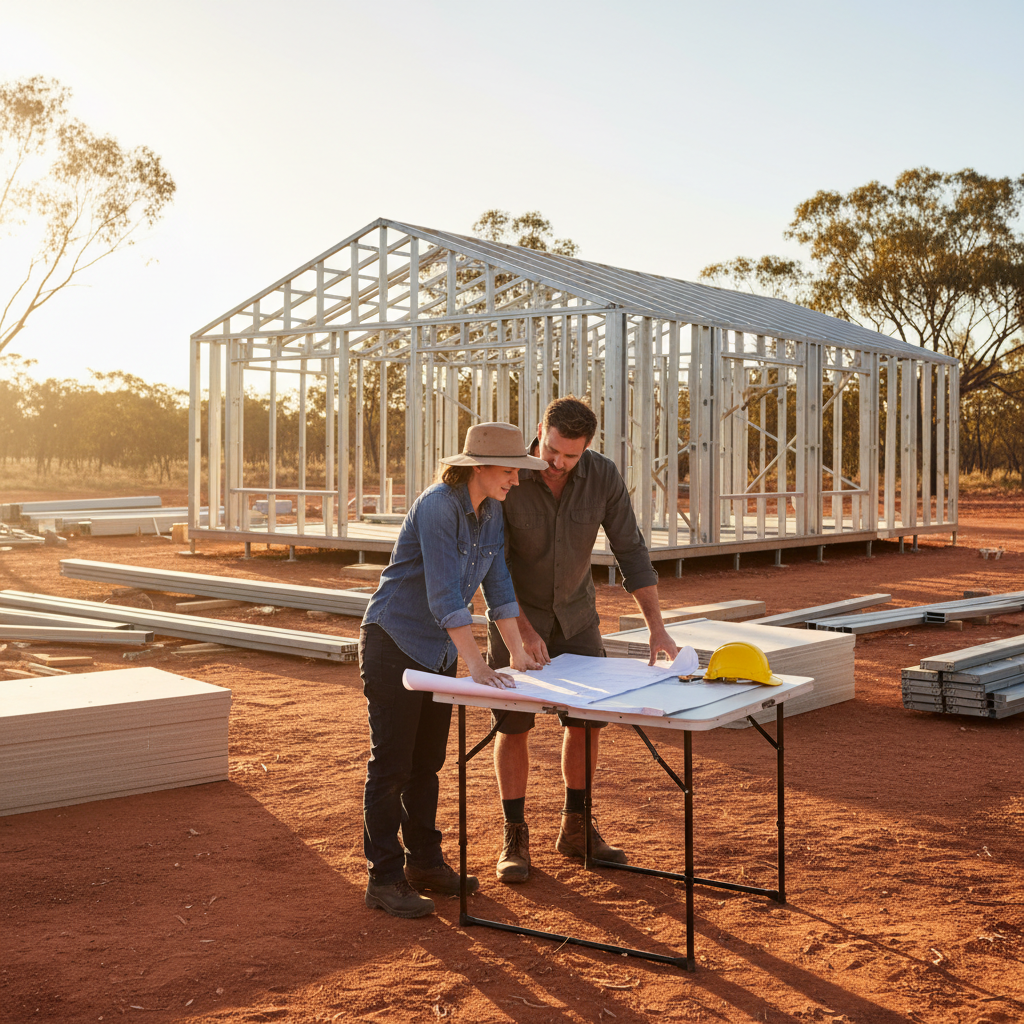
But you've got to plan ahead. Steel frame construction is strong, but if you're planning on hanging a massive, heavy custom rangehood or some chunky open timber shelving, tell us early. We can throw extra noggins into the frame design during the CAD phase. It’s way easier to bolt a heavy cupboard into a pre-planned steel noggin than it is to realize you've got nothing but air behind your plasterboard once the walls are already up. Think about your wall-mounted microwave too. That stuff is heavy. Plan the steel to suit the lifestyle.
The Fridge Triangle is a Lie
You've heard of the work triangle. Sink, stove, fridge. It's the old-school rule of thumb. But in a modern family home, the triangle falls apart at 7:30 AM. The real killer of kitchen peace is the 'snack track'. That's the path the kids take from the lounge to the fridge. If that path crosses right through the middle of where you're trying to drain a pot of boiling pasta, someone's getting hurt or at least shouted at.
Put your fridge on the edge. Not buried in the corner. If the fridge is at the end of the kitchen run, people can grab a cold drink or a yogurt without ever entering the 'hot zone' near the cooktop. It sounds like a small thing. It’s not. It’s the difference between a calm morning and starting your day with a headache.
Practical Tips for Owner Builders
- Power points Everywhere: You think four is enough? Double it. Then add two more inside a cupboard for charging phones and tablets. Nobody wants to see a mess of cables on their nice new bench.
- The Pantry Deep Dive: Walk-in pantries are great if you have the square meterage. If you don't, go for a pull-out pantry. Digging for a tin of tuna at the back of a 600mm deep shelf is a young man's game.
- Window Placement: A lot of our kit designs feature a window behind the sink. It's classic. Just make sure you check the height. You don't want your tap hitting the window sash when you try to open it. Sounds obvious, but you'd be surprised how often it happens on DIY builds.
- Lighting Zones: Don't just slap four LED downlights in the ceiling and call it a day. You need task lighting under the overhead cupboards. It makes a massive difference when you're prep-cooking in the evening.
Material Choices for the Real World
I love the look of marble. It's gorgeous. It's also a nightmare. If you drop a slice of lemon on it and don't see it for ten minutes, it's etched for life. For most of the families I talk to, engineered stone or even high-quality laminates are the way to go. They handle the knocks. They handle the heat. And let's be honest, they're easier on the budget when you're trying to manage a whole house build.
And think about your flooring. If you're building on a slab, polished concrete is amazing for thermal mass, especially with a steel-framed house that can heat up and cool down quickly. But concrete is hard on the legs if you're standing and cooking for three hours. Maybe look at some hybrid vinyl planks. They look like timber, they're waterproof, and they have a bit of 'give' underfoot.
The Butler’s Pantry Debate
Is a butler’s pantry worth it? If you have the space, sure. It’s a great place to hide the toaster and the messy coffee machine. But I've seen people sacrifice a huge chunk of their dining area just to get a tiny, windowless room where they can't even turn around. If your kit home footprint is under 150 square metres, skip the butler's pantry. Use that space for a bigger island or a decent-sized laundry instead. You'll thank me when you're not doing a three-point turn just to get to the bread bin.
Wrapping It All Up
Building a kit home is a massive undertaking. You're doing the hard yards, coordinating trades and making a thousand decisions a day. It's easy to get lost in the technical stuff like AS 4100 compliance or your slab tie-downs. But don't forget the lifestyle bit. You're building a place to live. The kitchen is where the noise happens. It's where the arguments start and where they get settled over a cuppa.
Focus on how you actually move. Not how a magazine says you should move. Get your steel noggins in the right place, keep the kids away from the stove path, and for heaven's sake, put the bin where it's easy to reach. Everything else is just details. Now get back to your site and check those levels again.