I spent twenty years on building sites before I started writing about them. Back in the day, the skip bin at the end of a house build was a nightmare. It was overflowing with off-cuts, treated timber chunks that couldn't be burned, and enough plastic wrap to cover a suburban block. People think wood is the green choice because trees grow back, but once you douse that timber in chemicals to stop termites and rot, it's not exactly friendly to the dirt anymore. That is why I shifted my focus to steel. Specifically, Australian BlueScope TRUECORE steel. It is cold-formed, precisely engineered, and it holds a secret that most people overlook when they are looking at floor plans on a Sunday night. Every single scrap of it can be shoved back into a furnace and turned into a brand new beam without losing an ounce of strength.
The Infinite Loop of Steel Recycling
Steel is one of the only building materials on the planet that is truly circular. You can recycle it once, ten times, or five hundred times. It doesn't matter. In the Aussie kit home industry, we use a lot of light-gauge steel because it's punchy and strong for its weight. But the environmental kicker is the process. When a steel building eventually reaches the end of its life, maybe sixty or eighty years from now, it doesn't head for a hole in the ground. It gets picked up by a magnet and sent back to the mill. Because it's a permanent material, we aren't constantly losing quality like you do when you recycle plastic or paper into lower-grade mush.
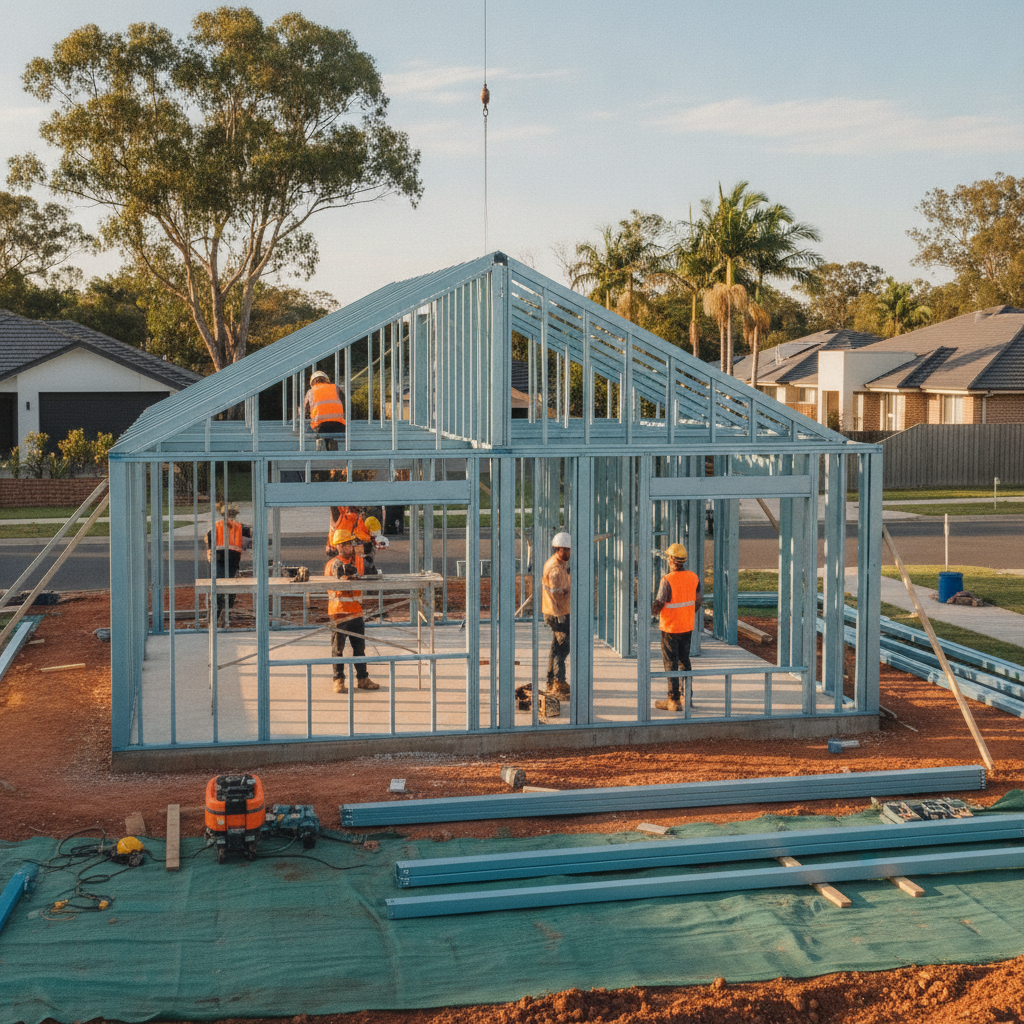
And let's look at the actual manufacturing. Modern arc furnaces are getting cleaner every year. Plus, when we design a kit home with steel frames, the engineering software calculates exactly what is needed. There is no 'she'll be right' attitude where a chippie cuts a four-metre stud down to three metres and tosses the rest. The frames come out of the factory ready to bolt together. It's clean. It's dry. Your site stays tidy, and the birds aren't trying to nest in a pile of sawdust treated with copper chrome arsenic.
Termites and the Chemical Warfare Problem
If you're building anywhere from the mid-north coast of NSW up into Queensland or across to Perth, termites are the enemy. They're relentless. To keep a timber-framed home safe, you basically have to soak the ground in poisons or use H2-treated wood. Those chemicals eventually leach. Steel is naturally termite-proof. It's a mineral. Bug teeth can't dent it. This means you aren't pumping liters of pesticides into the soil around your family home every few years just to keep the roof from falling in. That is a massive environmental win that doesn't get enough airtime in the glossy brochures. Using TRUECORE steel is like having an insurance policy for the planet and your bank account at the same time.
Precision Means Less Waste
I've seen owner-builders get overwhelmed by the amount of rubbish a standard build generates. But with a steel kit, you're looking at a different beast. The components arrive pre-cut and pre-punched for your electrical and plumbing. Because the tolerances are so tight, usually within a millimetre, you aren't hacking away at materials on-site. This precision is part of AS 4100 and the relevant cold-formed steel standards. It's boring technical stuff, sure, but it means you aren't filling up three-ton skip bins with mistakes. Less waste on-site means fewer truck trips to the tip. Fewer truck trips means less diesel burnt. It all adds up.
Bushfires and the Weight of Materials
We're seeing a lot more demand for steel frames in High BAL (Bushfire Attack Level) zones lately. If you're building in a spot like the Blue Mountains or the Adelaide Hills, steel is a non-combustible material. It doesn't add fuel to the fire. From an environmental standpoint, the most 'unsustainable' thing you can do is build a house that burns down in ten years because you then have to use twice the resources to build it again. Resilience is sustainability.
Another point: steel is lighter than seasoned hardwood. This affects the footings. Because the frame weight is lower per square metre, we can often design slabs or sub-floors that use less concrete. Concrete is a huge carbon emitter during production. So, by opting for a lightweight steel frame, you're actually reducing the amount of cement you need to pour into the ground. It is all connected.
The Reality for the Owner Builder
I won't lie to you and say steel is perfect in every scenario. You've got to think about thermal bridging. If you just slap some corrugated iron on a steel frame without a thermal break, you're going to bake in summer and freeze in winter. That's why we include high-grade insulation and thermal breaks in our kits. You have to respect the material. But once it's up, that frame is straight, true, and it stays that way. It doesn't warp because of a humid week in Bairnsdale or shrink when the dry winds hit Tamworth. That stability means your plasterboard doesn't crack, and your doors don't bind, which keeps the house airtight and energy-efficient for the long haul.
Plus, if you're doing the work yourself, steel is easy to handle. You aren't straining your back with heavy wet-treated pine. It's manageable. You'll find yourself finishing the frame stage faster than you expected, mostly because the hard work was done in the factory. And when you're done, you don't have a mountain of off-cuts to deal with. You might have a small bucket of steel scraps, which any local scrap yard will actually pay you for. Try getting a fiver for a pile of discarded treated pine off-cuts at the tip. They'll charge you for the privilege of dumping it.
The Future of Aussie Housing
The National Construction Code (NCC) is getting stricter about energy ratings and material lifecycles. We're moving toward a world where the 'embodied carbon' of a building matters as much as the lightbulbs you use. Steel fits this future. It's made here in Australia, supporting local jobs in places like Port Kembla, and it's built to survive our specific, harsh climate. Timber frames have their place, but when you look at the big picture, the ability to recycle 100% of your home's skeleton at the end of its life is a hard benefit to ignore. It’s about building something that lasts without leaving a mess for the next generation to clean up.
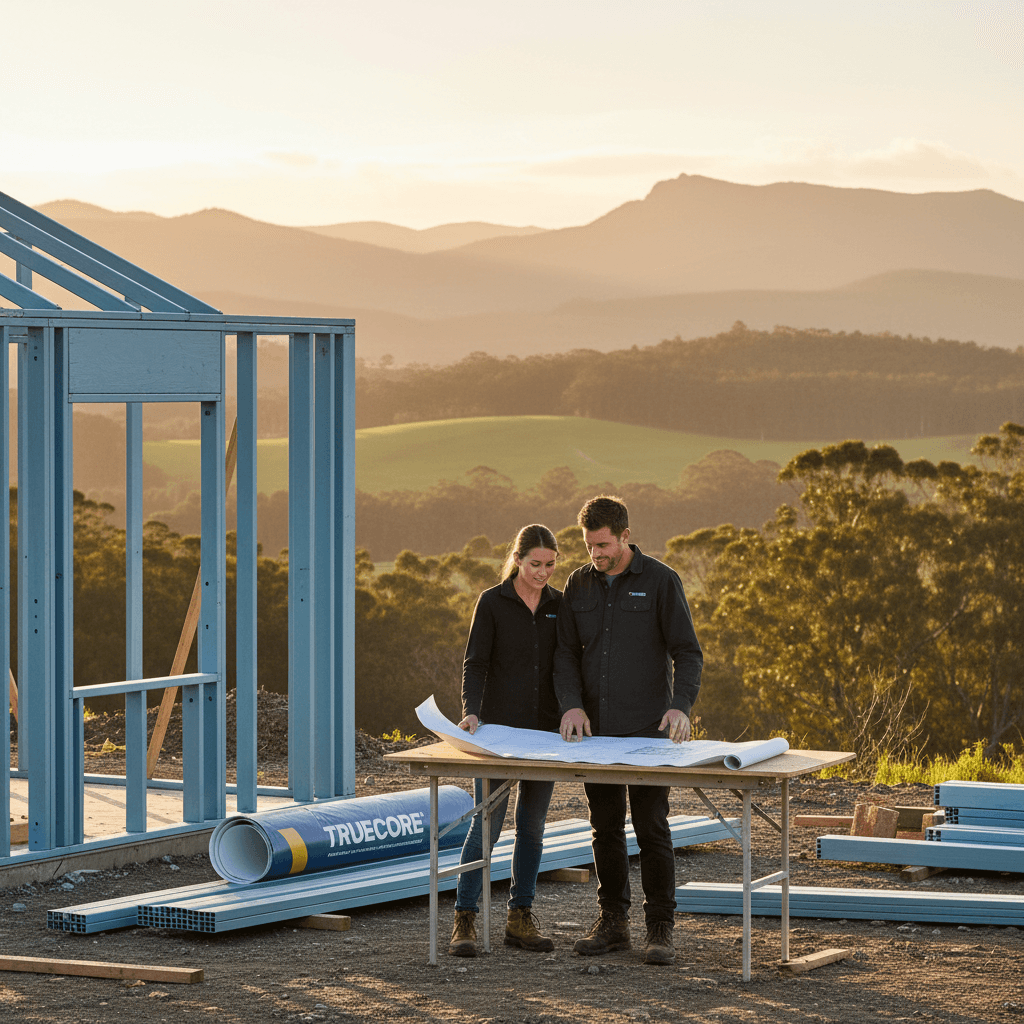
So, next time you're sitting at the kitchen table with a highlighter, going over your site plan and worrying about the council DA, take a second to think about what's actually going into the walls. You want something that stays straight, keeps the bugs out, and won't end up in a landfill. Steel is the answer. It's been the backbone of industrial Australia for years, and it's the smartest way to put a roof over your head today.