The Scrap Metal Reality Check
Most people talk about green building like it's all about solar panels and fancy light bulbs. That's a load of rubbish. If you really want to talk about environmental impact, you have to look at what's left behind when a house eventually comes down in eighty or a hundred years. With a timber frame, you're looking at a pile of treated wood that's basically toxic waste thanks to the chemicals used to keep the white ants at bay. You can't burn it, and you certainly can't recycle it. It just sits in a hole in the ground.
Steel is different. It's the most recycled material on the planet. If someone knocks down a steel-framed house in the year 2110, every single piece of that BlueScope TRUECORE steel can be melted down and turned into something else. Maybe another house. Maybe a car. Maybe a bridge. It doesn't lose its strength. It just keeps going. That's what a circular economy actually looks like in the real world, not just in a textbook.
Precision Engineering vs. The Skip Bin
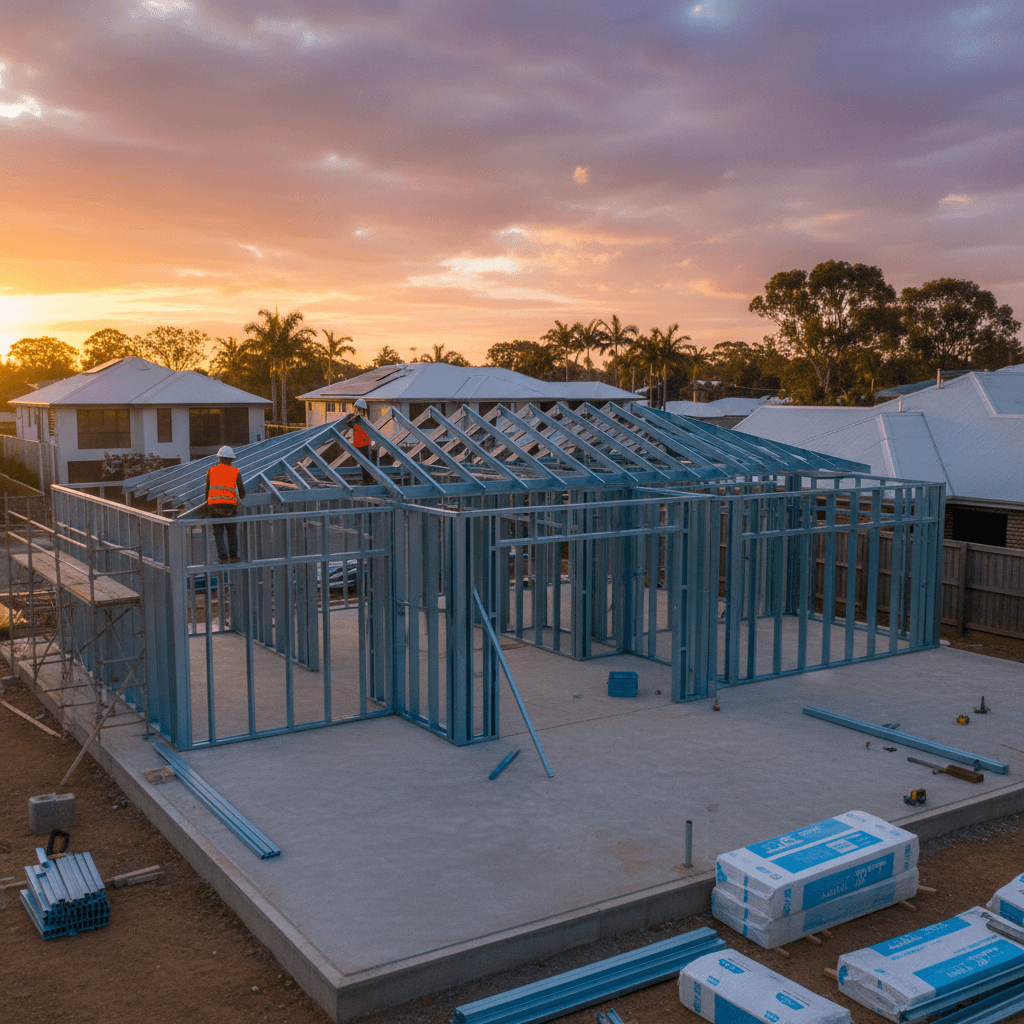
The amount of waste on a standard building site in Australia is enough to make you sick. I've walked onto sites in Western Sydney where there's literally thousands of dollars in timber off-cuts just tossed into a massive skip. It's a joke. When we talk about kit homes, we're talking about a process where the frames are pre-punched and cut to the millimetre in a factory setting. Because everything is engineered to AS 4100 standards before it even reaches your block, there's basically zero waste on site. You aren't paying for material that ends up in the bin. Plus, the factory scraps are bundled up and sent straight back to the furnace for recycling. It's clean. It's efficient. And it's better for your pocket and the dirt you're building on.
I remember a mate building up in the Adelaide Hills. He spent three weekends just hauling timber scraps away because his frame was cut on-site by a chippy who wasn't exactly careful with his measurements. If he'd gone with a steel kit, he would've had a clean slab and about two kilos of metal shavings to sweep up. That's it.
Termites, Poison, and Peace of Mind
Let's talk about the chemical side of things. If you live anywhere north of Melbourne, termites are a constant worry. To keep them out of a timber house, you're often looking at chemical barriers and soil treatments. These things aren't exactly great for the local groundwater or the worms in your garden. Steel is naturally termite-proof. It's not a food source. You don't need to soak the ground in poison every few years just to make sure your walls don't collapse. This makes steel a win for the environment in your own backyard, literally.
And for the owner-builder doing the heavy lifting themselves, it's a health thing. You aren't handling ACQ or CCA treated timber all day. You're handling clean, cold-formed steel. It doesn't off-gas. It's allergy-friendly because it doesn't support mould growth like timber can if moisture gets trapped in a wall cavity during a wet Queensland summer. It's just a healthier way to build a shed or a three-bedroom family home.
The Weight Factor in Transport
People forget that moving heavy materials across Australia costs a lot in diesel. Steel has a much higher strength-to-weight ratio than timber. This means we can pack a whole lot of house onto one truck. If you're building out past Dubbo or up in the Top End, every truck you save is a massive reduction in the carbon footprint of your project. We've seen entire kit homes, including the roof and the cladding, show up on a single semi. Try doing that with a traditional build. You'd be looking at three or four heavy loads easy.
Tips for the Savvy Owner-Builder
If you're keen on the environmental side of things, don't stop at the frame. Here's how to make it all work together:
- Orient your house for the sun. This is basic stuff, but so many people get it wrong. Get those big windows facing North so you don't have to run the heater all winter.
- The insulation we include in the kit is a great start, but don't be shy with it. The better the seal, the less energy you'll use over the next fifty years.
- Use the termite-proof nature of steel to your advantage and look into chemical-free physical barriers for your footings.
- Consider your rainwater. Since you're using a steel roof, the water running off into your tanks is clean and ready for the garden or the laundry.
Thermal Performance and the Myth of the 'Ice Box'
I hear this one all the time: "Steel homes are cold in winter and hot in summer." Wrong. It's all about the system, not the material. A steel frame with a proper thermal break and high-quality insulation outperforms a poorly built timber house every day of the week. Because steel frames don't warp, twist, or shrink over time, your windows stay square. That means you don't get those annoying drafts five years down the line when the timber has finally dried out and moved. A tight house is a sustainable house. Less air leakage means your air con isn't working double time to keep you cool during a February heatwave.
One thing you'll notice when you're bolting these frames together is how rigid they are. There's no 'near enough is good enough' with steel. It's straight. It's true. When you go to hang your plasterboard later, you'll thank yourself because you aren't trying to plane down wonky studs. It's those little details that lead to a better finished product and fewer repairs later on. Sustainability is also about building something that lasts. If a house stays standing for 100 years without needing a major structural overhaul, that's the best environmental outcome you can ask for.
The Bottom Line on Sustainability
So, is a steel kit home the perfect green solution? Nothing's perfect. Making steel takes energy. We know that. But when you look at the lifecycle, nothing else comes close. You get a material that is 100% recyclable, produces zero waste on your site, requires no toxic pesticides for termite protection, and stays straight forever. For most Australians looking to build their own place, it's the smartest move you can make. You get a high-performance home that isn't going to be a headache for the next generation to deal with. Just make sure you've got a good impact driver and a couple of mates who don't mind a bit of hard work on the weekend, and you're golden.