The Reality of Building in the Scrub
Last summer, I stood on a ridge in the Blue Mountains looking at a site that had been wiped clean. Not a stick of timber left. Just some warped corrugated iron and a set of concrete footings. It hits you then. Building a home in Australia isn't just about aesthetics or how the kitchen flows into the alfresco area. It's about physics. It's about how materials handle heat when the sky turns that nasty shade of orange. If you're planning an owner-builder project in a bushfire-prone area, your frame is the skeleton that holds everything together when things go south.
Most people jump straight to the cladding. They worry about the fire-rated shutters or if the windows are toughened glass. They're right to, but the bones matter more than you'd reckon. Using BlueScope TRUECORE steel frames gives you a massive leg up before you even start looking at your BAL (Bushfire Attack Level) rating. Steel doesn't add fuel to the fire. It's that simple. In a kit home context, where you're managing the build yourself, having a non-combustible frame removes one of the biggest headaches you'll face during the council approval process.
Understanding the BAL System Without the Fluff
If you've spent any time at all on your local council's planning portal, you've seen the BAL ratings. BAL-12.5, BAL-29, BAL-40, and the big one, BAL-FZ (Flame Zone). These aren't just arbitrary numbers meant to make your life difficult. They're based on AS 3959, the Australian Standard for construction of buildings in bushfire-prone areas. This standard dictates what you can and can't use on your site. If you're building with timber in a BAL-40 zone, you're looking at a mountain of extra costs for fire-retardant treatments and specific hardwood species that meet the grade. Steel frames don't need those treatments. They are inherently non-combustible. That's a huge win when you're trying to get your DA through without a back-and-forth that lasts six months.
Because steel frames don't burn, they maintain their structural integrity far longer than timber. In a fire, timber frames char. Once they char deeply enough, the roof can come down. Steel won't ignite. It won't spread the flame through the wall cavity to the next room. This isn't marketing talk; it's just the nature of the material. When the Rural Fire Service (RFS) or your local equivalent looks at your plans, seeing a steel frame kit home often makes the whole conversation a lot smoother.
The Myth of the 'Oven Effect'
I hear this one at the pub all the time. Someone says, 'Won me build with steel, it'll just heat up like an oven and bake everyone inside.' It's a load of rubbish. By the time the air inside your home is hot enough for the steel frame to be the primary heat conductor, you've got much bigger problems, like your windows blowing out or your roof vents sucking in embers. Proper insulation is the key here. When we put together a kit home, we aren't just chucking frames at you. We include the windows and doors and insulation that work as a system. Using high-quality glass and fire-rated insulation bats inside those steel studs creates a thermal barrier that works against both the summer sun and the radiant heat of a bushfire.
Direct Benefits for the Owner-Builder
Building your own home is stressful. Anyone who says otherwise is lying to you. You're juggling trades, permits, and deliveries. When your kit arrives on the back of the truck, you want to know everything is straight. Steel frames are manufactured to millimetre-perfect tolerances in a factory. They don't warp if they get wet on site. They don't twist as they dry out. This is vital in bushfire zones where your cladding needs to fit perfectly to prevent ember entry. If your frame is wonky, your cladding will have gaps. Gaps are where embers get in. Those tiny little sparks find a way into your wall cavity, and that's usually how houses are lost, not by a wall of flame, but by a thousand tiny embers.
And let's talk about the weight. Steel is significantly lighter than green timber. If you're building on a steep block with limited access, which is common in many bushfire-prone areas like the Dandenongs or the Adelaide Hills, being able to carry frames by hand without needing a massive crane is a lifesaver. It saves your back and it saves your sanity.
Why Australian Steel Matters
Don't be tempted by cheap imported steel. It's often thinner, prone to rust, and doesn't meet our local standards. We use TRUECORE steel because it's been tested for our harsh conditions. It has a distinctive blue coating that isn't just for looks, it's a protective layer that ensures the frame stays solid for decades. Plus, it's termite-proof. In many bushfire zones, you're also dealing with high termite activity. With steel, you don't need to pump the ground full of nasty chemicals every few years. The termites can't eat the frame. Period.
One thing to keep in mind, though. Steel frames can be a bit of a trick when it's time to hang your heavy stuff. You can't just drive a screw into a stud anywhere like you might with a piece of 4x2 pine. You need to plan where your kitchen cabinets are going or where that heavy 75-inch TV will sit. We usually suggest throwing in some extra noggins or using specific metal fixings. It's a small trade-off for a house that won't rot or burn.
The Kit Home Process in Fire Zones
- Get your BAL assessment done first. Don't guess. Pay the consultant to come out and give you a proper rating.
- Choose a design that minimises 'dead air' spaces. Complex rooflines look great but they’re ember traps. Simple is safer.
- Check your local council’s LEP (Local Environmental Plan). Some areas have specific requirements for external colours to blend into the bush, which affects your cladding choice.
- Ensure your site works include a decent asset protection zone (APZ). No point having a fire-resistant house if you have a pile of mulch leaning against the wall.
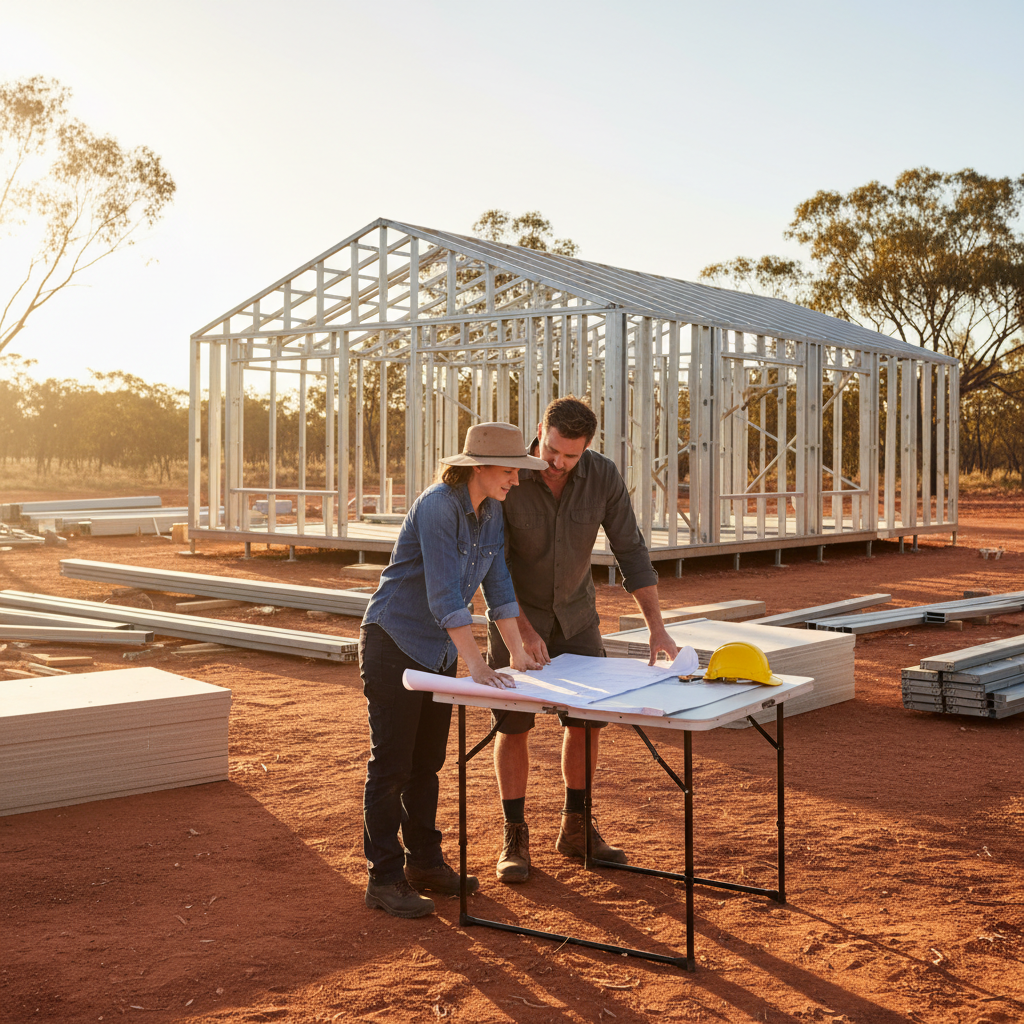
When you're looking at a kit home, remember you aren't just buying a pile of parts. You're buying a system. The cladding, the roofing, and the steel frames all have to work together to meet the NCC (National Construction Code) requirements. Because our kits come with the frames and the external skin, you know the components are compatible. You won't be scratching your head at 2pm on a Saturday wondering if the window flashing you bought at the hardware store actually fits the steel reveal.
Looking Ahead
The climate isn't getting any cooler. Building codes are only going to get tighter. By choosing a steel frame now, you're future-proofing your home. You're building something that is resilient. It's about peace of mind. When the wind picks up and the sirens start, you want to know you've built with the best materials possible. Steel gives you that confidence. It’s hard, it’s straight, and it stay's where you put it. No dramas.