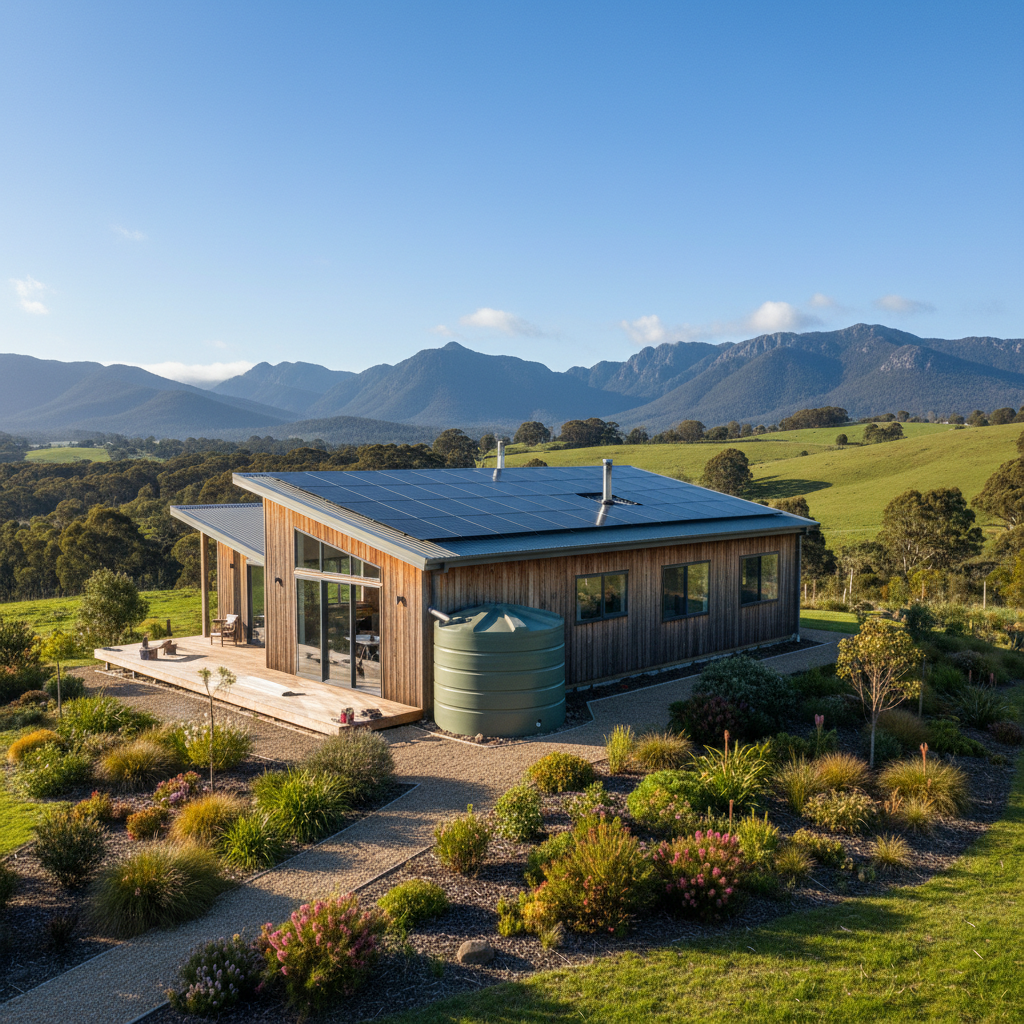
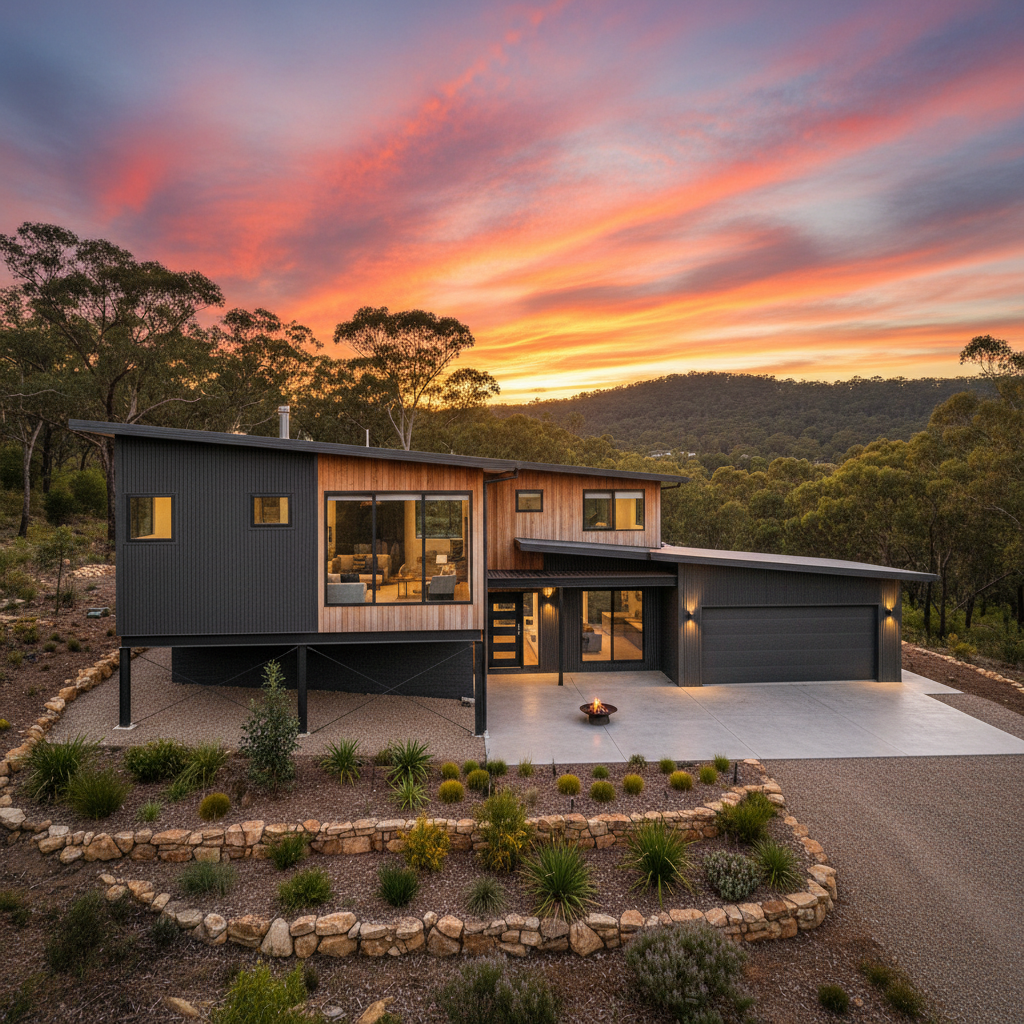
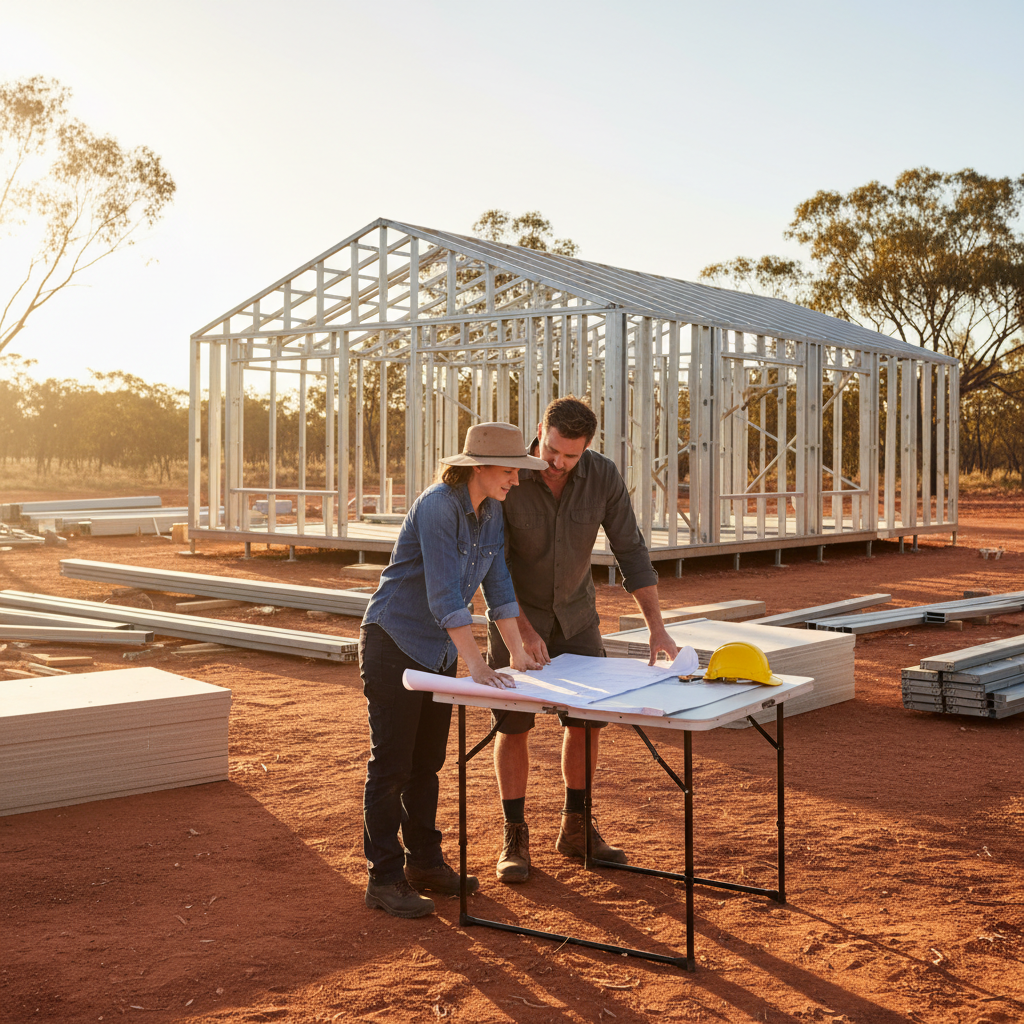
Fire doesn't care about your floor plan. When you're standing on a block of land in the Blue Mountains or tucked away in the hills behind Adelaide, the reality of the Australian summer hits different. You aren't just thinking about where the sun hits the deck for a morning coffee, you're looking at the scrub and wondering about ember attack. It is a heavy thought to carry while you're trying to pick out kitchen tiles, but ignoring the BAL (Bushfire Attack Level) rating of your site is a recipe for disaster before you even get a slab poured.
The Reality of Building in Fire Zones
Most people start their owner-builder path thinking about the look of the place. They want that clean, modern aesthetic. But the moment the council or your private certifier gets a look at your site, the BAL rating comes into play. If you're hit with a BAL-29, BAL-40, or the daunting BAL-FZ (Flame Zone), your choice of building materials isn't just a matter of taste anymore. It becomes a matter of survival for the structure. Steel frames aren't a luxury in these zones. They're a logical necessity. Wood burns. Steel doesn't. It's a blunt way to put it, but when a fire front is pushing heat levels that would make a ceramic kiln blush, you want a skeleton that isn't going to contribute fuel to the situation.
I've seen blokes try to skirt around fire regs by using treated timber or fancy coatings, but why bother with the stress? Using something like BlueScope TRUECORE steel gives you a head start because the material itself is non-combustible. It won't ignite. It won't spread the flame through your roof cavity while you're down at the local evacuation centre waiting for news. That peace of mind is worth more than any fancy marble splashback you might be eyeing off for the kitchen later on.
How Steel Frames Change the Game for Owner Builders
Doing it yourself as an owner builder is hard enough without fighting your materials. Steel frames are light. You can carry most of the wall sections with a mate, no crane needed for the basic stuff. Because they're precision engineered, the holes for your sparky and plumber are already there. No sitting on a ladder for six hours with a hole saw, getting covered in dust. It's clean work. Plus, if it rains while you're mid-build, the steel doesn't soak up water like a sponge. It stays straight. It stays true. You won't come back on Monday morning to find your walls have warped because of a weekend downpour in Gippsland.
The Precision of TRUECORE
When we talk about steel, we aren't just talking about any old scrap metal. We use TRUECORE because it sticks to the Australian Standards, specifically AS 1397 and AS 4600. It's coated with an aluminium, zinc, and magnesium alloy. This isn't just for show. It prevents corrosion and ensures the frame stays structurally sound for the life of the house. If you're building a kit home, you want everything to line up. There's nothing worse than trying to hang a door in a frame that's skewed by 10mm because the material wasn't up to scratch. With steel, it's millimetre perfect every single time. It makes the window installation a breeze, which is vital because in high BAL zones, those window seals and the toughened glass need to fit perfectly to keep out the embers.
Design Flexibility Without the Weakness
There is a weird myth that steel frame homes have to look like sheds. That is absolute rubbish. In fact, steel allows for bigger spans and more open-plan living because it is stronger than timber for its weight. You want a big stacker door leading out to the verandah so you can catch the breeze? Steel handles that weight without needing a massive, ugly lintel hanging down. You get the look of a modern designer home with the guts of a bunker. We see heaps of people building out in the bush who want those big vistas, and steel frames make it possible without compromising on the fire safety required by the NCC Volume 2.
But it's not all beer and skittles. You've got to think about your thermal bridging. Steel transfers heat faster than wood. This is why we include quality insulation in our kits. You need that break between the outside cladding and the internal frame to make sure your house stays cool in summer and warm when the frost hits the ground in July. Don't cheap out on your sarking or your batts. It's the difference between a house that feels like a home and one that feels like a tin shed in the sun.
The Hidden Enemy: Termites
While we're talking about the bush, let's talk about the other thing that eats houses: termites. If you're building on a bush block, you're moving into their backyard. They're everywhere. Using a steel frame takes their favourite food source off the menu. You still need your termite barriers for your skirting boards and door frames, but the actual structure of your house is bulletproof against the little buggers. I've walked into 50-year-old homes where the timber studs were literally held together by the paint and hope because termites had gutted them. With steel, that's one less thing for you to worry about while you're trying to figure out your site drainage and your septic system.
Practical Tips for the Build Site
- Keep your steel off the ground if you're storing it for a few weeks. A bit of timber dunnage goes a long way.
- Invest in a good quality impact driver. Your wrists will thank you after the thousandth screw.
- Check your slab levels twice. Steel doesn't have the "play" that timber does. If your slab is out by 20mm, the steel won't hide it.
- Always wear gloves. Freshly cut steel edges are like razor blades, and they'll get you when you're tired at 4pm on a Friday.
Living with Steel
People ask if steel frames make noise. Every house makes noise. Timber creaks as it dries out and moves. Steel can make a quiet 'tick' as it expands and contracts with the temperature, but if your insulation is done right, you'll barely notice it. What you will notice is that your walls are straight. Your cornices won't crack three years down the line because the frame decided to twist. It's a stable, predictable material. For an owner builder, predictability is the greatest gift you can get. You're already managing trades, council inspections, and deliveries. You don't need your house frame acting up as well.
When the wind picks up and the sky turns that weird shade of orange we all dread, you want to know you've built the best possible version of your home. A steel frame won't solve every problem, but it sets a foundation of safety and strength that is hard to beat. You've done the hard yards on the site prep and the slab, so don't fumble on the 5-yard line by choosing a frame that can't stand the heat. It's about being smart, being prepared, and building something that'll still be standing when your grandkids are running around the yard. That's why we stick with steel. It just makes sense for the way we live in this country.