City life in Sydney or Melbourne has lost its shine for a lot of people lately. I see it every week. People are tired of the noise, the traffic, and councils that treat every small renovation like you are building the Opera House. They want space. They want a shed. They want to wake up and see trees instead of their neighbour's brick chimney. But there is a massive problem with the traditional tree-change dream. Finding a reliable builder in regional New South Wales or rural Victoria is like trying to find a decent coffee at a petrol station at 3am. It is nearly impossible. Many local blokes are booked out for two years, and the ones who aren't often charge a 'remote area' tax that would make your eyes water.
The Shift to Regional Owner-Building
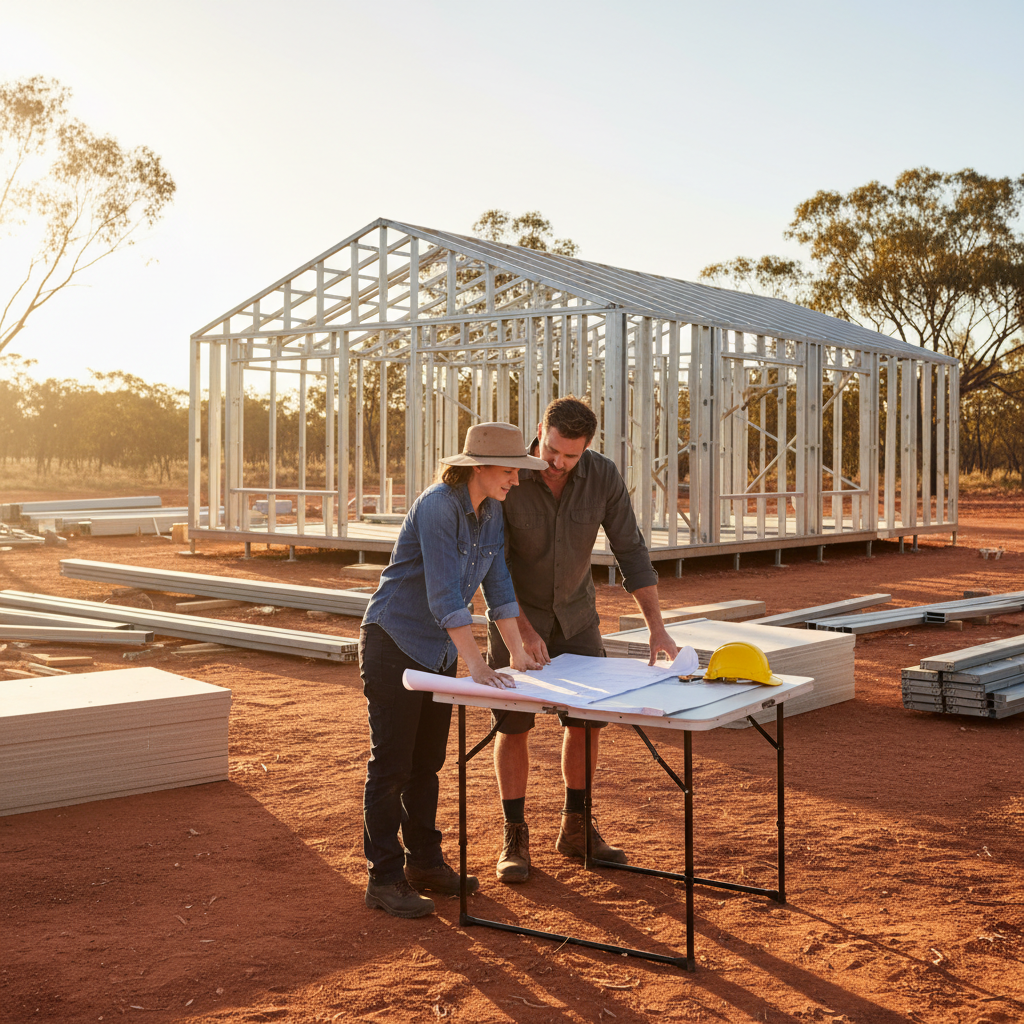
This is where kit homes have stepped in to save the day for people moving to places like the Hunter Valley, the Sunshine Coast hinterland, or down near Margaret River. It's about control. When you buy a kit, you aren't waiting on a big volume builder to fit you into their schedule between thirty other suburban projects. You become the owner-builder. You manage the site. You get the kit delivered on a truck, and suddenly, you have a pile of BlueScope steel and cladding sitting there ready to go. You aren't just buying a house, you're buying a way to bypass the frustration of regional labor shortages.
People reckon owner-building is only for blokes who grew up with a hammer in their hand. That is rubbish. I've seen librarians and office workers manage a kit build better than some seasoned chippies because they actually read the instructions and stay organized. They hire the plumber, they find the local sparky, and they get the slab poured. It's a logistical game, not just a physical one. Plus, when you're in a regional area, being an owner-builder lets you support local trades directly. You're the boss of the site, and that changes the whole dynamic of the build.
Why Steel Frames Matter in the Bush
If you are building in the Australian bush, you have two main enemies: termites and fire. I have seen timber houses in Queensland that looked solid from the outside but were essentially held together by the paint because the termites had a feast on the internal studs. That is a nightmare you don't want when you've just moved to your dream five-acre block. Using TRUECORE steel for the frames and trusses is a no-brainer here. Termites won't touch it. They can crawl over it, sure, but they can't eat it. It gives you a level of peace of mind that timber just can't match, especially when you are miles from the nearest pest control bloke.
Then there is the fire risk. We have to talk about BAL ratings. Whether you are building in a BAL-12.5 zone or a high-risk BAL-40 area, your material choice is your first line of defense. Steel is non-combustible. It won't contribute fuel to a fire. When the wind picks up on a hot February afternoon and the sky starts looking a bit too orange for comfort, you'll be glad your home's skeleton is made of Aussie steel. It's about building for the reality of the Australian climate, not some idealized version of it. The precision of steel is also a massive win for DIYers. Steel frames don't warp, twist, or shrink like timber can. Every piece is straight. Every corner is square. When it comes time to put the plasterboard on or fit the windows, everything just fits. No planers, no shims, no swearing at a bowed stud.
The Practicality of the Kit Delivery
Logistics in regional areas is a headache. Try getting a truckload of loose timber or individual bricks out to a block at the end of a dirt track in a storm. It's a mess. Kit homes are designed for this exact scenario. Everything comes in a co-ordinated drop. You get the frames, the roof sheets, the Colorbond cladding, the windows, and the doors. It is a house in a box, minus the slab and the kitchen sink. It means fewer delivery fees and less chance of materials going missing or getting weathered while you wait for the next stage of the build.
I always tell people to think about their site access early. If the delivery truck can't turn around, you're going to have a bad day. You need a flat, dry spot to stack your components. Keep the steel off the ground, even if it is just on some old pallets. Cover it with a tarp if the weather looks dodgy, even though the BlueScope stuff is tough. Being organized on day one saves you three weeks of headaches later on.
Design Trends for the Modern Tree-Changer
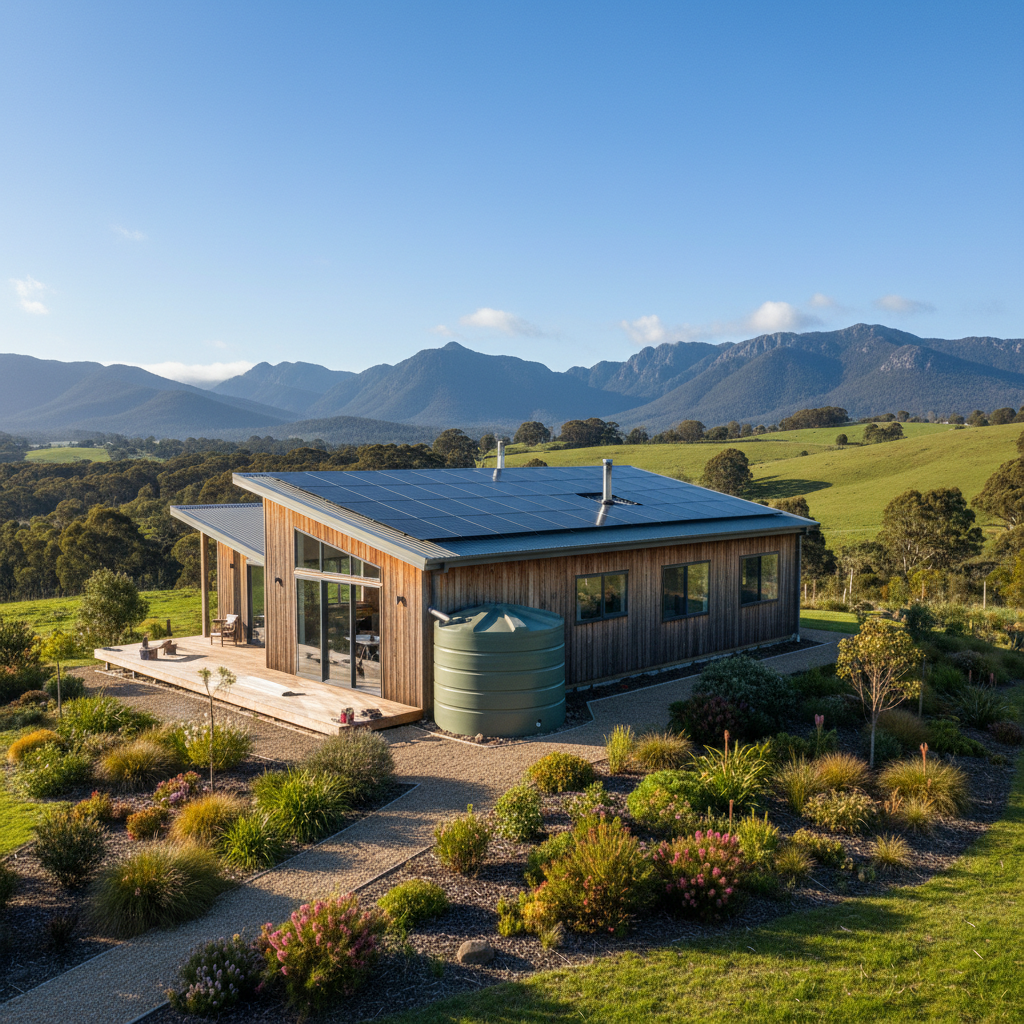
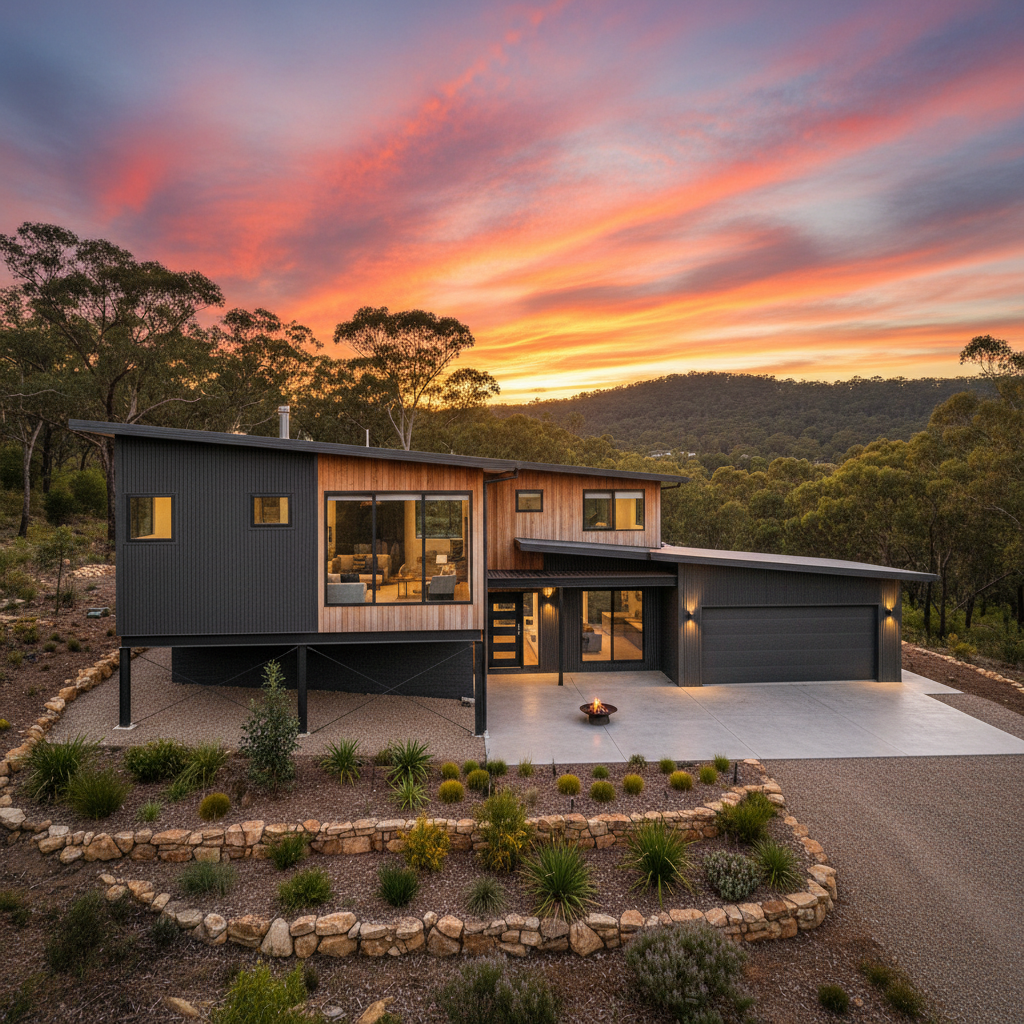
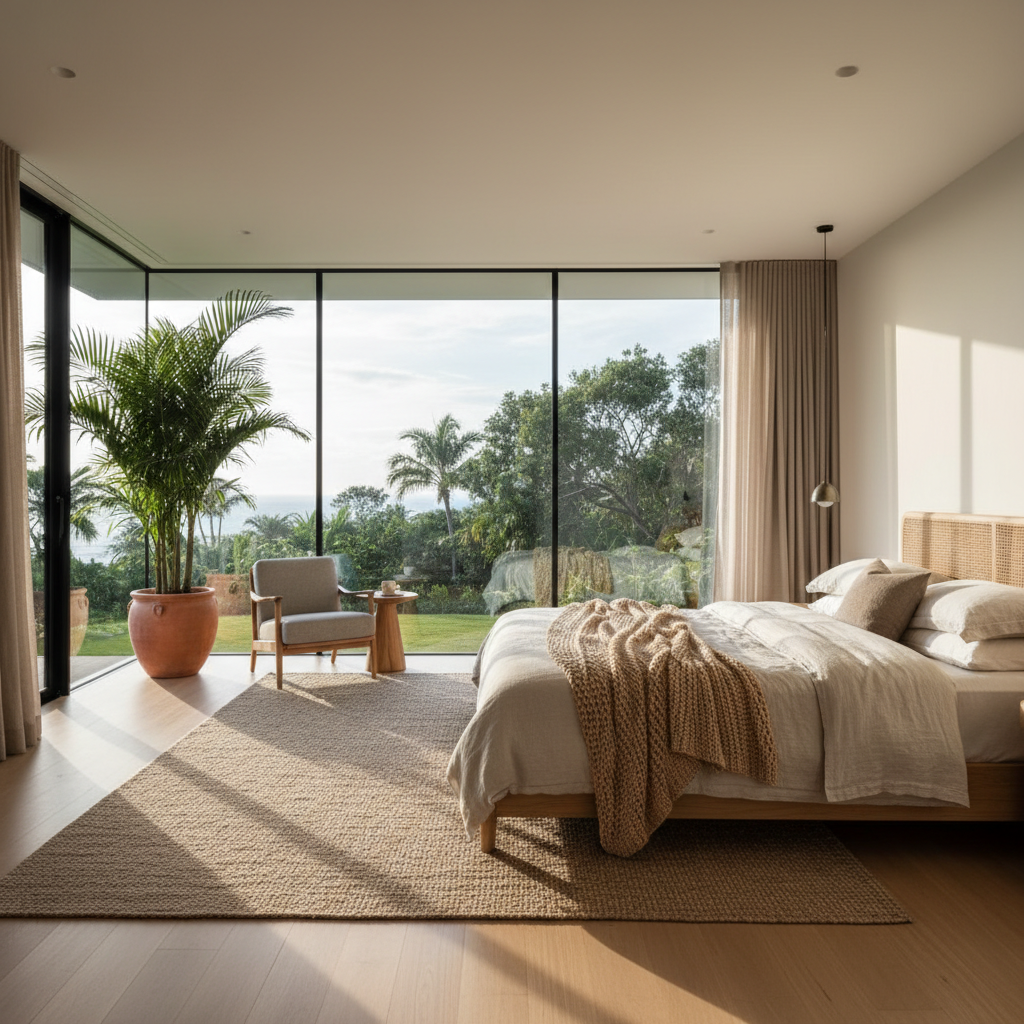
The days of kit homes looking like glorified sheds are long gone. What we are seeing now is a move towards 'Pavilion' style living. Think long, lean buildings with plenty of glass to soak up the view. Because kit homes use steel spans, you can get those big open-plan living areas without needing a forest of internal load-bearing walls. People are opting for higher ceilings and massive sliding doors that lead out to a deck. If you've moved to the country for the view, you might as well see it. Wrap-around verandahs are also making a huge comeback. They keep the sun off the walls in summer, which helps with the cooling bill, and they give you a spot to sit with a beer while the sun goes down. Practical and it looks great.
Technical Tip: Managing Your Trades
As an owner-builder, your biggest job isn't swinging a hammer. It is managing people. Because you've bought a kit, the structural heavy lifting is mapped out for you. But you still need to suss out your subbies early. Don't wait until the kit arrives to start calling plumbers. Most good regional trades are booked weeks in advance. Show them the plans. Tell them it's a steel frame kit. Some old-school plumbers moan about drilling through steel, but most modern blokes have the right bits and don't care. In fact, many prefer it because the holes are often pre-punched for wiring and pipes. It's faster for them, which should be cheaper for you.
One thing to watch out for is your slab. It has to be spot on. Because steel frames are made with millimetre precision, your concrete needs to match. If your slab is out by 20mm, the frames won't sit right and you'll be chasing your tail for the rest of the build. Hire a concretor who knows how to use a laser level properly. Don't settle for 'close enough'.
The Reality Check
Building a home in the bush isn't all sunsets and kookaburras. It's hard work. You'll be dealing with council DA approvals, which can be a slow grind depending on where you are. You'll be coordinating deliveries and probably picking up extra bits from Bunnings more often than you'd like. But there is a specific kind of pride that comes from standing in a house that you saw arrive on the back of a semi-trailer. You know every screw, every sheet of insulation, and every piece of flashings because you put it there or watched it go in. It is a way to get a high-quality, architecturally designed home without the city price tag or the city stress. So if you're looking at that block of land three hours away from the CBD, don't look for a builder first. Look for a kit that fits your life and a steel frame that will outlast you.