Taking the Reins: Your Journey to Becoming an Owner Builder
There is something uniquely Australian about the dream of building your own home. It is about more than just saving on labor costs, it is about the pride of seeing a structure rise from the dirt knowing you coordinated every nail, screw, and steel frame. Whether you are looking to build a small weekender or a full scale family home, the kit home path is a popular route for those who want to be hands-on without having to design every component from scratch.
However, before you can start swinging a hammer or even clearing your site, there is a significant hurdle to clear: obtaining your owner builder approval. In Australia, building regulations are managed at the state and territory level, which means the rules in Queensland are quite different from those in Victoria or Western Australia. This guide will walk you through the essential steps to getting your permit and ensuring your project stays on the right side of the law.
What Does it Actually Mean to be an Owner Builder?
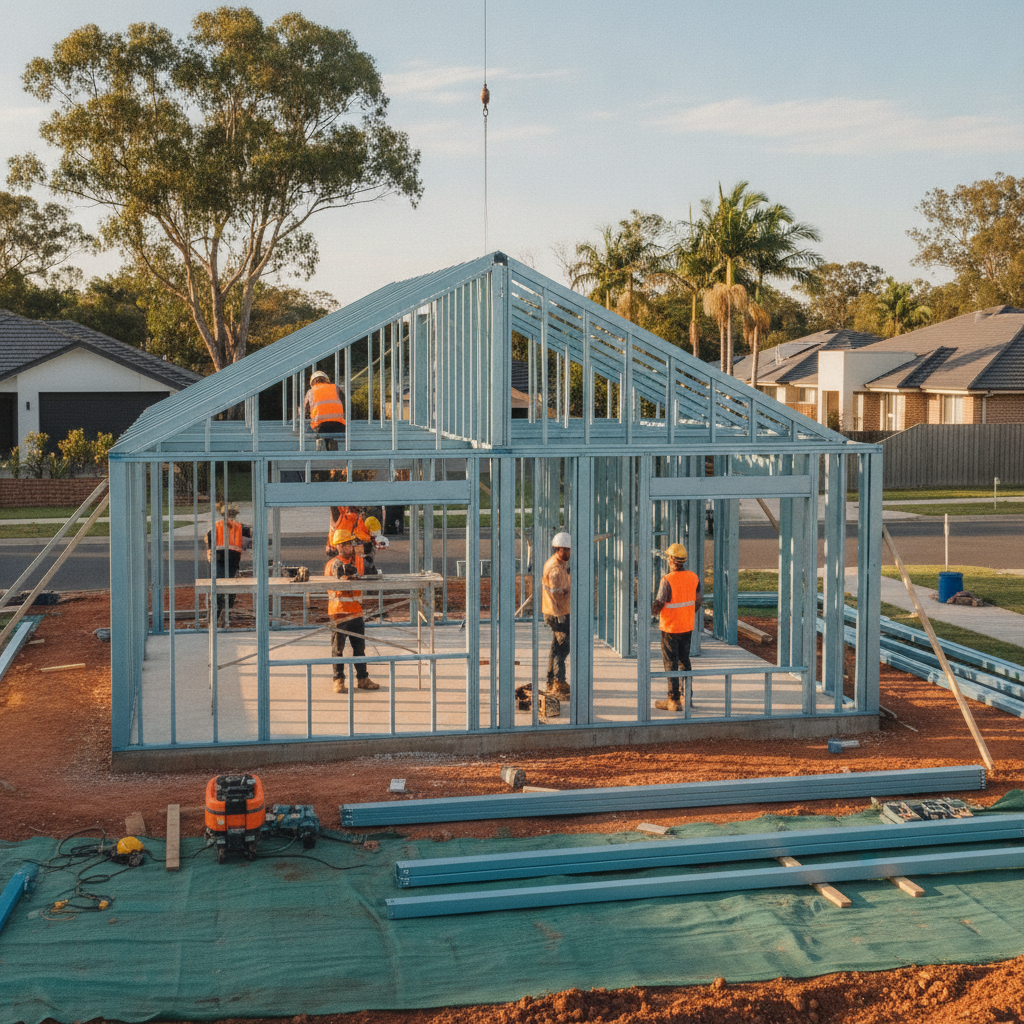
Being an owner builder means you take on the legalities and responsibilities of a head contractor. You aren't just the person paying the bills, you are the person responsible for site safety, the quality of work, and ensuring all subcontractors (like plumbers and electricians) are licensed and insured. When you purchase a kit home, companies like Imagine Kit Homes provide the structural components, such as the TRUECORE steel frames, roofing, and cladding, but the responsibility of turning those parts into a finished, compliant home rests on your shoulders.
Most states require an owner builder permit if the value of the work exceeds a certain threshold, usually between $10,000 and $20,000. Without this permit, you cannot legally manage a major construction project on your own land.
State by State: Navigating the Approval Process
Queensland (QLD)
In the Sunshine State, the Queensland Building and Construction Commission (QBCC) oversees owner builder permits. If your kit home project value exceeds $11,000, you must obtain a permit. A key requirement in QLD is completing an approved owner builder course. This course ensures you understand your obligations regarding site safety and trade management. Once you have your course certificate, you can apply for the permit. Remember, in QLD, you can only obtain one permit every six years, so make it count.
New South Wales (NSW)
NSW Fair Trading manages the process here. If the work is valued at over $20,000, you need a permit. Similar to Queensland, you must complete an owner builder education course unless you are already a licensed builder. Additionally, if the work is valued at over $20,000, you must provide evidence that you have completed the 'Work Safely in the Construction Industry' (White Card) training. This is a practical step that keeps you and your tradespeople safe on site.
Victoria (VIC)
In Victoria, the Victorian Building Authority (VBA) handles the approvals. You are required to obtain a Certificate of Consent if the project is worth more than $16,000. One unique aspect of the Victorian system is the requirement to pass a knowledge test or complete an e-learning module provided by the VBA. This ensures you are aware of your legal duties, particularly regarding insurance and domestic building contracts.
Western Australia (WA)
The Department of Mines, Industry Regulation and Safety handles applications in the west. You need a permit if the value of work is over $20,000. WA is known for its high standards of construction, and as an owner builder, you will need to demonstrate that you have sufficient knowledge of the building process. The approval is specific to the property, and like other states, there are restrictions on how often you can apply for a permit.
South Australia (SA) and Other Regions
In South Australia, the process is slightly different as the focus is on the 'Building Indemnity Insurance' and ensuring that the person supervising the work is competent. It is always best to check with your local council and Consumer and Business Services (CBS) for the latest requirements. Similarly, in the ACT, NT, and Tasmania, checking with the relevant local building authority is the first step before ordering your kit home components.
The Essential Steps for Every Owner Builder
Regardless of which state you call home, there are universal steps you must take to get your project off the ground:
1. Complete a White Card Course
Even if it is not strictly required for your permit in every state, a White Card course is invaluable. It teaches you how to identify hazards and manage risks on a building site. Since you will be managing trades coming on and off your property, having this baseline safety knowledge is a non-negotiable for a professional build.
2. Source Your Kit Home Plans
You cannot apply for a permit without a clear plan. When you choose a steel frame kit home, you receive detailed architectural and structural engineering plans. These are vital for your permit application and for your local council to grant Development Approval (DA) or a Construction Certificate (CC).
3. Organize Your Insurances
This is where many owner builders stumble. You need more than just standard home insurance. You will likely need Public Liability insurance and Construction Risk insurance. Some states also require 'Owner Builder Warranty Insurance' if you decide to sell the home within a certain period after completion. Protecting yourself and your investment from the start is common sense.
4. The Council Approval Phase
Your owner builder permit is a personal license to manage work, but you still need local council approval for the building itself. This involves submitting your kit home designs, site plans, and soil tests. Working with a company that provides pre-engineered steel frames can make this process smoother, as the structural integrity of the frames is already documented for the certifiers.
The Benefits of Choosing Kit Homes for Owner Builders
Why do so many owner builders gravitate toward kit homes? The answer lies in the balance of control and support. When you receive a delivery containing the frames, cladding, windows, and doors, the 'puzzle' has already been designed to fit together. Using steel frames, specifically those made from high quality Australian steel like TRUECORE, offers a level of precision that is hard to achieve with traditional stick-built timber frames. Steel is straight, true, and doesn't warp, which makes the assembly process much more manageable for a DIY enthusiast.
Furthermore, because the components are pre-cut and ready to be bolted or screwed together, the time your site is exposed to the elements is reduced. This efficiency is a huge win for an owner builder who might be juggling the project alongside a full time job.
Practical Tips for a Smooth Approval Process
- Don't rush the paperwork: Most delays in owner builder projects happen before the first hole is dug. Ensure every form is filled out correctly and all attachments (like your course certificates) are included.
- Talk to your neighbors: A friendly chat about your plans can prevent formal objections during the council notice period.
- Build a relationship with a Building Certifier: A private certifier can be a great ally. They can review your plans before submission and point out any potential regulatory issues.
- Document everything: Keep a site diary. Take photos of the progress, especially things that will eventually be covered up like plumbing in the slab or the steel wall frames before the insulation and cladding go on.
Final Thoughts
Getting your owner builder approval is the first major milestone in creating your dream home. It represents the transition from a dreamer to a builder. While the bureaucracy might feel heavy at times, these regulations are there to ensure that your home is safe, durable, and compliant with Australian standards. By choosing a kit home with robust steel frames and following the state-specific steps outlined above, you are setting yourself up for a rewarding and successful building experience. Take the time to do the research, get your permit in order, and enjoy the process of bringing your vision to life.