The Great Australian Dream: Bringing the Outside In
There is something uniquely Australian about the way we live. Perhaps it is the golden light of a summer afternoon or the crisp, clear air of a winter morning, but our homes have never been just about the four walls we sleep within. In the modern Australian architectural landscape, the boundary between the kitchen and the garden has blurred. For those embarking on a kit home journey, this presents an incredible opportunity to design a lifestyle that celebrates our climate and our love for entertaining.
Building a kit home allows you to be the architect of your own daily rituals. When you sit down with your floor plans, you aren't just looking at room dimensions, you are deciding where the morning coffee will be sipped and where the weekend barbeques will roar to life. Integrating an expansive outdoor entertaining space is not just an add-on, it is a way to effectively double your living area without the footprint of a massive internal build.
The Philosophy of Seamless Transitions
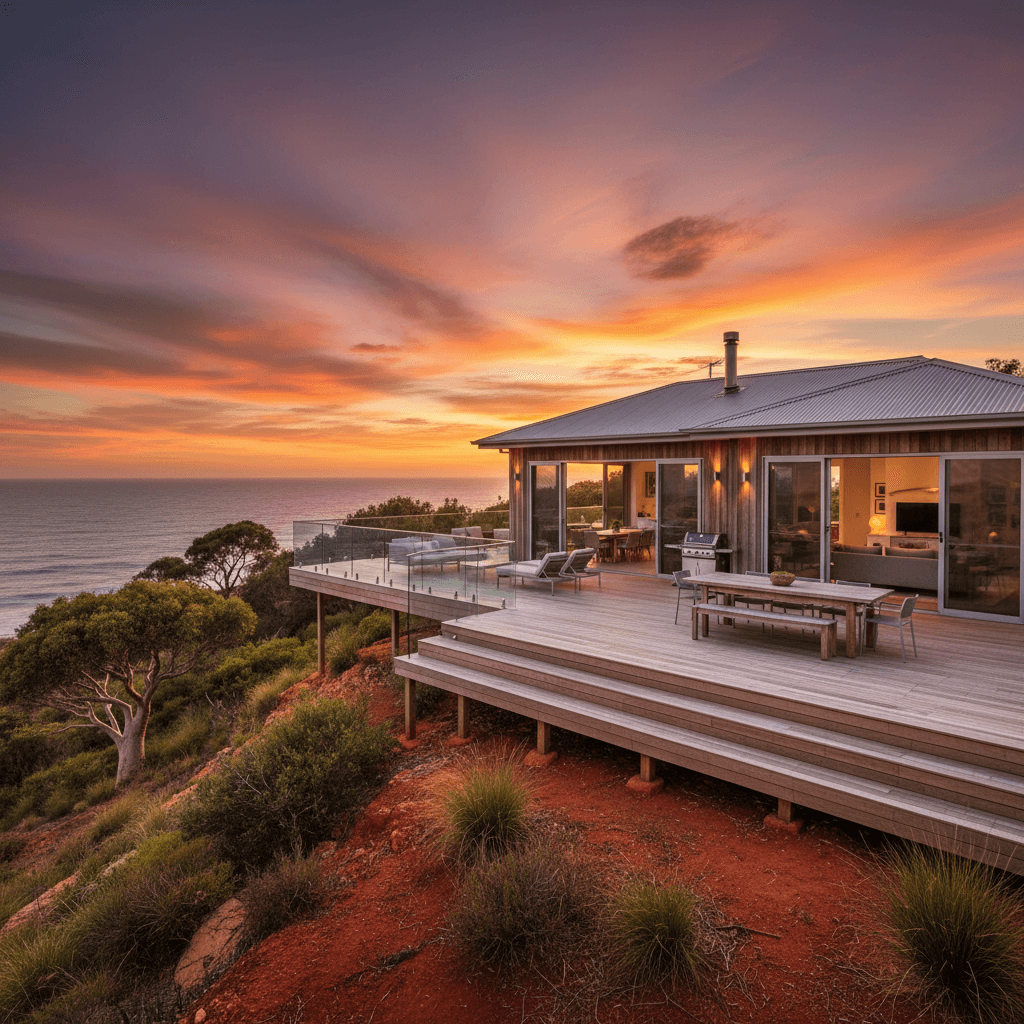
The secret to a successful outdoor living area lies in the flow. If you have to step down a steep set of stairs or navigate a narrow hallway to reach your deck, the connection is lost. Design and lifestyle trends in Australia are currently leaning heavily toward "level threshold" living. This involves aligning your internal floor height as closely as possible with your external decking or patio.
By using wide sliding or bi-fold doors, which are standard inclusions in high-quality steel frame kits, you can create a literal wall of glass that disappears. When these doors are open, the lounge room settles into the garden, and the garden becomes a part of the home. This sense of openness makes even a modest-sized kit home feel like a sprawling estate.
Orientation: Let the Sun Be Your Guide
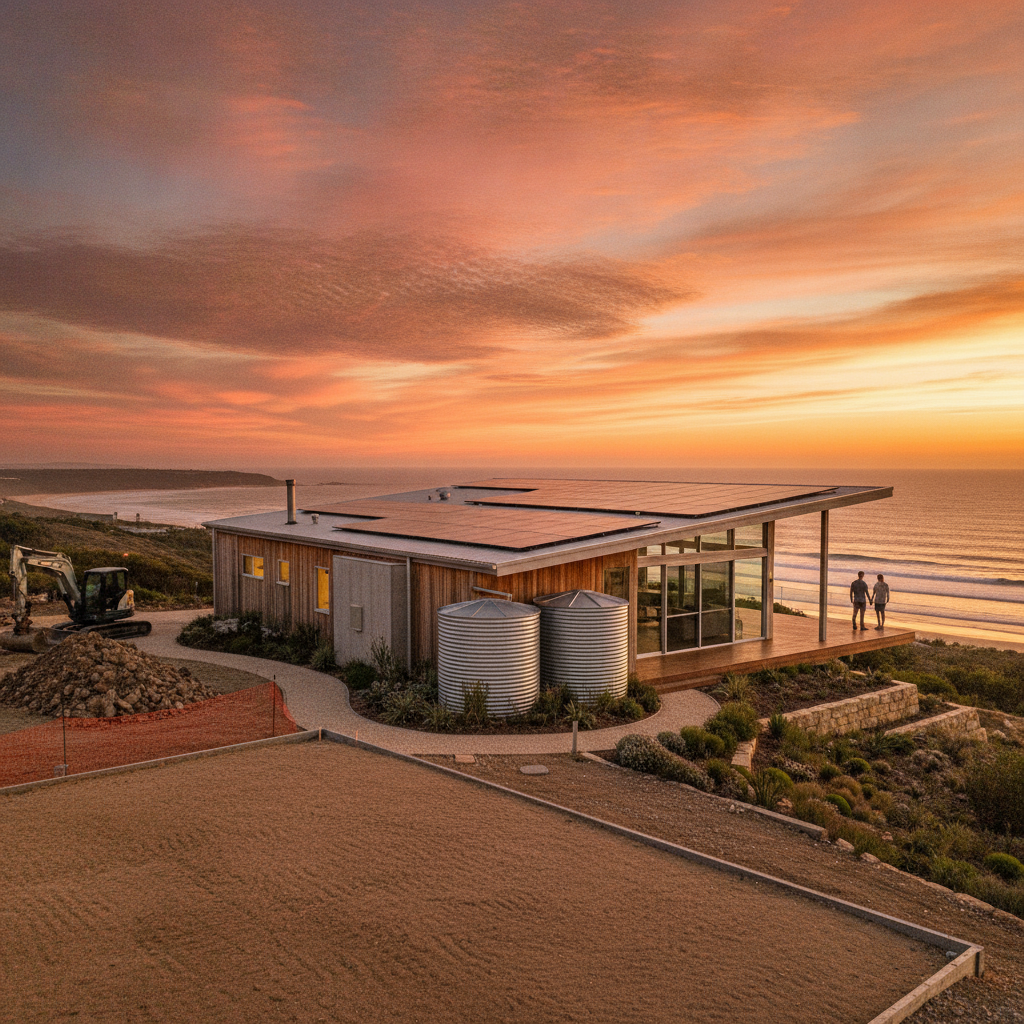
Before the first bolt is tightened on your steel frames, you must consider the sun. In Australia, orientation is everything. A north-facing outdoor area will capture the best of the winter sun while being easier to shade in the peak of summer. Think about where the prevailing winds come from in your specific region. There is nothing worse than a beautiful deck that becomes a wind tunnel every afternoon. Using the structure of your kit home to create a L-shape or U-shape footprint can provide a natural windbreak for your entertaining zone.
The Bones of Beauty: Why the Foundation Matters
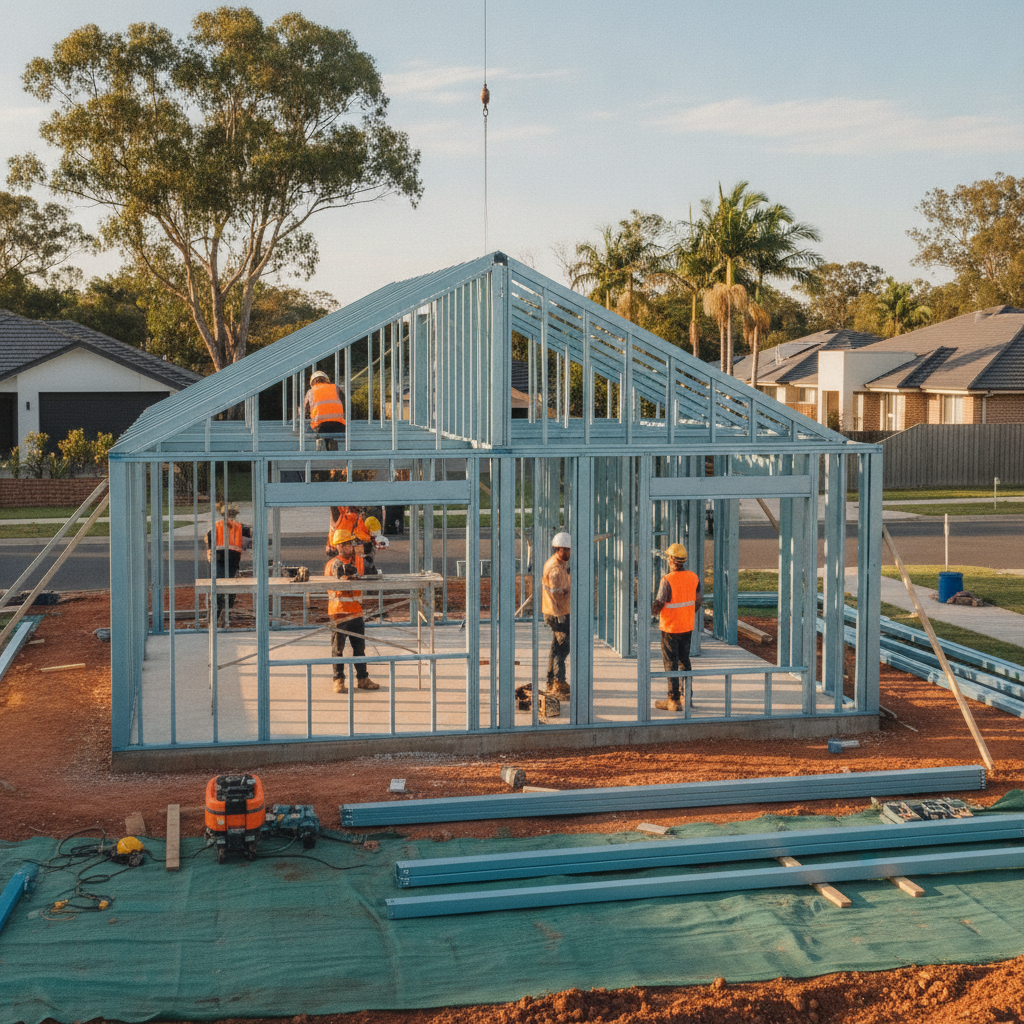
When we talk about design and lifestyle, we often focus on the cushions and the plants, but the longevity of your outdoor space depends on what is underneath. Many Australian owner-builders choose steel frame kits because they offer a level of precision that makes extending into the outdoors much simpler. Using BlueScope TRUECORE steel for the main structure of your home ensures that the skeleton of your building is straight, true, and resistant to the elements.
This precision is vital when you are trying to line up an expansive deck or a skillion roof extension. Steel does not warp or twist over time, meaning those large glass doors will continue to glide smoothly for years, maintaining that seamless transition you worked so hard to design. Furthermore, in many parts of Australia, termite resistance is a non-negotiable. Using steel frames throughout the build provides that extra peace of mind so you can focus on the aesthetic choices rather than maintenance headaches.
Kit Home Tips: Creating Zones for Entertaining
A large empty deck can feel cold and uninviting. To make your outdoor area a true extension of your living space, you need to create "zones" much like you do inside the house. Consider these three essential areas:
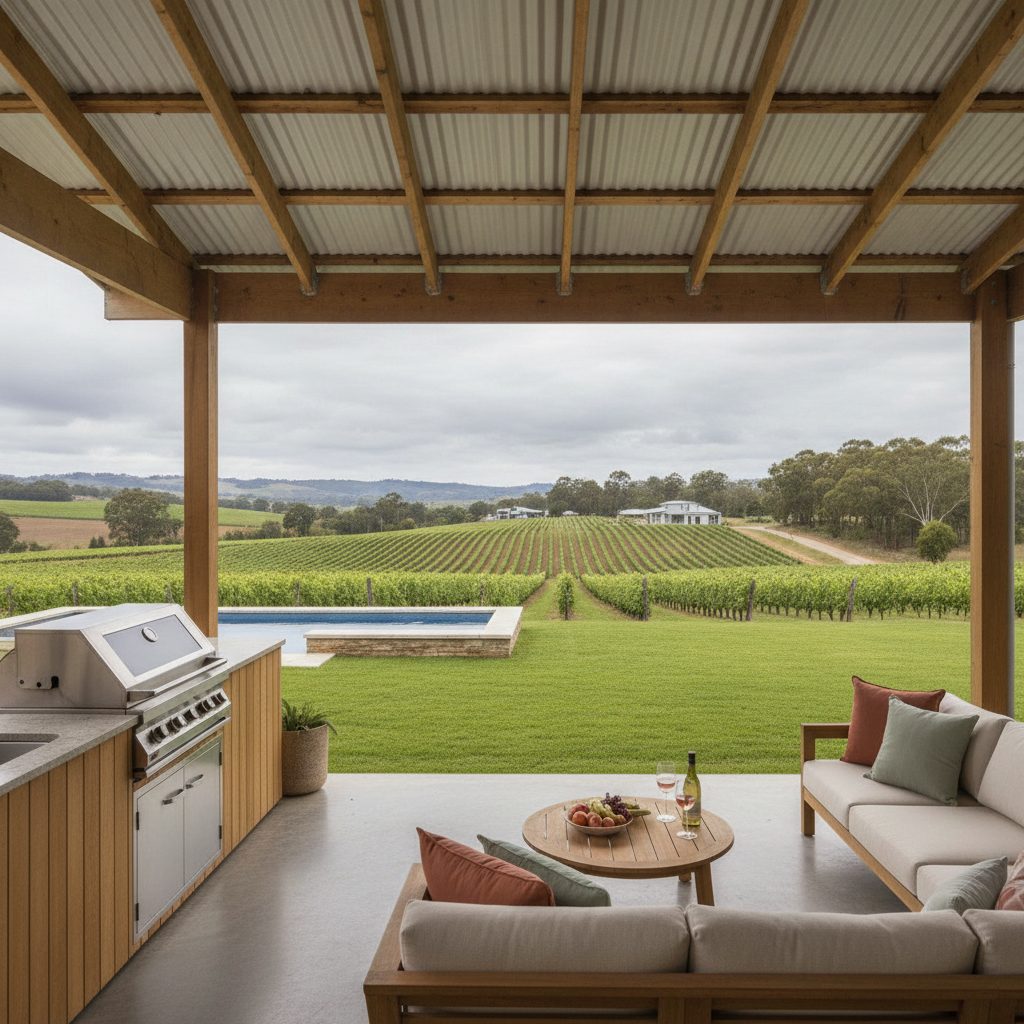
- The Outdoor Kitchen: This is more than just a portable grill. Think about built-in cabinetry that complements your internal kitchen's cladding, a small bar fridge, and perhaps even a wood-fired pizza oven. Positioning this close to the internal kitchen makes transferring food a breeze.
- The Dining Node: Ensure there is enough space for a large table where guests can linger over a meal. Overhead protection, such as an extension of your kit home's roofline using matching corrugated steel roofing, ensures this space is usable year-round.
- The Lounge Corner: Every outdoor area needs a spot for relaxation. Low-slung outdoor sofas, an outdoor rug, and perhaps a fire pit nearby create a cozy atmosphere for evening drinks.
Owner-Builder Tips: Navigating the Project
As an owner-builder, you have the hands-on task of managing the trades and the workflow. When it comes to outdoor spaces, timing is key. You might want to have your main slab poured with an integrated thickened edge for the deck, or you might choose to build a raised timber deck after the main kit is standing.
One pro-tip for owner-builders is to plan your electrical and plumbing early. If you want a ceiling fan on the veranda or a gas point for the BBQ, ensure these are roughed-in while the steel frames are exposed. It is much easier to run cable and pipe through the pre-punched holes in steel frames than it is to retro-fit them later. Also, consider the lighting. Sconces mounted on the external cladding can provide a soft, ambient glow that highlights the architectural lines of your home at night.
Materiality and Texture
The modern Australian aesthetic is all about contrast. If your kit home features sleek, dark steel cladding, you can soften it with the warmth of natural timber decking. Spotted gum or Blackbutt are popular Australian choices that age beautifully. Alternatively, if you prefer low maintenance, composite decking provides a similar look without the need for annual oiling.
Don't forget the vertical surfaces. Using the same cladding on your outdoor kitchen island as you have on the exterior of the house creates a cohesive look. This repetition of materials is a classic design trick that makes the entire project feel professionally designed rather than a series of afterthoughts.
Landscaping: The Final Layer
Your kit home doesn't end at the deck's edge. The landscaping should act as the frame for your house. Use native Australian plants to tie the building to its environment. Tall grasses can provide privacy, while a well-placed Eucalyptus can offer dappled shade that keeps the house cool. For those in bushy areas, remember to consult your BAL (Bushfire Attack Level) rating when choosing plants and materials. Steel frames and non-combustible cladding are excellent choices for these high-risk zones, giving you more flexibility with your design.
Conclusion: A Home Without Borders
Building a kit home in Australia is about more than just putting a roof over your head, it is about creating a sanctuary that fits your way of life. By focusing on the flow between your internal rooms and your outdoor entertaining areas, you create a home that feels spacious, airy, and deeply connected to the landscape.
Whether you are hosting a festive family lunch or enjoying a quiet sunset from your veranda, the effort you put into designing these spaces will pay dividends for decades. With the strength of a steel frame foundation and the freedom of the owner-builder path, your dream of a seamless indoor-outdoor lifestyle is well within reach. Grab your floor plans, head outside, and start imagining the possibilities.