Stop Dreaming and Start Scheduling
Most blokes and handy women get into the owner builder game because they want to get their hands dirty. They want to see that steel frame rise up out of the slab on a crisp Saturday morning while the magpies are warbling. But here is the reality check. Building a kit home in Australia isn't 90 percent physical labour. It's 90 percent paperwork and logistics. If you aren't prepared for the sheer volume of phone calls, emails, and site inspections required before you even crack a sweat, you're going to hit a wall fast.
I've seen it heaps of times. A family buys a beautiful block out in the sticks, maybe near Gympie or down the coast near Nowra, and they think they'll be moved in by Christmas. Then they realize they haven't sussed out their Section 68 or they've completely forgotten about the BAL (Bushfire Attack Level) rating requirements for their windows. Suddenly, that kit they bought sits in a paddock under a tarp for six months while they fight with the local council. That's how projects die. You need to be a project manager first and a builder second.
The Slab is the Foundation of Your Sanity
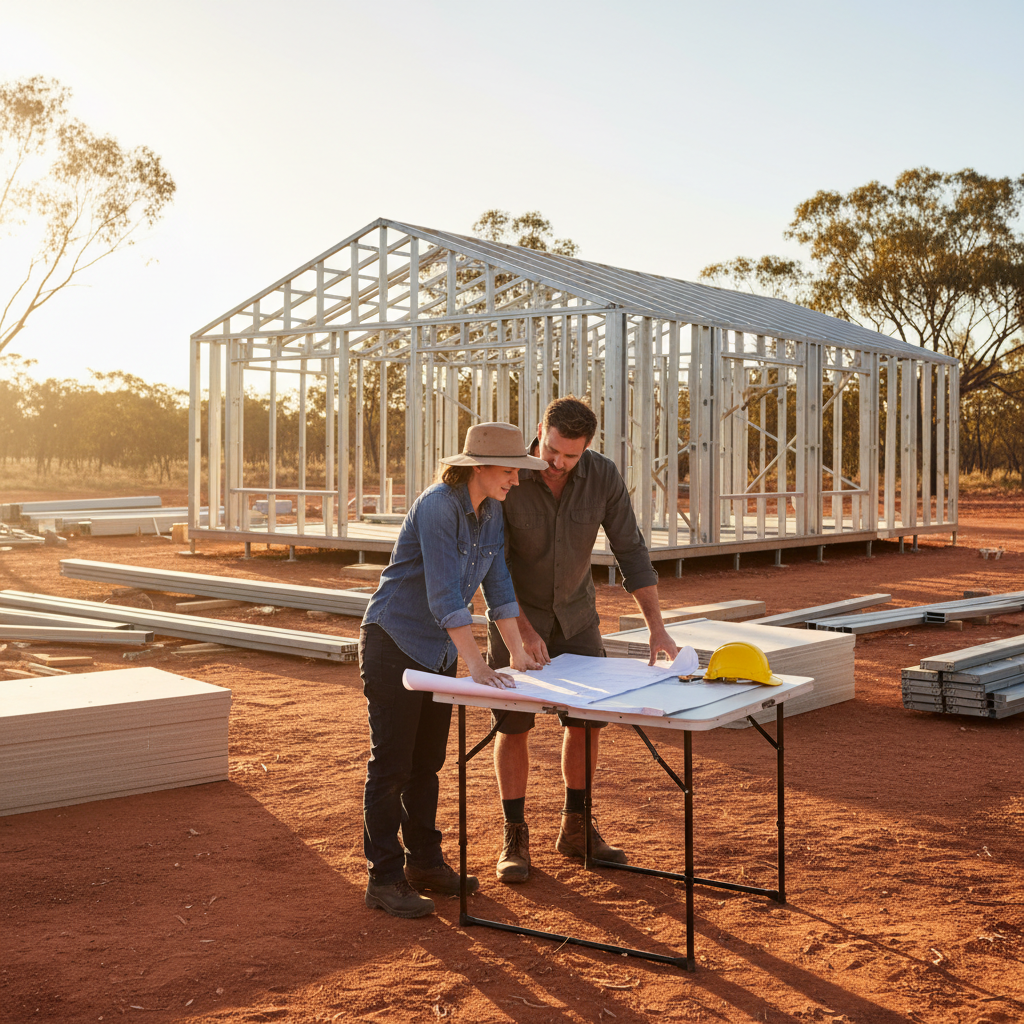
Everything starts with the concrete. If your slab is out by even 10mm, you're in for a world of pain when those TRUECORE steel frames arrive. Steel doesn't have the 'give' that old-school timber does. You can't just plane a bit off the side if the slab is wonky. It's precise. We're talking millimetre-perfect engineering from BlueScope Steel. Because the frames are pre-punched and ready to bolt down, your footings need to be spot on.
I always tell owner builders to be on-site the day the pour happens. Don't just trust the subbie. Check the dimensions yourself. Get the laser level out. If those anchor bolts are in the wrong spot, you'll be spending your weekends drilling into cured concrete instead of putting up walls. It's a nightmare you don't want. Plus, make sure your plumber has really looked at the floor plan. Moving a stack pipe through 100mm of reinforced concrete because someone misread the kitchen layout is a mistake that will haunt your bank balance and your schedule.
The Trade Trap: Don't Be the Last Priority
When you're an owner builder, you're competing for trades with the big volume builders who give those sparkies and chippies forty jobs a year. You're giving them one. So, how do you keep them interested? Communication. Don't call a plasterer on Friday and expect him there Monday. You need to be booking your trades months in advance.
But here's the kicker. If the kit delivery is delayed or the weather turns sour, you have to let them know immediately. If a sparky shows up to a site that isn't ready for him, he won't come back for three weeks. He's got bills to pay and other jobs to get to. Be the bloke who has the site clean, the materials ready, and the coffee hot. It sounds soft, but a tidy site earns respect from trades. They'll work faster and do a better job if they aren't tripping over offcuts and rubbish.
Managing the Kit Arrival
When the truck rolls up with your kit, it's a big day. You'll get the frames, the roofing, the cladding, and all the bits and pieces like insulation and windows. It's a lot of gear. Do not just let the driver dump it in a pile. You need to have a clear, flat area ready. Sort your components as they come off the truck. Lay your BlueScope steel frames out in the order they'll be erected. This isn't just being fussy. It saves you hours of digging through a pile of steel trying to find 'Truss A' while your help is standing around getting paid to wait.
Keep your windows and doors somewhere safe and out of the sun. Some of the seals can get weird if they sit in the 40-degree mid-day heat for too long before they're installed. And for heaven's sake, keep the paperwork dry. Those assembly plans are your bible for the next month.
The Council and Compliance Headache
AS 4100 and the NCC Volume 2 aren't exactly light bedtime reading, but you need to know what applies to your build. One of the biggest delays for owner builders is failing a frame inspection because they missed a tie-down or used the wrong gauge screw. If you're using steel frames, the advantage is they're straight and true, which inspectors generally love. But you still have to follow the engineering drawings to the letter.
Also, don't sleep on your BASIX or NATHERS requirements. If you've planned for specific R-values in your insulation, make sure that's what shows up. If the building inspector sees something different than what's on the stamped plans, he'll knock you back. Then you're back in the queue for another inspection, wasting more time. It's about being meticulous. Because at the end of the day, you're the one signing the paperwork saying this house is safe to live in.
Weatherproofing is a Race
Once those frames are up, your sole focus should be getting the roof on and the cladding wrapped. Getting the house 'tight' is the biggest milestone. Why? Because once the roof is on, you can work inside when it rains. In places like the Northern Rivers or Tassie where the weather can turn in ten minutes, this is life or death for your timeline.
I've seen plenty of projects stall because the owner builder spent too much time fiddling with internal details before the structure was actually sealed. Get the Colorbond on. Get the windows in. Lock the doors. Once the site is secure, you can breathe. You can start the rough-in for the plumbing and the electrical without worrying about a storm ruining your work.
Practical Tips for the Site
- Buy a high-quality impact driver and plenty of spare bits. Steel frames eat cheap bits for breakfast.
- Check your site access. Can a heavy semi-trailer actually get to your building pad? If they have to double-handle the kit onto a smaller ute, it'll cost you time.
- Organize your waste management early. A messy site is a dangerous site. Rent the skip bin before you think you need it.
- Get a decent set of temporary stairs or ramps. Don't climb over the floor joists like a gymnast; you'll just end up with a twisted ankle.
Building a kit home shouldn't be a slog that lasts three years. If you treat it like a second job, keep your schedule tight, and respect your trades, you'll be sitting on your new deck with a cold drink sooner than you think. The steel is the easy part. The management is where the real work happens. So get your folders organized, keep your site clean, and stay ahead of the council. Your future self will thank you when you're finally moving the furniture in.