Engineering for the Extreme: The Strength of Steel in Australian Cycles
Living in Australia means embracing a landscape of incredible beauty, but it also means respecting the power of nature. For those planning a kit home in Northern Western Australia, the Northern Territory, or the tropical stretches of Queensland, the threat of cyclonic weather is a reality that dictates every step of the building process. When you are taking on the role of an owner-builder, your priority is creating a sanctuary that stays standing when the wind begins to howl.
In these high-wind regions, the skeleton of your home is its most critical feature. While traditional building materials have their place, light gauge steel frames have emerged as the premier choice for cyclone-prone areas. This is not just about strength, it is about precision engineering, chemical properties, and the peace of mind that comes from knowing your kit home is built to withstand the elements.
The Science of Cyclone Ratings and Wind Levels
Before diving into the benefits of steel, it is important to understand what we are up against. In Australia, wind loads are categorised into classes. While most suburban areas fall into N1 or N2 (Non-cyclonic) categories, many coastal and northern kit home sites require C-class (Cyclonic) ratings. These ratings, ranging from C1 to C4, determine the structural requirements of your build.
A cyclone does not just push against a house, it tries to lift it up, twist it, and pry it apart. This is known as uplift and racking. Steel frames, particularly those manufactured from BlueScope TRUECORE steel, are engineered to manage these specific stresses. Every screw, every brace, and every connector is part of a calculated system designed to transfer those immense loads safely into the ground.
Why Steel Frames Outperform in High Winds
Unmatched Strength to Weight Ratio
One of the primary benefits of steel in kit home construction is its incredible strength to weight ratio. Steel is significantly stronger than timber while being lighter. This allows for longer spans and more creative open plan designs without sacrificing the structural integrity required for a C-rated zone. For an owner builder, this means you are handling a product that is easier to position but offers superior resistance to the lateral forces of a cyclone.
Precision and Consistency
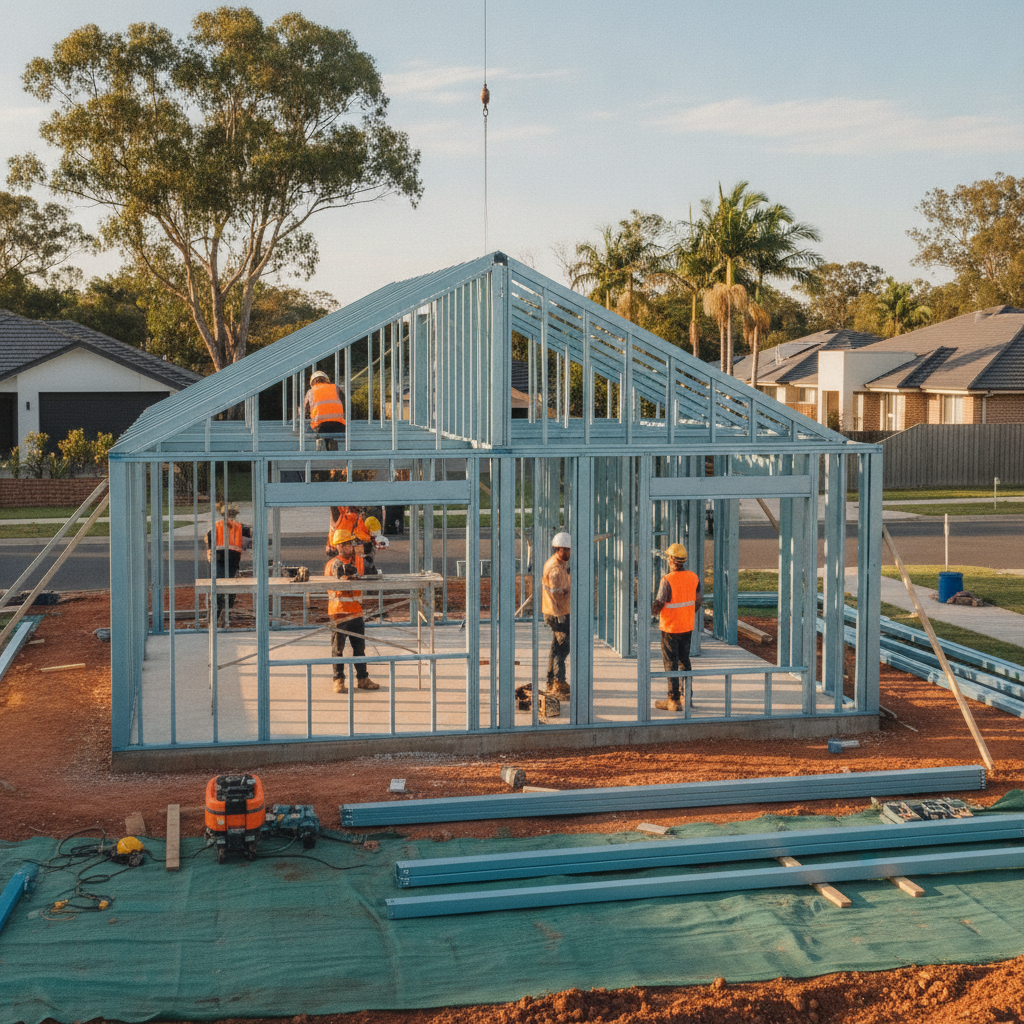
In a cyclone zone, a millimetre can be the difference between a secure joint and a structural failure. Steel frames are manufactured using advanced CAD (Computer-Aided Design) software and precision roll-forming technology. Unlike organic materials, steel does not warp, twist, or shrink over time. When your kit arrives on site, every piece is straight and true. This level of precision ensures that the engineering calculations used to certify your home for a cyclone zone are reflected perfectly in the physical structure.
The Power of Integrated Tie-Down Systems
In a high-wind event, the roof is often the most vulnerable part of a house. Steel frames allow for integrated, continuous tie-down systems. Because the frames are screwed and bolted together rather than nailed, the connection points are significantly more robust. The roof trusses, wall frames, and floor systems are effectively interlocked, creating a single, rigid 'monocoque' structure that resists the suction forces created by extreme wind speeds.
The Owner Builder Advantage: Managing a Cyclone-Ready Project
Stepping into the world of owner building is an exciting journey, but it comes with significant responsibility, especially regarding safety and compliance. When you choose a steel-framed kit home for a cyclone zone, you are simplifying several complex parts of the process.
Firstly, the engineering is largely solved for you. A reputable kit provider ensures that the steel frames, which are the backbone of the home, are engineered specifically for your site's wind classification. This documentation is vital for your council approvals and building certification.
Secondly, the assembly process is more intuitive. Steel frames typically come with pre-punched holes for electrical and plumbing services, and every component is clearly marked. For someone managing their own project, this reduces the margin for error. In a cyclone zone, you cannot afford to have a 'near enough is good enough' mentality. The accuracy of steel frames ensures that your windows, doors, and cladding fit exactly as intended, providing a weather-tight seal against driving rain.
Sustainability and Resilience: Beyond the Storm
While the focus in cyclone zones is often on the immediate impact of the wind, long-term resilience is just as important. In the humid, tropical environments where cyclones are common, moisture and pests are constant threats. Steel is completely termite-proof and does not rot or support the growth of mould. This means your kit home remains structurally sound for decades, even in the harshest Australian climates.
Furthermore, steel is 100 percent recyclable. Choosing a steel-framed kit home is a responsible choice for the environment. Because the components are cut to length in a factory setting, there is minimal waste on your building site, which is a major win for owner builders looking to maintain a clean and efficient workspace.
Practical Tips for Building in Cyclone-Prone Regions
If you are planning to build a kit home in a high-wind area, here are some practical steps to ensure success:
- Verify Your Wind Speed: Work with a local surveyor or your kit provider to confirm your exact wind classification (e.g., C2 or C3). Do not guess this, as it dictates the entire engineering requirements of your steel frames.
- Focus on Openings: In a cyclone, if a window or door fails, the internal pressure of the house can spike, leading to roof failure. Ensure you select windows and doors that are specifically rated for your zone.
- Corrosion Resistance: If you are building right on the coast (within 1km of the ocean), ensure you discuss the appropriate steel finishes with your provider. BlueScope offers different grades of steel, such as COLORBOND Ultra steel, designed for these high-salt environments.
- Follow the Manual: Kit homes come with detailed assembly instructions. In a cyclone zone, following the specified fastener patterns and bracing details is non-negotiable.
The Importance of Quality Materials: TRUECORE Steel
At the heart of a high-quality kit home is the brand of steel used. TRUECORE steel, manufactured by BlueScope in Australia, is specifically designed for residential framing. It features a distinctive blue finish and a high-strength alloy coating. For an owner builder, seeing that blue steel on your site is a mark of quality. It is tested in Australian conditions to meet Australian standards, ensuring that your home is not just a kit, but a durable legacy for your family.
Conclusion: Peace of Mind in the Eye of the Storm
Building your own home is one of life's greatest achievements, and doing so in one of Australia's more challenging climates requires a balanced approach of ambition and caution. By choosing a steel-framed kit home, you are opting for a system that has been scientifically engineered to protect against the extremes of our continent.
Steel provides the strength to face a cyclone, the precision to make the owner-builder journey smoother, and the durability to withstand the test of time. When the clouds gather and the wind begins to pick up, the best feeling in the world is the confidence that your home, built with your own hands and the strength of Australian steel, is ready for whatever comes its way.