The Foundation of a Perfect Finish: Understanding Dimensional Stability
When you embark on the journey of building your own home as an owner-builder, you are likely focused on the floor plan, the kitchen layout, and the beautiful Australian landscape outside your window. However, the most critical decision you will make happens long before the first tile is laid. It starts with what is inside your walls. In the Australian climate, where temperatures can swing from freezing mornings to scorching afternoons, the material you choose for your home's skeleton defines its longevity.
For decades, timber was the default choice, but as building technology has evolved, steel has emerged as the gold standard for kit homes. The primary reason? Dimensional stability. In simple terms, this means that the material does not change its shape, size, or integrity when exposed to moisture or temperature fluctuations. While timber is a cellular, organic material that breathes, moves, and reacts, steel is inorganic and engineered for absolute precision.
The Warping Woe: Why Timber Moves
Timber is essentially a sponge. Even after it is seasoned or kiln-dried, it maintains a moisture content that seeks equilibrium with its surroundings. In the humid regions of Queensland or the damp winters of Victoria, timber frames absorb moisture and swell. Conversely, during a dry Australian summer, that same timber releases moisture and shrinks. This constant cycle of movement leads to warping, twisting, and bowing.
If you have ever been in an older home and noticed doors that won't shut in the summer or cracks appearing in the plasterboard cornices, you are seeing the results of poor dimensional stability. For an owner builder aiming for a high quality finish, these issues can be a nightmare to fix once the home is completed. This is where steel frames, specifically those made from high quality BlueScope TRUECORE steel, offer a significant advantage.
The Steel Advantage: No More Shrinking or Twisting
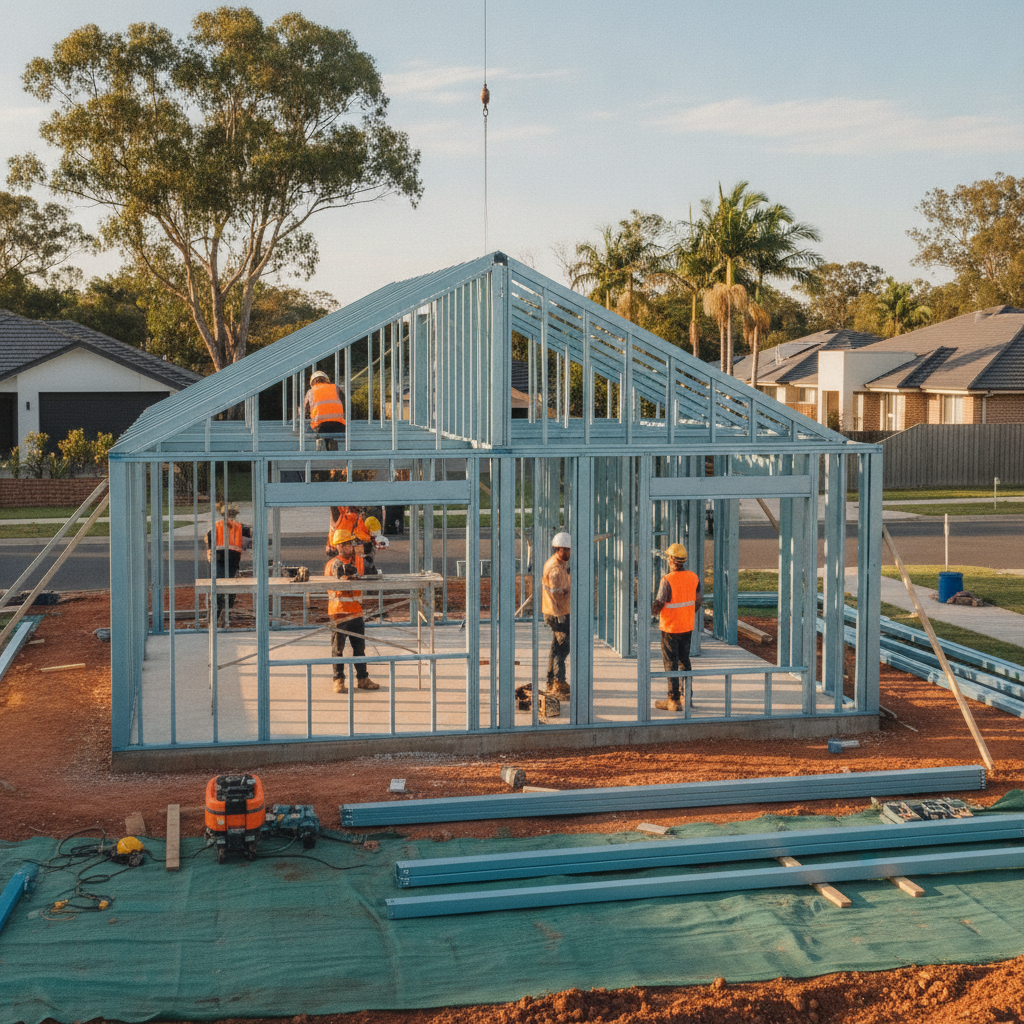
Steel frames are manufactured to millimetre-perfect specifications. Because steel is an alloy, it contains no moisture. It does not matter if your kit home is delivered in a downpour or sits on-site during a heatwave, the studs will remains straight and the plates will remain true. This lack of movement is what we call dimensional stability.
When you build a kit home with steel frames, you are setting yourself up for success in several key areas:
- Plasterboard Perfection: One of the most common issues in new builds is "nail popping" and cracked joints in the gyprock. This happens when the timber frame behind the wall shrinks, forcing the screw or nail outward. With steel frames, the frame stays still, meaning your walls stay smooth and crack-free for years to come.
- Straight Lines and Square Corners: For DIY enthusiasts, there is nothing more frustrating than trying to install cabinetry or tiling against a wall that isn't straight. Steel frames provide perfectly vertical studs and square corners, making the fit-out process much easier and faster.
- Door and Window Operation: Because the frame around your openings does not move, your doors and windows will continue to open and shut smoothly without sticking, regardless of the season.
Precision Engineering for the Australian Climate
Australia is a land of extremes. From the salt air of the coast to the dry heat of the outback, our homes have to work hard. Steel frames are uniquely suited to this environment. Unlike timber, which can become brittle or rot if moisture is trapped within the wall cavity, steel is resilient. Using TRUECORE steel ensures that the frame is protected by a zinc, aluminium, and magnesium alloy coating, providing incredible corrosion resistance.
For the kit home builder, this precision is a massive benefit during the assembly phase. Since the components are manufactured using advanced CAD (Computer-Aided Design) software, every piece fits together exactly as intended. There is no need to plane down a bowed stud or discard a twisted piece of wood, which reduces waste on site and saves valuable time.
Owner Builder Tip: The Ease of Handling Steel
If you are managing the build yourself, physical handling is a major consideration. Many people assume steel is heavier than timber, but the opposite is true. Cold-rolled steel sections are light enough to be handled by two people, often negating the need for heavy lifting equipment on smaller sites. This light weight, combined with the fact that the frames are dimensionally stable, means that once a wall is stood up and braced, it isn't going anywhere. You won't return to the site the next morning to find that a change in humidity has caused your walls to lean.
Termites and Fire: The Hidden Stability Factors
While warping and shrinking are the obvious signs of a lack of stability, there are biological and environmental factors that can compromise a frame's integrity. Termites are a reality for most Australian homeowners. A timber frame is a food source, and once damaged, its structural stability is gone. Steel is 100 percent termite proof. You don't need to worry about chemical treatments for the frame itself, giving you peace of mind that the bones of your home are safe.
Similarly, steel is non-combustible. In bushfire-prone areas, a steel frame won't contribute fuel to a fire. While the primary benefit we are discussing is the lack of warping, the fact that steel maintains its shape and doesn't rot or burn adds a layer of long-term structural stability that timber simply cannot match.
Better Kitchens and Bathrooms through Better Framing
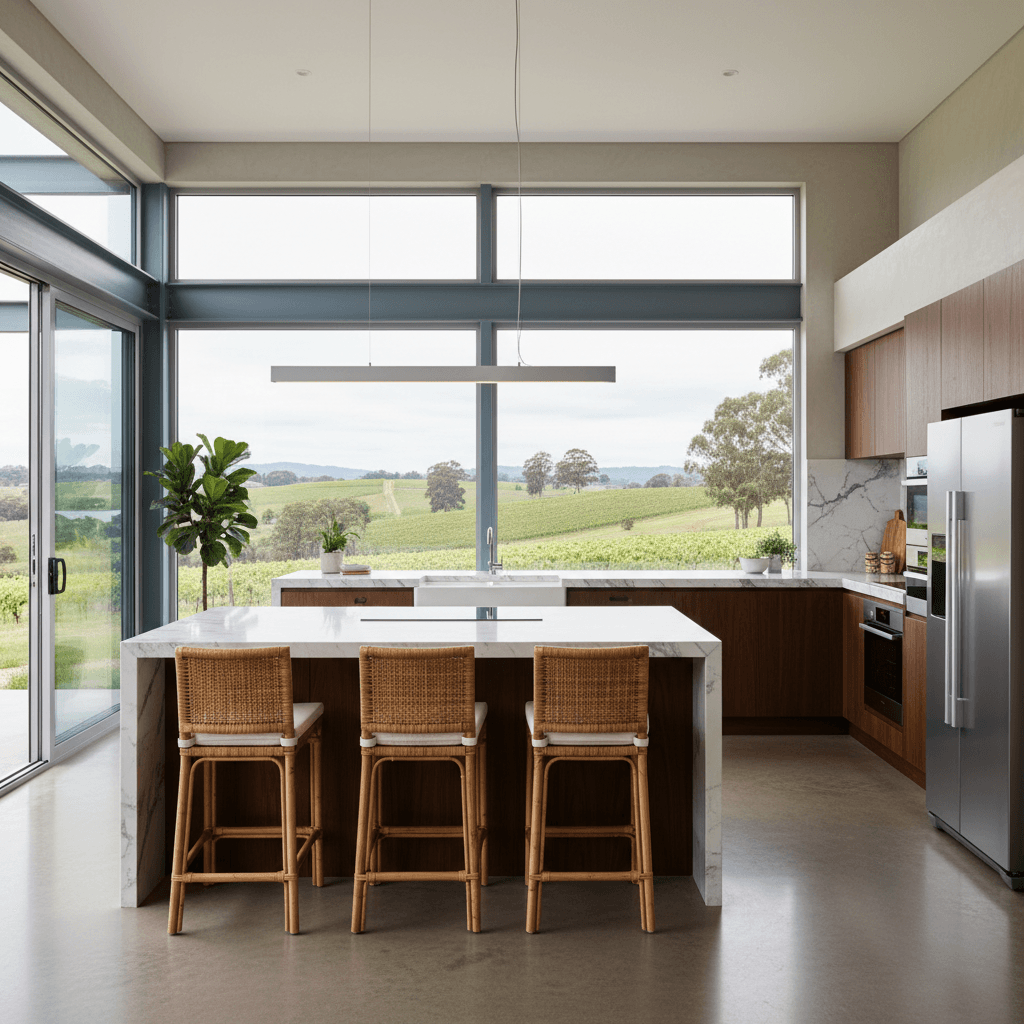
Let's talk about the high-value areas of your kit home: the kitchen and the bathroom. These rooms rely on expensive finishes like stone benchtops, large-format tiles, and custom cabinetry. These materials are rigid and have zero tolerance for a moving house frame. If your floor joists or wall studs shrink, your tiles can crack or your waterproof membrane can be compromised.
By using steel frames in your kit home, you are creating a stable substrate for these finishes. The floor stays level and the walls stay plumb. This is particularly important for contemporary open-plan designs that use large spans. Steel's strength-to-weight ratio allows for these wider openings without the need for massive, heavy timber beams that are prone to sagging over time.
Environmental Considerations and Longevity
Choosing a dimensionally stable material is also a win for sustainability. Because steel frames are made to order, there is very little scrap produced during the manufacturing of your kit. Furthermore, steel is one of the most recycled materials on the planet. The longevity of a steel frame home means that it won't need the same level of maintenance or structural repair as a timber-framed home, reducing the lifecycle cost and environmental impact of the building.
Final Thoughts for the Australian Owner Builder
Building a kit home is an empowering experience. It allows you to take control of your housing future and create a space that perfectly fits your lifestyle. However, the success of the project relies on the quality of the components. Choosing a steel frame is an investment in the "straightness" of your home. It's the difference between a house that feels solid and silent, and one that creaks, groans, and shows its age through cracks and sticking doors.
When you stand back and look at your completed home, you want to see crisp lines, flat walls, and a finish that looks just as good in ten years as it does on move-in day. By opting for the dimensional stability of steel, you are ensuring that the heart of your home is built on a foundation of precision and durability.