Measuring Success in Millimetres: The Steel Frame Advantage
When you embark on the journey of building your own home in Australia, you quickly realise that precision is the foundation of a high quality finish. For owner builders, the choice of structural material is one of the most critical decisions you will make. While timber has been a traditional go to for decades, a growing number of Australians are turning to steel frame construction for one primary reason: dimensional stability.
In the construction world, dimensional stability refers to a material's ability to maintain its original dimensions when subjected to changes in temperature and humidity. In a country like Australia, where we experience everything from bone dry heatwaves to tropical downpours, this stability isn't just a technical detail, it is the difference between a home that stays straight and true and one that develops cracks, squeaks, and sticking doors over time.
The Science of Movement: Why Timber Warps and Steel Stays True
To understand why steel frames are superior for kit homes, it is helpful to look at how materials react to the Australian environment. Timber is a hygroscopic material, meaning it behaves like a sponge. It absorbs and releases moisture from the air constantly. When timber dries out, it shrinks. When it gets damp, it expands. This constant movement leads to twisting, bowing, and warping.
Steel, particularly high quality Australian BlueScope TRUECORE steel, is an inorganic material. It does not contain moisture, and it certainly does not absorb it. This means that if a steel stud is manufactured to be 2400mm long, it will stay 2400mm long regardless of whether you are building in the humid hinterlands of Queensland or the dry plains of South Australia. For a kit home owner builder, this predictability is absolute gold.
The Practical Impacts of Warping and Shrinking
If you have ever lived in an older timber framed house, you have likely seen the results of poor dimensional stability. You might notice:
- Plasterboard cracking at the joins or in the corners.
- Doors that suddeny stick in the frame during winter but swing freely in summer.
- Windows that become difficult to open or close because the frame has shifted.
- Cornices pulling away from the ceiling.
- Squeaky floorboards caused by timber joists shrinking away from the subfloor.
By choosing a steel frame kit home, you are effectively eliminating these issues before they even start. Because the steel does not warp or shrink, the skeleton of your home remains perfectly straight. This provides a stable substrate for all your internal finishes, ensuring that your plasterboard stays smooth and your cabinetry remains level for years to come.
A Dream for Owner Builders: Precision Engineering
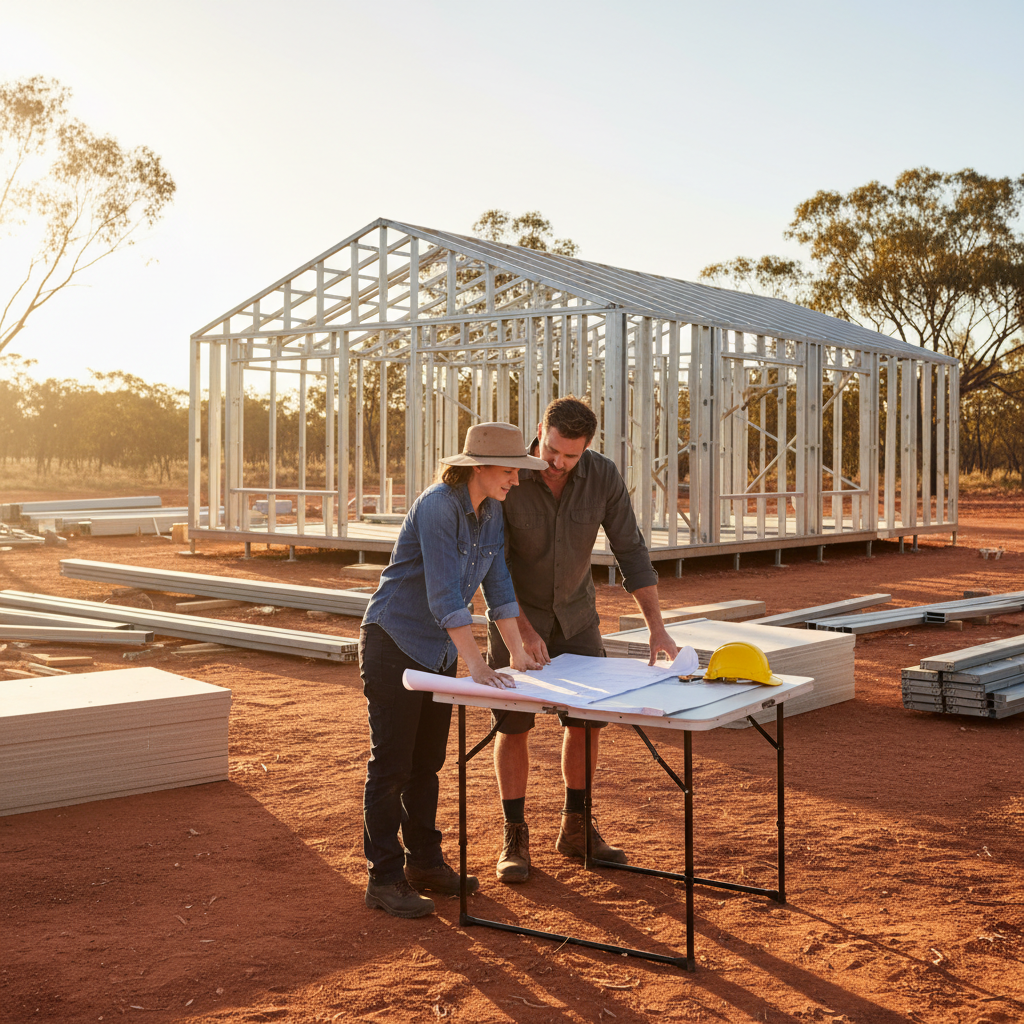
One of the biggest anxieties for a first time owner builder is the fear of things not lining up. When you are managing your own site works and coordinating trades, you want the assembly process to be as logical and straightforward as possible. This is where the engineering of steel frames really shines.
Steel frames for kit homes are typically pre-punched and manufactured to incredibly tight tolerances, often within a millimetre. Because the material is dimensionally stable, you can trust that every piece will fit exactly where it is supposed to. You aren't standing on a slab with a plane or a saw trying to shave down a bowed stud just to get your wall straight. You simply follow the layouts and watch the house go up with laser like precision.
Streamlining the Internal Fit-Out
The benefits of a straight frame extend far beyond the structural phase. When it comes time for the internal fit-out, your trades will thank you. Plasterers love steel frames because they provide a perfectly flat surface, which makes achieving a Level 4 or 5 finish significantly easier. Tilers also benefit from the lack of movement, as there is a much lower risk of tiles cracking or grout lines popping due to the frame shifting behind the wall.
For the DIY enthusiast handling their own painting or skirting boards, the lack of shrinkage is a massive time saver. In timber homes, it is common for the frame to "settle" or shrink over the first 12 to 18 months, requiring the homeowner to come back and patch cracks or re-caulk gaps. With steel, what you build on day one is what you have in year ten.
Sustainability and Longevity in the Australian Landscape
We cannot talk about steel frame kit homes without mentioning their resilience against the unique challenges of the Australian bush. Beyond dimensional stability, steel offers two major advantages that timber simply cannot match: it is 100 percent termite proof and non-combustible.
Termites cause millions of dollars in damage to Australian homes every year. While timber can be treated with chemicals to deter them, steel provides a permanent, chemical free barrier. It is a set and forget solution that gives owner builders immense peace of mind. Furthermore, in bushfire prone areas, using a non-combustible steel frame can be a key component of your BAL (Bushfire Attack Level) compliance strategy.
Practical Tips for Working with Steel Frames
If you are planning to take on a steel frame kit home project, here are some practical tips to ensure you get the most out of the material:
1. Use the Right Fasteners: Steel frames require specific self-drilling screws. Ensure you have a high quality cordless impact driver and the correct hex head or Phillips head drivers for the job. Your kit provider will usually specify exactly what is needed.
2. Electrical and Plumbing Considerations: Steel frames come with pre-punched service holes. When running your wiring or pipes, always use the plastic grommets provided to prevent any chafing against the steel edges. This is a simple step that ensures long term safety and a professional finish.
3. Magnetic Level Advantage: One of the best "hacks" for owner builders is using a magnetic level. These stick directly to the steel studs, leaving your hands free to secure the frame. It makes plumbing up walls a one person job.
4. Storage on Site: While steel won't warp in the rain, it is still good practice to keep your frames off the ground and covered if they are going to be sitting on site for an extended period. This keeps them clean and ready for a smooth assembly.
Designed for the Modern Australian Lifestyle
Modern Australian home design often calls for large, open plan living areas and expansive spans of glass to take in the views. Steel's strength to weight ratio allows for these architectural features without the need for massive, heavy timber beams that are difficult to manhandle on an owner builder site. The dimensional stability of steel allows for those crisp, clean lines that define contemporary Australian architecture.
Whether you are building a compact backyard retreat or a sprawling family homestead, the structural integrity of your home relies on the materials you choose. Steel frames offer a level of consistency that biological materials just can't replicate. By choosing steel, you are investing in a home that won't sag, won't creak, and will remain as straight and true as the day you built it.
Conclusion: A Solid Foundation for Your Future
Building a kit home is an empowering experience. It allows you to take control of your housing future and create something with your own hands. By opting for a steel frame construction, you are setting yourself up for success from the very first bolt. The lack of warping and shrinking ensures that your hard work results in a professional, high quality finish that stands the test of time.
In the harsh and ever changing Australian climate, dimensional stability isn't just a luxury, it is a necessity for a low maintenance, long lasting home. Steel frames provide the precision, durability, and peace of mind that every owner builder deserves. So, as you plan your project, look toward the material that stays straight, stays strong, and makes the building process a whole lot smoother.