The Foundation of a Straight Home
When you embark on the journey of building your own home in Australia, you are not just putting up four walls and a roof. You are creating a sanctuary that needs to withstand the harsh variations of the Australian climate. For generations, timber was the go-to material for residential framing, but as building technology has evolved, steel has emerged as the clear front-runner for those seeking precision and longevity. In the world of kit homes, the frame is the skeleton of your project. If the skeleton is crooked, everything else follows suit.
One of the most significant advantages of choosing a steel frame kit home is a concept known as dimensional stability. In simple terms, this means that the material does not change its shape or size when exposed to the elements. While timber is a cellular, organic material that breathes, absorbs moisture, and dries out, steel is inorganic and engineered for absolute consistency. For an owner-builder, this difference is the secret to a professional finish and a home that stays beautiful for decades.
Understanding Dimensional Stability: Steel vs. Timber
To appreciate the benefits of steel, we first need to look at what happens to timber during the construction process. Timber is hygroscopic, meaning it is constantly gaining or losing moisture to reach an equilibrium with its environment. In the humid coastal regions of Queensland or the dry heat of Central Australia, timber studs can twist, bow, and shrink as they dry out after being installed.
Steel, specifically high-quality Australian products like TRUECORE steel, is manufactured to exact specifications. Because it is an engineered product, every piece is straight and true. It does not contain knots, splits, or heartwood variations that can cause a piece of wood to pull in one direction. This lack of movement is what we call dimensional stability. When you stand up a steel wall frame, you know it is going to stay exactly where you put it, regardless of whether it rains the next day or hits a 40-degree heatwave.
No Warping, No Bowing, No Worries
One of the most frustrating experiences for a DIY builder is arriving at the site to find that a wall that was perfectly plumb last week has now bowed in the middle. This often happens with timber as it seasons on-site. When a stud bows, it creates a ripple effect throughout the entire build. Your plasterboard won't sit flat, your skirting boards will have gaps, and your kitchen cabinetry might require extra packing to sit level.
With steel frame construction, warping is a non-issue. The frames are cold-formed, which gives them immense strength-to-weight ratios and ensures they remain straight for the life of the building. For the owner-builder, this translates to a much smoother installation process. You aren't fighting the material; you are simply assembling a precision-engineered kit that fits together like a glove.
The Impact on Interior Finishes
The real value of dimensional stability often reveals itself months after the build is finished. We have all seen houses where cracks appear in the cornices or where the plasterboard joints begin to show through the paint. Frequently, these aren't structural failures, but rather the result of the timber frame shrinking and moving behind the walls.
When timber frame members shrink, they pull away from the fasteners. This leads to common headaches such as:
- Nail Pops: Small circular bumps where the plasterboard nail or screw is pushed out as the timber moves.
- Cornice Cracking: Gaps opening up at the junction of the wall and ceiling.
- Sticking Doors and Windows: Frames shifting just enough to make doors catch on the floor or windows difficult to slide.
By choosing a steel frame for your kit home, you are virtually eliminating these maintenance issues. Because the steel does not shrink or move, the plasterboard remains securely fastened to a stable substrate. The result is a crisp, high-end finish with straight lines and square corners that stay that way.
The Precision of Steel Frame Construction
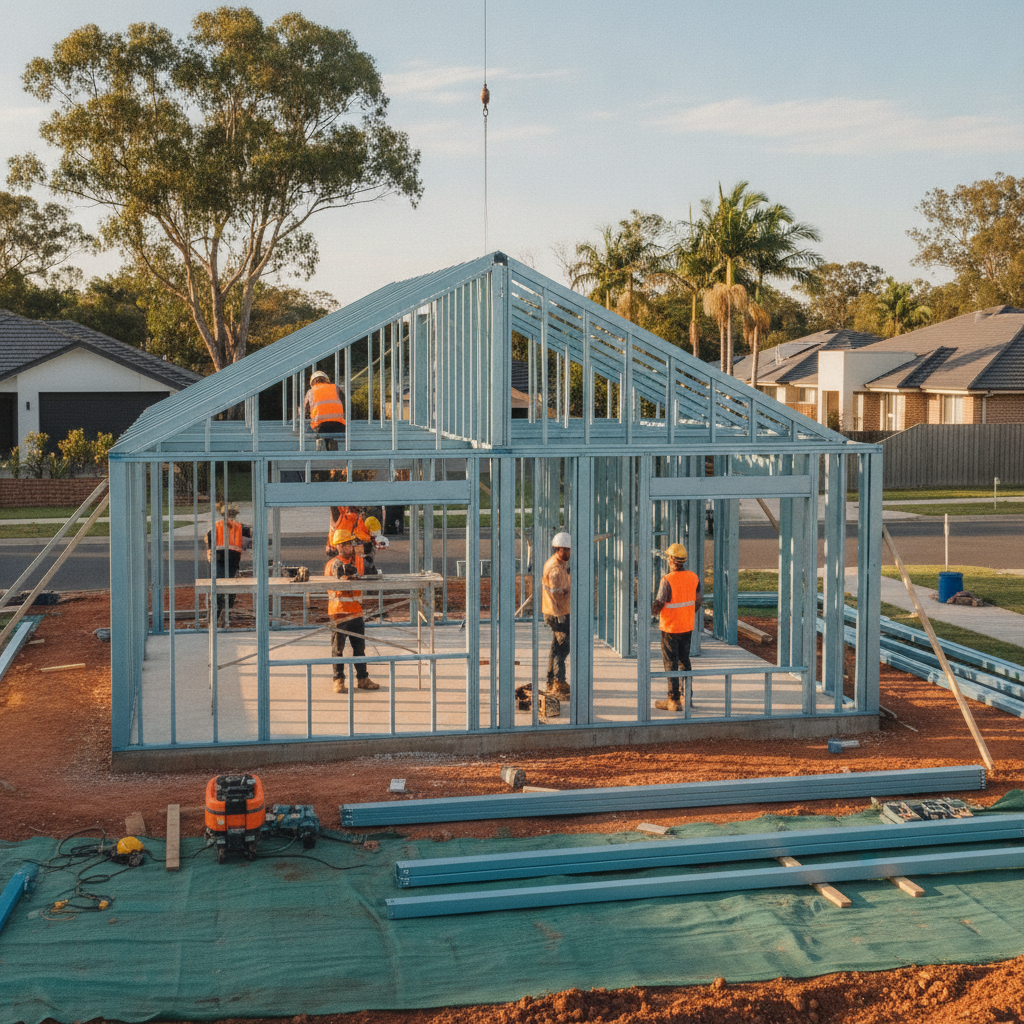
For an owner-builder, the ease of construction is just as important as the final look. Steel frames in modern kit homes are typically designed using advanced 3D CAD software and manufactured with millimetre precision. Every service hole for plumbing and electrical is pre-punched, and every connection point is clearly marked.
This level of precision is only possible because steel is so predictable. You don't have to worry about a particular batch of steel being 'green' or 'wet' like you do with timber. When you receive your kit, you are getting a system where every component is designed to work together. This reduces waste on-site and significantly speeds up the framing stage of your build.
Tips for Handling Steel Frames on Site
If you are managing your own kit home project, here are some practical tips for working with steel frames:
- Storage: While steel frames are incredibly durable, try to store them off the ground on level dunnage to keep them clean and easily accessible.
- Tooling: Invest in a good quality cordless impact driver and a metal-cutting saw. Using the right fasteners is key to maintaining that dimensional stability.
- Safety First: Steel edges can be sharp. Always wear high-quality gloves and eye protection when handling the frames.
- Check Your Slab: Because the steel frames are perfectly straight, they will highlight any imperfections in your concrete slab. Ensuring your slab is level from the start is the best way to take advantage of steel's precision.
Environmental Resilience and Termite Protection
In Australia, we have to deal with more than just humidity. Termites are a significant threat to the structural integrity of homes across most of the continent. One of the background benefits of steel frame construction is that it is 100 percent termite-proof. You don't need to worry about the internal skeleton of your home being eaten away, which provides immense peace of mind for the long term.
Furthermore, steel is non-combustible. While a steel frame alone doesn't make a house fireproof, it does not contribute fuel to a fire, and it won't drop embers or spread flames within the wall cavities. In a country where bushfire resilience is increasingly important, starting with a non-combustible frame is a smart, logical choice.
The Owner-Builder Advantage
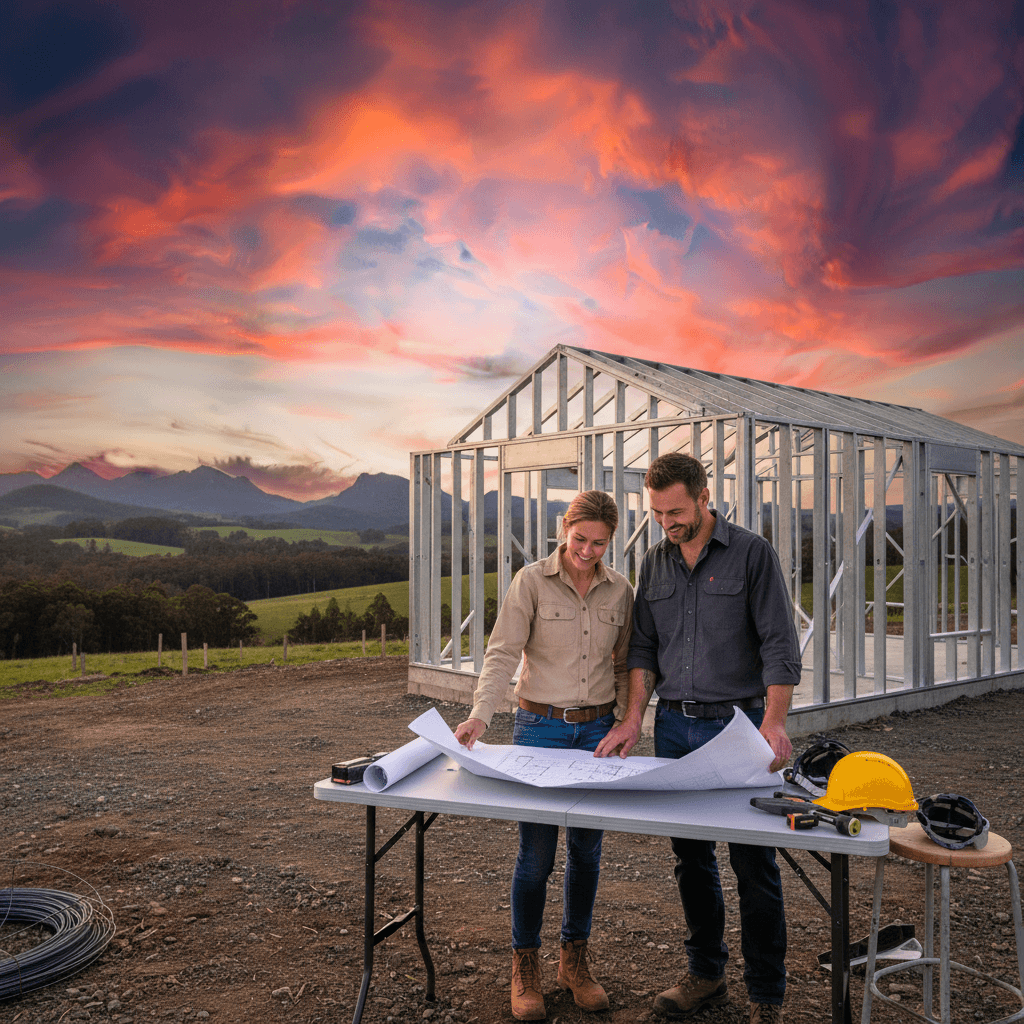
Many Australians choose the kit home route because they want to be hands-on and have control over their project. Using steel frames makes this process significantly more manageable for someone who isn't a professional carpenter. When you are working with a material that is light, easy to handle, and guaranteed to be straight, the margin for error is reduced. You aren't spending your weekends trying to plane down a twisted stud or shim out a wall. Instead, you can focus on the rewarding aspects of the build, knowing that your home is built on a foundation of accuracy.
Summary: A Choice for the Future
Choosing the materials for your kit home is one of the most important decisions you will make. While timber has its place in history, the benefits of steel frame construction, particularly regarding dimensional stability, are hard to ignore. By opting for a steel frame, you are investing in a home that won't warp, won't shrink, and won't be susceptible to termites. You are ensuring that the effort you put into your interior finishes, such as painting and tiling, won't be undone by a shifting frame.
For the Australian owner-builder, steel offers a path to a professional-grade result. It provides a straight, true, and permanent structure that stands up to the unique challenges of our climate. When the winds blow and the temperatures soar, you can rest easy knowing your home is held together by the strength and stability of Australian steel.
Ready to Start Your Journey?
Building a kit home is a rewarding experience that allows you to create a space tailored to your lifestyle. By focusing on quality components like steel frames, you are setting yourself up for success from day one. Take the time to research your site, plan your layout, and understand the technical advantages of the materials you choose. With the right preparation and a stable steel frame, your dream home will be built to last a lifetime.