Building from the Ground Up: A Guide to Kit Home Foundations
When you start planning your owner-builder journey, it is easy to get caught up in the exciting details like floor plans, cladding colours, and kitchen layouts. However, the most important decision you will make happens before the first wall frame is even standing. Your foundation is the literal bedrock of your home, and in Australia, choosing between a concrete slab, stumps, or piers is a decision that affects your budget, your site preparation, and your home's long-term performance.
At its core, a kit home provides you with the high-quality components for the structure, such as precision-engineered steel frames made from BlueScope TRUECORE steel. But before those frames arrive on site, you need a level, engineered surface to bolt them to. In this guide, we will break down the technical aspects of different foundation types to help you decide which one suits your specific Australian block.
The Concrete Slab-on-Ground
The concrete slab is perhaps the most common foundation seen in modern Australian suburbs. It involves a single, continuous layer of concrete poured directly onto the ground, usually reinforced with steel mesh and thickened at the edges to support the weight of the external walls.
When to Choose a Slab
Slabs are ideal for flat or nearly flat sites. If your block has less than a metre of fall across the building envelope, a slab is often the most straightforward choice. It provides a solid, thermal mass that can help regulate indoor temperatures, keeping your home cooler in summer and holding onto heat in winter.
Technical Considerations for Owner-Builders
If you are choosing a slab for your kit home, you need to ensure your plumbing and electrical conduits are perfectly positioned before the concrete is poured. Once that slab is set, moving a bathroom drain becomes a major demolition task. For steel frame kit homes, the slab must be perfectly level to ensure the wall frames align correctly and the roof trusses sit square. Any deviation in the slab can cause ripples through the entire build.
Stumps and Bearers (The Raised Floor)
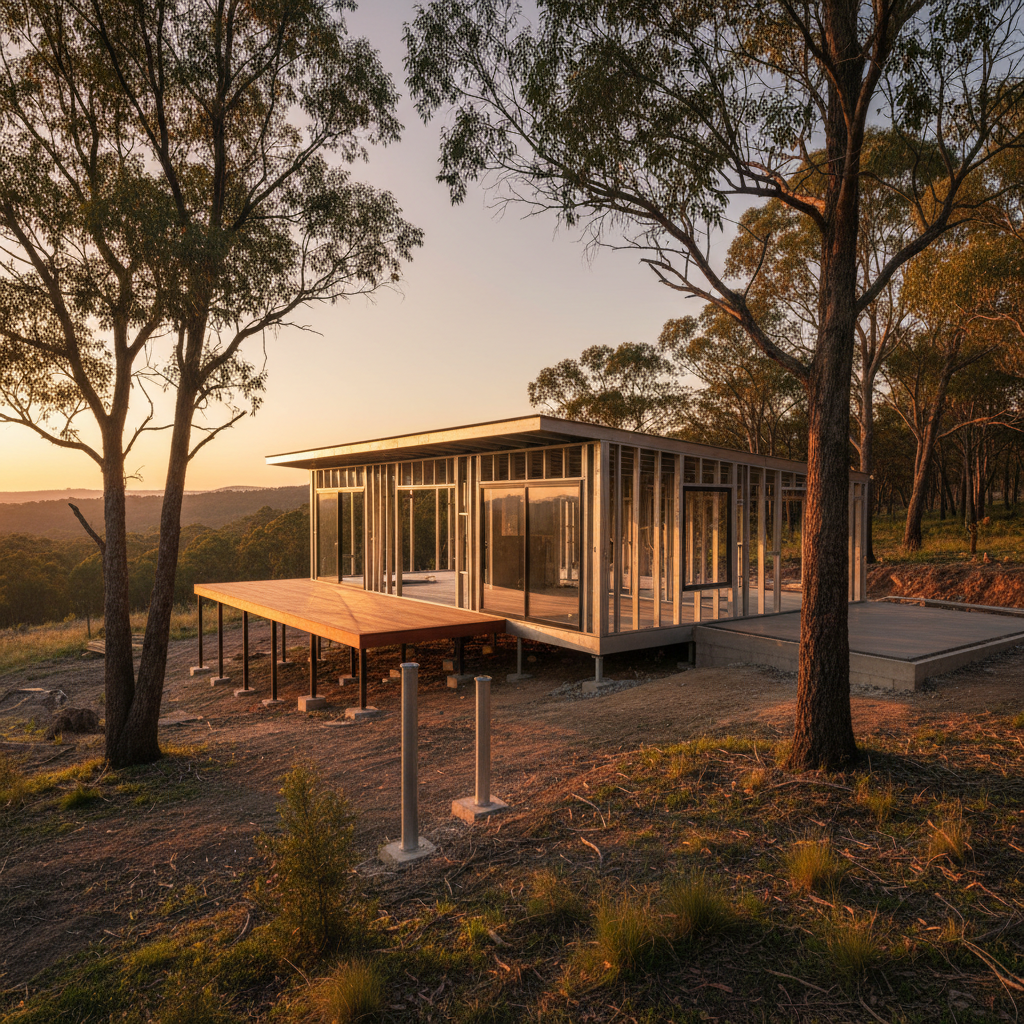
Traditionally known as the "Queenslander" style or a pier-and-beam foundation, raised flooring remains a popular choice across Australia, especially in regional areas and on sloping blocks. This involves horizontal timber or steel beams (bearers) supported by vertical stumps.
The Benefits of Staying Above Ground
Using stumps is a brilliant solution for sloping sites. Instead of spending a fortune on massive earthworks and retaining walls to create a flat pad for a slab, you can simply vary the height of your stumps to create a level floor. This significantly reduces the impact on the natural landscape and can improve the home\'s resale value by preserving original site features like trees and natural drainage paths.
Raised floors also offer excellent ventilation. In humid Australian climates, allowing air to flow under the house helps prevent moisture buildup and keeps the structure cooler. Additionally, accessing plumbing and electrical wiring for future renovations is much easier when you can simply crawl underneath the house.
Piers: Deep Strength for Volatile Soils
Piers are similar to stumps but are generally driven or bored deeper into the ground to reach more stable soil or rock. They are frequently used when the surface soil is considered "reactive" (clays that expand and contract significantly with moisture changes) or filled ground.
Concrete Bored Piers vs Screw Piles
In modern Australian construction, we see two main types of piers. Concrete bored piers involve drilling a deep hole and filling it with reinforced concrete. Screw piles, on the other hand, are large steel screws that are mechanically driven into the earth until they reach a specific torque, indicating they have hit stable ground. Both provide an incredibly stable anchor for a steel frame kit home, ensuring that soil movement doesn\'t result in cracked walls or sticking doors.
The Impact of Soil Classification
Before you commit to a foundation type, you must obtain a Soil Test and Site Classification report from a geotechnical engineer. In Australia, soils are classified from Class A (stable, sandy, or rocky sites) through to Class P (problem sites). If you have Class H (Highly Reactive) or Class E (Extremely Reactive) clay, your foundation design will need to be much more robust. Your kit home\'s structural engineering will be based on this classification to ensure the building can handle the stresses of the specific environment.
Owner-Builder Tips: Foundation Checklist
If you are managing the build yourself, here are some practical tips to ensure your foundation is ready for the kit delivery:
- Hire a Professional Surveyor: Do not guess your boundaries or levels. A professional surveyor ensures the foundation is placed exactly where the council-approved plans say it should be.
- Prioritise Drainage: Whether you choose a slab or stumps, water must be diverted away from the foundation. Ensure the ground slopes away from the house to prevent water from pooling against the concrete or under the floor.
- Termite Protection: Australia is home to some of the world\'s most aggressive termites. While steel frames are termite-proof, your foundation type will dictate the kind of physical or chemical barriers required by the Building Code of Australia (BCA).
- Verify the Engineering: Ensure that your chosen foundation specialist has seen the engineering drawings for your kit home. The weight of the steel frames and the specific wind loading for your area will dictate the thickness of the slab or the spacing of the stumps.
How Foundation Choice Affects Your Kit Assembly
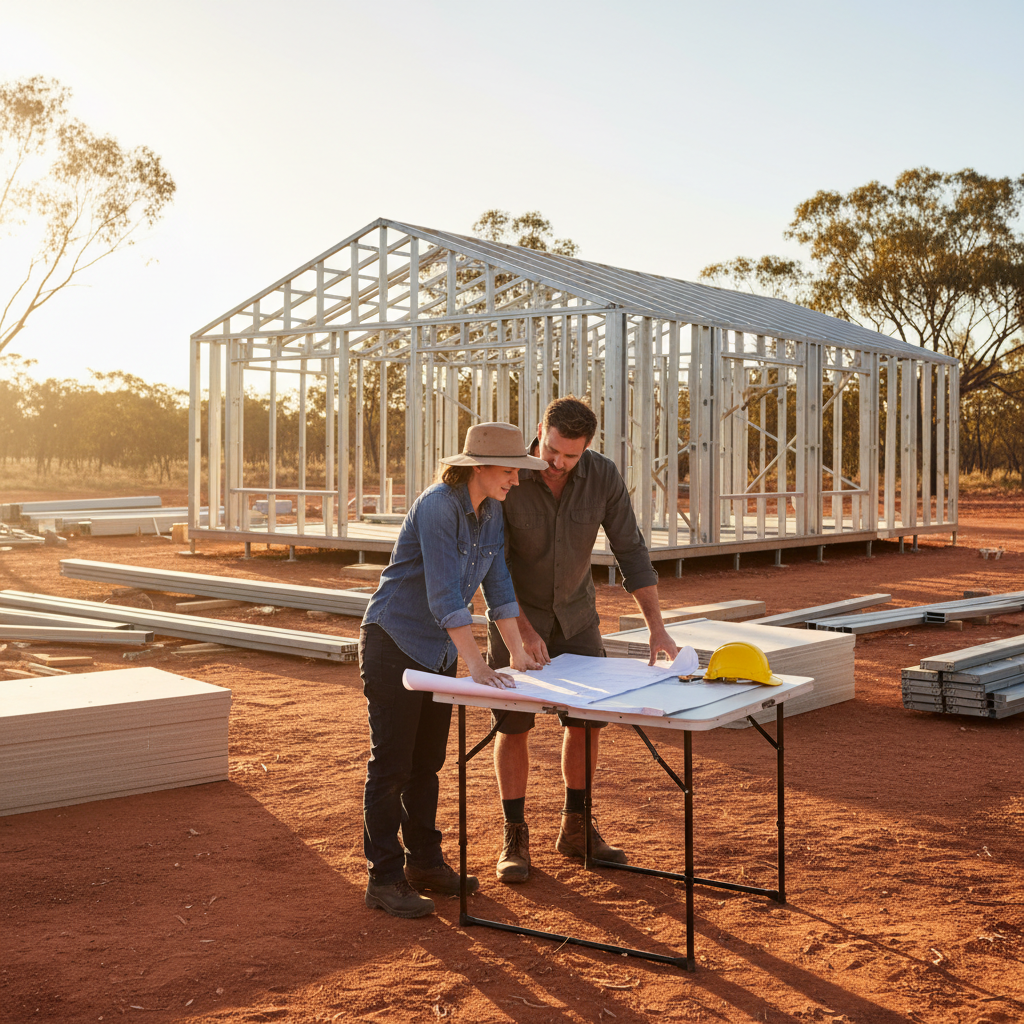
The foundation you choose directly impacts how you interact with your kit during the assembly phase. A concrete slab provides a dry, flat workspace for lay out your steel frames before standing them up. If you are building on stumps, you will first need to install the subfloor (the bearers and joists) and then usually a flooring material like termite-treated particleboard or compressed fibre cement. This creates your "platform," allowing you to build the rest of your kit just as you would on a slab.
One advantage of steel subfloors provided with some kit packages is their precision. Much like the wall frames made from TRUECORE steel, steel bearers and joists are straight and true, meaning they won\'t warp or twist over time. This makes the subsequent assembly of your wall frames much faster and more accurate.
Environmental and Lifestyle Factors
Beyond the technical requirements, think about the lifestyle you want to lead. A slab allows for seamless indoor-outdoor flow, often at ground level with your patio or garden. A raised home on stumps might offer better views if you are on a hill and provides a shady spot underneath for storage or even a workshop.
From an environmental perspective, raised floors allow the natural water cycle of the land to continue with minimal disruption. They are often preferred in flood-prone areas, as they can be engineered to sit above the peak flood level, providing peace of mind during Australia\'s intense storm seasons.
Conclusion
Selecting a foundation is not a one-size-fits-all process. It requires a balance between your site\'s topography, your soil type, and your personal preferences for the home\'s final look and feel. Whether you opt for the thermal mass and solidity of a concrete slab or the flexibility and ventilation of a raised floor on stumps or piers, getting this stage right is the key to a successful kit home project.
As an owner-builder, taking the time to understand these building techniques ensures that when your high-quality steel kit arrives on site, it will be supported by a foundation that is as durable and reliable as the home itself. Always consult with local engineers and check your local council requirements to ensure your chosen foundation meets all Australian standards and building codes.