The Face of Your Home: Navigating Cladding Choices in Australia
When you embark on the journey of building a kit home, you are stepping into the shoes of a project manager and, often, a hands-on builder. One of the most significant technical decisions you will face is selecting the cladding. This choice goes beyond simple aesthetics, it impacts the thermal performance of your home, the maintenance schedule for the next twenty years, and the complexity of your installation process.
In the Australian context, our homes need to withstand everything from blistering inland heat to salty coastal breezes and the ever-present threat of bushfires. This guide explores the most popular building techniques for cladding kit homes, comparing traditional materials with modern innovations to help you find the perfect match for your steel-framed project.
Understanding the Role of the Building Envelope
Before we dive into specific materials, it is important to understand what cladding actually does. In a kit home environment, the cladding is the final layer of your building envelope. While the internal steel frame provides the structural integrity, the cladding serves as the protective skin. It keeps the weather out, assists with insulation, and defines the architectural character of the building.
For owner-builders, the ease of installation is often just as important as the look. Some systems require specialized trades, while others are perfectly suited to a competent DIYer with a bit of time and the right tools.
1. Classic Weatherboards: The Timeless Australian Choice
Nothing says "Australian homestead" quite like weatherboards. Traditionally made from timber, modern kit homes often utilize advanced fibre cement alternatives that offer the same look with significantly lower maintenance requirements.
The Technique
Weatherboards are installed using an overlapping technique. Each board covers the top edge of the board below it, which naturally sheds water away from the structure. This is known as a "lapped" installation. In modern construction, many builders use a concealed clipping system or specialized nails to secure the boards directly to the steel battens.
Pros and Cons
Fibre cement weatherboards are excellent for fire-prone areas because they are non-combustible. They are also resistant to termites and rot, which is a major advantage over traditional timber. However, they do require painting and periodic cleaning to keep them looking fresh. For the owner-builder, weatherboards are relatively easy to handle, though you will need a second pair of hands for long lengths.
2. Metal Cladding: Modern, Industrial, and Durable
Metal cladding has moved from the shed to the showroom. Using profile steel sheets for the exterior of a home is a growing trend in Australian architecture, particularly in contemporary and rural designs. It offers a sleek, vertical or horizontal line that makes a bold statement.
The Technique
Metal cladding is usually fixed directly to the steel wall cavity using tek screws with neoprene washers to ensure a watertight seal. One of the most important technical considerations here is the use of a high-quality breathable building wrap. This prevents moisture from being trapped between the steel frame and the metal skin, which is vital for the longevity of your home.
Pros and Cons
The biggest benefit of metal cladding is its longevity. It is incredibly hardy and requires almost zero maintenance compared to painted surfaces. It is also lightweight, making it one of the fastest materials to install. The downside? It can be prone to denting if hit by heavy objects, and some people find the aesthetic too industrial for suburban settings.
3. Brick Veneer: Stability and Tradition
While many kit home builders prefer lightweight cladding, brick veneer remains a staple in Australian construction. It involves building a non-structural brick wall outside the structural steel frame, leaving a small cavity between the two.
The Technique
This is a more complex building technique that usually requires a professional bricklayer. The brick skin is connected to the internal steel frame using wall ties. These ties allow the two structures to move independently during temperature fluctuations while ensuring the brick wall doesn't tip over. This technique adds significant thermal mass to the home, which can help regulate internal temperatures in certain climates.
Pros and Cons
Bricks are famous for their durability and acoustic insulation. If you live near a busy road, brick veneer can offer a quieter interior environment. However, bricks are heavy and require a more substantial concrete footing or thickened slab edge. For an owner-builder, this is often the most expensive and time-consuming cladding option.
4. Rendered Blueboard: The Smooth, Modern Finish
If you want the solid look of a rendered masonry home without the cost and weight of bricks, rendered fibre cement sheets (often called blueboard) are the answer.
The Technique
Thick fibre cement sheets are fixed to the frame, and the joints are taped and plastered. A textured acrylic render is then applied over the entire surface. This creates a seamless, monolithic look that is very popular in contemporary Australian suburbs.
Pros and Cons
The primary advantage is the high-end, clean aesthetic. It allows for a wide range of colors and textures. On the technical side, you must ensure the joints are finished perfectly, or cracks can appear over time as the house settles. This technique usually requires a professional renderer to achieve a flawless finish.
Owner-Builder Tips: Choosing the Right System
Managing your own build means you need to balance your vision with your skill level and the help you have available. Here are some practical tips for selecting your cladding:
- Check your BAL rating: If you are building in a bushfire-prone area, your cladding choice may be restricted by your Bushfire Attack Level (BAL) rating. Steel and fibre cement are usually the safest bets.
- Consider the weight: Lightweight cladding materials like steel or weatherboards are easier to transport and install on difficult or sloping sites where a heavy brick truck might struggle to gain access.
- Think about scaffolding: If you are building a two-story kit home, remember that some cladding types require more time on the scaffold, which can increase your hire costs. Fast-install options like large format panels can save you weeks of rental fees.
- Don't skip the sarking: No matter which cladding you choose, always use a high-quality building wrap (sarking). This is your secondary line of defense against moisture and plays a massive role in the energy efficiency of your steel-framed home.
A Note on External Finishes and Modern Lifestyles
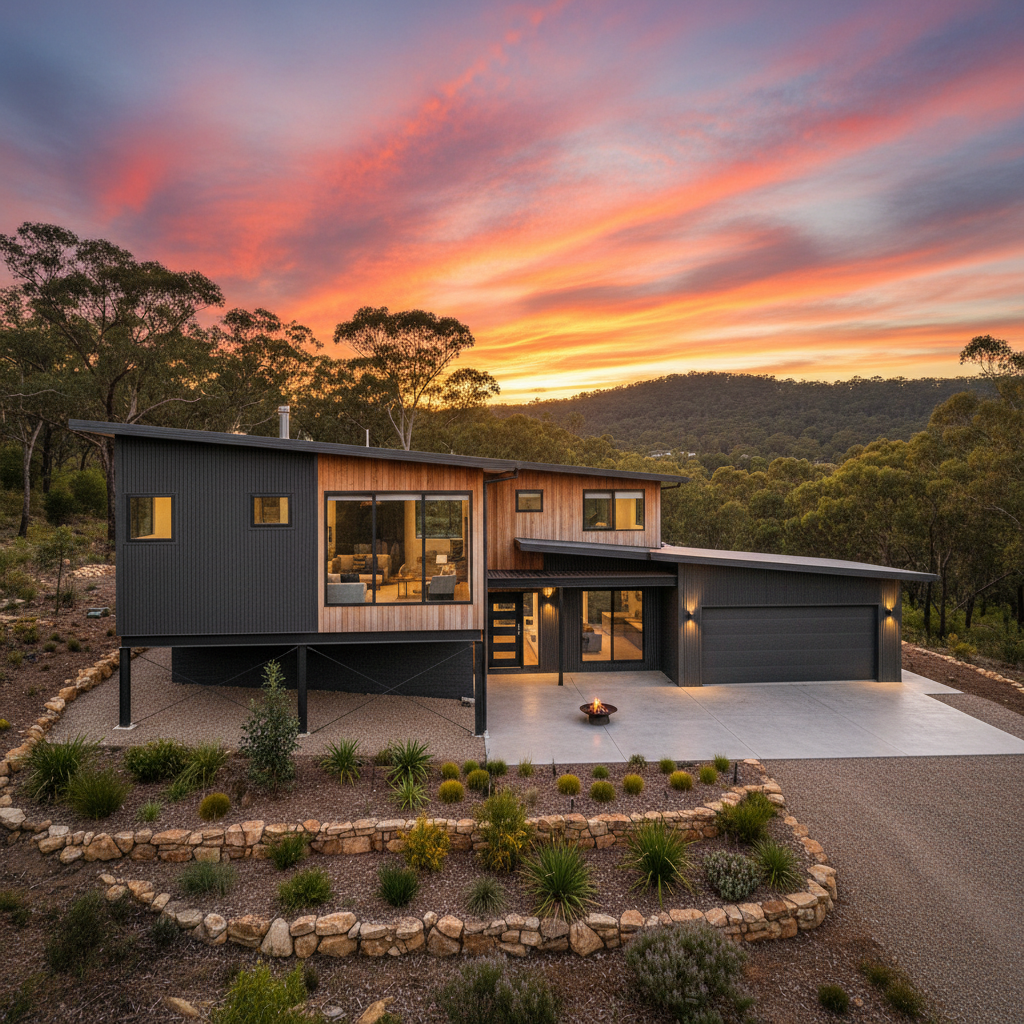
In recent years, we have seen a rise in "mixed media" exteriors. Many Australian homeowners are no longer sticking to just one material. A popular technique is to use horizontal weatherboards for the main body of the home and accent sections with vertical metal cladding or stone features. This breaks up the visual mass of the building and allows you to create a home that feels architecturally designed rather than just "off the shelf."
When you combine these cladding techniques with a precision-engineered steel frame, you end up with a structure that is straight, true, and built to last. Steel frames won't warp or twist, which means your cladding stays looking better for longer, with fewer issues like popping nails or uneven gaps in your weatherboards.
Building for the Future
Choosing the right cladding for your kit home is a decision that impacts the daily enjoyment of your space. Whether you prefer the coastal charm of lapped boards, the modern efficiency of metal, or the solid presence of brick, understanding the technical requirements of each will lead to a smoother build process and an outstanding final result.
As an owner-builder, taking the time to research these building techniques ensures that your new home is not just a place to live, but a high-performing asset that stands up to the unique challenges of the Australian landscape.