The Balancing Act: Career, Life, and Your New Kit Home
So, you have decided to take the plunge. You have got the land, you have picked out a beautiful steel frame kit home design, and you are ready to put on the tool belt. But there is one small detail, you still have a nine-to-five job to contend with. Managing a construction project as an owner builder is a significant undertaking, but doing so while maintaining a full-time career requires a specific set of skills, mostly centered around ruthless time management and smart choices.
In Australia, the owner builder path is a popular way to create a high quality home while staying deeply involved in the process. However, without a solid plan, the 'weekend warrior' lifestyle can quickly lead to burnout. The key is not to work harder, but to work smarter by leveraging the efficiencies of modern building systems, like precision engineered steel frames, and mastering the art of the schedule.
1. Leverage the Efficiency of Steel Frame Kits
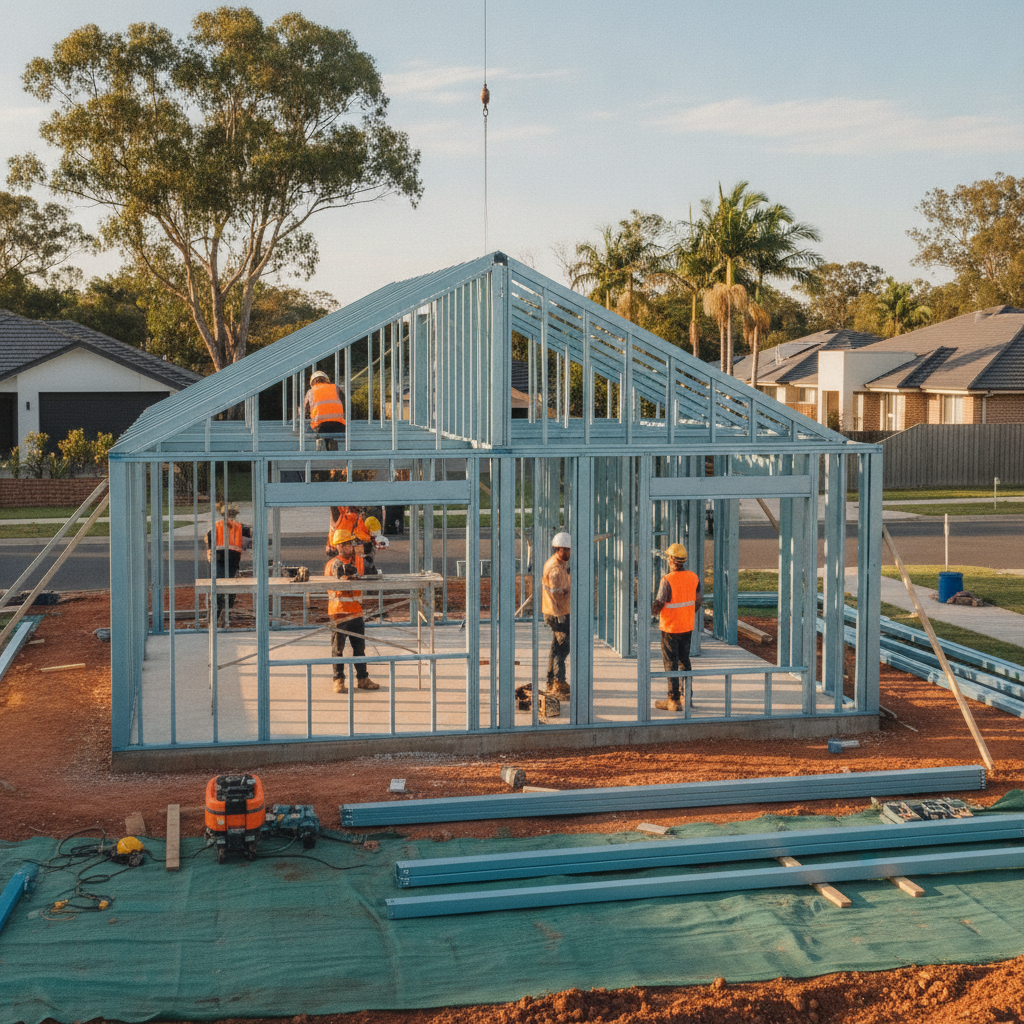
When time is your most precious commodity, the materials you choose matter immensely. One of the biggest advantages for a working owner builder is opting for a steel frame kit home. Unlike traditional timber framing which might require on-site measuring, cutting, and adjusting, a quality kit using BlueScope TRUECORE steel arrives pre-engineered to millimetre perfection.
Because the frames are light and often comes with pre-punched holes for electrical and plumbing, the 'skeleton' of your home goes up much faster than traditional methods. For someone who only has Saturdays and Sundays to make progress, saving two or three weeks on the framing stage is a game changer. It means you get to lock-up stage sooner, protecting the interior of your build from the Australian elements and allowing you to tinker with internal fit-outs during weeknights after work.
2. The 'Power Hour' Strategy
You do not always need an eight-hour block to move the needle. The most successful working owner builders utilize the 'Power Hour' strategy. This involves identifying tasks that can be completed in 60 minutes or less on weeknights. This keeps the momentum alive so that when Saturday morning rolls around, you aren't spending the first three hours just getting organized.
Power Hour tasks might include:
- Reviewing the assembly manuals for the next stage of the kit.
- Calling and confirming trades (plumbers, electricians) for the upcoming weekend.
- Cleaning the site so it is safe and ready for work.
- Checking off your inventory of delivered components like cladding or windows.
- Updating your project management spreadsheet.
3. Master the Art of the Forward Schedule
The biggest time-waster in any kit home project is waiting. For a working professional, a delay on a Friday can mean an entire weekend of lost productivity. Effective time management means looking at least four weeks ahead at all times. If your kit is arriving on a Tuesday, you should have already arranged for its secure storage and confirmed any help you need for that following Saturday.
In the Australian building industry, good tradespeople are often booked out weeks or even months in advance. Use your lunch breaks at your 'real job' to make those vital phone calls. Consistency is key here. A simple 10 minute call at midday on a Wednesday can prevent a total standstill on a Saturday morning.
4. Communication is Your Best Tool
When you are managing a site remotely for 40 hours a week, communication becomes your primary construction tool. Ensure you have a clear, documented plan for any trades you have hired to do the slab, electrical, or plumbing. Because you are using a steel frame kit, providing the trades with the engineering plans early can save hours of back-and-forth questions. These plans are precise, meaning your plumber knows exactly where the pipes need to go before the slab is even poured, reducing the risk of errors that you would have to fix on your own time.
5. Realistic Milestone Setting
It is easy to get overexcited and tell yourself you will have the roof on in a weekend. However, reality often has other plans, especially when you factor in the Australian weather. Set your milestones with a 'buffer' included. If you think the cladding will take two weekends, schedule it for three. This prevents the psychological defeat that comes with constantly falling behind your own arbitrary deadlines.
Focus on one major goal per month. For example:
- Month 1: Site preparation and slab pour.
- Month 2: Standing the steel frames and trusses.
- Month 3: Installation of windows, doors, and external cladding (Lock-up).
- Month 4: Insulation and internal linings.
By breaking the build down into these chunks, the project feels like a series of wins rather than one giant, overwhelming mountain.
6. Utilize Delivery Services to the Fullest
Time spent at the hardware store is time not spent building. For a working owner builder, the local Bunnings or timber yard is a trap that can suck up half a Saturday. Whenever possible, order your consumables, fixings, and additional materials in bulk and have them delivered to the site. Yes, there may be a delivery fee, but calculate what your hourly rate is. If you spend three hours driving and loading, that is three hours of construction time gone. In the context of a kit home, most of your major components come in the delivery, but for those extra bits and pieces, always opt for delivery over a DIY pickup.
7. Protect Your Mental Health and Relationships
Building a home is emotional. Doing it while working full-time is an endurance test. One of the most important time management tips is actually to schedule 'off' time. It sounds counter-intuitive, but if you work 40 hours at the office and then 20 hours on the tools every single week, you will eventually hit a wall. When you hit that wall, your productivity drops, mistakes happen, and the project slows down anyway.
Designate one afternoon a week where building talk is banned. Keeping your energy levels up ensures that the hours you do spend on-site are high-quality, productive hours. Remember, the goal of an owner builder project is to end up with a beautiful home and a sense of achievement, not just a finished building and a frayed nervous system.
8. The Steel Frame Advantage: Accuracy Equals Speed
We have touched on it before, but the technical benefits of steel framing really shine for the part-time builder. Because steel doesn't warp, twist, or shrink, your walls stay straight. This has a massive 'knock-on' effect for your time management later in the project. When it comes time to install your kitchen cabinets or line the walls with plasterboard, everything fits because the frame is perfectly square. You won't spend your precious weekends 'shimming' walls or trying to fix wonky corners. The precision of the kit takes the guesswork out of the build, which is the ultimate time-saver.
Final Thoughts for the Weekend Builder
Building your own kit home in Australia while holding down a career is entirely possible, and thousands of people do it every year. It requires a shift in mindset from 'doing everything' to 'managing everything'. By choosing efficient building materials like steel frames, utilizing the 'Power Hour' for admin, and planning your trade schedules weeks in advance, you can keep the project moving forward without sacrificing your career or your sanity.
Take it one bolt at a time, stay organized, and remember that every hour spent on site is one hour closer to moving into a home you built yourself. The satisfaction of standing in your finished living room, knowing you managed the project through to completion, is worth every early morning and every carefully planned weekend.