Taking the Mystery Out of Kit Home Plans
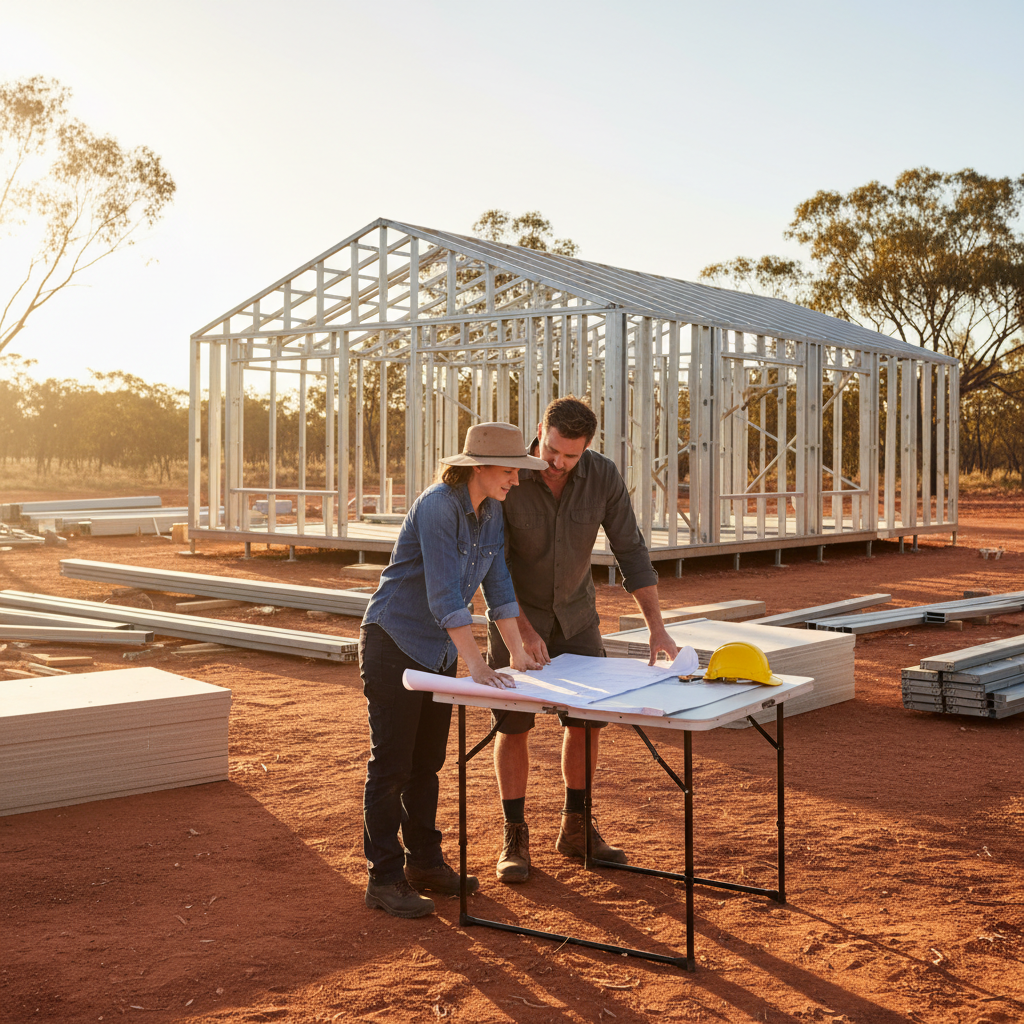
For many Australians, the dream of building a home with their own two hands is a powerful motivator. Kit homes offer a unique pathway to homeownership, providing a structured way to manage a project while maintaining control over the finished product. However, when those large rolls of paper or digital PDF files first arrive, they can look like a foreign language. Understanding how to read and interpret your kit home plans and specifications is one of the most vital skills you will develop as an owner builder.
Whether you are looking at a compact two bedroom retreat or a sprawling family homestead, the plans are your roadmap. They tell the story of how your house will sit on the land, how the rooms connect, and exactly what materials will be used to keep your family safe and dry. In this guide, we will break down the technical jargon and show you exactly what to look for when reviewing your kit home documentation.
The Anatomy of a Kit Home Plan Set
A standard set of plans is not just one drawing. It is a collection of different views and schedules that work together to provide a complete picture of the build. In the Australian context, these plans must meet specific standards to be approved by your local council or a private certifier. Here are the core components you will encounter:
The Site Plan
This is where it all begins. The site plan shows your house footprint in relation to your property boundaries. It will include information about setbacks (the distance from the home to the fence), easements, and North points. Understanding the orientation of your home on the site plan is crucial for energy efficiency. In Australia, positioning your living areas to take advantage of the northern sun can significantly reduce your heating and cooling requirements throughout the year.
Floor Plans
The floor plan is a bird's eye view of the interior layout. It shows the location of walls, doors, windows, and fixed joinery. When reviewing these, do not just look at the room sizes. Think about the flow. Is there enough space for a dining table? Is the laundry easily accessible? Pay close attention to the door swings shown on the plan to ensure they do not hit furniture or block walkways.
Elevations
Elevations are flat, two dimensional views of the outside of the house from the North, South, East, and West. These are essential for visualizing the finished aesthetic of your home, including the roof pitch and the placement of windows. These drawings will also indicate the types of cladding used on the exterior walls.
Engineering and Framing Layouts
This is the technical heart of your kit. For a kit home utilizing a steel frame, these drawings specify every stud, noggin, and truss. Using BlueScope TRUECORE steel ensures the frame is laser accurate, and your framing layouts will show exactly how these pieces click together. Because these frames are engineered to specific wind speeds and site conditions, following these plans to the millimeter is non negotiable for structural integrity.
Understanding the Specification List
While the plans show you where things go, the specifications (or 'specs') tell you what those things are made of. This document is a detailed list of every component included in your kit. As an owner builder, you need to cross reference this list carefully to understand exactly what you are receiving and what you need to source locally.
In a high quality Australian kit, the specifications usually include:
- Wall Framing and Trusses: Details on the steel gauge and the specific framing system.
- Roofing Materials: Often specifying COLORBOND steel profiles and gutter types.
- External Cladding: The specific materials used for the outer skin of the home.
- Windows and External Doors: Sizes, glazing types, and frame colors.
- Insulation: The R-values of the batts or blankets provided for the roof and walls.
- Fixings and Brackets: The nuts, bolts, and screws required to assemble the frame.
The Importance of Sectional Drawings
One of the most overlooked parts of a kit home plan set is the 'Section.' Imagine taking a giant knife and slicing the house down the middle. That is what a section drawing shows. It reveals the layers of construction that you cannot see from the outside, such as the slab thickness, the height of the ceilings, the insulation gap, and how the roof trusses connect to the walls.
For an owner builder, section drawings are invaluable for communicating with trades. When your plumber or electrician arrives on site, they will look at the sections to understand how much space they have to run pipes and cables within the wall cavities or ceiling voids.
Practical Tips for Reviewing Your Plans
Before you sign off on your plans and move into the production phase, take the time to do a 'mental walkthrough.' Here are some practical steps to ensure you have caught every detail:
1. Check Your Window Heights
Look at the window schedule often found on the floor plan or a separate sheet. Are the windows high enough to allow for kitchen benches underneath? If you have a beautiful view, are the windows positioned at the right height to enjoy it while sitting down? It is much easier to move a window on a computer screen than it is to move a steel stud once it has been manufactured.
2. Verify the Finished Floor Level (FFL)
The FFL is the height of your floor relative to the ground. This is vital for drainage and accessibility. Ensure your plans clearly state how many steps will be required to enter the home and how this relates to your specific site slope.
3. Confirm Your Bushfire Attack Level (BAL)
Many areas in Australia are subject to bushfire regulations. Your plans and specifications must reflect the required BAL rating. This might mean you need toughened glass in your windows or specific mesh over your vents. Ensure your kit specifications match the requirements set out in your bushfire assessment report.
Communicating with Your Kit Provider
If you see a symbol or a note on your plans that you do not understand, ask. A reputable kit home provider would much rather explain a drawing to you ten times than have you make a mistake during the build. Common symbols like 'RL' (Relative Level), 'DP' (Downpipe), or 'UBO' (Under Bench Oven) are standard in the industry, but they are not always intuitive to a first time builder.
Remember that while the kit provider supplies the components, the owner builder is responsible for the site works. This means you need to ensure your slab or sub floor is built exactly to the dimensions specified in the plans. Steel frames are manufactured to tight tolerances, meaning there is very little room for error on the foundation. Always provide your concreter or flooring contractor with the most recent version of the plans and emphasize the importance of accuracy.
Common Pitfalls to Avoid
One major trap for owner builders is working off old versions of plans. During the design and approval process, plans often go through several revisions. Make it a habit to destroy or clearly mark 'OUTDATED' on any old copies. Only keep the 'Issued for Construction' set on your site. This prevents situations where a plumber might rough in pipes based on a kitchen layout that was changed three weeks prior.
Another pitfall is assuming that every single item required for the house is in the kit. Kit homes are designed to get the structural shell and exterior lock up completed. Items like floor coverings, internal paint, kitchen cabinetry, and electrical wiring are typically sourced by the owner builder during the fit out stage. Reading your specifications list thoroughly will clarify where the kit ends and your local sourcing begins.
Conclusion: Knowledge is Power
Building a kit home is an empowering experience that allows you to create a high quality, modern Australian home while staying involved in every step of the process. By taking the time to truly understand your plans and specifications, you move from being a spectator to being a confident project manager.
When you can read the drawings, you can speak the language of your tradespeople, anticipate challenges before they arise, and ensure that your new home is built exactly the way you envisioned it. These documents are more than just paper, they are the foundation of your future home. Treat them with the respect they deserve, study them closely, and enjoy the rewarding journey of seeing those lines on a page turn into a beautiful reality.