The Slab Is Just the Start
Most blokes walk onto a flat patch of dirt and reckon they're halfway to a finished house. They aren't. I've seen it a hundred times over fifteen years in the trade. A guy buys a beautiful steel frame kit, ships it to a block in the back of beyond like Mudgee or some sloping site in the Dandenongs, and then realizes he forgot to factor in the earthworks. Or worse, he hasn't checked the BAL rating. You can have the best TRUECORE steel frames sitting on your grass, but if your Bushfire Attack Level is BAL-40 or Flame Zone and your windows don't match, you're looking at a very expensive pile of metal that the council won't let you live in.
Preparation is boring. It's dusty, it's full of paperwork, and it costs money before you even see a wall go up. But if you skip the soil test? You're asking for a slab that cracks because you didn't account for reactive clay. Get the site right first. Everything else follows.
The Council Paperwork Trap
New owner-builders often think because a kit is ready-to-go, the council approval is a mere formality. It's not. Dealing with a DA (Development Application) or even a CDC (Complying Development Certificate) can be like drawing blood from a stone. Each local council has its own quirks. Some care about your roof color. Others get a bee in their bonnet about your rainwater tank placement.
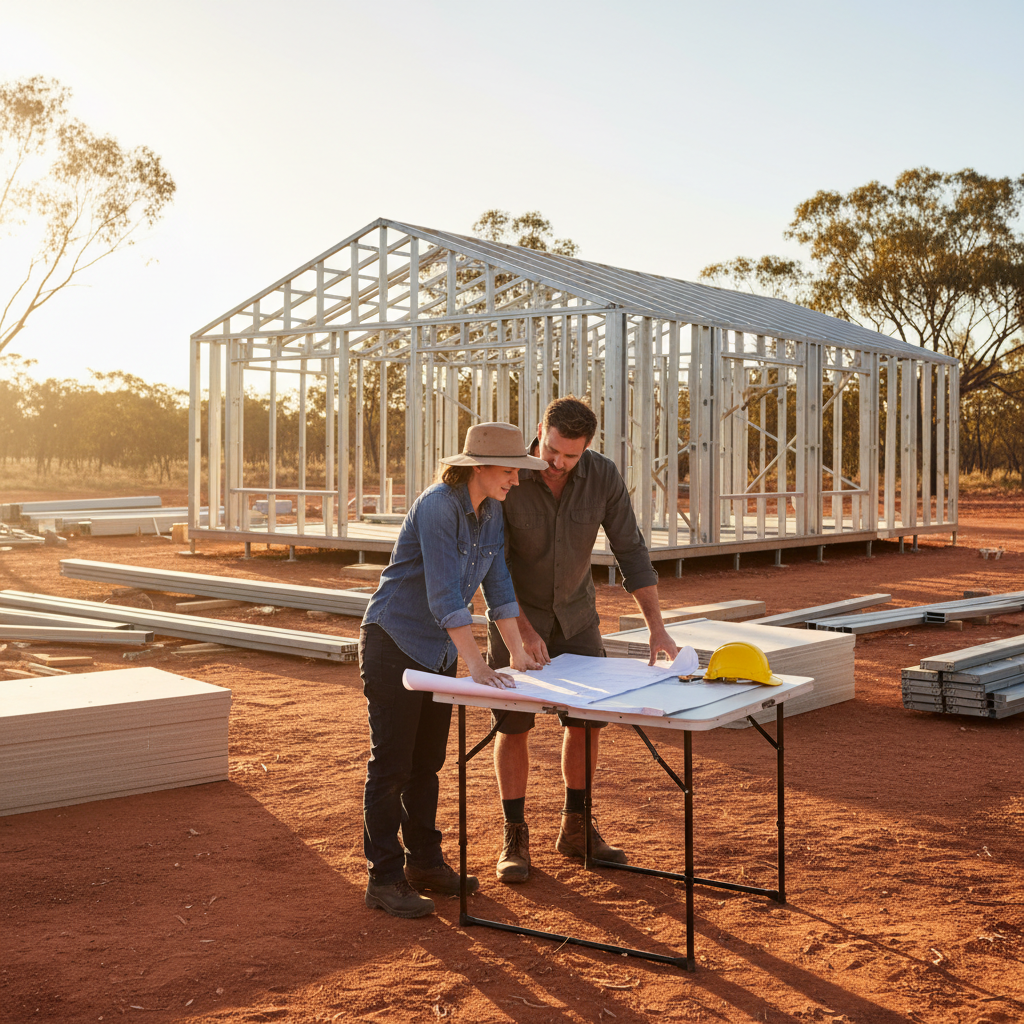
You need to be your own project manager here. Don't assume the kit provider handles the council. They provide the engineering for the building, sure. But they don't know where your neighbor's fence is or if there's a protected eucalypt right where you want the kitchen. Getting your site plan, drainage plan, and BASIX (if you're in NSW) sorted early saves you from sitting on a kit for six months while you argue with a planner about setbacks.
Steel Frames Aren't Magic, But They Help
I love steel. It's straight. It doesn't warp when the humidity hits 90 percent in Queensland. Termites look at it and go hungry. But a common mistake is not thinking about the fit-out. Because steel is precise, you have to be precise too. If you're planning on hanging those heavy stone floating vanities in the bathroom, you need to tell someone early. You need extra noggins. You can't just screw into the wall later and hope for the best like you're fixing a picture frame.
AS 4100 is the standard for steel structures and NCC Volume 2 covers residential buildings. You don't need to memorize them, but you do need to understand that the system works because it's engineered. Don't start cutting into studs or modifying the frame on-site because you changed your mind about a window. If you deviate from the engineering plans, your certification goes out the window faster than a tradie at 3:30 pm on a Friday.
The Windows and Doors Headache
Kits come with the glass and the frames. It's a huge win. But I've seen guys leave their window deliveries sitting in the paddock for months. Glass is heavy. It's fragile. And if you're building in a coastal spot like North Gosford or the Gold Coast, the salt air is going to mess with things if they're not stored properly.
When the kit arrives, you'll have a mountain of cladding, roofing, and insulation. Inventory it. Every single nut and bolt. Don't wait until the roofers are on-site to realize a flashing is missing. That’s how you end up paying for three tradesmen to sit on their tailgates drinking coffee while you're racing to the hardware store.
Trade Scheduling: The Owner-Builder’s Downfall
You're the boss. That sounds great until the plumber cancels. Or the sparky shows up and tells you he can't rough-in because you haven't finished the internal walls. Being an owner-builder means you're the conductor of the orchestra. If you aren't organized, the music sounds like a car crash.
Talk to your trades early. Real early. Tell them you're building a kit home. Some tradies are wary of kit homes because they think they're weird. They aren't. They're just standard construction methods delivered in a smarter package. Once they see the BlueScope steel delivery and the clean lines, they'll usually relax. Give them clear timelines, but be honest about the delays. Weather happens. Suppliers get backed up. Just keep the communication lines open so you're not at the bottom of their list when you finally need that final sign-off.
Practical Tips for the Build Site
- Buy a high-quality levels and a decent impact driver. Don't cheap out on tools you'll use ten thousand times.
- Keep the site clean. A messy site is a dangerous site, and it makes finding that specific bag of screws impossible.
- Get your insulation in properly. R-values matter, and if you leave gaps, you'll feel every bit of that winter chill.
- Don't rush the cladding. It's the face of your house. If your lines are wonky, you'll see it every time you pull into the driveway.
Living With the Layout
You probably spent months looking at the 2D floor plans on your laptop. You know where the fridge goes. But have you thought about the light? In Australia, we have a sun that wants to cook us. If you put your big sliding doors facing west without any eaves, your living room will be an oven by 4 pm in February. Think about cross-breezes. Think about where the morning sun hits your bedroom. A kit home gives you the freedom to choose your orientation, so don't just plonk it parallel to the road because it looks easier. Walk the block at different times of the day before the slab is poured. Feel where the wind comes from. It costs nothing to rotate a house 15 degrees on a map, but it costs a fortune to fix a dark, stuffy house once it's built.
Building a home is stressful. Anyone who says otherwise is lying to you. There will be days where it rains for a week straight and your site looks like a mud wrestling pit. There will be days where you lose your favorite hammer. But when that roof goes on and you stand inside a structure you managed, it's a different feeling. It's not just a house. It's yours. Just do yourself a favor and get the prep work done right. No shortcuts.