Stop Guessing and Start Planning
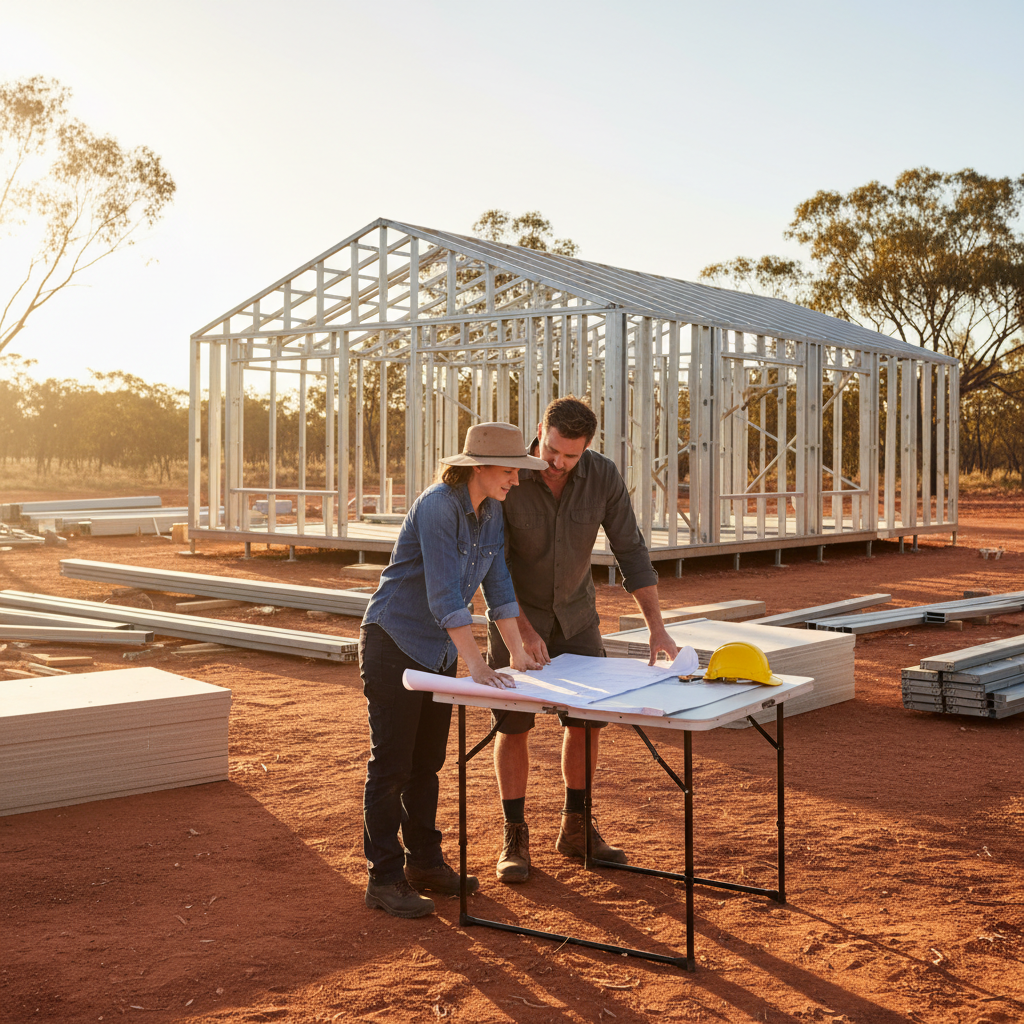
Most blokes and plenty of couples walk into the kit home world thinking it's like a giant Lego set for adults. They see the TRUECORE steel frames arrive on the truck and reckon they'll have the roof on by Sunday arvo. I've been in this industry for fifteen years, and let me tell you, that's exactly when the wheels fall off. Building a kit home in Australia is a bloody brilliant way to get a high-quality house on your own terms, but it's not a walk in the park if you're disorganized.
The biggest trap isn't the construction itself. It's the stuff you don't realize you don't know. You're the project manager now. That means when the sparky doesn't show up or the council knocks back your DA because you forgot a sediment fence on your site plan, that's on you. We see common mistakes every single month that could've been avoided with a bit of foresight and less ego.
The 'She'll Be Right' Site Access Disaster
You've ordered a house. A whole house. It comes on a heavy rigid truck or a semi-trailer, depending on how big your dream is. One of the dumbest mistakes first-timers make is not checking their site access. If your block is up a narrow, winding track in the Adelaide Hills or tucked away behind a row of established gums with low-hanging branches, that truck isn't getting in. Semi-trailers don't do three-point turns on dirt tracks. If the driver has to drop your kit at the gate because he can't get to the building pad, you'll be hand-carrying steel wall frames up the hill for three days. Your back will hate you. Your mates will stop answering your calls. Check your clearances. Realistically.
Ignoring the Order of Operations
In construction, there's a strict sequence. You can't just change your mind and decide to move the toilet three feet to the left once the slab is poured. Well, you can, but you'll be paying a fencer or a laborer to spend two days with a jackhammer. It's messy. We see people get so excited about the cladding and the paint colors that they forget the boring stuff. Things like termite barriers and under-slab drainage. If you're building with steel frames, you've got a massive advantage against termites, sure. But the Building Code of Australia (NCC Volume 2) still demands specific physical and chemical barriers. Don't skip them just because the frame is steel. Your neighbors might have timber trusses, and those white ants are hungry. They'll eat your skirting boards and your kitchen cabinets if you give 'em a chance.
The Engineering and Council Headache
Every site is different. Just because a plan looks good on our website doesn't mean it's ready for your specific patch of dirt. You need to know your wind rating. Are you in a cyclonic N3 zone or a sheltered N1 spot? If you buy a kit designed for sheltered suburbs and try to stick it on a ridge top in a high-wind area, the council will laugh you out of the office. And don't get me started on BAL (Bushfire Attack Level) ratings. If you're in a BAL-29 or BAL-40 zone, your windows and doors need to be specific types. You can't just chuck in any old sliding door from a salvage yard. If you don't get your engineering and bushfire specs sorted before the kit is manufactured, you're looking at a world of pain and expensive retrofitting.
The Difference Between 'Kit' and 'Turnkey'
Here is the cold, hard truth: a kit home is a shell. We supply the bones and the skin. That's the steel frames, the BlueScope TRUECORE trusses, the Colorbond roofing, and the external cladding. What some people fail to grasp is that they are responsible for everything else. You need to find a plumber who doesn't mind working with owner-builders. You need to source your own kitchen, your own floor tiles, and your own light switches. I've seen blokes get the frame up and then realize they haven't talked to a cabinet maker for six months. Now they're living in a caravan on-site for an extra half-year while they wait for a kitchen to be built. Get your trades lined up early. Good sparkies and chippies are busy. They aren't sitting around waiting for your phone call.
Steel Frames: Not Just for Show
We use steel because it stays straight. Timber moves. It warps, it twists, it has knots. If you're a first-time builder, you want a frame that is dead square and stays that way. It makes hanging the plasterboard heaps easier. But here's a tip: when you're working with steel, buy a decent impact driver and the right self-drilling screws. Don't try to use the cheap bits from the bargain bin. They'll snap, you'll get frustrated, and you'll end up with a wall that looks like Swiss cheese. Also, remember your thermal break. If you're in a cold climate, you need that insulation layer between the steel frame and your cladding to stop the cold from bridging through. It's a small detail that makes a massive difference in how much you'll pay for heating later.
Mismanaging Your Trades
If you're acting as the owner-builder, you are the boss. A common mistake is being too soft on contractors or, worse, being a nuisance. Show up on site with a box of cold ones on a Friday arvo, but also make sure you've got the site ready for them. If the plumber shows up to do the rough-in and the site is covered in scrap steel and old cement bags, he's going to charge you for the time it takes him to clear a path. Professionalism goes both ways. Keep a clean site. It sounds like something your mum would say, but a tidy site is a safe site. Plus, it shows the inspectors you know what you're doing.
Missing the Small Stuff
It's rarely the big frames that cause the most stress. It's the flashing. It's the specific screws for the valley gutters. It's the insulation batts you forgot to order for the internal walls. When your kit arrives, do an inventory immediately. Don't wait until you're on the roof in the middle of a Hobart winter to realize you're short three meters of ridge capping. Check the packing list. Then check it again. If something is missing or damaged from transport, you need to know on day one, not day fifty.
And let's talk about tools. You'll need more than a hammer and a spirit level. You're going to need a decent laser level, especially for getting your stumps or slab right. If your foundation is out by 10mm, by the time you get to the roofline, that error will have grown. Steel frames don't hide mistakes. They're precise, so your foundation needs to be bloody precise too.
Building for Your Lifestyle, Not Just the Plan
I always tell people to walk through their floor plan while it's still just a drawing on the dining table. Imagine carrying the groceries from the car to the kitchen. Where do you put your keys? Is the light switch in a spot that makes sense when you walk in at night? People often build the kit exactly as shown in the brochure without thinking about their specific block. Maybe the view is better if you flip the house? Maybe that sun-drenched north-facing wall needs fewer windows to keep the heat out in summer? These are the changes you make before the steel is cut at the factory. Once those frames are delivered, the design is set in stone... or steel, anyway.
Advice From the Trenches
Be patient. You'll get rains. You'll get sick. A trade will let you down. It happens. The successful owner-builders are the ones who stay calm and keep the momentum moving. Building your own home is an incredible achievement. When you're sitting on your deck looking at a house you built with your own two hands, all the stress of the council permits and the muddy site access fades away. Just don't let the small mistakes ruin the experience. Plan more, talk to the experts, and for heaven's sake, keep a clean site.