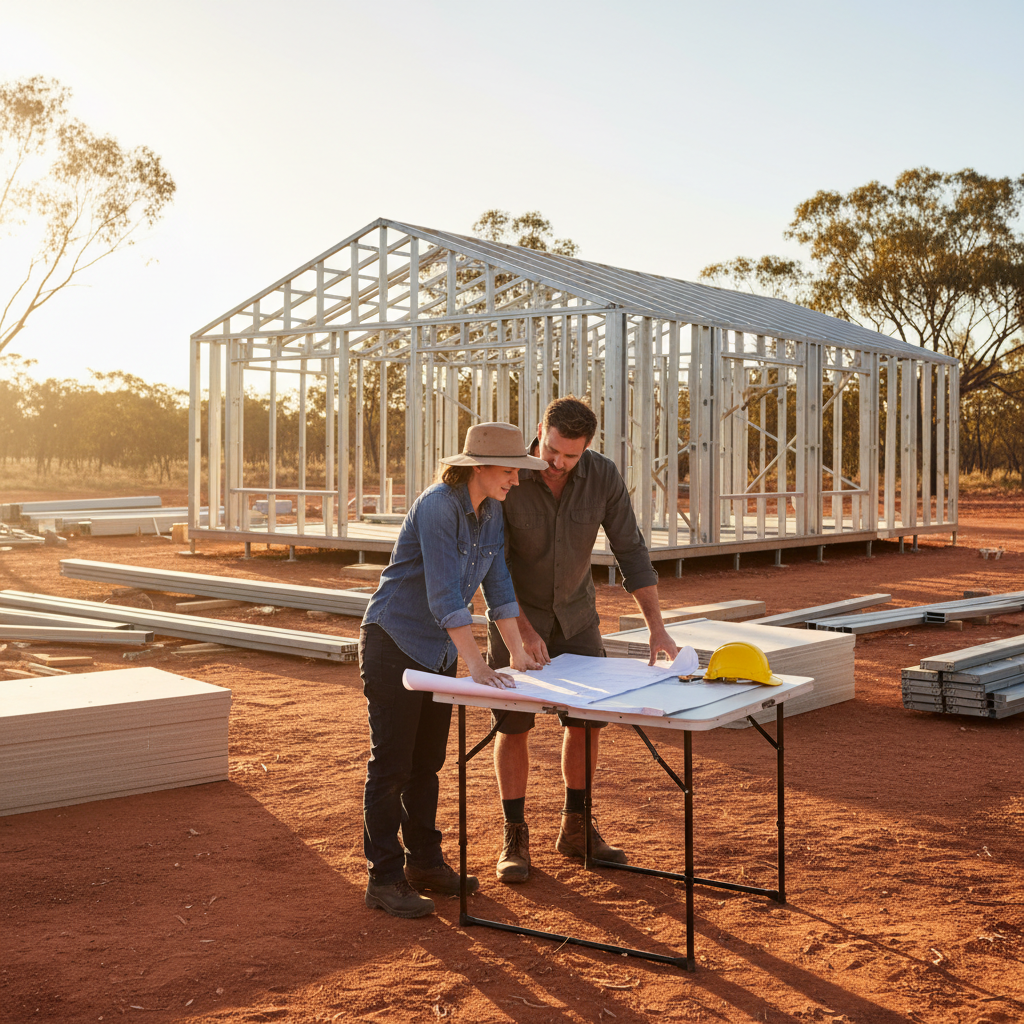
Standing on a vacant block of dirt in the pouring rain with a set of council-approved plans in your hand feels different when your own name is on the permit. It is a mix of adrenaline and a slight sinking feeling in your gut. Most people think they can just buy a kit, grab a hammer, and start nailing things together on a weekend. They are wrong. If you want to build your own kit home in Australia, the very first hurdle isn't choosing between a gable or a skillion roof. It is getting that white card and your owner builder permit sorted before a single truck rolls onto your site.
The State Bureaucracy Minefield
Each state treats owner builders like a different species. In New South Wales, the Fair Trading office handles the paperwork. If your project value exceeds $20,000, you are stuck doing an owner builder course. Don't try to dodge it. They check. In Queensland, the QBCC runs the show. You will need to complete an approved course if the work is worth more than $11,000. It is a bit of a dry read, honestly. You will spend hours learning about workplace health and safety and how to manage subcontractors who don't show up when they say they will. But without that permit number, you cannot get insurance. And without insurance, you are one rogue gust of wind away from a financial disaster.
Victoria has its own quirks through the VBA. You can only be an owner builder for one single home every five years there. They are strict because they want to stop people acting like unlicensed developers. If you are building in WA or SA, the rules shift again. It is a mess of acronyms and fees. My advice? Head to your state regulator's website tonight. Not tomorrow. Tonight. Download the application form and look at the 'fit and proper person' requirements. It's the boring part of the dream, but it's the only way the slab gets poured legally.
Steel Frames and the Owner Builder Advantage
Once you've got the permit, the actual build starts to look a lot more manageable. This is where kit homes really shine for the DIY crowd, specifically the ones using BlueScope TRUECORE steel. Why? Because steel is predictable. Timber can arrive on site with crowns, bows, and twists that would make a seasoned chippy use words I can't repeat here. If you are an owner builder, you don't have time to be hand-selecting every stud or planing down a warped plate just so the plasterboard sits flat later on.
When those steel frames arrive, they are straight. They stay straight. In a places like North Queensland or the Northern Rivers where the humidity is high enough to swim in, steel won't swell. Plus, the termites will starve. I've seen blokes spend three weeks trying to straighten up a timber frame because the rain got to it before the roof was on. With a steel kit, the holes for your electrical and plumbing are often pre-punched too. That makes your sparky and plumber much happier, which usually means they might actually turn up on Monday morning like they promised.
The Reality of On-Site Logistics
You need to think about access. A semi-trailer carrying your frames and roofing iron isn't going to pull a U-turn in a tight cul-de-sac. I remember a project out near Toowoomba where the owner forgot to check the overhead low-hanging branches on his driveway. The driver refused to go up the track. The owner ended up carrying every single frame up a 100-metre hill by hand with his brother-in-law. It took two days. It was a nightmare. Check your site access before you order. Measure the gate. Then measure it again.
Trade Coordination: The Owner Builder's Real Job
You aren't just a builder. You are a project manager, a diplomat, and a quality control officer. Many owner builders make the mistake of thinking they'll do everything. Don't. Unless you are a licensed plumber, you aren't touching the pipes. The same goes for the switchboard. Your job is to make sure the slab is dead level before the frames arrive. If your slab is out by 20mm over the length of the house, your precision-engineered steel frames will not fit properly. You cannot just 'fudge' it with a saw like you can with wood. Steel is unforgiving. If the bolt holes are supposed to be there, they need to be there.
Talk to your concreter early. Tell them you are building a steel kit home. They need to know the tolerances are tight. If they don't reckon they can hit the specs required in the engineering drawings, find a different concreter. It is cheaper to pay for a better tradie now than to try and grind down cured concrete later because your anchor bolts don't line up.
Wait, what about the NCC?
You must get familiar with the National Construction Code, specifically Volume 2 for residential builds. Even as an owner builder, you're responsible for ensuring the house meets Australian Standards like AS 4100 for steel structures. Your kit provider does a lot of the heavy lifting with the engineering, but you are the one on site making sure the fixings are driven in correctly. You can't just slap an extra window in because it looked good in a magazine. Every change affects the structural integrity and your energy rating. If you mess with the bracing, the whole thing could fail a building inspection. Always stick to the engineering plans. They are there for a reason.
The Finishing Stretch
After the frames are up and the roof is on, you'll feel like you're winning. But the lock-up stage is where the real work begins. This is where you deal with insulation, windows, and cladding. Our kits come with these bits, but you've got to install them right to get the thermal performance you're paying for. If you leave gaps in the insulation or mess up the flashing around the windows, you'll be living in a drafty box. Take your time with the weatherproofing. Use the right sealants. Follow the cladding manufacturer's spacing guide to the millimetre. It's the difference between a house that looks like a professional built it and one that looks like a weekend project gone wrong.
Being an owner builder is hard work. It's dusty, it's stressful, and your partner will probably be sick of hearing about roof pitches and R-values by month three. But there is something about walking through a front door that you helped hang, into a house you managed from a pile of steel and a stack of paperwork. Just make sure you get that permit first. Everything else is just solving one problem at a time until you've got a set of keys in your hand.