Setting the Foundation for Your Kit Home Dream
When you start browsing floor plans for your new kit home, it is easy to get swept up in the layout of the kitchen or the span of the veranda. However, the most critical part of your build is something you will eventually never see: the soil beneath your feet. In Australia, our vast landscape offers a diverse range of geological conditions, from the sandy coastal strips of Western Australia to the heavy, reactive clays of western Sydney and regional Victoria.
As an owner builder, understanding soil classification is not just a regulatory hurdle, it is the fundamental building technique that ensures your home stands straight and crack-free for decades. In this guide, we will break down the technical world of Australian soil types and explain how they influence the foundations of your steel frame kit home.
The Importance of the Site Classification
Before any slab is poured or piers are dug, you must commission a soil test, formally known as a Site Classification. A geotechnical engineer will visit your block, take core samples, and determine how the soil reacts to moisture. In Australia, this is governed by Australian Standard AS 2870/2011.
The primary concern for kit home builders is reactivity. Some soils stay relatively stable, while others act like a sponge, expanding when wet and shrinking when dry. This movement can put immense stress on a house structure. While steel frames are incredibly resilient and offer a high strength to weight ratio, they still require a stable base to perform their best.
Understanding the Soil Classes
Australian soils are categorized into several classes that dictate what kind of foundation your home will need. Let us look at what these mean for your project:
Class A and S: The Stable Performers
Class A (Ace) represents sand and rock sites with little to no ground movement. Class S (Slightly Reactive) represents clay sites with only slight movement. These are the holy grail for builders. If you are lucky enough to have a Class A or S site, your foundation costs are typically lower, and you have more flexibility with basic raft slabs or strip footings.
Class M: Moderately Reactive
This is arguably the most common classification across suburban Australia. Class M soils experience moderate ground movement due to moisture changes. In these areas, engineers often design a stiffened raft slab with deeper internal beams to ensure the foundation moves as one solid unit, protecting the kit home structure above.
Class H1 and H2: Highly Reactive
These soils are often referred to as heavy clays. They move significantly. If you have ever seen deep cracks in the ground during a dry summer, you are likely looking at Class H soil. These sites require heavily engineered slabs or bored piers. The goal here is to ensure that when the ground heaves or shrinks, your steel frame remains level and tension-free.
Class E: Extremely Reactive
Class E sites are challenging and require specialized engineering oversight. These are sites that move more than 75mm over time. While building a kit home on Class E soil is perfectly possible, the foundation design will be much more robust and vital to the project's long term health.
Class P: Problem Sites
A Class P rating does not mean you cannot build, but it does mean the soil is unpredictable. This could be due to soft clay, loose sand, uncontrolled fill, or even the presence of large trees. If your site is P rated, an engineer must provide a custom design for your footings.
How Soil Impacts Your Kit Home Selection
Knowing your soil type early in the piece can help you make better design choices. For instance, if you are building on a steeply sloping site with reactive clay, you might choose a kit home designed for a sub-floor system (posts and bearers) rather than a concrete slab. Raising the home off the ground on adjustable stumps can sometimes be an easier way to manage ground movement compared to mass excavation and heavy concrete work.
One of the advantages of using steel frames in your kit home is the weight. Steel is significantly lighter than traditional timber or masonry. A lighter structural load can sometimes be an advantage on softer soils, as it reduces the pressure on the foundation system. Additionally, the precision of steel frames means that if your foundation is perfectly level, your walls will be too, making the rest of the DIY assembly much smoother.
Practical Tips for Managing Your Site Works
As an owner builder, you are in the driver's seat. Here are some practical building techniques to keep your site stable:
- Don't skip the soil test: Never rely on a neighbor's soil report. Soil can change significantly within just a few meters.
- Manage drainage from day one: The biggest enemy of reactive clay is uneven moisture. Ensure your site is graded so water flows away from the footprint of the home.
- Be wary of trees: Large trees can suck moisture out of the ground, causing localized soil shrinkage. Conversely, removing a large tree before building can cause the ground to swell as it rehydrates.
- Consult with your slab contractor: Show them your kit home plans and your soil report early. They can help identify any potential site access issues for concrete trucks or excavators.
The Interaction Between Foundations and Steel Frames
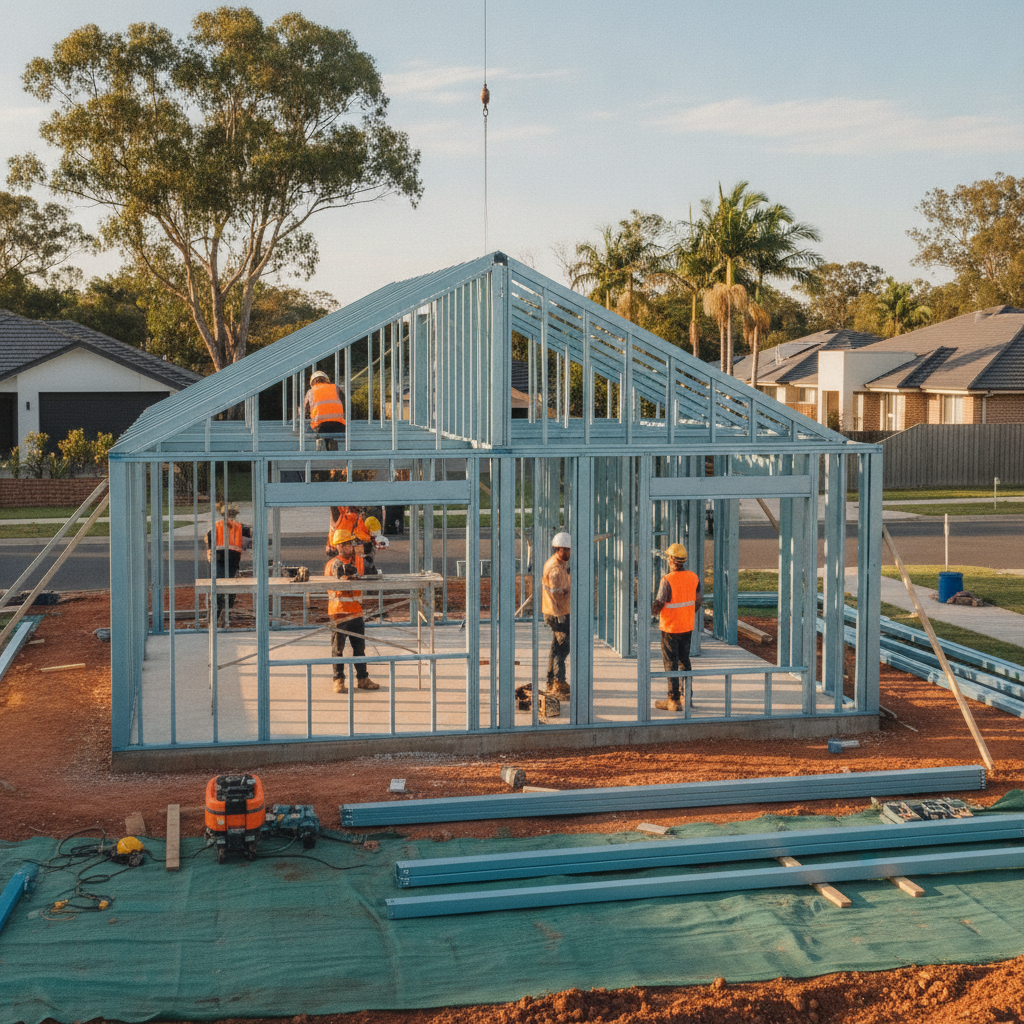
When your steel frame kit arrives on-site, it is designed to be bolted down to a level, stable surface. Because steel does not warp, twist, or shrink like timber, it provides a very stable skeletal structure. However, if the foundation shifts excessively because the soil was not properly accounted for, it can lead to issues with doors sticking or plasterboard cracking. This is why the marriage between a quality kit home and a professionally designed foundation is so important.
Using high quality BlueScope steel (like the TRUECORE brand) ensures that the frames are straight and true. When you combine this precision with a foundation that has been engineered specifically for your soil type, you are setting yourself up for a high quality finish that will last a lifetime.
The Role of Retaining Walls
On many Australian blocks, managing soil also involves managing slope. If your site needs to be leveled (cut and fill), you may need retaining walls. It is a common mistake to think of retaining walls as a separate landscaping project. In reality, they are a critical part of your home's structural ecosystem. Poorly drained retaining walls can lead to water pooling against your house foundation, which can change the soil moisture and lead to movement.
Final Thoughts for the Owner Builder
Building your own kit home is a rewarding journey that offers a unique sense of accomplishment. By taking the time to understand the ground you are building on, you are protecting your investment and ensuring the longevity of your home. While the technical language of soil classifications can seem daunting at first, it boils down to one simple principle: work with your land, not against it.
Once your foundation is poured and your site is prepared according to the specific needs of your soil, the fun part truly begins. You can receive your steel frame kit, start standing the walls, and watch your vision come to life on a base that is as solid as a rock. Remember, a great home starts with great ground work.