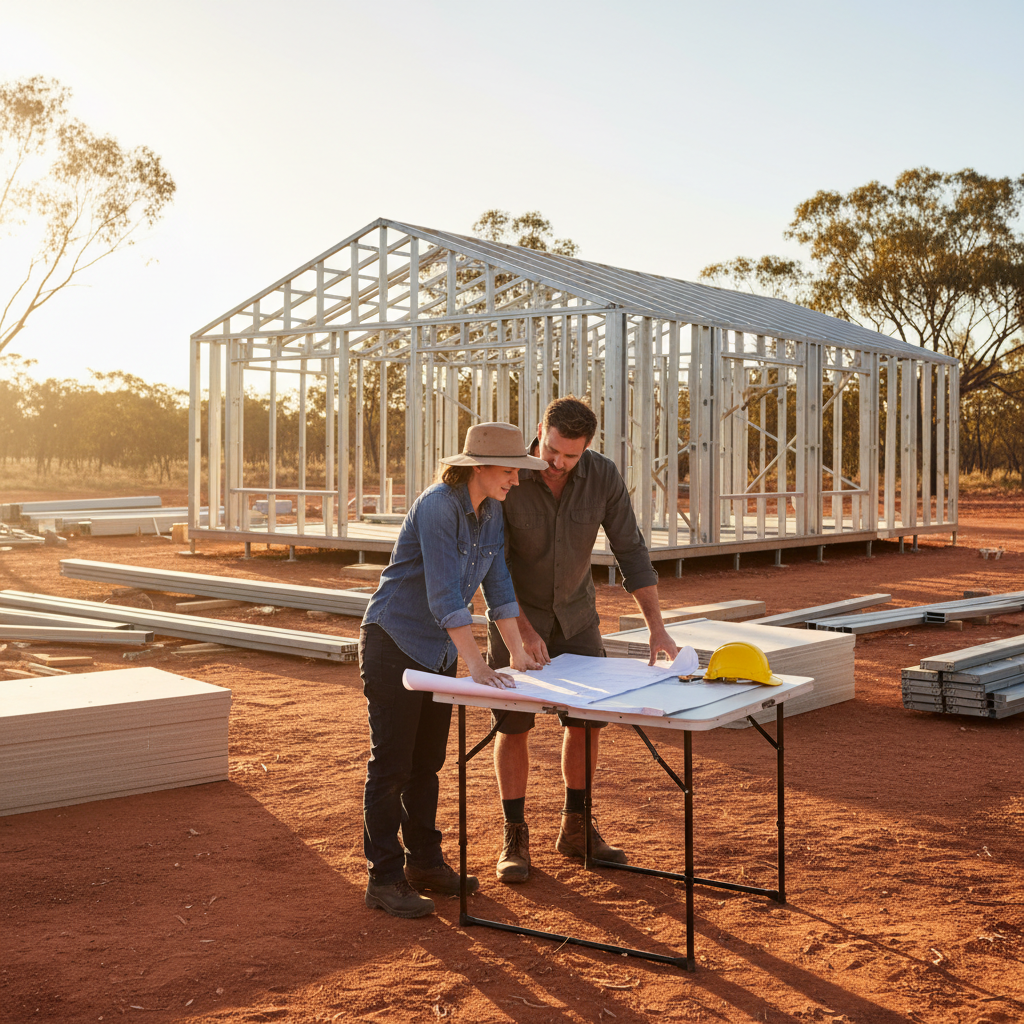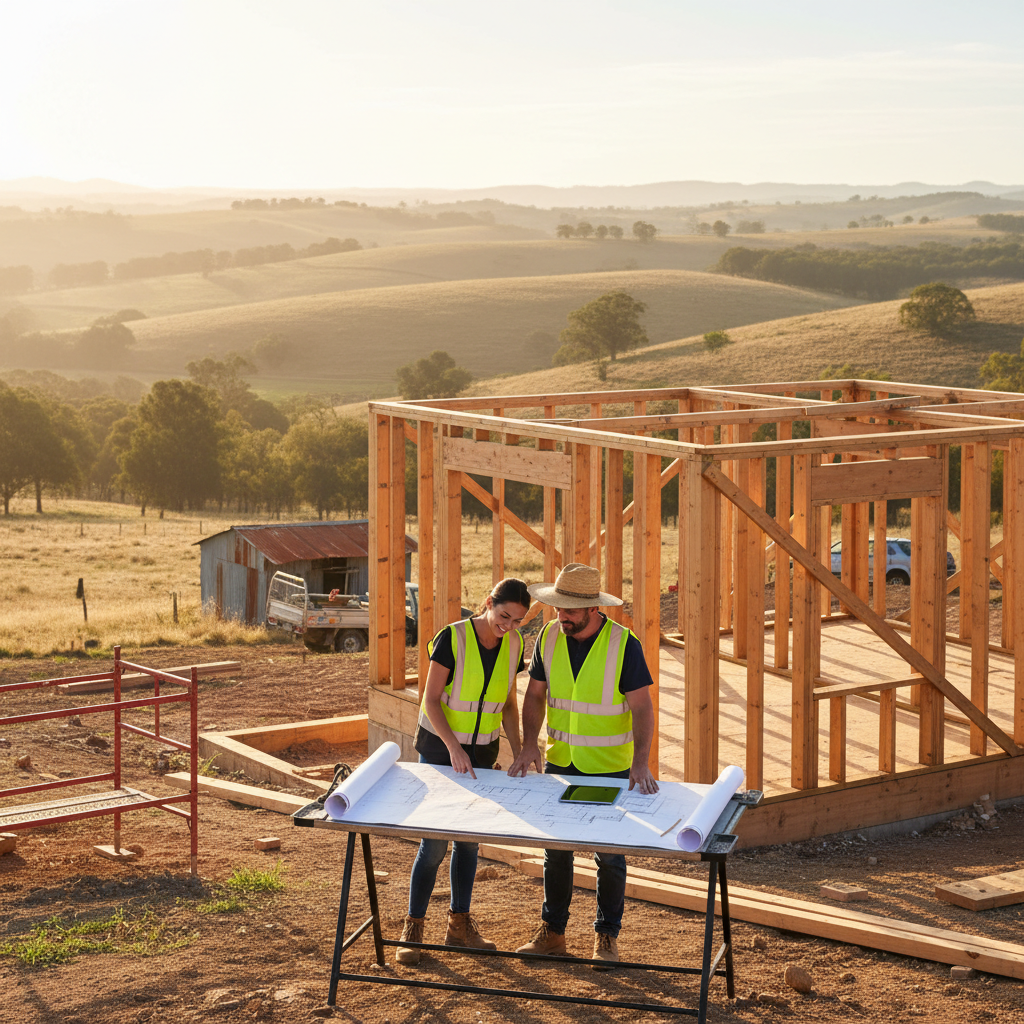
Standing on a vacant block of land in the middle of July with a set of engineering plans and a thermos of lukewarm coffee is where the reality of owner building finally hits. You've ordered your kit, you know the BlueScope TRUECORE steel frames are arriving in three weeks, and now you have to actually find people to put the footings in. This is usually the point where most DIYers realize they aren't just building a house. They're managing a small, occasionally chaotic business. The success of your kit home depends entirely on how you handle the tradies who come through your gate.
The Myth of the 'Simple' Tradie Relationship
Most people think you just call a plumber, they show up, they do the work, and you pay them. If only. In the real world, your plumber's ute breaks down on the same day your slab is being poured, or the sparkie forgets to run the data cables before you've started tacking up the internal lining. As an owner builder, you are the Site Supervisor. If things go wrong, it's on you. You can't point at a project manager because that's you in the reflective vest. You've got to be across AS 3000 for your electrical and ensure your wet areas meet AS 3740 requirements. If you don't know the standards, you can't check the work.
Getting Quotes That Actually Mean Something
Don't just ask for a price. That's a rookie move that leads to 'variations' later on, which is just trade-speak for more money out of your pocket. When you're building a kit home, you've got the advantage of a fixed set of plans and a specific bill of materials. Use them. Provide your subcontractors with the full architectural set, the engineering specs for the steel floor system or slab, and the exact cladding profile you've chosen. If you're using something like Corodek or Stramit Monopanel, tell them. Different profiles require different fixing methods and labor times. If they know exactly what they're installing, they can't complain later that the job was more complex than they thought.
I always tell people to get at least three quotes, but don't just pick the cheapest one. The cheapest quote is often from the bloke who's going to disappear halfway through the job to chase a bigger contract in the next suburb. Look for the one who asks questions. If a drainer asks about your fall or your trenching depth before he gives you a number, he's the one you want. He's actually thinking about the job, not just the invoice.
Scheduling is a Tetris Game
Sequence is everything. You cannot have the plasterers and the electricians on site at the exact same time in a small three-bedroom kit. They'll just get in each other's way, and someone will end up grumpy. You need a clear run. Slab first, obviously. Then those steel frames go up. Because our kits use TRUECORE steel, they're straight and true, which actually makes life easier for your follow-on trades. Trusses and wall frames won't warp or twist while you're waiting for the windows to arrive, so your plasterer won't have to waste time packing out wonky walls. Tell your trades this. They love working on steel because the holes for wiring and plumbing are already punched out. It saves them a heap of boring drilling time.
The Critical Path
You've got to understand the 'critical path'. This is the sequence of tasks that, if delayed, pushes the whole project back. For a kit home, it usually looks like this:
- Site cut and plumbing under-slab drainage.
- Slab pour or piers/bearers/joists.
- Frame and roof truss standing.
- Roofing and gutters (getting 'dried in' is the goal).
- Windows and external doors.
- Rough-in (electrical and plumbing).
- Insulation and internal linings.
Quality Control and the Handover
You aren't being 'difficult' by checking work against the NCC or your engineering plans. You're being responsible. When the frames are up, grab a level. Check the plumb of the corners. Check the spacing of the noggins if you've got specific wall-hung vanities or heavy TVs going in later. It's much easier to add an extra piece of timber or steel bracing now than it is once the sheets are finished and painted.
One trick I've used for years is the 'site walk'. At the end of every Friday, walk the site alone. Look for things that don't look right. Is the flashing tucked in properly? Are the weep holes clear? Is there trash piling up in the corners? A messy site leads to messy work. If you keep the site tidy, subbies will respect the project more. It sounds simple, but it works.
Communication Without the Fluff
Tradies are busy people. They don't want a three-page email about your feelings on the color palette. They want clear instructions, a site that's ready for them, and prompt payment. When they finish a stage, inspect it immediately. If it's good, pay the invoice. Building a reputation as a 'good payer' is the fastest way to ensure they come back when you need them for the final fit-out. If there's a problem, bring it up right away. Don't wait three weeks. Say, "Hey, that tap outlet in the ensuite looks a bit high, can we check the spec against the vanity height?" It's a professional conversation, not a confrontation.
Remember that you're the one living in this house for the next twenty years. If a subcontractor suggests a shortcut because "that's how we always do it," stick to your guns. Most kit homes are designed to specific engineering standards for a reason. Whether you're in a high wind zone or a bushfire-prone area with a high BAL rating, the specs are there to keep you safe. Don't let someone talk you out of the correct installation method just because they want to get to the pub half an hour earlier.
The Reality Check
Things will go wrong. Rain will turn your site into a mud pit. A delivery truck will clip your gatepost. A subbie will go MIA for a week. As an owner builder, your job is to keep your head while everyone else is losing theirs. Stay on top of your paperwork, keep your Victorian or NSW or QLD owner builder permit handy, and make sure your Site Specific Safety Plan is more than just a folder gathering dust in the shed. Managing trades is about respect, clear specs, and eyes-on-the-ground supervision. Get those right, and your kit home build will be the best thing you've ever done.