The Myth of the Weekend Warrior
Most blokes and back-yarders start their owner-builder journey with a glossy brochure and a false sense of security. They think because they've built a deck once or put together a shed from Bunnings that a full scale kit home is just a bigger version of the same job. It isn't. I've spent fifteen years watching people hit the same brick walls, and it usually starts with the council. You'll spend weeks, maybe months, chasing your tail with a Development Application (DA) or a Complying Development Certificate (CDC) before a single piece of steel arrives on your block. If you haven't checked your BAL rating (Bushfire Attack Level) before you buy your kit, you're already behind the eight ball. A high BAL rating changes everything from your window specs to your cladding. It's a massive trap for the unwary.
The Slab is Your Only Foundation for Sanity
Everything starts on the ground. If your concreter is off by even 15mm across a 15-metre span, your steel frames won't fit. Steel doesn't have the 'give' that timber does. You can't just shave a bit off with a plane or force it with a nail gun. We use TRUECORE steel because it stays straight and true, but that only works if the surface it's bolted to is flat. I've seen owner builders try to save a grand by hiring the cheapest concreter in town, only to spend three grand later on packers and grinders trying to fix an uneven slab. Get a laser level out there. Check the work yourself before you pay that final invoice. Because once that concrete cures, you're stuck with it.
And then there's the set-out. You need to know exactly where your plumbing goes before the pour. If your toilet waste is 200mm to the left of where it should be, you're looking at a concrete saw and a lot of dust. It's miserable work. Double check your floor plans against the plumber's markings. Actually, triple check them. Then do it again after the formwork is up.
Scheduling Trades: The Biggest Time Sink
Trade shortages in regional Australia are no joke. You might reckon you'll just call a sparky when the frames are up, but good luck with that. Most decent trades are booked out three months in advance. As an owner builder, you're at the bottom of their priority list. You don't give them regular work like a volume builder does, so they'll bump your job the second a bigger project comes along. It's frustrating, but it's the reality. You've got to be on the phone constantly. Build a relationship with them. Bring a pack of cold ones to the site when they show up to quote. It sounds old school, but it works.
The Logic of the 'Lock-Up' Phase
The goal for any kit home project is 'lock-up'. That means the frames are up, the roof is on, and the windows and doors are in. Once you're at lock-up, the weather stops being your boss. I've seen too many projects stall because the owner builder didn't order their insulation or cladding in time. The kit comes with these components, but you need to have the man-power ready to install them. If your frames sit exposed to the elements for six months because you can't find a roof plumber, you're wasting time. Even though steel won't rot or get eaten by termites, your sub-floor and other materials might not be so lucky. Plan your delivery dates around your trade availability, not the other way around.
Technical Realities of Steel Frames
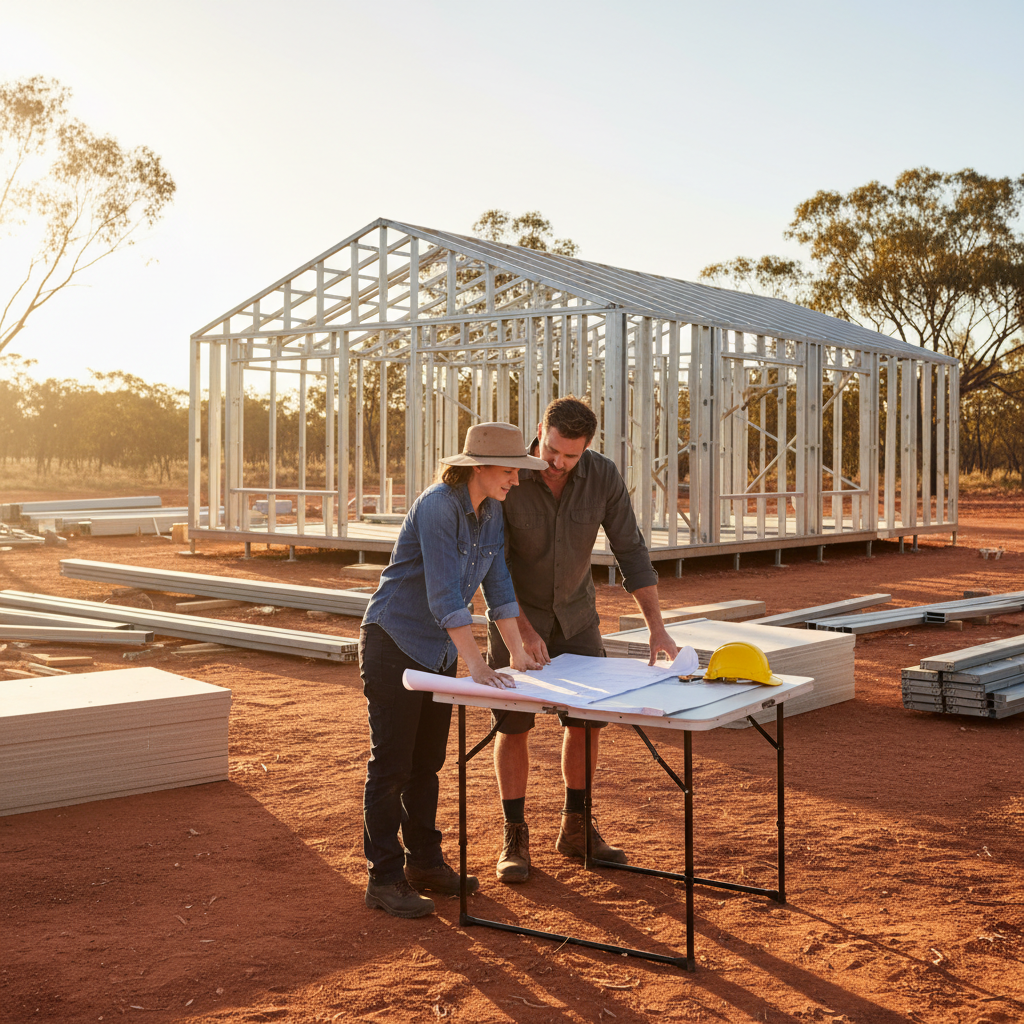
Working with AS 4100 or the NASH standard for steel framing isn't rocket science, but it requires different tools. You'll need a good impact driver and a metal-cutting saw. Don't try to use your old timber blades. You'll just blunt them and get frustrated. One thing I'll say about steel is that it's light. You and a couple of mates can move most wall frames without a crane, which is a massive win for the budget. But, you have to be precise with your fixings. Use the right Tekscrews. Don't over-tighten them and strip the thread. It’s about being deliberate. If you're building in a cyclonic area like North Queensland or parts of WA, your tie-down requirements are going to be intense. Don't skip a single bolt. The NCC Volume 2 is your bible here, and the inspectors won't be doing you any favours if they see sloppy work.
Common Pitfalls with Modular Thinking
People often get kit homes confused with those boxy units that arrive on the back of a semi-trailer. Those are different beasts entirely. A kit home is a real house, built on-site, part by part. This gives you more control, but it also gives you more responsibility. You aren't just buying a product; you're managing a construction site. If you show up to site and it's a mess of off-cuts and food wrappers, your trades will treat the job with the same lack of respect. Keep a tidy site. It sounds like small-fry advice, but it affects the quality of the build. Plus, if a tradie trips over a pile of scrap steel and does their back in, that's your insurance headache.
The Stuff No One Tells You
You'll spend more time at the hardware store than at home. You'll be there at 6:30am buying some obscure washer or a specific drill bit. And then you'll be back there at 4:30pm because you ran out of sealant. It's part of the game. Also, don't forget the site amenities. You need a toilet on site from day one. You need a secure place to store your tools and your insulation packs. If 50 bags of Earthwool get wet because you left them under a leaky tarp, they're useless. They'll sag and lose their R-value. It’s these small logistical failures that add weeks to a build time.
- Check your site access. Can a heavy truck actually get to your building pad? If they have to bog down in a muddy paddock, you're paying for the tow truck.
- Store your cladding flat. If you lean it against a fence, it'll bow, and it'll look rubbish when you screw it to the wall.
- Keep an eye on the weather. Don't schedule your roof pour or your slab when the BOM is predicting a week of rain in the valley.
At the end of the day, being an owner builder is an exercise in problem solving. Things will go wrong. A window might arrive with a crack, or the plumber might forget to show up on Tuesday. You just have to deal with it and keep the momentum. The people who finish their kit homes are the ones who treat it like a second job. They're on-site every day, checking progress, cleaning up, and planning three steps ahead. It's hard work, but when you're sitting on that verandah with a beer in hand, knowing you put the walls together themselves, it's worth the grey hairs. Just don't expect it to be easy. Because it isn't.