The Myth of the Weekend Warrior
Most guys walk into an owner builder project thinking they'll be on the tools every Saturday, knocking out a house by Christmas. It doesn't happen like that. You aren't just a builder. You're a logistics manager, a waste disposal technician, and a professional dispute mediator between your plumber and the guy who just dumped five cubes of topsoil right where the trenches need to go. If you want to get a kit home up without losing your hair or your marriage, you need a system that works harder than you do.
Organization on a kit home site in Australia isn't about fancy apps or color-coded spreadsheets you never look at. It's about physical reality. It's about where you put the BlueScope steel when the truck rolls up at 6am on a Tuesday. It's about knowing your BAL rating by heart so you don't accidental buy the wrong sparky gear. If you don't control the site, the site will control you. And the site is a cruel boss.
The Staging Area is Your Best Friend
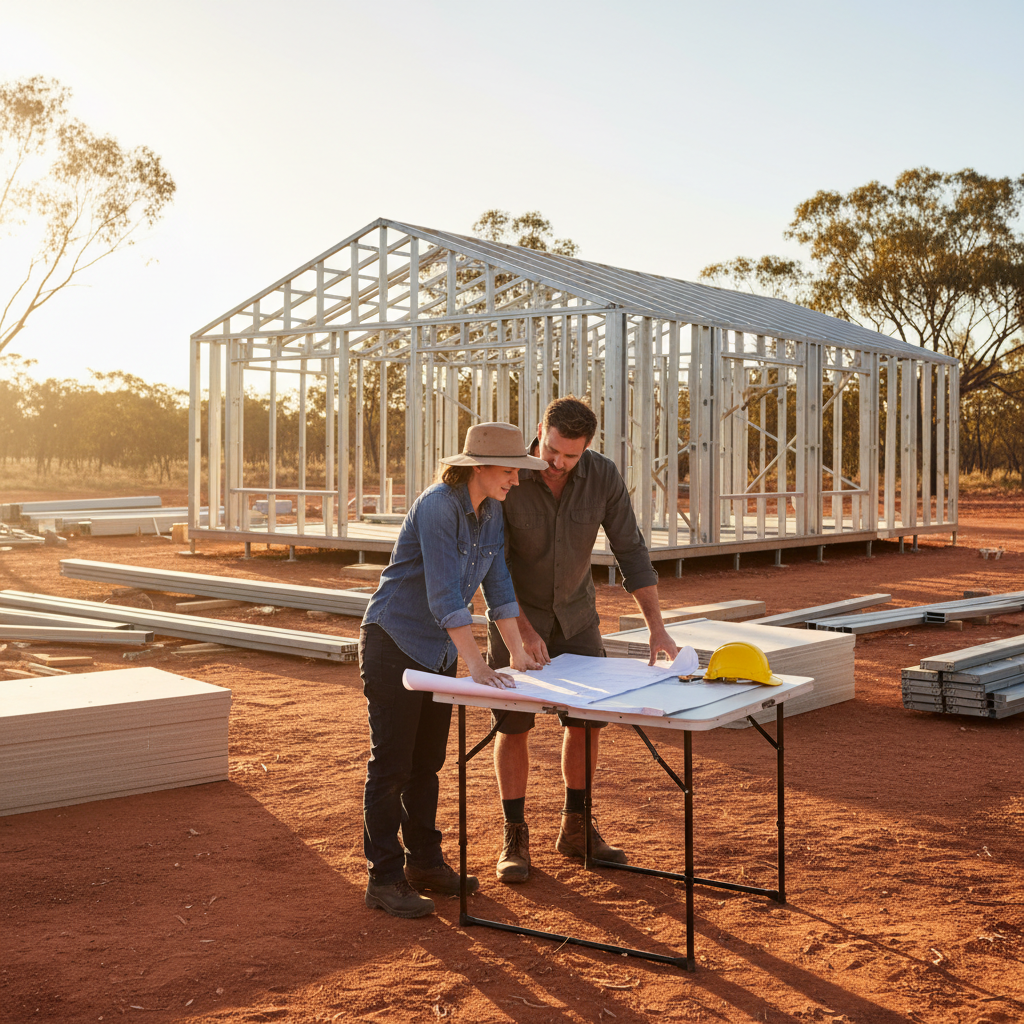
When the kit arrives, it's a massive puzzle. You'll get your TRUECORE steel frames, roofing, cladding, and windows usually in a few distinct drops. Don't just tell the driver to 'chuck it over there'. You need a flat, dry, accessible staging area. If you bury your bottom plates under three tons of roof sheeting, you're going to spend three days moving heavy metal just to start the first hour of work. It sounds stupidly simple, but I've seen blokes lose weeks of progress because they didn't think about the order of assembly. Frame goes up first. Roofing goes on next. Order your site so the stuff you need last is the stuff furthest from the slab.
Protecting the Goods
Australia is harsh. Even if you're building with steel frames because you're sick of termites and want something straight, you can't just leave everything to the elements. Windows are the biggest headache. They'll arrive with those thin plastic protectors that bake onto the glass in the Aussie sun. If you leave them sitting in a paddock for three months, you'll be scraping that gunk off with a razor blade for the rest of your life. Get them under cover or get them installed. Same goes for your insulation batts. Once they get soaked in a summer storm, they're heavy, useless heaps of wool that'll never dry out properly. Buy a high-quality tarp. Not the five-dollar blue ones that shred in a breeze, but a heavy-duty silver one with proper eyelets.
The Paper Trail and the Council Ninja
You'll be dealing with your local council more than you want to. Whether you're in the Noosa hinterland or out past Wagga, the paperwork is the same beast. You need a dedicated site folder. Yes, an actual physical folder. Keep your approved plans, your engineering specs for the steel frames, and your Form 15s or 16s in there. When the inspector rocks up unannounced and asks for the tie-down details or the truss layout, you want to hand it over in thirty seconds. It shows you're not a cowboy. An inspector who thinks you're organized is an inspector who's less likely to look for reasons to fail your slab pour.
Keep a digital backup on your phone too. Take photos of every single connection before the wall wrap goes on. Take photos of the plumbing pipes in the ground before the concrete is poured. Use a literal tape measure in the photo so you know exactly how many millimeters that waste pipe is from the external wall. You'll thank me when you're trying to bolt down a vanity two months later and can't remember where the hot water line runs.
The Trade Management Hustle
Since you're managing the trades yourself, you're the one who has to make sure the sparky isn't tripping over the tiler. Communication is the biggest killer here. Don't just say 'see you next week'. Confirm on Sunday night for a Monday start. Trades are busy. If a bigger job comes up, the owner builder is usually the first one they'll ghost because they think you're flexible. You aren't. You've got a kit home sitting there waiting to be closed in before the weather turns.
Be the boss who has everything ready. If the plumber shows up and you haven't cleared the debris from the slab, he's going to charge you for the hour he spent pushing a broom. Or he'll just leave. Have the site ready. Have the materials they need in a pile right where they're working. And for heaven's sake, make sure there's a portaloo on site that doesn't smell like a tip. Treat your trades well and they'll actually answer the phone when you have a minor crisis on a Friday afternoon.
Specifics of Steel Frame Assembly
Building with steel is different to timber. It's faster and more precise, but it's less forgiving if you mess up the sequence. Most Australian kit homes come with a very specific assembly manual. Read it. Then read it again. Don't assume you know better because you helped your uncle build a shed in 1994. The engineering in these frames depends on specific screw patterns and bracing. If the manual says use twelve screws in a bracket, don't use six just because you're running low. Go to the shop and get more.
One trick is to group your fasteners. You’ll have thousands of screws. Categorize them by type. Self-drillers, wafer heads, hex heads. Use clear screw organizers. If you're digging through a cardboard box with greasy hands trying to find a specific M6 bolt while you're holding a three-meter wall section in the wind, you've already lost. Label them with a permanent marker. It's the small wins that keep your momentum going.
Waste Management: Don't Let it Pile Up
A messy site is a dangerous site. Steel offcuts are sharp. Plastic wrapping from the cladding becomes a slip hazard the second it gets damp. Get a skip bin early. If you're on a rural block, don't just figure you'll 'burn the trash later'. You can't burn steel packing straps or insulation offcuts. Keep a clean perimeter around your slab. It makes the whole project feel faster. There's a psychological boost to walking onto a clean site on a Monday morning compared to wading through a sea of coffee cups and offcuts.
The Tools You Actually Need
Don't go out and buy a massive table saw if you're building a steel kit. You won't use it. You need high-quality cordless impacts. Get two. While one is charging, you're using the other. Get a decent set of tin snips, a magnetic spirit level (crucial for steel frames), and a laser level if you can swing the cost. The laser level will be your best friend when you're trying to get your battens perfectly straight across a long roof span. Precision is what makes a kit home look like a professional build rather than something slapped together.
And buy a proper first aid kit. I'm not talking about a box of Band-Aids. Get one with saline washes and proper bandages. Steel edges are unforgiving and you're going to get nicked at some point. It's part of the trade.
Living on Site
If you're living in a caravan while you build, the organization needs to be ten times better. You need a clear separation between the 'home' zone and the 'work' zone. Don't bring the site mud into the van. Don't leave your work boots where you'll trip over them at 2am. It sounds like lifestyle advice, but it's actually about endurance. Owner building is a marathon. If your living situation is a disaster, you'll start cutting corners on the house just to get it finished faster. That's how mistakes happen.
Keep your energy up and keep your head in the game. You're building your future here. Take it one delivery at a time, one frame at a time, and keep that site folder updated. You'll get there, and when you're sitting on that deck with a cold drink looking at a house you managed yourself, every single minute of organizing those screws will have been worth it.