The Reality of the Owner Builder Path
Most people get into the kit home game because they want to save a packet or they've got this itch to build something with their own two hands. That's fine. But let's be straight about one thing before you even look at a floor plan. Building a house isn't just about swinging a hammer or watching a slab go down. It's about being a project manager, a mediator, a logistics expert, and occasionally, a therapist for your sparky who's had a rough week. You aren't just building a house. You're running a small construction company for twelve months. Get that into your head early and you'll survive the process. Fail to see it that way, and you'll be the one sitting on a pile of BlueScope steel frames in the rain wondering where it all went wrong.
I've seen it 100 times. Someone buys a kit, thinks the house basically builds itself, and then gets a shock when the council inspector shows up and asks for a compaction report they don't have. Or the windows arrive on a Thursday when you're at work and the delivery driver won't wait. Being an owner builder means you're the one holding the bucket when things leak. No one is coming to save you unless you've booked them three weeks in advance. And even then, they might show up late because it rained in the next suburb over.
The Scheduling Grind
Your life now lives and dies by the schedule. Not some vague idea of finishing by Christmas, but a hard, day-by-day plan. You need to understand the sequence of trades better than the trades do. For example, you can't just call the plumber whenever you feel like it. They need to be there before the slab is poured for the rough-in, and then they disappear for months until the frames are up and the roof is on. If your BlueScope TRUECORE frames arrive on site but your slab hasn't cured for at least a week, or worse, the concreter hasn't even booked the pump, you're paying for storage or watching your kit sit in the dirt. It's a domino effect. One delay at the start ripples through to the end. So, buy a massive wall calendar. Use different colored markers for different trades. It sounds old school, but you need to see the whole board at once.
And here is a tip from someone who has been in the trenches. Call your trades two days before they are scheduled to show up. Not to nag, just to confirm they've got the site address and they know where to park. A quick phone call on a Wednesday afternoon can save you a whole wasted Thursday. Plus, it reminds them you're organized. Trades hate working for disorganized owner builders because it usually means they'll be standing around waiting for materials or another trade to finish. If they know you're onto it, they'll prioritize your job over the bloke down the road who still hasn't figured out where his water meter is.
Why Steel Frames Change the Game
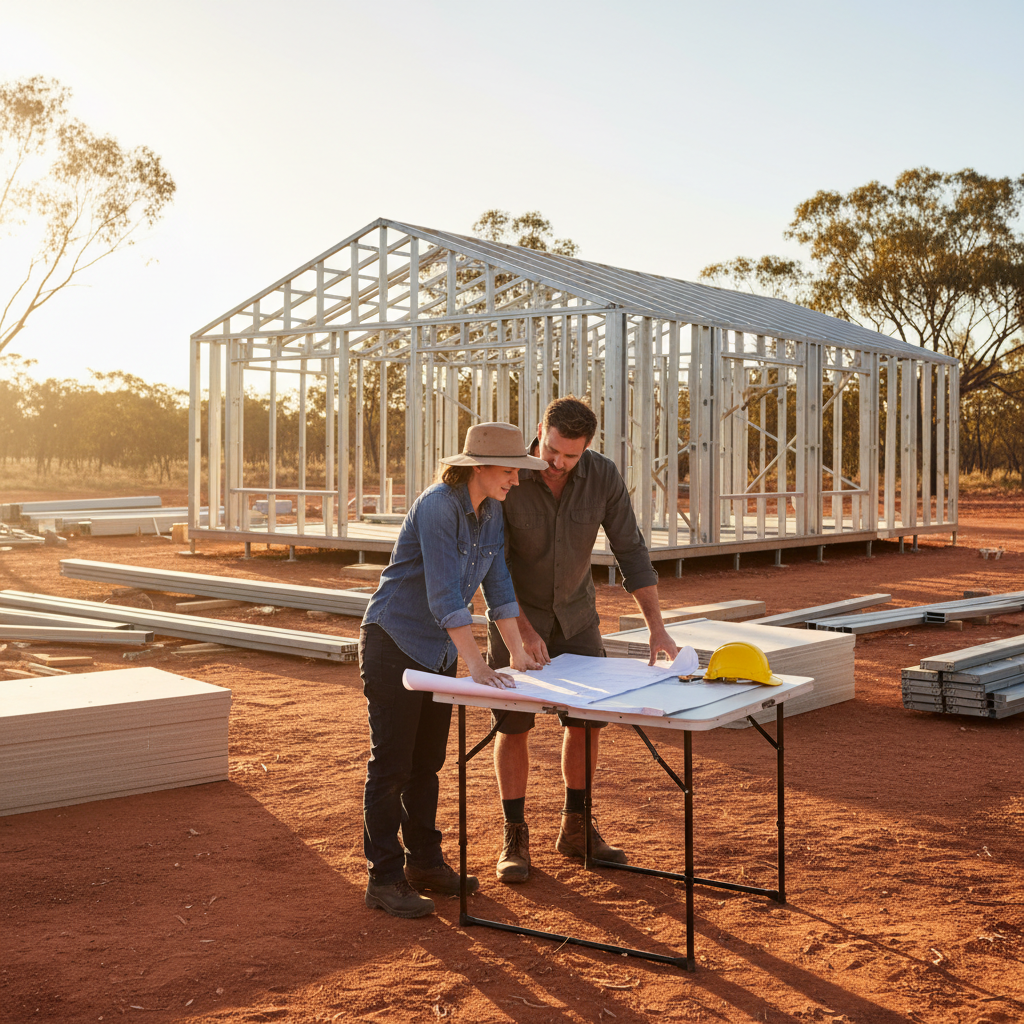
When you're managing the build yourself, the frame stage is where the house actually starts to look like a house. We use steel frames because, quite frankly, they're easier for an owner builder to deal with. They arrive on a truck, they're straight, and they stay straight. If you've ever tried to straighten a wonky timber stud with a planer because it bowed in the sun, you'll know why steel is a godsend. Using TRUECORE steel means you don't have to worry about termites eating your investment before you've even moved in. It's a huge weight off your mind, especially if you're building in places like the Sunshine Coast or rural NSW where the termites are basically the size of small dogs.
But there's an art to it. Steel frames are lighter than timber, which your back will thank you for when you're helping the crew stand them up. On the flip side, you need to be precise. You've got pre-punched holes for your electrical and plumbing, which is great, but it means you've got to have your layout sorted. You can't just chainsaw a hole through a steel stud because you changed your mind about where the light switch goes. Think it through. Walk through the frames once they're up and literally draw on the floor where you want things. It's much easier to fix a plan on paper than it is to fix it once the cladding is on.
Site Access and Deliveries
You wouldn't believe how many people forget about the truck. Your kit comes on a big rig. If you've got a narrow driveway with low-hanging gum trees or a gate that's only two meters wide, that truck isn't getting in. You'll end up with three tonnes of steel sitting on the nature strip, and you'll be spending your weekend moving it piece by piece. Check your access. Then check it again. Look up, not just down. Power lines are the silent killer of delivery schedules. If a crane truck can't safely operate because of overhead lines, they'll leave, and you'll still get the bill for the call-out.
Also, have a plan for where things go. Your roof iron, the windows, the bags of insulation. Don't just chuck them anywhere. Put the frames near where they'll be stood up. Put the windows somewhere they won't get smashed by a stray piece of scaffolding. Cover everything. Even though steel is tough, you don't want your windows sitting in a puddle for six weeks. Organized sites are fast sites. Messy sites are where accidents happen and tools get lost. Because at the end of the day, if a subbie trips over a pile of your rubbish, that's on you.
The Council and Compliance Side
This is the part that kills the DIY dream for many. The paperwork. You need to be intimately familiar with the NCC Volume 2. You don't need to memorize it, but you need to know it exists and why it matters. Every stage of your kit home build will likely need an inspection. Foundation, slab, frame, final. Don't assume your plumber will call the inspector for you. They might, but they might not. As the owner builder, the buck stops with you. Keep a folder. A physical one. Every certificate, every receipt, every engineering drawing goes in there. When the private certifier or council inspector turns up and asks for the tie-down details for your roof, you want to be able to hand it to them in three seconds. It shows you aren't a cowboy. It makes them trust your work more.
And let's talk about neighbors. A kit home build can be noisy and dusty. Go around and talk to them. Bring a six-pack or a box of chocolates. Tell them your timeline. If they know the noisy part is only lasting two weeks, they're much less likely to call the council and lodge a complaint about your skip bin placement. A little bit of PR goes a long way when you're building in an established street.
Managing the Trades
You aren't their boss in the traditional sense, but you are the client. Be firm but fair. If you've hired a local chippy to help you stand the frames, pay them on time. Nothing kills a relationship with a trade faster than making them wait for their money. If they finish a stage on Friday, have that bank transfer ready to go. On the other hand, don't pay for work that isn't done. If the roof isn't finished, don't pay the full amount because they "promise" to come back Monday. Life happens, vans break down, and suddenly that Monday becomes three weeks away. Keep a percentage back until the job is 100 percent right.
One more thing. Don't be afraid to ask questions. If the electrician is doing something and it doesn't look like the plan, speak up. It's your house. It's much easier to move a wire before the plasterboard goes up than it is after. Most trades are happy to explain what they're doing if you're respectful about it. Just don't stand over their shoulder while they're working. Nobody likes the feeling of someone breathing down their neck while they're trying to wire a switchboard.
Building a home is many things, but it's never boring. You'll have days where you want to sell the dirt and move into a caravan. But then you'll have days where the sun hits the steel frames and you see the skeleton of your future lounge room, and it all feels worth it. Just keep your head down, keep your site clean, and keep your schedule updated. You've got this.