Stop building boxes and start building spaces
I saw it again last week on a site visit out near Mudgee. A bloke had finished his shell, beautiful steel frame setup, but he’d tucked the whole thing right in the middle of a paddock with a tiny 1.2-meter porch stuck on the front like an afterthought. It looked lonely. More importantly, it was a wasted opportunity. In Australia, if you aren't thinking about how you'll move from the kitchen to the deck with a tray of steaks without tripping over a sliding door track, you're doing it wrong. A kit home shouldn't just be a place to sleep. It’s the anchor for your whole lifestyle, which usually happens outside under a bit of shade anyway.
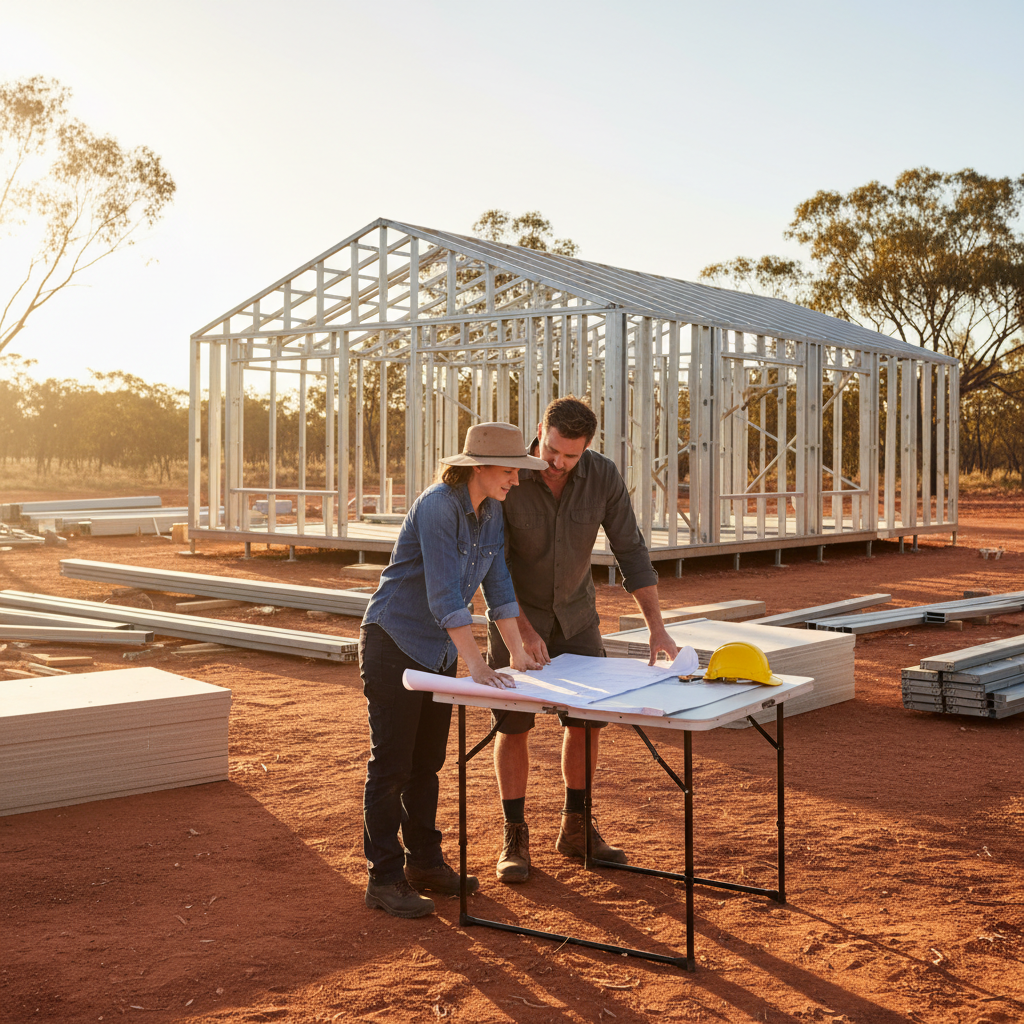
Designing for the Great Australian Dream means understanding that the walls are just suggestions. Because we use BlueScope TRUECORE steel for our framing, we have the structural integrity to span wider openings than you'd get with old-school timber without needing a forest of thick pillars. This is where you get your value. You want a five-meter stacker door that disappears into the wall? That's how you turn a standard three-bed kit into a massive entertaining hub. But you have to plan it before the slab is poured.
The 2.4-meter rule for decks
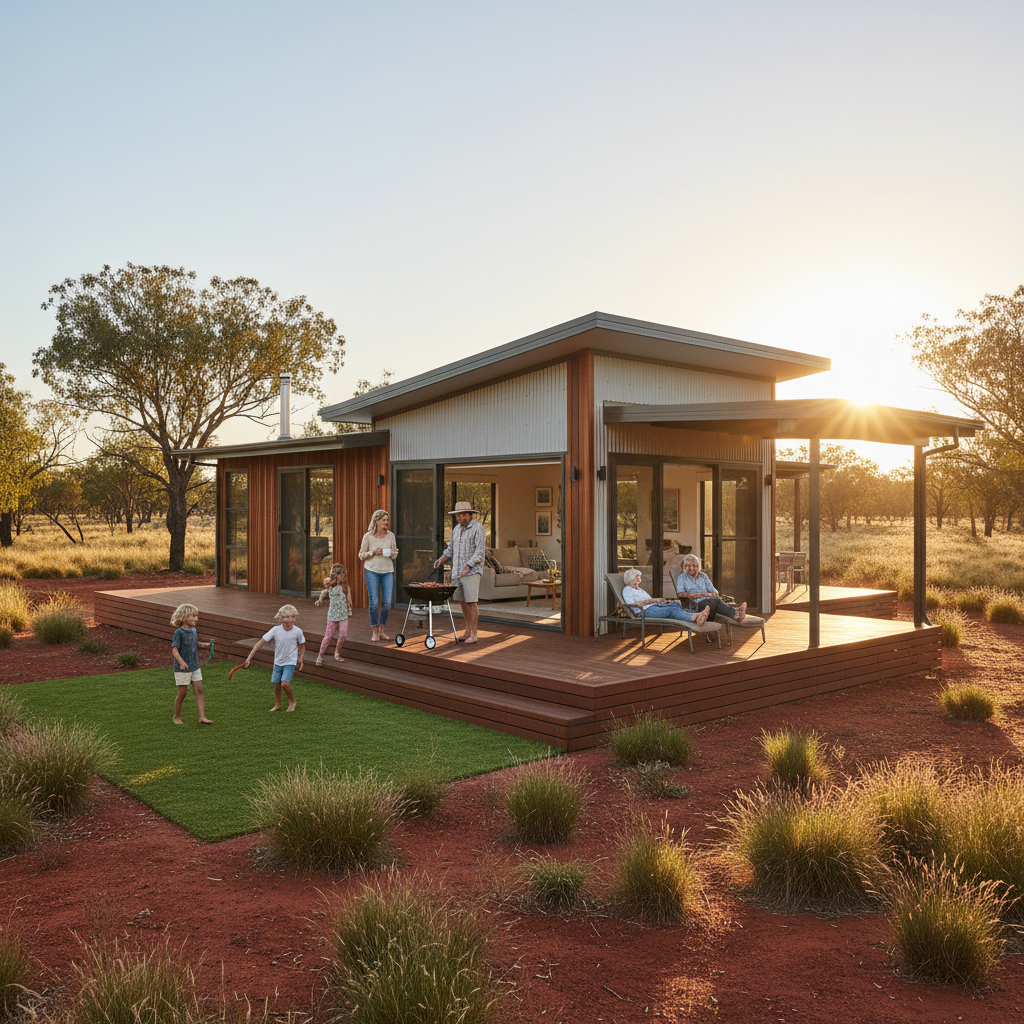
Size matters. I’ll tell anyone who listens: do not build a verandah less than 2.4 meters deep. Anything smaller is just a hallway with a breeze. If you want to fit a proper outdoor table, a barbecue, and still be able to walk past without someone having to tuck their chair in, 3 meters is even better. I’ve seen owner-builders try to save a few bucks by narrowing the deck, only to regret it the first time they host Christmas lunch.
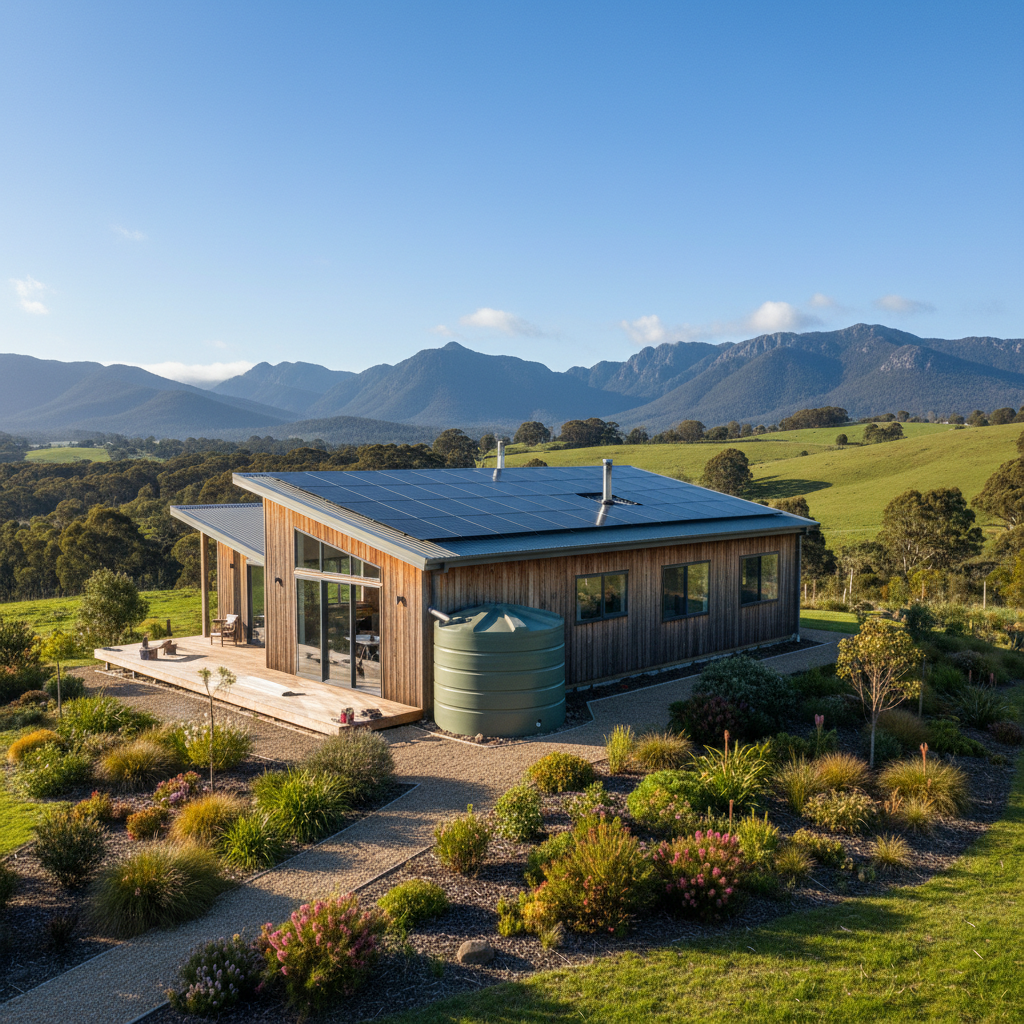
Think about the roofline too. A lot of Australian kit home designs use a continuous roof pitch that brings the main roof down over the verandah. It looks classic, but it can make the interior a bit dark if you aren't careful. If you’re building in a spot like the Sunshine Coast where the sun is brutal, that shade is a godsend. But if you’re down in Victoria and want that winter sun to hit your floorboards, you might look at a separate skillion roof for the deck or even some clear polycarbonate inserts to let the light through. Or just go with a gable end that faces your best view. It opens the whole place up.
The flow from kitchen to BBQ
Indoor-outdoor living is a bit of a buzzword, but it’s really just about logistics. Look at your floor plan. Where is the kitchen relative to the outdoor area? If you have to walk through the lounge room, past the TV, and around a corner to get a beer to the guest on the deck, the design has failed. You want a servery window. It’s one of the simplest things to add to a kit home order. A wide awning window in the kitchen that opens out onto a breakfast bar on the deck. Suddenly, the cook isn't stuck inside alone, and the dirty dishes stay out of sight. Simple. Effective.
Tips for Owner Builders: Planning the transition
- Check your floor levels early. If you want that seamless 'flush' look between your indoor floor and your deck, you need to talk to your concretor about a recessed slab edge.
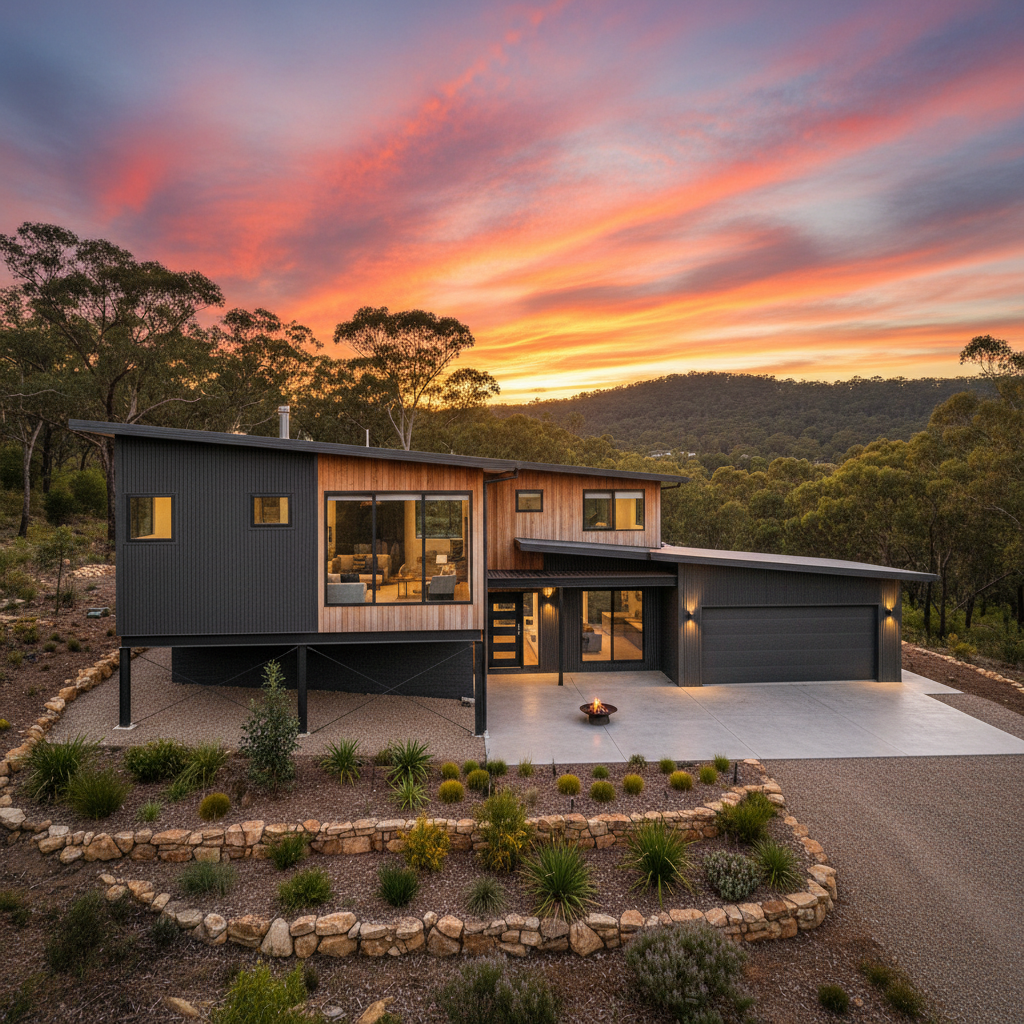
- Think about your BAL rating. If you’re in a bushfire-prone area (like many of our customers in the Blue Mountains or rural WA), your deck materials need to be non-combustible. Steel sub-frames for your deck are a no-brainer here.
- Orientation is everything. In the southern hemisphere, you want your big glass areas and decks facing North. Direct West-facing glass will turn your house into an oven by 4pm in February.
- Don't forget the power. Get your sparky to run points for outdoor fans and some weather-proof outlets before the cladding goes on. Adding them later is a pain in the neck.
Steel frames and big spans
One of the best things about working with steel is the strength-to-weight ratio. Because we’re using high-tensile steel, we can achieve those open-plan designs that people love. You don't need a big chunky load-bearing wall in the middle of your living room. This is particularly handy when you want to open up the back of the house to a huge outdoor area. We provide the frames and the trusses, but how you orient that shell on your block is where the magic happens.
I reckon some people get a bit nervous about the technical side of steel. Don't be. It’s straight, it’s true, and it won't warp like timber when the Aussie sun hits it. For an owner builder, that means your window and door openings stay square. Nothing ruins a lifestyle vibe like a sliding door that sticks because the frame has sagged or Twisted.
Living with the orientation
I talked to a lady in the Hunter Valley who built one of our smaller kits as a secondary dwelling. She was smart. She rotated the whole house 15 degrees off the 'logical' line of the driveway just to catch the afternoon breeze and shade her bedroom from the morning sun. That’s the sort of stuff you don't get with a cookie-cutter project home. You’re the one on the ground. Go out to your site at 5pm. Where is the sun? Where is the wind coming from? If the wind is howling from the south, build a wall or a privacy screen on that side of your deck. You want a microclimate, not a wind tunnel.
Flooring and finishes
What you put underfoot matters. If you’re doing a kit home on a raised floor system, you’ve got a lot of choices for decking. Composite stuff is popular because nobody likes oiling timber every six months, but there is something about the smell of real Australian hardwood that’s hard to beat. If you are on a slab, carrying the same tile from the inside to the outside makes the room feel twice as big. Just make sure the outdoor ones have a decent slip rating. Nobody wants a trip to the ER because the patio got a bit of rain on it.
Lighting is the final touch. Avoid those massive floodlights that make your backyard look like a prison yard. Use low-level LED strips under the edge of the deck or some soft up-lighting in the garden. It keeps the focus on the view and makes the space feel like a room rather than just 'outside'.
Building a kit home is a big job, but it gives you the freedom to prioritise the stuff that actually makes life better. It's not about the square meterage inside the walls; it’s about how much of your block you actually use. Get that deck right, get the kitchen connected, and use the strength of the steel frame to open things up. You'll spend more time out there than in the lounge room anyway.