Stop imagining and start managing
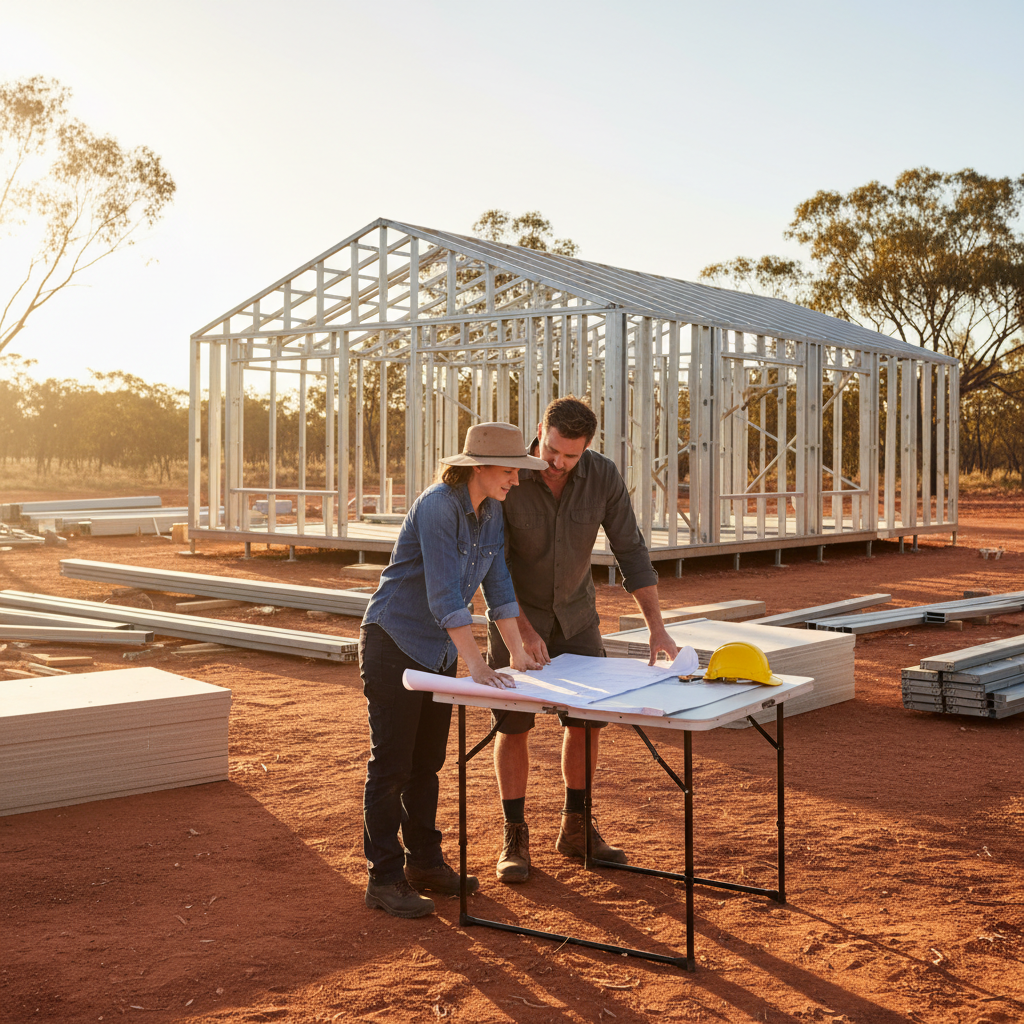
Most people think being an owner builder is about swinging a hammer or getting stuck into the site work on a Saturday morning. It isn't. Not really. If you've decided to tackle a kit home build, you've actually just signed up for a full-time gig as a recruitment officer, a peace-keeper, and a quality control inspector. You’re the one standing there in the dust at 6:30am waiting for a sparky who swore he'd be there on the dot. If he doesn't show, your whole week slides sideways. That is the reality of the game.
I've seen blokes and women walk onto a site with high hopes and a shiny new clip-board, only to be eaten alive because they didn't know how to talk to a brickie or a plumber. You're the boss now. But you aren't their boss in the traditional sense, you're their client and their coordinator. Getting that balance right is the difference between moving in by Christmas or still staring at a slab in February. Plus, there's the technical side. You've got your BlueScope TRUECORE steel frames sitting there ready to go, and you need to make sure the blokes you hire actually know how to handle them. Not every tradie is used to the precision of steel. You've got to suss them out before they pick up a drill.
The Art of the Quote (and why the cheapest one is usually a trap)
Don't just look at the bottom number. It’s tempting, I know. But when a tradie gives you a price that's 30 percent lower than the other three, ask yourself why. Usually, it's because they've missed something in the NCC Volume 2 or they're planning to cut corners on the flashing. Or maybe they just don't value their own time, which means they won't value yours either. You want a detailed breakdown. If they won't give you one, walk away. Simple as that.
I remember a job out near Ipswich where the owner builder went with the cheapest plumber for his kit home. The bloke didn't realize the steel frame required specific grommets for the pipes to prevent rattling and corrosion. He just jammed them through the pre-punched holes. Cost the owner three grand to fix it after the frames were already clad. Not a fun conversation. When you're quoting, ask specific questions about steel frames. If they roll their eyes, they aren't your guy. You need people who respect the materials you've chosen.
The Schedule is Your Bible
Construction has a very specific rhythm. You can't have the plasterers turning up when the rough-in isn't done. It sounds obvious, but you'd be shocked how many owner builders mess this up because they're trying to be too nice. You need to be firm. Use a Gantt chart or just a big calendar on the wall of the site shed. Whatever works. But you must communicate it. Call your trades two weeks out, one week out, and the day before. Because if they forget you, they’ll go to the next job and you’ll be left cooling your heels.
And remember the weather. If you’re building in a place like the Northern Rivers or North Queensland, you’ve got to build slack into your timeline for rain. Steel frames are great here because they won't swell or twist if they get a bit of a soak before the roof goes on, but your slab guys and your site works crew can't work in a swamp. Factor in the downtime. It's better to tell a tradie you're ahead of schedule than to keep apologising for delays.
Communication on Site
Tradies have a low tolerance for fluff. Give them clear instructions and leave them to it. But stay visible. You don't need to hover over their shoulder, but you should be there at the start of the day to answer questions. If you aren't sure about something, ask. "How are you planning to tie this cladding into the window fins?" is a fair question. It shows you know what's going on. Don't worry about sounding like a novice. You are the owner builder. It's your house.
One thing that works well is providing a site induction. Even if it's just you and a couple of mates helping out, show them where the first aid kit is, where the plans are kept, and where the skip bin is. Treating it like a professional site makes the subcontractors treat you like a professional. It sets the tone. If the site is a mess, the work will be a mess. Keep it tidy. Pick up the offcuts. If a tradie sees you're taking pride in the build, they usually step up their game too.
Kit Homes and Trade Specifics
Since your kit from Imagine Kit Homes comes with the frames, trusses, and roofing, your main focus as an owner builder is finding the people to put the puzzle together. The steel frames are precision-engineered. Everything is pre-punched for services. This is a massive win for your sparkies and plumbers, but only if they use the right gear. Make sure your electrician has plastic bushings for his wiring. If he tries to run cable straight through the steel without protection, stop him right there. It's an AS 3000 requirement. It isn't just about being fussy; it's about safety and compliance.
When it comes to the external finish, your cladding and windows need to be handled according to the manufacturer's specs to keep your warranty intact. This is where most owner builders stumble. They hire a chippie who's used to timber and he tries to use the same fixings or spacings. Read the manual we provide. Then make sure your subbie reads it. If they says "That's not how I usually do it," just remind them it's how *this* house is being done. No dramas, just do it by the book.
Managing the Paperwork
This is the boring bit, but it's what keeps you out of court. Before anyone touches a tool on your site, you need to see three things:
- Their trade license (check it's current on the state register).
- Public liability insurance.
- A Safe Work Method Statement (SWMS) if it's high-risk work.
Handling Disputes
Things will go wrong. Rain will delay the slab for three weeks. A window might arrive with a scratch. A tradie will forget to install a noggin where you wanted one for the TV bracket. When it happens, stay cool. Shouting doesn't get a house built faster. Look for solutions, not someone to blame. If a subbie has done the wrong thing, point it out immediately. Don't wait until they've finished the whole wall. It's much easier to move a stud before the insulation is in than after the plasterboard is painted.
Payment is your best lever. Never pay for work that isn't finished or isn't up to scratch. But on the flip side, pay your bills on time when the work is good. Tradies talk. If word gets around the local hardware store that you're a good payer who runs a clean site, you’ll find it much easier to get people back for the next stage of the build.
Final push: Getting to Lock-up
Getting your kit home to the lock-up stage is a massive milestone. This is when the roof is on, the windows are in, and the doors are shut. It’s when the project starts feeling like a home rather than a skeleton. As an owner builder, this is usually when you find your second wind. The humidity might be sitting at 90 percent and your back might be sore from carrying sheets of cladding, but seeing that steel structure standing tall against the sky is worth the sweat. Just keep your eye on the trades, keep your site clean, and don't be afraid to be the boss. You've got this.