The Science of the Summer Breeze
In the Australian building landscape, we often focus heavily on what goes into our walls, but we sometimes forget the power of the gaps we leave in them. When you are taking on the challenge of being an owner builder, understanding the technical side of airflow is one of the most valuable skills you can acquire. It is the difference between a house that feels like a stifling box and one that breathes with the landscape.
Natural cooling through cross-ventilation is not just a sustainable choice, it is a functional necessity in our harsh climate. By mastering window placement, you can significantly reduce your reliance on expensive air conditioning. This guide explores the building techniques required to harness the wind, manipulate pressure zones, and keep your new kit home naturally cool.
Understanding the Pressure Game
To design a home that cools itself, you first need to understand how air moves. Airflow occurs because of pressure differences. High pressure occurs on the windward side of your home (the side the wind hits), while low pressure occurs on the leeward side (the sheltered side). Nature always wants to balance this out, so air will naturally try to move from the high-pressure zone to the low-pressure zone.
As an owner builder, your job is to provide the path of least resistance for that air. If you place a window on the windward side but have no opening on the leeward side, the air will simply push against the glass and stay outside. However, by placing openings on opposite or adjacent walls, you create a vacuum effect that pulls the breeze through your living spaces.
Strategic Window Alignment
The most effective form of cross-ventilation is a straight line. When air enters through one window and can exit directly through another on the opposite side of the room, you achieve maximum velocity. However, this is not always possible with every floor plan. In these cases, you can use the building's geometry to your advantage.
The 45-Degree Rule
If the prevailing winds do not hit your house head-on, do not panic. Research in building science suggests that windows placed at a 45-degree angle to the wind direction can actually increase the speed of airflow within the room. This happens because the air is forced to accelerate as it enters the smaller opening at an angle. When planning your kit home layout, check the Bureau of Meteorology records for your specific area to find the direction of the 'afternoon gully breeze' or the coastal 'sea breeze' and orient your largest openings accordingly.
Height Matters: The Stack Effect
Cross-ventilation is not just about horizontal movement, it is about vertical movement too. Hot air rises. In technical terms, this is known as the stack effect. By placing windows at different heights within a room, you can flush out the hot air that accumulates near the ceiling.
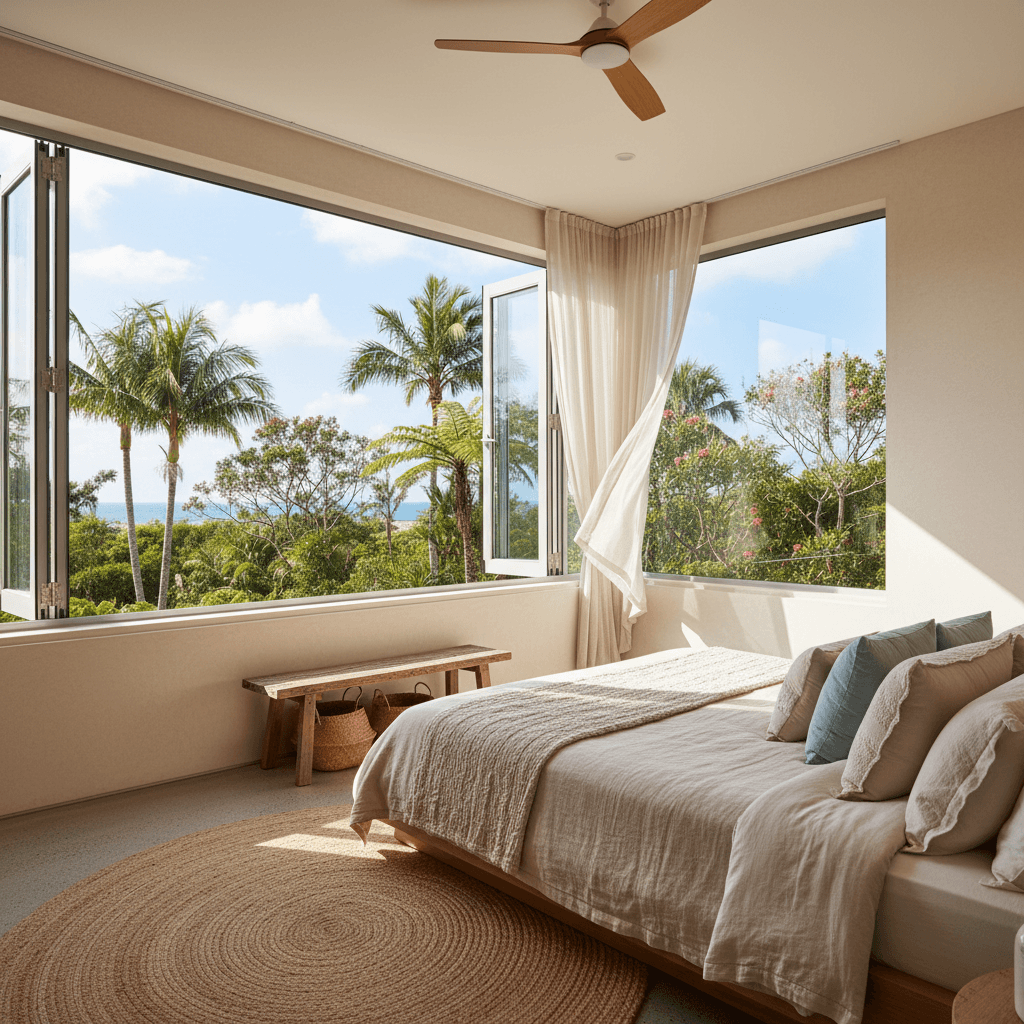
Clerestory windows (windows placed high on a wall, often above eye level) are a brilliant addition to any kit home design. By opening a low window on the cool side of the house and a clerestory window on the opposite side, you create a thermal chimney. The cool air enters low, while the rising hot air is sucked out through the high windows. This technique is particularly effective on still days when there is very little wind to rely on.
Choosing the Right Window Styles for Airflow
Not all windows are created equal when it comes to ventilation. As you select the components for your kit home, consider how the hardware impacts the physics of airflow:
- Louvre Windows: These are the gold standard for Australian cooling. They allow for nearly 100 percent of the window area to be open. More importantly, you can tilt the blades to direct the breeze upward toward the ceiling or downward toward the floor.
- Casement Windows: These act like sails on a boat. Because they swing outward, they can catch breezes that are moving parallel to the wall and funnel them into the house.
- Awning Windows: While great for rainy days because they keep the water out while staying open, they are less effective for cooling as the sash tends to block the direct path of the wind.
- Sliding Windows: A classic choice, but remember that you can only ever open 50 percent of the window area at one time.
Integrating High-Quality Materials
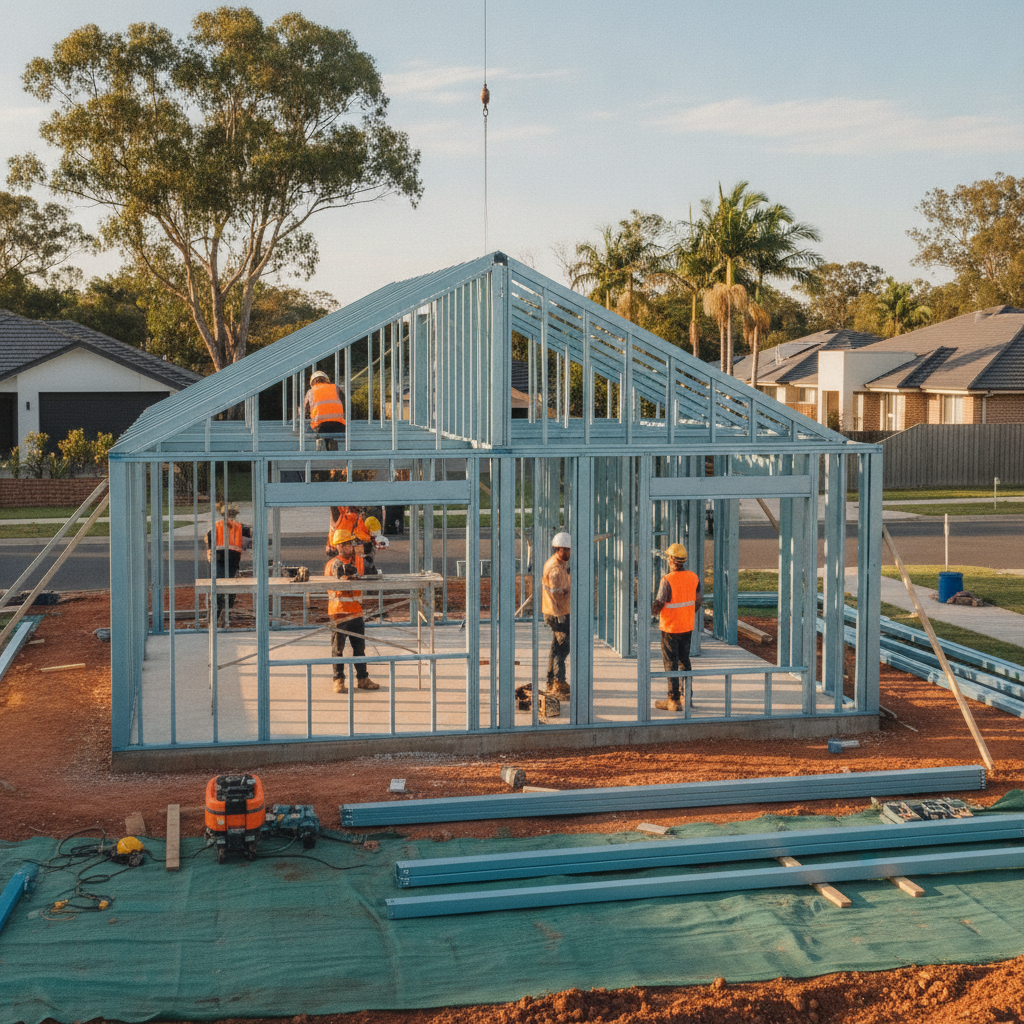
While placement is key, the performance of your home also relies on the integrity of the shell. Using a steel frame kit home provides a dimensionally stable structure that ensures your windows and doors operate smoothly for decades. When you use materials like BlueScope TRUECORE steel, you are building with a frame that does not warp or twist. This is vital for maintaining the air-tight seals around your windows when they are closed, ensuring that when you do want to keep the heat out, the house performs as intended.
Combining these steel frames with high-quality insulation and double-glazed windows creates a thermal envelope that works in harmony with your ventilation strategy. You want to be able to open the house to the breeze when it is cool, but shut it tight against the radiant heat during the peak of a 40-degree Australian summer day.
Practical Tips for Owner Builders
If you are currently in the planning phase of your project, here are some actionable steps to ensure your home stays cool:
1. Map the Microclimate
Spend time on your block at different times of the day before you finalize your slab location. Where does the wind come from at 4:00 PM? Is there a row of trees that blocks the breeze? Use this real-world data to tweak your window positions on the floor plan.
2. Consider Internal Door Placement
Airflow does not stop at the bedroom door. To keep the whole house cool, you need a clear path from one end to the other. Consider using large sliding doors or even internal louvres above doorways to allow air to circulate even when privacy is required.
3. Wing Walls
If you have a flat wall that doesn't catch much wind, you can create a 'wing wall'. This is a small projection from the exterior of the house (like a decorative pillar or a structural extension) built right next to a window. It creates a small high-pressure zone that forces air into the opening.
The Role of Shading
A window in the sun is a heater. No matter how much breeze you catch, if the sun is hitting the glass directly, you are fighting a losing battle. Combine your window placement with deep eaves, verandas, or external shading devices. The goal is to let the air in but keep the light (radiant heat) out. In Australia, northern windows need horizontal shading (like an eave), while eastern and western windows need vertical shading (like blinds or trees) to block the low-angled sun.
Conclusion
Building your own kit home is an empowering journey that allows you to customize your living environment to suit the unique Australian climate. By moving beyond aesthetics and focusing on the technical aspects of window placement and cross-ventilation, you create a home that is more than just a shelter, it is a living, breathing system.
Focus on the relationship between high and low pressure, utilize the stack effect with varied window heights, and choose window styles that maximize airflow. When you combine these building techniques with the strength and precision of a steel frame, you are setting yourself up for a lifetime of comfort, sustainability, and low energy bills. The breeze is out there, you just have to give it a way in.