So, you're ready to pick up the tools?
Becoming an owner builder is an absolute cracker of a way to get your dream home without the massive builder margins. But let's be fair dinkum for a second. The success of your kit home project doesn't just depend on how well you can swing a hammer. It depends on how you talk to the people helping you build it. You're the project manager now. That means the buck stops with you when it comes to coordination.
When your steel frame kit arrives on the back of a truck, the real work begins. You've got the frames, the TRUECORE steel, the windows, and the cladding ready to go. But how do you make sure the sparky shows up when the frames are up? How do you ensure the plumber doesn't hack into your precision engineered steel floor joists? It all comes down to the gift of the gab and a bit of common sense.
The Golden Rule: Don't guess, just ask
One thing that catches people off guard is the technical jargon. Every industry has its own shorthand. In the world of Australian kit homes, you'll hear about pitches, spans, thermal breaks, and sarking. If a supplier starts rattling off numbers and terms you don't recognize, stop them right there. It's better to look like a keen amateur for five minutes than to order the wrong windows and wait six weeks for a replacement.
Trust us, we've seen plenty of folks try to nod along to keep face, only to end up with a mess on site. Tradies actually respect an owner builder who wants to get the details right. If you're unsure how the cladding interacts with the window flashing, ask for a detail drawing or a quick explanation while they're having a cuppa. Most blokes are happy to share their knowledge if you're respectful of their time.
Scheduling is a balancing act
Managing a site is like conducting an orchestra. Except the violin player is late and the drummer's ute broke down on the Monaro Highway. Timing is everything. When you're working with steel frames, you have a massive advantage. They're straight, true, and they don't warp. This makes the job easier for your follow up trades like internal gyprockers and tilers. But they can't do their bit until the roof is on and the site is lockable.
Give your trades plenty of notice. Don't call the plumber on Thursday arvo and expect him there Monday morning. A good rule of thumb is to touch base three weeks out, then confirm again one week before, and a final text the day before. It sounds like overkill? Maybe. But it's the only way to stay on their radar when they've got ten other jobs on the go.
Tips for clear site instructions:
- Write it down. A quick email or even a clear text message serves as a paper trail if something goes sideways later.
- Mark the slab. Grab some spray paint or a chalk line and mark out exactly where you want internal walls or plumbing points. It's much harder to mess up when it's literally written on the floor.
- Have your documents ready. Keep a printed set of your kit home plans on site in a weatherproof folder. Digital is great, but a physical plan on a makeshift table is what people actually use.
Building a rapport with your suppliers
Your suppliers are your best mates during this process. Since your kit includes the essentials like the BlueScope steel frames, roofing, and insulation, you've already got a head start. But you'll still be dealing with local yards for your slab materials, your driveway mix, and your internal fit-out items like kitchens and floorboards.
Treat your local hardware store or timber yard staff well. Become a regular. They're the ones who'll tell you which local chippy is actually worth hiring and who to avoid. They also know which products are in short supply. If there's a backlog on certain tiles or tapware, they can give you the heads up so you can pivot your design before it's too late.
Working with Steel Frames: What your trades need to know
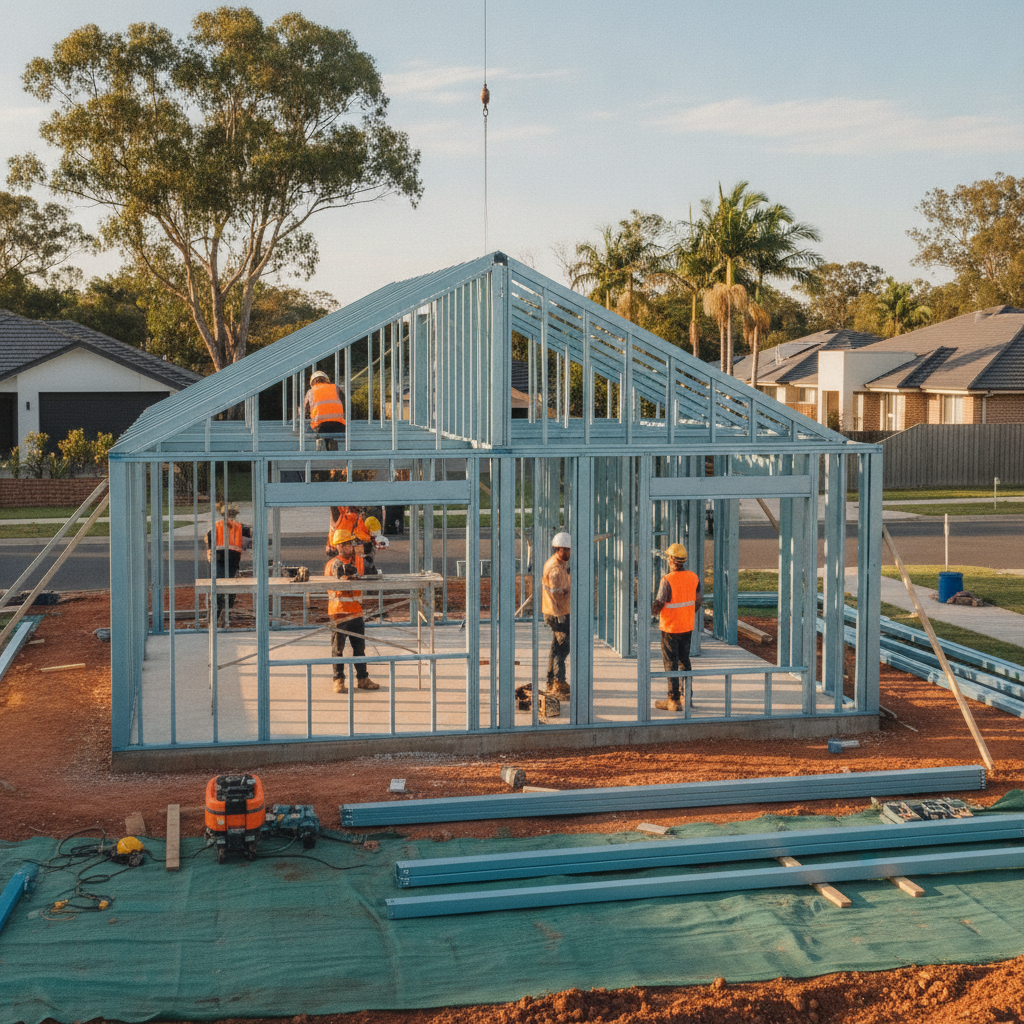
Not every tradie has worked extensively with steel frame construction. While it's becoming the standard across Australia, some old school blokes might still be more comfortable with timber. You need to be proactive here. Point out that the frames are pre-punched for electrical and plumbing. This is a huge win for them! It means less drilling and a faster install.
Mention that the steel is termite-proof. It's a great selling point for the home's longevity, but it also means they aren't dealing with treated timber chemicals all day. If they're worried about fixing things to the walls, remind them that they just need the right self-tapping screws. Simple. No worries at all.
But what if they're hesitant? Explain the precision of the system. Because the steel doesn't shrink or twist, the walls stay square. That means the kitchen installer won't be swearing at a wonky corner when he's trying to fit the cupboards. When the trades realize your kit home makes their life easier, they'll be much more keen to work on your project.
The Arvo Debrief
At the end of a big day on site, take ten minutes to walk around. Look at what's been done. If something looks a bit funny, suss it out immediately. Don't wait until the next week to bring it up. Most issues are easy to fix if they're caught within twenty four hours.
And hey, don't forget the human element. An occasional Friday barbie or a few cold drinks after a long stretch of hot weather goes a long way. Building a house is a massive undertaking. You're not just building a structure; you're building a network of people who'll help you maintain it for years to come.
Common communication traps
Ever wondered why some owner builders seem stressed to the max while others are cruising? It usually comes down to assumptions. Never assume a trade has read every single page of your engineering specs. They're busy. Point out the specific sections that apply to their task.
Another classic mistake is changing your mind mid-build without telling everyone involved. If you decide to move a light switch, tell the sparky, but also make sure it doesn't interfere with where the tiler is putting a feature wall. One small change can have a ripple effect across three different trades. Communication is about keeping everyone in the loop, not just the person doing the work that day.
Wrapping it up
Reckon you've got a handle on it? Being an owner builder is one of the most rewarding things you'll ever do. There's nothing quite like the feeling of standing inside a house you managed yourself. Using a high quality kit home with a steel frame gives you a rock solid foundation to work from. It takes a lot of the guesswork out of the structural side of things.
Just remember to be clear, be respectful, and be organized. Talk to your trades like partners, not just hired hands. If you do that, you'll find the process runs smoother than a new ute on a fresh bitumen road. Good luck with the build. It's going to be a cracker.