The Reality of Being an Owner Builder in Australia
There is a unique sense of pride that comes with building your own home. Whether you are looking to escape the city grind or create a bespoke sanctuary on a rural block, the owner builder path offers a level of control and satisfaction that a standard turnkey contract simply cannot match. However, the road from receiving your steel frame kit to moving in is paved with logistics, regulations, and coordination.
In the Australian construction landscape, an owner builder is essentially the project manager. While you might be handy with a hammer, your primary role is ensuring that the right people, materials, and inspections happen at the right time. Most delays do not happen because of the physical building process, but because of gaps in planning and communication. Let's dive into how you can keep your project moving smoothly and avoid the mistakes that often catch newcomers off guard.
The Pre-Slab Phase: Where Most Delays Begin
It is a common misconception that the project begins when the kit arrives on site. In reality, the most critical work happens months before. One of the biggest pitfalls for Australian owner builders is failing to account for the time required for local council approvals and site preparation.
Before your kit can even be manufactured, your site must be ready. This includes soil testing, site levelling, and the installation of the slab or flooring system. A delay in the slab pour cascades through the entire timeline. If your slab is not level or does not match the engineering specifications of your kit, you will face significant issues when it comes time to stand the frames. Always double check your slab dimensions against your architectural drawings. A few millimetres might not seem like much on the ground, but it can cause havoc when you are trying to bolt down precision-engineered steel frames.
Managing the Moving Parts: Delivery and Storage
When your kit home components arrive, it is a big moment. You will suddenly have a lot of high quality materials on your site, including the BlueScope steel frames, roofing, cladding, and windows. A common mistake is not having a clear plan for where these items will be stored.
If the delivery truck cannot access your site because of mud, steep slopes, or narrow gates, you will face immediate delays and potential redelivery fees. Ensure you have a flat, dry, and accessible area for the materials. Furthermore, organize your site so that the items you need first (like the wall frames) are accessible, while items like insulation and internal doors are protected from the elements. Keeping a clean and organized site is not just about safety, it is about efficiency. You don't want to spend three hours moving cladding sheets just to get to the rafters you need for that afternoon.
The Importance of Sequencing Trades
As an owner builder, you are the conductor of an orchestra. You need to book your plumber, electrician, and carpenter well in advance. In the current Australian building climate, good tradespeople are often booked out for months. Waiting until your frames are up to start calling sparkies is a guaranteed way to stall your project for weeks.
The sequence for a kit home usually follows a specific flow: site works, slab/floor, frame assembly, roofing and cladding (getting the building 'dried in'), followed by internal rough-in for services, then insulation and lining. If you book the plasterer before the electrician has finished the rough-in, you'll be paying a tradesperson to stand around. Create a detailed timeline and check in with your trades regularly. A quick phone call two weeks before they are due on site can save a lot of heartache.
Technical Accuracy and the Benefit of Steel Frames
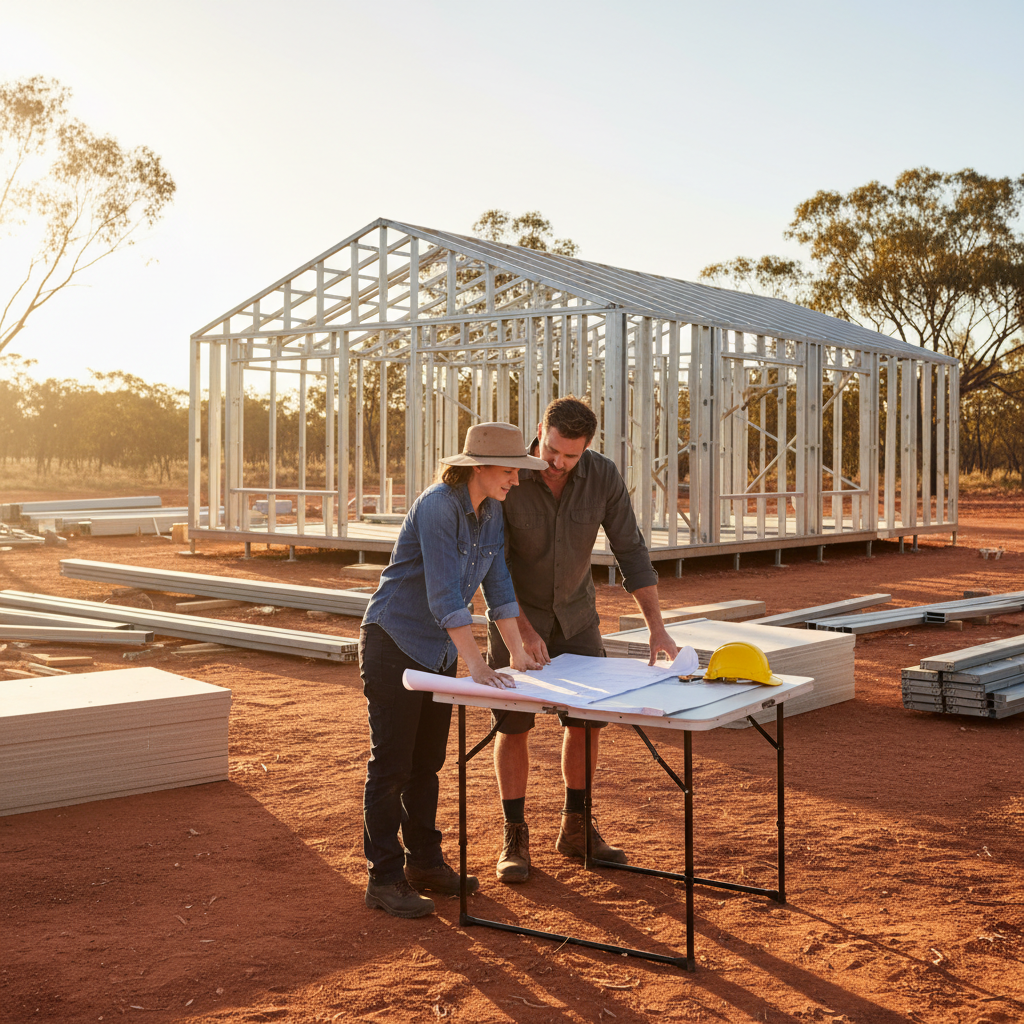
One of the reasons many Australian owner builders opt for kits using TRUECORE steel is the precision it offers. Unlike timber, which can bow, twist, or shrink depending on the weather, steel frames are dimensionally accurate. This makes the assembly process much more straightforward for a DIY enthusiast.
However, the pitfall here is failing to follow the engineering plans to the letter. Every bracket, screw, and bracing member has a purpose. High winds and harsh Australian conditions mean that structural integrity is non-negotiable. Take the time to read the assembly guides thoroughly. If a component doesn't seem to fit, don't force it or cut it, stop and re-read the plan. More often than not, it means a previous piece was installed slightly out of alignment. Precision at the start makes the fit-out much easier later on, as your walls will be perfectly straight for cabinetry and tiling.
Navigating Inspections and Compliance
Nothing grinds a build to a halt faster than a failed inspection or a missing certificate. In Australia, specific stages of the build must be signed off by a building surveyor or inspector. This usually includes the footings, the frame, and the final completion.
A common mistake is covering up work before it has been inspected. For example, never install your wall insulation or internal linings until the frame and the rough-in plumbing and electrical have been passed. If you skip this step, the inspector may require you to pull down your plasterboard so they can see the structural connections. Keep a folder with all your certificates, including the termite protection certificate and glazing certificates for your windows. Being organized with your paperwork is just as important as being handy with a drill.
Weather Proofing Your Timeline
Australia is a land of weather extremes, and your build schedule should reflect that. If you are building in the northern parts of the country, plan your heavy earthworks and framing outside of the peak wet season. In southern regions, be aware that frost or heavy rain can prevent slab pours for days on end.
A major delay occurs when a building is left 'open' to the weather for too long. Once your steel frames are standing, your priority should be the roof and the external cladding. Getting the structure 'lock-up ready' protects the interior components and allows work to continue inside even if it is pouring rain outside. Always have a few 'indoor jobs' ready to go so that if the weather turns, the day isn't a total loss.
Practical Tips for a Smooth Owner Builder Journey
- Communicate clearly: When talking to trades, be specific about what you are providing (the kit components) and what you need them to provide (labour and consumables).
- Safety first: Ensure your site meets all OHS requirements. A single accident can shut down a site indefinitely.
- Tool up: Invest in or hire the right tools for the job. Attempting to assemble a steel frame kit with underpowered DIY tools will lead to frustration and slow progress.
- Ask for help: If you are unsure about a technical aspect of the kit assembly, contact your provider. It is better to ask a question than to fix a mistake.
- Manage your energy: Owner building is a marathon, not a sprint. Pace yourself to avoid burnout, which often leads to mistakes and poor decision making.
Conclusion: Success is in the Preparation
Building your own kit home is a rewarding way to create a high quality residence tailored to your lifestyle. By understanding the common pitfalls, from site access and storage to trade sequencing and inspections, you can navigate the process with confidence. Remember that your role as an owner builder is primarily one of management. Stay organized, stay patient, and keep your eye on the finish line. The result will be a home built to your standards, providing a sense of achievement that you will enjoy for decades to come.