The Art of the Owner Builder Conversation
Taking on the role of an owner builder for your Australian kit home is an exhilarating journey. You are no longer just a homeowner; you are the project manager, the site supervisor, and the primary point of contact for every professional who steps onto your block. While the quality of your steel frame and the beauty of your cladding are essential, the success of your build often hinges on something less tangible: how well you communicate.
Navigating the Australian building industry requires a unique blend of technical understanding and people skills. You will be dealing with everyone from excavation operators to electricians, and each trade has its own jargon, timelines, and expectations. This guide focuses on bridging the gap between you, the owner builder, and the trades and suppliers who will help bring your kit home to life.
The Importance of Professional Preparedness
Before you even pick up the phone to book a plumber or order your slab materials, you need to have your ducks in a row. Tradespeople in Australia are incredibly busy, and they value clients who are prepared. If you sound like you know your project inside and out, you will attract the best contractors.
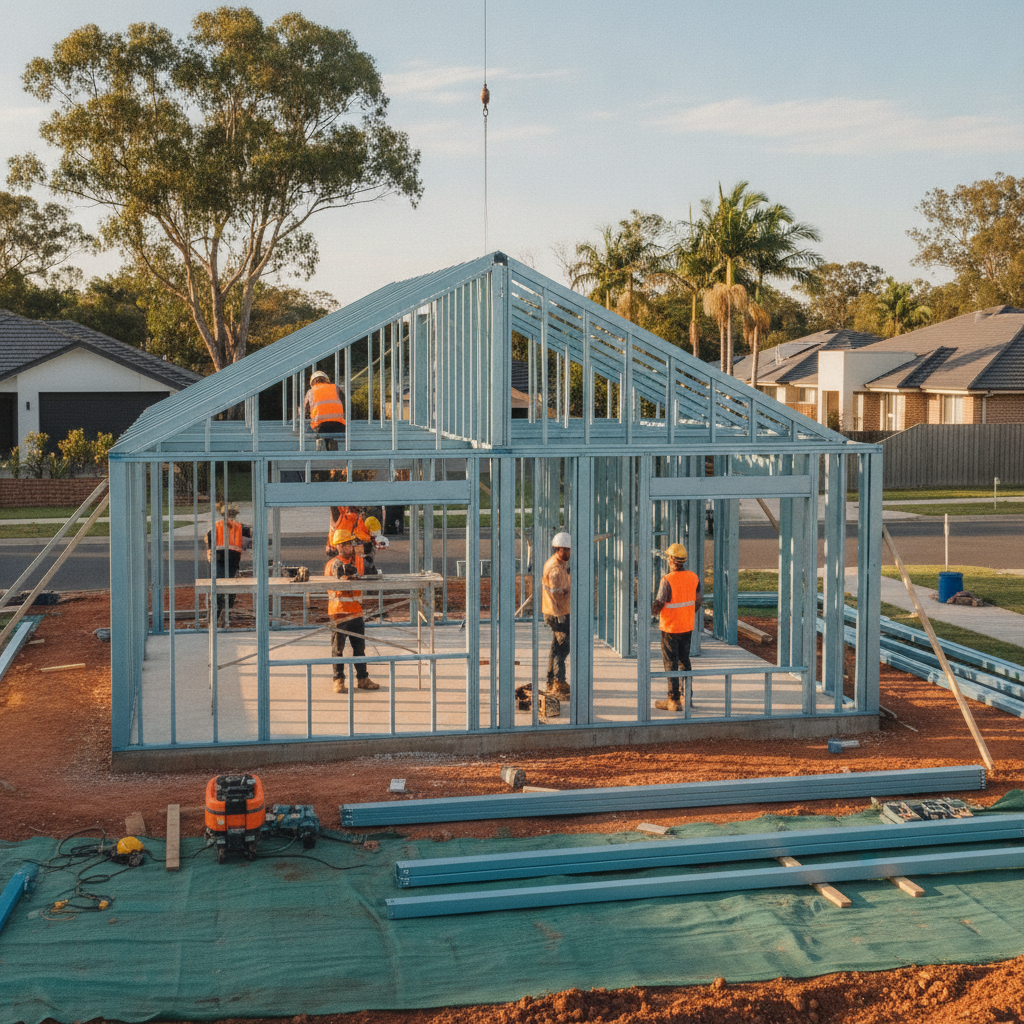
Start by familiarizing yourself with your kit home plans. Understand where the load bearing walls are, the specifics of your TRUECORE steel frame, and the exact dimensions of your windows and doors. When a supplier asks for a specification, being able to provide it instantly builds trust. It signals that you are running an organized site, which usually means they can get their job done without unnecessary delays.
Speaking the Lingo Without Losing Your Voice
You don't need to be a qualified carpenter to talk to one, but knowing basic construction terminology goes a long way. However, a common mistake for owner builders is pretending to know more than they do. It is always better to ask a clarifying question than to nod along and end up with a structural mistake.
When discussing your kit home assembly, be specific. Instead of saying "the wall over there," refer to the grid lines on your engineering plans or the specific room name. Use terms like "rough-in," "fit-out," and "fixing stage" correctly. If a supplier mentions a lead time, clarify if they mean business days or calendar weeks. These small details prevent the assumptions that often lead to project friction.
Managing Trades: Setting Clear Expectations
The relationship between an owner builder and a trade is a professional partnership. To keep it healthy, you must set clear expectations from the first site visit. This starts with a detailed scope of work. Never rely on a verbal agreement over a coffee.
The Written Scope
For every trade, provide a written document outlining exactly what you want them to do. For example, if you are hiring a tiler, does their quote include the screed? Are they supplying the grout, or are you? For your kit home, you need to be very clear about where your kit supplier's responsibility ends and the tradesman's begins. Since you are providing the steel frames and external materials, the trade is generally providing the labor and consumables. Putting this in writing prevents "scope creep" and unexpected invoices at the end of the month.
Timelines and Site Readiness
Nothing frustrates a tradie more than showing up to a site that isn't ready for them. If the sparky is booked for Tuesday, but your steel frames aren't fully secured or the roof isn't on, you are wasting their time and your money. Maintain a master calendar and communicate regularly. A quick text message 48 hours before they are due to arrive can save a lot of headaches. Simply asking, "Are we still on for Tuesday? The site is ready and the materials are staged," shows you are on top of the management side of things.
Supplier Relations: More Than Just Orders
Your suppliers are your lifeline. When you are building a kit home in Australia, you'll be coordinating deliveries for everything from the concrete for your slab to the final coat of paint. Effective communication with suppliers is about timing and logistics.
When your kit home components arrive, such as the roofing or the windows, you need to be ready to receive them. Check the delivery access for large trucks. Is there a clear, flat area to move the steel frames? Are there overhead power lines that might obstruct a crane? Communicating these site constraints to your suppliers beforehand prevents delivery failures and extra freight charges.
Keep a physical or digital "Delivery Log." Note down when items were ordered, the promised delivery date, and a contact name. If a window pane arrives cracked or a component is missing, take photos immediately and call the supplier while the delivery driver is still on-site if possible. Clear, documented evidence is much easier to resolve than a complaint made three weeks later.
The Power of the Site Meeting
Sometimes, an email or a phone call just won't cut it. For complex stages of your kit home build, such as the initial layout or the plumbing rough-in, hold a brief on-site meeting. This allows you to walk through the space together. Mark things out on the slab or the frames with a carpenter's pencil. Seeing the physical space helps everyone visualize the end goal and identify potential clashes between different services before they become permanent problems.
Handling Conflict and Difficult Conversations
In a project as large as building a home, things will occasionally go wrong. A trade might run behind schedule, or a finish might not meet your expectations. The key is to address issues early and calmly. Use the "sandwich method": start with something that is going well, address the specific issue that needs fixing, and finish with a reminder of the shared goal of a high quality home.
Avoid becoming emotional. Stick to the facts of the contract and the building standards. As an owner builder, you are the boss, but being a fair and reasonable boss will get you much better results than being an aggressive one. Most tradespeople take great pride in their work and want to resolve issues just as much as you do.
Practical Tips for Daily Communication
- Document everything: Follow up important phone calls with a summary email. "Great chatting today, just confirming we agreed on the 10mm offset for the bathroom wastes."
- Be available: During critical phases, make sure you can be reached quickly. Decisions often need to be made on the spot to keep the momentum going.
- Respect the weekend: Unless it is an absolute emergency, avoid calling your trades on Sundays or late at night. Respecting their downtime goes a long way in building rapport.
- Provide site amenities: A tidy site with access to water and a clean portaloo makes your project a preferred place to work. Happy trades do better work.
Conclusion: Your Role as the Conductor
Building your own kit home is like conducting an orchestra. You aren't playing every instrument, but you are responsible for making sure everyone is playing the same song, in the same key, at the same time. By mastering the art of communication, you transform from a casual observer into a confident owner builder.
Remember that every person on your site is an expert in their field. By treating them with respect, providing clear documentation, and maintaining an organized site, you ensure that the process of building your Australian dream home is as rewarding as the final result. Your steel frame is the skeleton of your home, but your communication is the heartbeat that brings it all together.