Taking the Reins: Your Journey as an Owner Builder
There is a unique sense of pride that comes with standing in a home you helped bring to life. In Australia, the owner builder path has become an increasingly popular route for those wanting more control over their living space and the building process itself. However, transitioning from a dreamer to a project manager requires a shift in mindset. You aren't just a homeowner anymore; you are the coordinator, the quality controller, and the primary point of contact for every trade on site.
Managing a kit home project is a rewarding challenge, but the success of the build hinges on your ability to organize, communicate, and stay one step ahead of the schedule. Whether you are building a coastal retreat or a rural homestead, these project management essentials will help you navigate the complexities of the Australian construction landscape with confidence.
1. Education First: The Owner Builder Permit
Before you even think about swinging a hammer or pouring a slab, you need to get your legal ducks in a row. In most Australian states, if the value of your domestic building work exceeds a certain threshold (often $11,000 to $20,000 depending on your location), you must obtain an owner builder permit from your state building authority, such as the VBA in Victoria or Fair Trading in NSW.
This process usually involves completing a short course. Don't view this as a bureaucratic hurdle. These courses are designed to teach you about your legal obligations, workplace health and safety (WHS), and the Australian Standards you must adhere to. It is your foundation in project management, ensuring you understand the gravity of the role you are taking on.
2. The Power of Precise Scheduling
A project manager is only as good as their schedule. When building a kit home, timing is everything. You need to coordinate the delivery of your steel frames and components with the completion of your foundation and the availability of your trades.
Create a detailed timeline that accounts for every stage of the build. Start with site preparation and the slab, then move to the delivery of your steel frame kit, followed by the roof, windows, cladding, and finally the internal fit-out. A common mistake is booking trades too close together. Always build in a 'buffer week' between major stages. If the plumber is delayed by two days due to heavy rain, you don't want the plasterer arriving on a site that isn't ready for them.
3. Why Steel Frame Kits Simplify Management
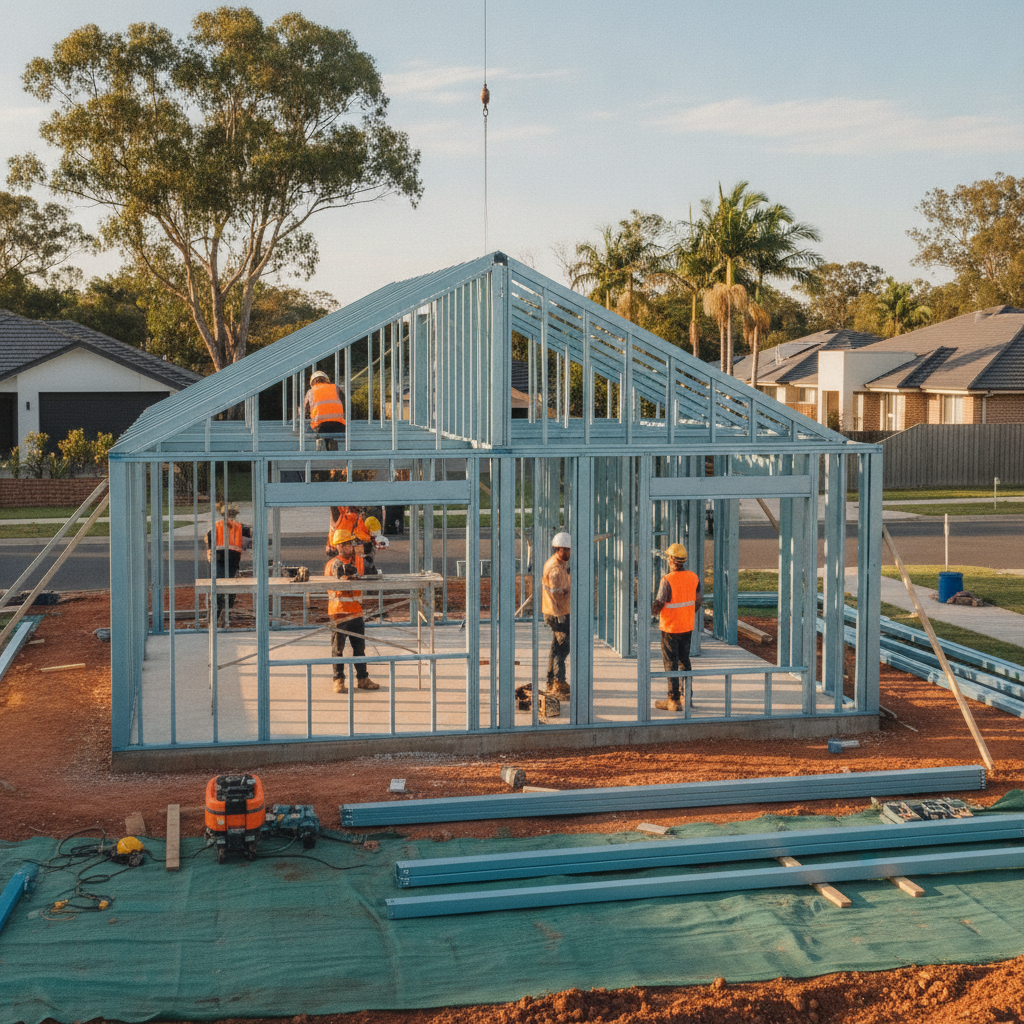
From a project management perspective, choosing a steel frame kit home offers several logistical advantages. Because the frames are engineered and manufactured off-site using high-quality BlueScope TRUECORE steel, they arrive ready to be assembled. This significantly reduces the time your site is 'open' to the elements.
Steel is incredibly lightweight compared to traditional timber, making the physical assembly of the frames more manageable for you and your assistants. Furthermore, steel is dimensionally stable. It won't warp, twist, or shrink over time. For a project manager, this means fewer headaches during the fit-out stage, as walls will be straight and corners will be square. This precision flows through the entire build, making the job easier for your plasterers and cabinet makers later on.
4. Selecting and Managing Your Trade Team
While you are the project manager, you will still need licensed professionals for specialized tasks like electrical work and plumbing. Your job is to vet these trades carefully. Ask for recommendations from locals, check their licenses online, and ensure they have experience working with owner builders.
When you hire a tradie, communication is your most important tool. Provide them with clear copies of your plans and be specific about what you expect. A project manager who is present on site, asks respectful questions, and ensures the site is clean and ready for work will always get the best results from their subcontractors. Remember, you are building a team, and mutual respect is the cement that holds that team together.
5. Site Logistics and Material Handling
Managing a construction site requires a keen eye for logistics. When your kit home arrives, you will have a significant amount of material delivered at once, including roofing, cladding, windows, and insulation. You need a plan for where these items will be stored.
Ensure there is clear access for delivery trucks and a flat, dry area to stack your steel frames and cladding. Keeping your site organized isn't just about efficiency; it's about safety. A cluttered site is a dangerous site. Make sure materials are covered and protected from the weather, even if you are using durable materials like Colorbond steel.
6. Quality Control and Rectification
As the owner builder, you are the final arbiter of quality. You need to inspect work at every stage before making payments to subcontractors. Use a checklist to ensure everything is done to the specifications in your plans and meets Australian building codes.
If something isn't right, address it immediately. It is much easier to fix a plumbing alignment issue before the slab is poured than after the walls are up. Don't be afraid to ask your trades to explain their work or to point out discrepancies. A good project manager is firm but fair, ensuring that the finished home is safe, compliant, and built to last.
7. Safety is Non-Negotiable
In the eyes of the law, an owner builder is responsible for the safety of everyone on the construction site. This means you must have appropriate insurance, such as Construction Works and Public Liability insurance. You also need to ensure that everyone on site has their 'White Card' (General Construction Induction training) and that all work is performed following safety regulations.
This includes providing proper amenities for workers, ensuring scaffolding is used for height work, and keeping the site free of trip hazards. Taking safety seriously not only protects your workers and your family but also protects you from significant legal and financial liabilities.
8. Staying Adaptable and Resilient
If there is one certainty in construction, it's that things will occasionally go wrong. The weather might delay your roofing, or a specific fixture might be out of stock. The best project managers don't panic; they adapt.
Being an owner builder requires a level of resilience. Stay focused on the end goal and maintain a positive relationship with your suppliers and trades. Your kit home provider is often a great resource during these times, as they can provide technical advice about the assembly process or help you understand the engineering drawings for your steel frames.
9. Documentation and Record Keeping
Keep a detailed diary of everything that happens on site. Note when trades arrive and leave, what work was completed, and take plenty of photos of 'hidden' elements like wiring and plumbing before the walls are sheeted. This documentation is invaluable for future maintenance, for council inspections, and for your own peace of mind.
Keep your receipts, contracts, and certificates of compliance organized in a central folder. This level of organization is the hallmark of a professional project manager and will make the final process of obtaining your Certificate of Occupancy much smoother.
Building Your Future
Managing your own home build is one of the most challenging yet satisfying projects you will ever undertake. By choosing a kit home, especially one utilizing the strength and precision of steel, you are already setting yourself up for success with a structured and proven building system. Your role as the project manager is to bring the pieces together with care, organization, and a commitment to quality. Take it one step at a time, stay informed, and soon you'll be turning the key in a front door that you helped put there yourself.