The Critical Phase: Why the Rough-In Defines Your Build
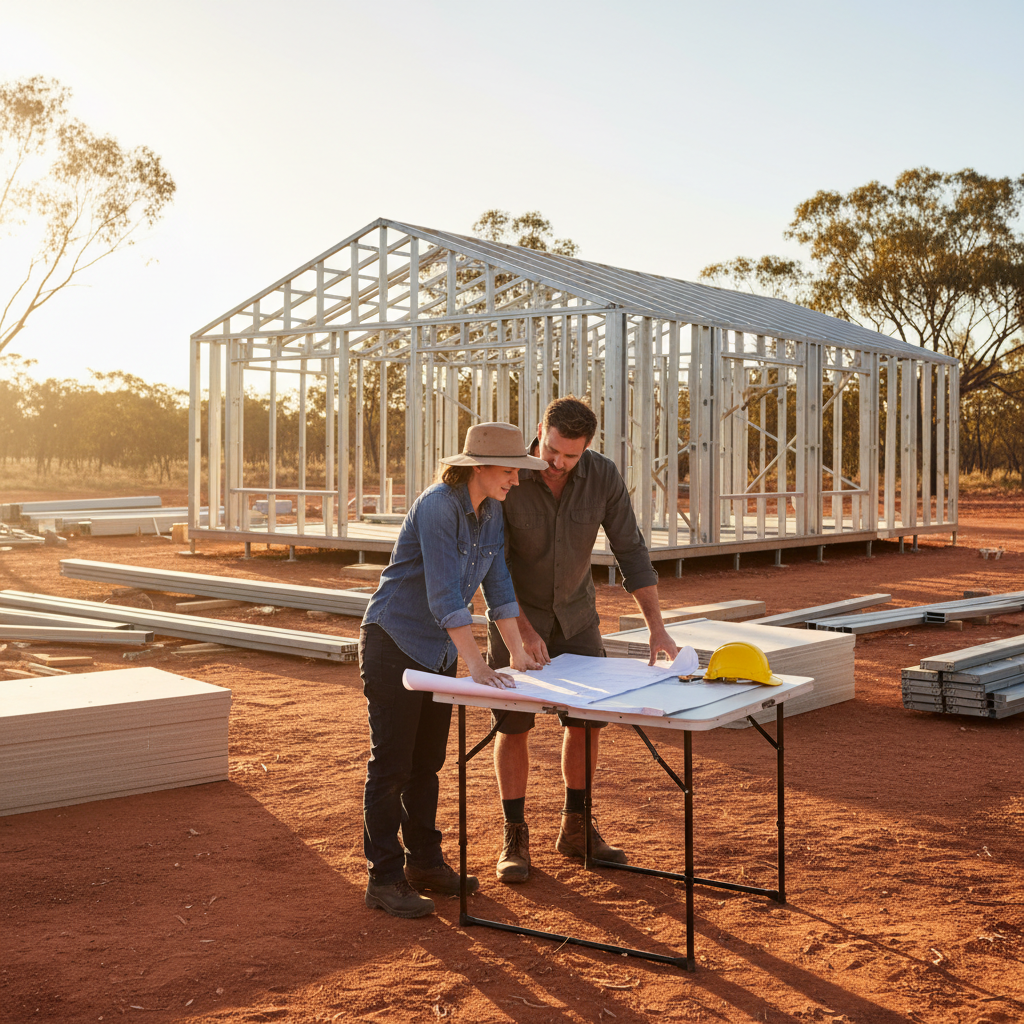
For any owner-builder in Australia, the transition from a standing frame to a functioning home is one of the most exciting milestones. This is the rough-in stage. It is the moment when the skeleton of your kit home starts to develop its nervous system (electrical) and its circulatory system (plumbing). While the steel frames provide the strength and geometry, the rough-in ensures the home is actually liveable.
When building with high quality Australian steel frames, such as those made from BlueScope TRUECORE steel, the rough-in process is impressively precise. Because steel frames are manufactured using advanced technology, every stud is perfectly straight. However, this precision requires a structured approach from your trades. In this guide, we will break down the technical requirements and practical tips to ensure your plumbing and electrical rough-in goes smoothly without compromising your structural integrity.
Understanding the Steel Frame Advantage for Services
One of the biggest benefits of modern steel frame kit homes is the inclusion of service holes. Unlike traditional timber framing where a plumber or sparky might spend hours drilling through studs, quality steel frames come with pre-punched swaged holes. These holes are strategically placed during the design phase to allow pipes and cables to pass through the walls easily.
This does not just save time, it preserves the strength of the home. When tradesmen drill haphazardly into framing, they can weaken the structure. With steel, the path is already laid out. However, because steel is a conductive material, there are specific Australian Standards (AS/NZS 3000) that sparkies must follow, such as using grommets or protective lining to ensure cables do not rub against the edges of the steel.
Electrical Rough-In: Keeping it Safe and Future-Proof
The electrical rough-in involves running all the wiring for your lights, power points, appliances, and data before the internal linings (plasterboard) are installed. In an Australian kit home context, there are three main areas to focus on:
1. Protecting the Cables
As mentioned, the interaction between copper wiring and steel framing is a primary consideration. Your electrician will use plastic grommets, often called "snap-ins," which clip into the pre-punched holes in the steel studs. These prevent the sharp edges of the steel from vibrating against the cable insulation over time. This is a non-negotiable step for long term safety.
2. Planning for Technology
Since you are in the owner-builder driver's seat, think about your future needs now. It is significantly cheaper to run an extra data cable or a dedicated circuit for an air conditioner during the rough-in than it is to retro-fit it once the walls are closed. Consider running conduit for wall-mounted TVs so you can hide cables later, and do not forget outdoor sensor lights or power to your alfresco area.
3. Earthing and Equipotential Bonding
In Australia, steel framed homes require proper earthing. Your electrician will ensure the entire frame is bonded to the earth system. This is a standard safety procedure that ensures in the extremely unlikely event of a fault, the safety switches (RCDs) will trip instantly, keeping the occupants safe.
Plumbing Rough-In: Precision and Gravity
Plumbing rough-in is generally split into two parts: the drainage (in or under the slab/floor) and the wall rough-in (water lines and vents). When working with a steel kit home, the wall rough-in is where the magic happens.
Navigating Water Lines
Most modern Australian homes use PEX (cross-linked polyethylene) piping for water supply. This flexible piping is a dream for steel frames as it can be easily threaded through the pre-punched holes. However, if you are using copper, you must ensure there is no direct contact between the copper pipe and the steel frame to prevent galvanic corrosion. Plastic isolators or lagging are used to keep the two metals separated.
Securing the Fixtures
Because steel studs are consistently straight and true, mounting your tapware sets and shower mixers is often easier than in timber builds. You will use "noggin" brackets or timber backing blocks secured to the steel studs to provide a solid mounting point for heavy fixtures or wall-hung vanities. Make sure your plumber specifies exactly where they want these supports so you can have them ready before they arrive on site.
The Owner-Builder Checklist for a Smooth Rough-In
As the project manager of your kit home, your job is to coordinate the trades. Here is a practical checklist to keep things on track:
- Verify the Floor Plan: Before the trades arrive, walk through the house and mark every power point, switch, and tap location on the floor with a marker. It is much easier to move a mark on the floor than a wire in the wall.
- Check the Service Holes: Ensure the pre-punched holes in your steel frames align with your layout. If a specific pipe needs to go somewhere without a hole, discuss the proper way to punch or drill a new hole with the frame manufacturer guidelines to avoid structural issues.
- Photo Documentation: This is a pro tip. Once the rough-in is complete but before the insulation and plaster go on, take a photo of every single wall in the house. Include a tape measure in the frame if possible. These photos are gold if you ever need to hang a heavy picture or fix a leak years down the track.
- The Pressure Test: Always ensure your plumber performs a pressure test on the water lines before the walls are sheeted. Finding a small leak now is a minor fix, finding it once the plaster is painted is a nightmare.
Integrating Insulation and Services
In the Australian climate, high quality insulation is vital. Once the rough-in is finished, you will be installing your batts. If you are using steel frames, you will likely be using thermal breaks as per the National Construction Code. Ensure your plumber and electrician have finished their work before the insulation goes in, otherwise, they will likely move your batts around and create gaps in your home's thermal envelope.
Collaboration is Key
The best builds happen when the owner, the plumber, and the electrician communicate. When your trades arrive, walk them through the steel frame system. Many Australian trades are very familiar with steel, but it is always worth highlighting the pre-punched holes and asking them to use the correct grommets and isolators. A friendly chat over a morning coffee can prevent costly mistakes later on.
Conclusion: A Foundation for the Future
Getting the rough-in right in your Australian kit home is about more than just passing inspections. It is about creating a home that functions flawlessly and is easy to maintain. By leveraging the precision of steel frames and following a disciplined approach to plumbing and electrical installation, you are setting yourself up for a stress-free fit-out phase.
Remember, as an owner-builder, you do not need to do the technical work yourself, but you do need to understand the process. By ensuring your trades respect the steel frame's integrity and plan for the future, you will turn your kit home project into a high-performing, modern residence that stands the test of time.