Logbooks, Coffee Stains, and the Chaos of a Kit Home Build
Most blokes think the hardest part of building a kit home is the actual construction. They reckon once the TRUECORE steel frames arrive on the back of the truck, the hard work begins. I've spent fifteen years watching owner builders succeed and fail, and I can tell you right now: the build is the easy part. It's the six months of paperwork, council headaches, and trade scheduling that'll break you if you aren't ready. If your idea of organization is a shoved-together pile of receipts in the glovebox of your Hilux, you're in for a rough time.
Being an owner builder means you're the project manager. You're the one answering the phone at 6:30am when the plumber can't find the stack pipe location. You're the one chasing the certifier because they haven't signed off on the slab reinforcement yet. It's a massive job. But it's doable if you treat your site office like a business and not a hobby. Start by getting a physical Lever Arch folder. Yes, physical. Digital is great for backups, but when you're standing in a muddy paddock in Gippsland and the sparky needs to see the electrical plan, you don't want to be swiping on a cracked phone screen with wet fingers.
The Master Document List
The first thing in that folder needs to be your approved DA (Development Application) or CDC (Complying Development Certificate). This isn't just a piece of paper. It's your bible. It contains your conditions of consent. If the council says you need a specific silt fence or a gravel shaker pad at the entrance, and you ignore it, they'll shut your site down faster than a pub closing on Good Friday. Keep your engineering plans and the steel frame layouts right behind it. You’ll be looking at these every single day. Trust me.
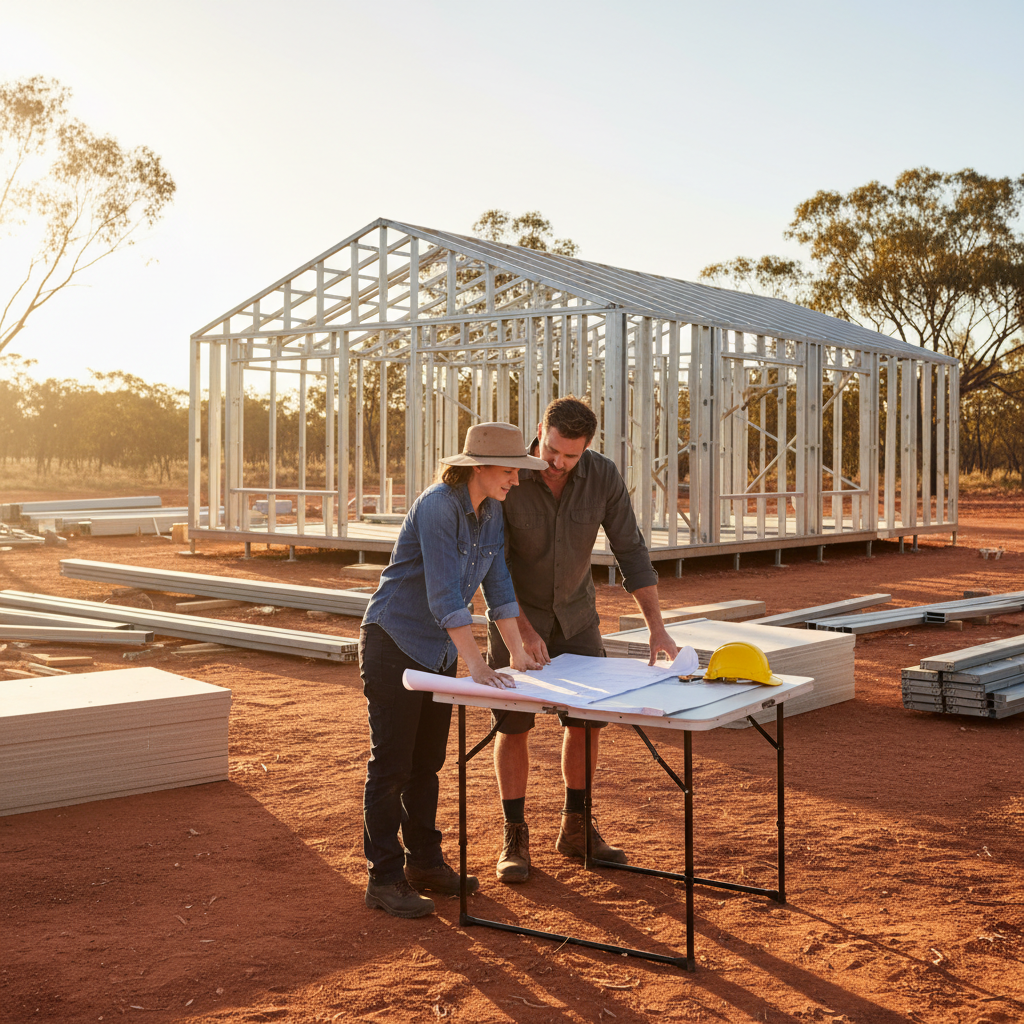
One trick I always tell people is to print your floor plans at A1 size and get them laminated. Tack them to a temporary ply wall inside the kit once the cladding is on. This stops trades from claiming they didn't know where the gables went or where the internal wall heights changed. It also gives everyone a central place to mark notes. Use a Sharpie. Mark where the noggin heights are for the kitchen cupboards. Real builders communicate through drawings, not just text messages.
Scheduling Trades Without Losing Your Mind
Timing is everything. You cannot book a plasterer until your windows are in and the roof is tight. Windows and doors usually come with your kit, but you've got to ensure the glass is protected from sparks if the site is busy. So. How do you manage the flow? I use a simple Gantt chart, but don't get fancy with software you don't understand. A printed calendar on the wall works better for most.
But here is the kicker: always assume your trades will be three days late. If the concreter says he'll be there Monday, don't book the frame delivery for Tuesday. Give it a buffer. Because if the pump truck breaks down or it rains in the Blue Mountains on Sunday night, you’ll have a semi-trailer full of steel frames sitting on the nature strip with nowhere to go. That costs money. And stress. Lots of stress.
Managing the Steel Frame Delivery
When your kit arrives, it's a big day. It's exciting. But don't just point to a spot in the dirt and tell the driver to drop it there. You need a plan for your site layout. Think about where the crane or the hiab can reach. You want the frames close to the slab, but not in the way of the guys actually standing the walls. Keep the steel off the ground using dunnage - old 4x2 timber offcuts are perfect for this. It keeps the TRUECORE steel clean and stops it from getting bogged if a storm rolls through overnight.
Check the inventory immediately. Every kit comes with a packing list. Cross-reference it. Ensure the roofing iron, the cladding, and all those boxes of teck screws and brackets are accounted for. If a box of flashing goes missing, you won't notice until you're six meters up a ladder on a Saturday afternoon. By then, the supplier is closed and you've wasted two days of perfect building weather.
The Relationship with Your Certifier
In Australia, the Private Certifier is the most important person on your project. They aren't your enemy. They are there to make sure the house doesn't fall down or burn down. You need to know exactly when they want to see the job. Usually, it's at specific stages:
- Footings/Slab steel before the pour.
- Frame inspection (this is where they check the tie-downs and the trusses).
- Final inspection for the Occupation Certificate.
A Note on Kit Homes vs. Other Builds
People often get kit homes mixed up with other types of off-site construction. To be clear, we aren't talking about homes that arrive in halves on a wide-load truck. We are talking about a proper, permanent home built on your slab. The advantage for an owner builder is that the heavy lifting of engineering and material Quantities (the 'take-off') is done for you. You aren't running to Bunnings every twenty minutes because you're three studs short. But. You are still the builder. You still have to manage the site safety. You still have to make sure there's a portaloo on site. Please, for the love of your neighbors, get a portaloo before the first trade arrives.
Practical Tips for the Long Haul
The middle of the build is the hardest part psychologically. The 'lock-up' stage is great, but then you spend weeks doing internal fit-out. It feels like nothing is happening. This is when organization saves you.
- Keep a daily site diary. Record the weather, which trades were on site, and what was achieved. It's invaluable if there is ever a dispute over a bill.
- Take photos of everything before the walls are sheeted. I mean everything. Every pipe, every wire, every bracing strap. If you want to hang a heavy TV in three years, you'll know exactly where the studs are.
- Organize your waste. A messy site is a dangerous site. Rent a skip or have a dedicated area for timber, steel offcuts, and general rubbish. If a subbie walks onto a clean site, they'll do cleaner work. It's a psychological thing.
Steel frames are great because they stay straight and true. They don't twist like timber might if it gets wet during the build. This makes your plasterer’s life heaps easier. But you still need to be across the details. Check your window reveals. Make sure your door openings are square. If you're using a specific type of cladding, read the manufacturer's installation guide three times. Then read it again. Most failures in owner building don't come from the materials, they come from people not following the instructions.
Finishing Strong
Don't rush the final five percent. That's where the quality lives. The skirting boards, the silicone in the bathroom, the flick-mixer installation. If you've kept your files organized and your trades scheduled properly, you won't be exhausted by the end. You'll have the energy to do the painting yourself or spend that extra time getting the landscaping right. Building your own home is an enormous task, but there's nothing like sitting on your finished deck knowing you managed the whole show from the ground up.