Building Success: Understanding the Inspection Journey
Embarking on the journey of building a kit home in Australia is an empowering experience. For many owner-builders, the appeal lies in the hands-on nature of the project and the satisfaction of seeing a structure rise from a flat site. However, one of the most technical and often misunderstood aspects of the process is the council inspection phase. Whether you are building on a rural block in Western Australia or a suburban site in New South Wales, understanding what a building inspector looks for is crucial to keeping your project on track.
While kit homes provide the physical components, like the precision-engineered BlueScope Steel frames and high-quality cladding, the responsibility for ensuring these components are integrated correctly into a compliant building falls on the owner-builder and their licensed trades. This guide breaks down the technical stages of inspections, offering practical advice to help you pass the first time.
The Role of the Principal Certifier
In the Australian building landscape, you will work with either a local council building surveyor or a private certifier. This person acts as the gatekeeper of the National Construction Code (NCC). Their job is not to find fault, but to verify that your kit home is being constructed according to the approved architectural plans and structural engineering specifications.
Before any dirt is turned, you must have your Construction Certificate (CC) or Complying Development Certificate (CDC) in hand. This document outlines the mandatory inspection schedule. Failing to book an inspection at a critical stage can lead to costly delays or, in worst-case scenarios, orders to uncover or demolish work for verification. Technical accuracy at every step is your best friend.
Stage 1: Footings and Slab Preparation
The first physical inspection occurs before any concrete is poured. This is a high-stakes moment because once the concrete sets, the work beneath it is hidden forever. The inspector will verify that the trenches or piers match the engineering drawings for depth and width.
If you are using a waffle pod slab or a traditional raft slab, they will check the placement of the steel reinforcement (reo). They are looking for correct lap lengths, the use of bar chairs to ensure the steel has the right amount of concrete cover, and that the vapor barrier (the heavy plastic) is taped and sealed correctly. They will also look at the placement of plumbing set-outs to ensure they align with the internal wall layouts of your kit home design.
Stage 2: Frame Inspection and Structural Integrity
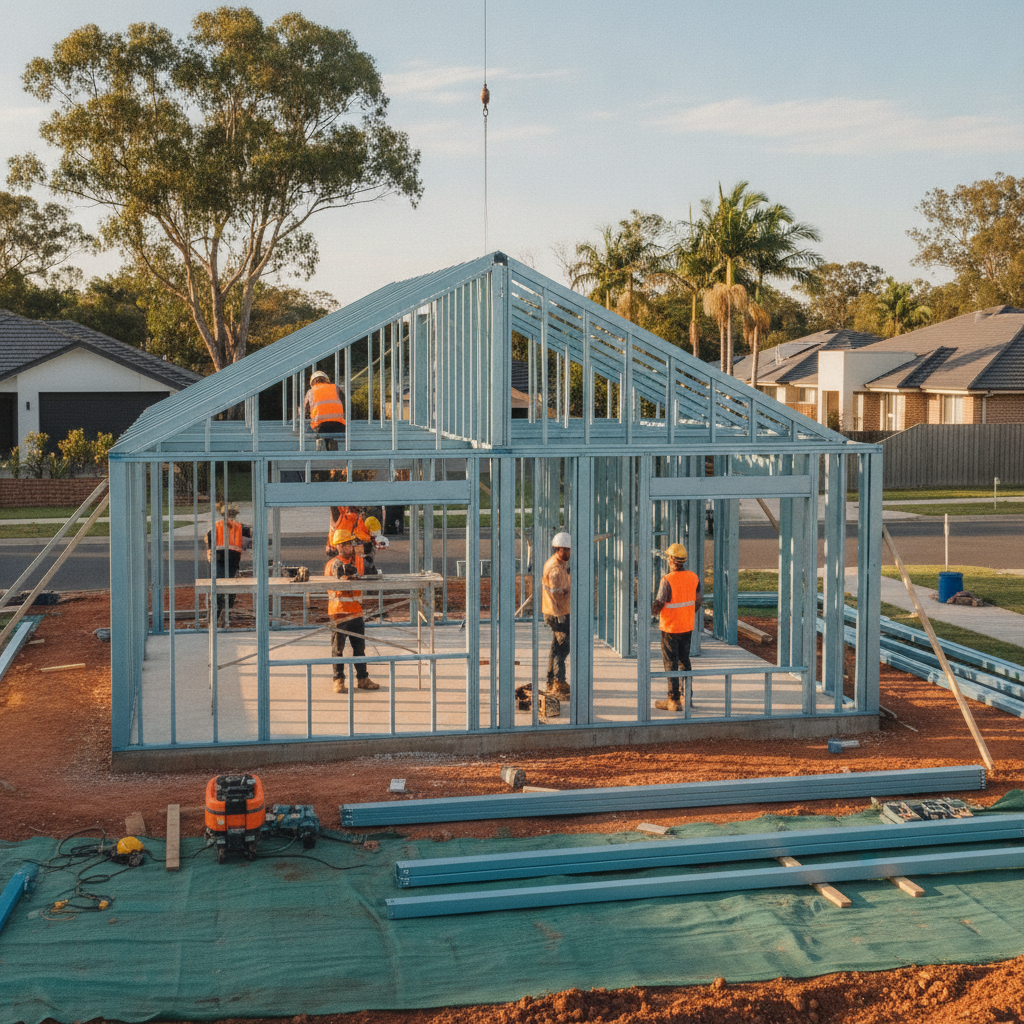
For most kit home builders, this is the most significant milestone. Once your steel frames are erected, but before the internal wall linings (plasterboard) are installed, the inspector must visit the site. This is often called the 'Close-in' or 'Frame' inspection.
When working with light gauge steel frames, such as those made from TRUECORE steel, the inspection focuses on the connection points. The certifier will check that the frames are fixed to the slab with the specified chemical or mechanical anchors. They will check the bracing patterns. Steel frames rely on specific bracing techniques (like K-bracing or strap bracing) to manage lateral loads like wind. The inspector will cross-reference the physical bracing on your site with the engineering computations provided in your kit home package.
Practical Tip: Ensure all service holes for electrical and plumbing through the steel studs have protective plastic grommets installed. Metal-on-metal contact can lead to noise or damage to wiring, and inspectors will often check for these small but vital details.
Stage 3: Weatherproofing and External Cladding
Modern Australian kit homes are designed to be high-performing and energy-efficient. The inspection phase often overlaps with the installation of the building wrap or sarking. The goal here is to ensure the building envelope is weather-tight. The inspector will look at the flashing around windows and doors. Poorly installed flashing is a common point of failure for owner-builders. You want to ensure that water is directed away from the steel frame and toward the exterior of the building. With the Australian climate ranging from intense humidity to driving rain, these technical details are what preserve the longevity of your home.
Stage 4: Final Inspection and Occupation Certificate
The final inspection occurs when the house is finished and ready to live in. This stage covers a broad range of safety and health requirements. Technical checks include:
- Wet Area Waterproofing: You will need to provide certificates from a licensed waterproofer confirming that the bathrooms and laundry meet Australian Standards (AS 3740).
- Bushfire Compliance: If you are building in a Bushfire Attack Level (BAL) rated area, the inspector will verify that your external materials, such as the roofing and windows, meet the required rating. Steel kit homes are often preferred in these areas due to the non-combustible nature of the frame and cladding.
- Smoke Alarms: Verification that hard-wired smoke alarms are installed in the correct locations.
- Balustrades and Handrails: If your kit home features a deck or stairs, they will measure the height and gap spacing of the railings to ensure child safety.
- Energy Efficiency: Documentation proving that the insulation and glazing installed match the requirements of your BASIX or NatHERS assessment.
Practical Tips for a Smooth Inspection Process
Managing a building site requires organization. Here are several actionable tips for owner-builders to navigate council requirements successfully:
1. Hold Onto Your Documentation
Every delivery to your site involves paperwork. Keep a physical or digital folder with your Truss and Frame certificates, glazing certificates from the window manufacturer, and any Form 15s or Form 16s (compliance certificates) provided by your kit manufacturer or trades. An organized builder is a trusted builder in the eyes of an inspector.
2. Communicate with Your Trades
Even though you are the owner-builder, you will likely hire licensed plumbers and electricians. Ensure they know when an inspection is scheduled. Most trades are happy to walk through their work with you to explain the technical compliance before the certifier arrives.
3. The 'Clean Site' Rule
A tidy building site signals to the inspector that you are disciplined and attentive to detail. If a site is covered in debris, it makes it difficult for the inspector to see the footings or floor fixings clearly. Clear the paths and ensure the areas to be inspected are swept and accessible.
4. Don't Be Afraid to Ask Questions
If you are unsure about a specific technical requirement in your plans, call your certifier before you build it. It is much easier to clarify a detail on a phone call than to move a structural wall after it has been bolted down.
The Importance of Steel Framing in Inspections
One of the advantages of building with steel frames in the Australian market is the precision. Because the components are manufactured using computer-aided design (CAD), the frames are straight and true. This makes the inspection process easier because the structural elements are uniform. Unlike traditional timber, steel doesn't warp or twist, meaning your measurements for window openings and wall alignments remain exact from the day the kit arrives until the day the inspector signs off on the final certificate.
Conclusion
Navigating council inspections is a significant part of the building journey, but it doesn't have to be stressful. By understanding the technical requirements of each stage and maintaining a focus on precision and documentation, you can move through the process with confidence. Your kit home project is a testament to your hard work, and the inspection process is simply the validation that you have built a safe, durable, and high-quality home for the future. Stay organized, stay informed, and enjoy the process of bringing your vision to life on your Australian block.